Posted in Netgalley

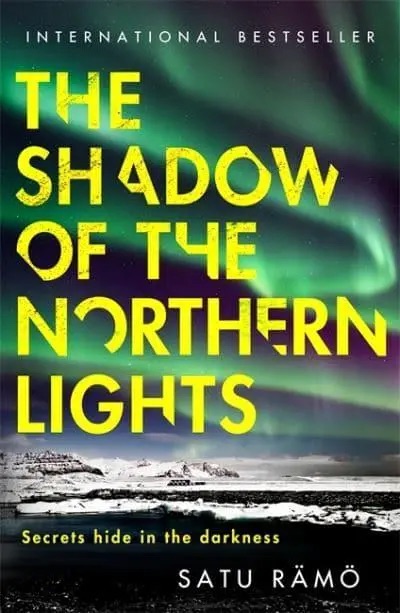
The Shadow of the Northern Lights by Satu Rämö

As Christmas comes to the west cost of Iceland, a corpse is found in a fish farming pond. Detective Hildur Rúnarsdóttir and trainee Jakob Johanson barely have time to start their investigation before another body is discovered. And soon a third.

While investigating the case, Hildur’s lost sister weighs heavy on her mind. Meanwhile, Jakob travels to Finland for the hearing of his fraught custody battle, that leaves him facing dire consequences. As the number of deaths continues to grow, Hildur and Jakob are desperate to catch the killer before they strike again.

If I said to you ‘horse vampire crime spree’ you’d probably think I’d gone bonkers, but that’s just a small part of what might be going on in this Icelandic thriller from Satu Rämö. When a body is found suspended by hooks in an Icelandic fish farm in the run up to Christmas, Detective Hildur is put in charge of the investigation, by her objectionable boss Jonas. Hildur’s partner Jakob’s mind isn’t on the job but on his custody battles, so she’s working alone a lot of the time and we’re in it with her, party to her thoughts and theories. So when a second victim has her hair burned off with a candle, a strange idea starts to form. Could the attacker be basing their methods on the Icelandic tradition of the Yule Lads?  I’m an avid QI fan and without it I would have known nothing about this particular tradition of thirteen mischievous troll-like creatures who come down from the hillsides and play tricks on people. The translations of their names include Spoon Licker, Pot Scraper and Sausage Swiper, something I have never forgotten since. The case is interesting psychologically, but there’s a lot more going on here and I found myself sidetracked by the lives of the detectives. I did find it a bit slow to get going and I think it was when these family stories developed that I became gripped. 

Jakob is rather fascinating – a taciturn character who has the unlikely hobby of knitting. In fact he’s so compelled to knit, that he’s able to do it in the car while Hildur is driving and in waiting rooms. It’s clearly displacement activity and we learn that Jakob has a son with his estranged partner Regina who has taken him out of the country to Finland. Although Jakob is fighting this, he’s now at the mercy of a foreign legal system and is having to fly over to attend court which affects his job and leaves Hildur coping alone. In the midst of her investigation Jakob calls Hildur to give her some shocking news, he has been arrested on suspicion of murder. Regina and the new man in her life have been shot dead in their vehicle while in a car park. Worse than this, a witness has described someone who looks remarkably like Jakob as being in the vicinity before the shooting. He has access to a gun and is in a contentious court battle with the deceased, he knows his chances aren’t good and asks for Hildur. Surely, if she had even the smallest suspicion of Jakob being guilty, Hildur wouldn’t fly to his aid without question? 

Underneath everything, this is a novel about family. The estrangement between Hildur and her sisters is so painfully believable and we can see the effects of generational trauma in the family. Their mother was an alcoholic, leading to neglect and one sister being very badly burned. We’re reminded of those small traditions families have that make celebrations personal and bind us together. Yet the story is also full of secrets people are keeping from each other and things they can’t talk about, until the right person comes along to unlock that emotion. 

“She knew from experience that she had a hard time forming attachments with anyone who hadn’t known grief.” 

This was such an eloquent description of how grief feels, almost like living on a different plane of existence to others. I felt this deeply when in the depths of grief and ever since I’ve been unable to do small talk and my tolerance levels for certain people and activities have lowered significantly. Some doors can only be opened with experience. What kept me reading was Jakob’s situation and the incredibly difficult opening flashback of three boys playing by a lake, a quietly devastating scene with ripples that must have spread through the community for years. The haunting and secretive nature of that event sets the tone for the rest of this novel, a perfect reading choice for those who like their Christmas nostalgic and a little bleak. 

Translated by Kristian London

Meet the Author


Hæ hæ! My name is Satu Rämö, I’m a Finnish-Icelandic author of bestselling nordic blue crime series called HILDUR. International rights are sold to 20+ countries and d during the first 2,5 years HILDUR books have sold over one million copies worldwide.

I was born in Finland in 1980 and moved to Iceland twenty years ago as an economics exchange student. Instead of macroeconomics I ended up studying Icelandic culture, literature and mythology.

Living in Iceland, I have written extensively about Nordic culture and life in the North Atlantic, blending my firsthand experiences into my novels.

I live with my family in the small town of Ísafjörður in northwest Iceland. I love ice cream, rye bread and sparkling wines. I drink my coffee with cream as often as possible.

My crime fiction debut Hildur (2022) changed the game for me as an author, totally. HILDUR-series is Icelandic-Finnish nordic blue crime fiction that takes place in a small village in the Westfjords of Iceland. Nordic blue is similar to nordic noir but more human. The stories are from the darker sides of the Nordic society but they also follow how people are dealing with each other in life in general.

Finnish Take Two Studios will shoot the HILDUR series in Iceland with an Icelandic co-production.

Turku City Theather stages HILDUR on their Main Stage in autumn 2024–2025.

I just love writing!

You can chat me your thoughts in Instagram at @satu_ramo I hope to hear from you 🙂

Posted in Netgalley

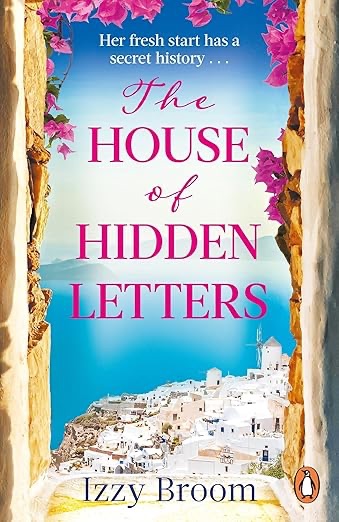
The House of Hidden Letters by Izzy Broom 

Be whisked away to Greece with this dual narrative novel set on the Greek Islands. Greek cottage. Price: One Euro. Skye doesn’t make impulsive decisions. But when she sees a derelict Greek cottage for sale by lottery, she enters with dreams of a fresh start. However, her heart sinks as she pushes open the tattered blue door weeks later. Can this wreck ever be her home? Then Skye finds a bundle of letters hidden in the fireplace, their faded pages drawing her in with a story of long-forgotten love, tragedy, and unbelievable bravery during WW2. But all the while, Skye’s own past is circling. No matter how far she goes, fate is never far behind…

I throughly enjoyed this novel that treads the difficult line between feeling escapist while looking back to harrowing events in the island’s history. The people who buy the one Euro houses bring an optimism and sense of renewal to the island. The current residents of the island are a joy, incredibly generous with the new arrivals and particularly Andreas who is the builder commissioned to renovate the houses. He is hospitable, showing Skye around her new home and chatting ideas, but he goes above and beyond when he realises she is staying in the empty house so brings her groceries and coffee. When some of the other residents arrive the place is full of camaraderie and new friendships. These are mainly women. Joy is an artist from Australia who clicks with Skye straightaway. There are three sisters, one of which is a builder determined to renovate in her own way much to Andreas’s disgust. As Skye wanders through her house alone, taking in the sea view from the attic room we get a sense of freedom and independence from her, possibly a feeling she hasn’t had for some time. All of this activity is exciting and hopeful, a light-heartedness that’s at odds with the reasons Skye left the UK and her new home’s sad history. Skye and Andreas find Nazi dog tags and a stash of letters in a half collapsed wall, so they know these are from the time of occupation, when Italian and German soldiers were present in the islands. It’s more troubling when remains are unearthed in the garden, some of which appear to be human. What has happened on this particular street? 

I found Katerina’s letters and the times we delve back into the island’s history so vivid and there were scenes so memorable, I don’t think I’ll forget them. It really engaged my emotions and I fell in love with Katerina when we first meet her as she’s climbing to reach her goats. Her relationship with the little three legged goat is so touching. It’s also the reason she meets Stefanos, as her goat climbs a little higher than she should considering her poor balance. Katerina tucks her skirt into her knickers and shows off her own climbing skills. It feels like love at first sight for these two, but war will get in the way of their courtship. This heroine is bold and brave and even though she faces some terrible events she never loses her determination or her love. This is a turn around for the girl who scorned her sister’s marriage and the constraints it placed on her.

“Love, such a stupid thing. She was eighteen, strong, healthy and free to roam between chores. A man would not let her behave in such a way.” 

I found the islander’s experiences at the hands of their occupiers harrowing. They take everything they can from the villager’s stores of food, requisition their animals and leave them starving slowly. Katerina can see her sister is becoming frail, but doesn’t realise what she’s enduring in order to secure the tiny amount of food they have. One particular soldier takes an interest in her and she knows he won’t take no for an answer, even though she is expecting to marry Stefanos if he comes home. As she symbolically tries on her mother’s wedding dress she feels the strength of the older generation with her. This is a strength she sees when encountering an elderly man on the beach who greets her warmly then simply walks away into the sea, unable to cope with what is happening on the island and knowing the young need to be priority when it comes to resources. It’s the young who have to fight, including Stefanos and her sister’s husband, but it’s easy to forget that occupied women are also fighting in their own way. That might be foraging for food, hiding supplies from the occupiers, or even collaborating to survive – something that women were often punished for by their community, but is understandable when there are children to feed and refusal only means they take what they want anyway. Katerina’s principles are steadfast, even when starving and pregnant, but they also lead to devastating consequences. I loved the author’s focus on women helping women, even across the barriers between them. 

Skye arrives in a timid state, but blossoms on the island. She has come through a period of grief after losing her father, but there’s something more in the way she reacts to men and in the joy she takes in making her own choices for her new home. She gains the confidence to tutor some of the children and her friendship with the bold and liberated Joy seems to be exactly what she needs. She also builds a good relationship with Andreas, they work well on the house together and he quickly learns her boundaries. If something has to be done his way because of safety or local regulations he stands his ground, but all other decisions belong to Skye. He literally gives her own power back to her by remaining respectful and passive with decision making. It’s a marker of how broken the mother daughter relationship is, that Skye’s mother turns up on the island with her husband. If I’d disappeared across the continent with no forwarding address my mum would know something was very wrong back home. The author illustrates so well how grief is life-altering, leaving us potentially vulnerable to those who seem to offer love and protection, but actually want to control. With a total break from her usual life and the new people she has around her, I hoped Skye would have enough strength to break from relationships that have become abusive. It emphasises ‘found family’ and shows that community is vitally important to our wellbeing. 

This was a fabulous read, a dual narrative storyline where both timelines held my interest and kept the pages turning. Of course Katerina’s experiences have more power because of the horrors they faced during occupation. I also particularly loved Katerina’s bond with Chrysi her little goat, a relationship that was so touching it brought me to tears. Skye is also fighting for her survival, to build a life that’s how she wants it and the freedom to make her own choices and mistakes. I loved the hint of romance that didn’t overpower or devalue the serious points being made about the strength of women and their supportive bonds with each other. The historical finds that are made really piqued my interest and it was fascinating to see Katerina’s story slowly uncovered and I have wondered since finishing what she might have done next. There is loss, domestic abuse and sexual violence which can be a tough read if you’ve been through it, but all are handled well and felt authentic. I felt Katerina’s despair when she realises she no longer ‘feared the enemy, not their guns and bombs. It was the sorrow that terrified her.’ Like Skye she realises that she must use this as a strength going forward. I was rooting for both women throughout, dealing with the oppression of men and finding their own path. 

Meet the Author

My career as an author really began when I won The Great British Write Off competition in 2014 with a short story called The Wedding Speech. It was the first time anyone in the publishing industry had looked at my writing, and their collective advice and guidance gave me the confidence to complete a proper novel. My Map Of You was the result.

I write escapist fiction because travel is in my soul. My books are about all facets of life and often feature a love story. Getting inside the hearts and minds of my characters continues to fascinate me, as does searching the globe for settings in which to set their stories. I have scaled mountains in Sri Lanka, watched fireworks over Lake Como, swam in crystal clear Croatian waters, made wishes in Prague, hunted for orange houses in Mallorca, fallen off chairs in French bistros and wept over the beauty of the stars in Zakynthos – and these experiences are just the tip of the iceberg.

Each of my novels comes with a promise: to take my readers on an adventure and leave them with hope in their hearts. I hope you enjoy reading them as much as I love writing them.

Posted in Netgalley

The Restoration Garden by Sara Blaydes 

I love spending time in beautiful gardens. One of my favourite childhood places was Chatsworth House, mainly because I had delusions of grandeur and wanted people to ask ‘have you seen Hayley?” “This morning she was in the library.” I also loved the garden because it has such an incredible mix: cozy hiding places (I think I’ve always been Jane Eyre hiding in the window seat), highlights like a bronze willow tree that sprinkles water and creates rainbows, huge tropical conservatories and grand vistas that open up to reveal incredible views of the Peak District. My favourite place was The Grotto, a stone building next to a large pond that was like a bandstand with a pointed roof and open sides. I imagined sitting there and reading, able to look out over the valley below. Gardens are powerful places that can evoke so many different emotions and I was fascinated with our heroine Julia who is a garden restorer. This means having all the landscaping skills and plant knowledge of a gardener with an emphasis on the history of the place. It gives Julia’s job an added emotional element whether the client is trying to recreate a garden from their ancestral past or a garden that existed within the client’s lifetime, potentially bringing up the feelings it once evoked and whatever led to it’s destruction or decline. Here it is WW2 that interrupted the garden’s original beauty, particularly the moonlit garden that was repurposed as a kitchen garden to supplement rationing. Based mainly around greenery and white flowering plants, the emphasis was placed on plants the would reflect moonlight or only flowered at night. Julia’s client Margaret does remember the garden from before the war, but is struggling to convey to Julia the details. The 92 year old lady of the manor is rather enigmatic, but steadfast in her instructions that it should be exactly as it was. So Julia must do some digging into the family’s historical documents and photos so she can hopefully give Margaret those feelings once again. However, digging into the archives will unearth more than plants as family secrets come to light. 

“Moon gardens were often believed to be deeply spiritual places, where the barrier between the dead and the living thinned.” 

The author tells the story in a dual timeline with two narrators. In the present day timeline we follow Julia’s perspective and her strange position of living in Havensworth Manor with her nephew while she fulfils her contract. It’s a slightly awkward situation, with Julia worrying about the disruption of the house’s quiet, slightly stifling atmosphere. Margaret is her client, but she is often restricted from seeing her by Andrew, Margaret’s nephew who is also a GP. Bringing a curious and excited child into the mix does bring its moments, but there’s a sense of these newcomers bringing the manor back to life again. Sam bursts into this careful and structured home with all the innocence, excitement and curiosity you’d expect from a small boy and he’s a delightful character. Where Julia feels she has to be careful around Margaret, Sam asks the questions that Julia can’t, having been steered away from certain topics like the war by Andrew. More specifically the family don’t talk about Margaret’s sister Irene, but it’s clear that Irene and the garden have a strong link. When Julia finds a sketchbook filled with botanical drawings she is fascinated. In fact the book is a florilegium – where specific flowers are drawn together with their meanings underneath. The Victorians were fascinated by the language of flowers and this artist had a gift for expressing meaning through her flower drawings. We learn that Margaret’s elder sister Irene was the artist, but the two became estranged during the war when Irene fled the family home and brought disgrace on her family. Having both lost a sister, Julia and Irene could connect, with Julia still unable to separate the disparate emotions of grief and anger. Might this common experience help her with the garden? 

I felt like the book was a little slow to reveal things in the first third and I didn’t connect with Julia, who sometimes felt more like the catalyst for Irene’s narrative than a fully rounded character in her own right. However, Irene’s story immediately grabbed me as we heard how her life unfolded in her own words as compared to the family version in which she never saw her family or the manor again. All Irene wanted to do was go to art college but her parents refused, even though she was talented enough to be accepted. Art was a pastime for a lady, not a profession. Irene’s life at Havenworth is limited, leaving her both naive and frustrated. This is the perfect combination for James Atherton, a handsome RAF officer to sweep her off her feet, when he comes to stay with her brother. She has her head turned by his flattery, especially when it’s about her work and the romantic symbolism and sentiment of flowers and gestures. When he asks her to run away to London and marry him she only pauses to think about how hard it will be leaving Margaret. She’s soon in the thick of London nightlife, meeting new friends and shopping in Selfridges never stopping to wonder where the money is coming from. London is now in the thick of the Blitz and Irene will have to face the reality of her new life, especially when she’s asked to make a choice she could never have imagined. Her narrative gives the book its urgency and drama as WW2 slices through the life of this family like a knife. The author brings home the differences between life before and during the war, both at Havenworth and in the city, particularly for women. There’s a sense in which Julia and Sam’s presence thaws this family riven with secrets, they bring life into a largely silent house and although Julia worries that Sam might be too much, he seems to work his charm on Margaret and Andrew. As the garden starts to come back to life so do they, actually connecting as a family when it finally gives up its secrets. 

Out now from Lake Union Publishing

Meet the Author

Sara Blaydes has been obsessed with books ever since she demanded her parents teach her to read at four years old so she could steal her older brother’s comic books. It was only natural she start crafting stories where she, a perpetual daydreamer, could escape into worlds of her own creation. She currently lives in British Columbia with her handsome husband, two amazing children, and an overly anxious Boston terrier. She believes books are magic, summer is the best season, and parsley is never optional.

Posted in Netgalley

Victorian Psycho by Virginia Fenton

Winifred Notty arrives at Ensor House prepared to play the perfect Victorian governess. She’ll dutifully tutor her charges, Drusilla and Andrew, tell them bedtime stories, and only joke about eating children. But the longer Winifred spends within the estate’s dreary confines and the more she learns of the perversions and pathetic preoccupations of the Pounds family, the more trouble she has sticking to her plan.

Whether creeping across the moonlit lawns in her undergarments or gently tormenting the house staff, Winifred struggles at every turn to stifle the horrid compulsions of her past until her chillingly dark imagination breaches the feeble boundary of reality on Christmas morning.

Having seen this billed as a Victorian horror comedy and having a taste for the macabre I thought this would be my perfect read and it definitely was. If you ever wondered whether the governess was the psychopath in The Turn of the Screw, then this is the book for you. Here our young governess Winifred arrives at Ensor House to take charge of Drusilla and Andrew Pound, however she isn’t just teaching them French, instilling a Christian faith and charitable nature, along with their etiquette. Winifred has instead set herself a very different and unexpected agenda. 

“It is early fall, the cold is beginning to descend, and in three months everyone in this house will be dead.”

So, alongside her everyday duties to the children she slinks around the house unnoticed by the rest of the family – cutting the eyes out of the ancestral portraits, stealing the children and bloodthirstily stalking the servants. Miss Natty is the perfect killer because of her position. I love reading about governesses in fiction because of their liminal position in a household, not as elevated as the family of the house and certainly not in the ranks of the servants. Too educated to fit in downstairs but as someone who earns a living, she’s definitely below the family. In one sense this could make her lonely at Ensor, but it also gives her an incredible amount of freedom. Governesses have bedrooms near the children, but the nanny will be on night duty. She’s free to roam with impunity, carrying out her horrible deeds. By day she’s teaching good manners and Christian values but by night she’s free to follow her darkest obsessions. 

“It fascinates me, the fact that humans have the capacity to mortally wound one another at will, but for the most part, choose not to.”

Disturbingly I found this character rather amusing, there’s a certain quirkiness about her that’s appealing and in places I found myself laughing. She is our narrator so we have her inner monologue as well as the havoc she creates. Miss Natty notices everything in the house with the skill of a psychotherapist: observing the servants, the family and their visitors closely to decide who will be murdered next. She’s weighing up their behaviour and those who are unkind and treat others badly will be in the firing line first. As she becomes increasingly murderous, with plenty of gore flying around, she is most definitely enjoying herself and so are we. What has turned this young woman into a potential psychopath? The author has written this book with the staid politeness of a Victorian novel, contrasting sharply with the mayhem being described. It added to the humour and my enjoyment. Of course there’s a feminist slant to this, the men in the house know it all, explaining away any anger and displeasure from their wives as hysteria. Meanwhile their particular shortcomings go unacknowledged. I think we’re still told a lot about how to behave as women and books like these with a female protagonist who commits terrible acts with total abandon and enjoyment is like a release valve. Her tongue can be as sharp as her scalpel, bringing them rapidly down to size. She is breaking every convention, particularly that of the Victorian ‘angel in the house.’ I felt like the author had taken the two Mrs Rochesters from Thornfield Hall and put them in one woman; the quiet and unassuming governess and the murderous madwoman in the attic. She is so incredibly clever and likes her revenge to come, not cold, but sharply, precisely and decorated with liberal amounts of blood. 

Out now from Fourth Estate Books

Meet the Author

A native of Spain, Virginia Feito was raised in Madrid and Paris, and studied English and drama at Queen Mary University of London. She lives in Madrid, where she writes her fiction in English. Victorian Psycho is being adapted for a feature film.

Posted in Netgalley

The Killing Stones by Anne Cleeves

I can barely contain my happiness at being back in the world of Jimmy Perez, this time in the Orkney islands where he grew up. Jimmy is living with partner Willow Reeves, who’s both his boss and heavily pregnant with his child. It’s Christmas and the couple are looking forward to the celebrations. Jimmy’s stepdaughter Cassie is spending the holidays with her father Duncan and his family on Shetland, so it just the two of them and son James. For the police, Christmas isn’t a holiday and as a huge storm passes across the islands, terrible discoveries are made. Everywhere there’s storm damage, but when a body is found at an ancient archaeological site Jimmy is devastated to find out it’s his childhood friend Archie Stout. Archie is a well known ‘larger than life’ character who’s the centre of every gathering and runs the family farm with a wife and two teenage sons. Jimmy finds that Archie has suffered a blow to the head and the murder weapon is a Neolithic stone covered in ancient runes and Viking graffiti, one of a pair taken from the heritage centre. Now Willow and Jimmy must investigate their friends and neighbours to solve the murder in the run up to Christmas, where events will traditionally bring the whole island together. The uncomfortable truth is that the murderer is likely to be someone they know and that means nobody is safe. 

Jimmy always comes across as someone who’s very still, the listener rather than the talker and the exact opposite of Archie and perhaps that’s why they became friends when they boarded at secondary school, something that all the islanders doat that age. Only the reader and perhaps Willow know the depth of feeling that runs underneath Jimmy’s calm exterior. We are privileged in knowing the depth of his grief for his previous partner Fran, the mother of his stepdaughter Cassie. I’ve always loved the way Duncan and Jimmy co-parent Cassie after Fran made it clear she wanted Jimmy to be the resident parent. He’s also dad to James and we can see the love and the anxiety he has about both his children, brought to a head when James becomes lost on Christmas Day. Part of him hates delving into the private lives of people he’s so close too, but then his knowledge and understanding of this small community is also a strength. He finds out things he didn’t know about his friend: an unexpected relationship with an island newcomer; a secret investment in the hotel and bar; financial difficulties at the farm. The killer made a point with their choice of weapon because they managed to get access to the heritage centre then lugged the stones to the murder site. But what was the point? Did they think Archie was betraying the community or the history of the islands? Is the inscription a clue? To have lured Archie out to such a remote spot in a storm means the site or the weapon must have been important to him. 

Anne Cleeves creates a beautiful atmosphere in this novel, her descriptions of this series of islands are both beautiful and savage, echoing its residents who are inextricably linked to each other and their shared ancestry. The storm really sets the scene of just how remote this community is and how they must pull together to get through difficulties, even where they don’t like each other. Each of the families are living history, something you can hear when Jimmy and Willow interview people and they have an encyclopaedic knowledge of several generations of other island families. Each generation has been at school together, worked together, attended each other’s weddings and celebrated the birth of the next generation. Archie’s father Magnus was an amateur historian and archivist, with a box of his research in the heritage centre. Even his looks hark back to a time when Vikings invaded the islands with his blonde hair and stature a stark contrast to Jimmy’s dark hair and Spanish eyes, thought to be a throwback to an Armada ship blown off course and it’s sailors who settled in Orkney. The different celebrations that lead up to Christmas show these different influences from the Christian carol service at the cathedral, to The Ba on Christmas Day and then Shetland’s Up Helly Aa in January. James’s determination to watch Archie’s sons participate in The Ba shows how the upcoming generations are inspired to take part just as their forefathers did in their predestined teams of the Uppies and Doonies. It’s best described as a game of ‘mob football’, something very like the Haxey Hood that takes place on 6th January with two teams trying to get their hands on a leather hood and take it back to one of two pubs in the village in the Isle of Axholme. My dad and his father before him participated in the Hood as young men and it’s still Christmas until Twelfth Night in our family. The author also uses this history to highlight tension between generations, those who leave and those who stay, those who participate and those who don’t, islanders and incomers. This tension also exists over development on the island and those trying to keep a balance between respecting the past, but also providing projects to employ newer generations. Incomers who use islanders to further their own agenda or make money will be made unwelcome. 

I really loved Willow and the atmosphere she creates at home, particularly around Christmas. Just as dedicated to her work as Jimmy she takes an active role in the investigation, her pregnancy not holding her back at all. She knows it’s a delicate situation, working together and being in a relationship, especially when she’s the boss. Somehow they manage to keep the personal and the work life separate and she seems to know which responsibilities she must let Jimmy bear and those she’s happy to share. As Christmas Eve approaches fast she’s not running around like a headless chicken trying to make sure they have all the right things, they have food and she points out something I say every year – the shops are only closed for one day. It’s the traditions and being together that are the most important thing. She’s a great interviewer though, brilliant at picking up what people are not saying. She reads their body language and their tone, plus knowing each islander’s history helps too. What she picks up on are the unexpected or secret alliances, such as Archie’s investment in the hotel or his in-law’s apparent friendship with a regularly visiting academic. The case is fascinating, covering potential adultery, family tensions, environmental disagreements and historical conflicts, as well as academic jealousy. As everyone gathers on Christmas Day for The Ba and someone goes missing, my nerves were like violin strings! It’s this gradually rising tension alongside the beautifully drawn relationships that make Anne Cleeves’s novels. Jimmy has always had incredible empathy for others, feeling his own loss alongside theirs and understanding behaviour that might at first glance seem inexplicable. This is a hugely welcome return for Jimmy, both in a different landscape and place in life. Hopefully it’s the first of many. 

Meet the Author

Ann Cleeves is the author of more than thirty-five critically acclaimed novels, and in 2017 was awarded the highest accolade in crime writing, the CWA Diamond Dagger. She is the creator of popular detectives Vera Stanhope, Jimmy Perez and Matthew Venn, who can be found on television in ITV’s Vera, BBC One’s Shetland and ITV’s The Long Call respectively. The TV series and the books they are based on have become international sensations, capturing the minds of millions worldwide.

Ann worked as a probation officer, bird observatory cook and auxiliary coastguard before she started writing. She is a member of ‘Murder Squad’, working with other British northern writers to promote crime fiction. Ann also spends her time advocating for reading to improve health and wellbeing and supporting access to books. In 2021 her Reading for Wellbeing project launched with local authorities across the North East. She lives in North Tyneside where the Vera books are set.

Posted in Netgalley

The Light a Candle Society by Ruth Hogan

Ruth Hogan is one of my cozy authors. These are books I read when I need comfort and boy did I need it last week. I’m having the kitchen renovated, not just new units but ripping out the floor and ceiling, putting in new joists and laying a floor that’s been so wonky I’ve tripped over it a couple of times. We’ve taken out an island that was hogging all the space and finally new units are slowly going in. I’ve been without a kitchen sink for a fortnight and my other half has wired the oven up in the garage so everything we cook has to be oven or microwave only and I keep meeting neighbours as I’m walking past with oven gloves and a tray of chicken kievs. I’m washing up in the bath tub (not while I’m in it) so this time last week I lost my marbles and we’ve been staying in a holiday cottage nearby for some quiet. So I’ve spent a lovely week being mostly unreachable, laying back in a huge bubble bath with a view, and reading my cozy books. 

So let’s talk about the book which was a lovely oasis of calm in my personal chaos. It covered a subject close to my heart. My first job in mental health was as a support worker and since I lived in a small town I would often see clients I worked with on days off and even for years after I left. These were usually single people, living alone and only just managing to function with the basics. They were so isolated and when I stopped working I would volunteer at a local community centre twice a week to have a drop-in place for people struggling or feeling isolated. Sometimes though I would find out someone had died and if I wasn’t too late I would go to the funeral. However if someone is estranged from their family due to their mental health history and lived alone I wouldn’t always be able to find out when and where it was. I hated the idea of no one being there, so I immediately understood our main character George and where he was coming from. He has lost his wife Audrey and takes her flowers every week down at the cemetery. It’s there he meets Edwin, a local undertaker who appears to be lurking by the bins. He explains that he’s watching the new council worker responsible for the funerals of those who had died without family or funds of their own. Edwin is making sure that new recruit Niall knows what he’s doing and giving the person the reverence and dignity they can. George hates the idea of such a lonely send off with no one to witness your journey beyond this life. He muses about it and talks to his friends at the Dog and Duck pub where he goes to the quiz night. He would like to mark these funerals in some way so he invites Edwin to join his group at the pub for a chat. From a simple wish to be there for these send offs the Light a Candle Society is born. 

Like all Ruth’s books this has a wonderful cast of interesting and quirky characters, many of whom do live alone. There’s Roxy, George’s friend and colleague from the library where he works part-time. She has an alternative look, with tattoos and piercings and is probably not the person you’d expect to be so close with an older widower. Slowly we’re drawn into their circle. There’s Elena from the florist who does George’s flowers for Audrey every week and would like to make a contribution to the funerals. There’s Captain and his dog Sailor, one of the library regulars who comes in and reads most days. He talks very little about himself, only seeming to warm up when people pet his canine companion. Then there’s Briony who works for the local paper and decided to write a piece about the funerals, something she can take to her rather dismissive and sneaky boss and show him she can write more than a few words about someone’s giant vegetable. Her downstairs neighbour Allegra is an absolute riot and I would have loved to be friends with her. She has led a rather colourful life and acts like a mentor to Briony, pushing her to trust her own instincts and talent. Briony needs her combination of feminism, cocktails and a kindly kick up the behind. 

The funerals grow when Edwin tips George off about a house clearance firm, who log all the deceased belongings, sorting through them for valuables and taking them away to sell. He agrees to tip George off if he’s doing the house of someone who has no relatives or friends, allowing him to come to the house and get more of a sense of who they were. From there he can write a eulogy that matters and resonates with anyone who does come along unexpectedly. The author has created short chapters that take us back in that person’s life in between the main narrative, showing us a moment from their life and the sometimes devastating circumstances of their death. It’s a reminder that no matter who it is or how their lives have ended, we can’t judge because we haven’t lived their life or experienced the unique and sometimes traumatic circumstances they find themselves in. This resonated strongly with me having had clients with addictions and mental illnesses that have driven family away. I was so touched by one young man who had the dream and potential of become a professional footballer. I was also touched by Captain who slowly builds a relationship with Roxy for a very particular purpose. When we’re taken back into his life it explains completely why a man called Captain lived so far from the sea. I may have shed a tear or two there.

As the society grows it takes in people who would have otherwise been alone. There are younger people like Briony or Niall who have often moved to start a career they’ve longed for, but have to then make a life far away from home where they don’t know anyone. There are older people who have retired and perhaps lost their partner who have the time and the enthusiasm for the society. However the society is also a lifesaver for them, getting them out of the house and making new connections. They’ve needed to make friends and have a home from home like the Dog and Duck to meet new people and of course, come to quiz night. There are potential romances but they’re kept quite low key because they’re not the story’s focus. The focus is one friendship and how the society isn’t just honouring those who have died, it’s making sure that lonely people who might easily have become one of the statistics, are looked after. It made me think of people I’ve let go off in life. Those I’ve lost touch with when one of us has moved or has had a partner who isn’t keen on me or vice versa. It reminded me that when someone pushes you away, it might be the time when they need you the most.  

Meet the Author

My new novel – THE LIGHT A CANDLE SOCIETY – is out in NOW! It’s about a man called George McGlory – recent widower, part-time librarian, pub quiz enthusiast and lover of loud shirts – who witnesses a public health funeral and is deeply moved by the sight of the lonely coffin with no flowers and no mourners in attendance. George believes that everyone deserves a decent send-off and decides to do something about what he calls these ‘lonely funerals’ – and so THE LIGHT A CANDLE SOCIETY is formed. The book contains a number of short stories which give a glimpse into the lives of those whom George and his friends take it upon themselves to honour and remember in their own unique way. Despite it being a story about funerals, it’s full of life, love, humour, community and human connections. And, of course, there is a very special dog!

THE PHOENIX BALLROOM, MADAME BUROVA, THE KEEPER OF LOST THINGS, THE WISDOM OF SALLY RED SHOES and QUEENIE MALONE’S PARADISE HOTEL – are out now in all formats.

I was brought up in a house full of books, and grew up with an unsurprising passion for reading and writing. I also loved (and still do) dogs and ponies, seaside piers (particularly the Palace Pier in Brighton) snow globes and cemeteries. And potatoes. So of course, I was going to be a vet, show jumper, or gravedigger. Or potato farmer.

Or maybe a writer…

Posted in Netgalley

The Art of a Lie by Laura Shepherd-Robinson

I loved this book. It drew me in immediately and two days after I finished it I can’t let go of it. I can’t start another book. It’s left me bereft. Our setting is 18th Century London and George II is on the throne. On St James’s Street is a confectioner’s shop called the Punchbowl and Pineapple and running it is the newly widowed Hannah Cole. This was her grandfather’s shop and has been handed down the family. Her father realised he needed an apprentice to pass on his skills and to work with Hannah, so he employed a young lad called Jonas Cole. Jonas and Hannah grew close and fell in love, with Hannah losing her father only a few days after they were married. So until a couple of days ago Hannah and Jonas ran the shop, with Hannah becoming quite an accomplished businesswoman. Jonas could be hard and ruthless in his business dealings and of recent years they had grown apart, with Jonas often spending evenings away from home. Then two nights ago he did not return and was found further down the Thames minus his money, his watch and several teeth. Hannah has had to borrow, especially to re-open after his death, something that caused a minor scandal so soon. She can’t afford to be closed and is waiting on their savings being released from the bank so she may pay her suppliers. Then Henry Fielding pays a call. In his role as magistrate rather than novelist, he explains that all money will remain frozen while he investigates Jonas’s death. He isn’t sure this is a simple robbery and wonders whether he should be looking into his business or personal dealings. He informs Hannah that Jonas had money in the bank, more than the £200 she knew about. Fielding explains he wants to be sure that the money was obtained legally and above board. Luckily, at Jonas’s funeral Hannah meets William Devereux. An acquaintance of Jonas, he has never met Hannah before but is very sympathetic to her plight. He promises to visit her shop and discuss how he may help her with Fielding and Jonas’s life outside the home – was he gambling, womanising or getting into shady business dealings? He also mentions a delicacy his Italian grandmother used to make called iced cream. It has all the ingredients of a custard, but flavoured with fruit or chocolate and is then frozen and eaten as a desert. Hannah resolves to let William help her and to master the art of ice cream, but are either of them being fully honest with each other about who they are and what their purpose is? 

As with all Laura’s books we become fully immersed in the setting straight away and it’s the little details that stand out and make us believe in this world. I loved the descriptions of Hannah’s various confections and the way she can tell what people will choose, not to mention what it says about them. 

“He paused to take a bite of his Piccadilly Puff, washing it down with a generous gulp of green walnut wine. It is a favourite choice of the sybarite: the silken sweetness of the custard, the crunching layers of puff paste, the dusky depths of the spices mingling with the sourness of lemon. I might have guessed that Mr Fielding was a man who struggled to keep his appetites in check.”

I believed in Hannah as a businesswoman and confectioner very quickly thanks to these details and as she narrates she tells us her hopes and dreams, including a joint dream of her and Jonas, to buy the empty premises next door and extend the shop so they could have more tables and chairs, especially when her iced cream starts to become popular. I think we always imagine that people from the 18th and 19th Century are very genteel and well behaved, this comes of too many Austen adaptations and strange hybrid historical settings like Bridgerton. While lovely to watch they give us little idea of what these centuries were like for those of the lower classes in society and women who worked. Real life 18th Century London was rather more colourful than Pride and Prejudice, as depicted in some of Fielding’s novels like Tom Jones and Daniel Defoe’s Moll Flanders. The author gives us the dirt and the bawdy side of London life when Hannah takes a trip to the theatre. 

“The playhouse crowd gave a wide berth to the nest of alleys around the back of the Theatre Royal, home to brothels and bath houses, gin shops and squalid taverns. The residents started drinking over breakfast and then kept going. Groups of ragged men stood about on corners. One lot were fighting, skidding in vomit. Half-naked women leaned from the upper windows shouting encouragement.” 

The King openly has a mistress and there are brothels and gaming rooms everywhere, operating just on the edge of the law. This is a book with every vice on display, even when if it is just cake. As Hannah points out when she’s evaluating Fielding, every man has his personal struggle. She is incredibly astute when it comes to assessing character and has Fielding’s own psychological make-up worked out through reading his novels. William Devereux appears to be equally astute, visiting Fielding’s rooms he notes the perfectly bound volumes of his own books and the wine glasses etched with the crest of Eton College, it’s students described beautifully as the “school of the most selfsatisfied fucksters in the kingdom.” I thought there were some brilliant choices in terms of the book’s structure and the way the story passed from Hannah to William was brilliant. Often when reading from NetGalley there are little mistakes or quirks to the format that can ruin the reading of the book, but here reading from NetGalley was a benefit because with no gaps or idea how far I was into the book, when the shocks came they were huge. The author has cleverly used aspects of modern thriller writing and applied them to her story, so there are twists and turns aplenty. She uses sudden unexpected confessions or statements that mean we know something no one else does. Other times a character suddenly changed their demeanour or had a different inner compared to their outer voice that made me go back a few pages in confusion. Then just as I become comfortable with my narrator, they switched back again.

This is definitely a cat and mouse game between three characters, a battle of wits where you’re never quite sure who is on the right side. Fielding appears to be pursuing this case to make his point to parliament that a national police force is needed to deal with crimes like murder. He also has a good point, Jonas’s watch had belonged to Hannah’s father and had a Russian Imperial Eagle on the case. If that had been stolen, every pawn shop and jewellers in London would have remembered someone trying to sell it. So where is it? Has the thief taken it to be sold elsewhere or is it still with a murderer rather closer to home? Devereaux seems like a gentleman, he introduces Hannah to friends who seem wealthy and of good status and they all vouch for his honesty and charity. He even seems to be thinking of making a young boy belonging to a distant relative his ward, in order to give him a better life. Hannah had a hard life at Jonas’s hands, especially when she found she was unable to have children something they both wanted. I loved the author’s detail of them both saving some urine to pour on a seedling and if the seedling grew they were believed to be fertile. Hannah’s didn’t grow and she felt her husband hardened his heart to her at that point and perhaps looked elsewhere. She has her head turned by the handsome gentleman who wants to find out where Jonas was going at night and intervening with Fielding on her behalf. He wants to help her keep her shop too and his iced cream idea is proving a huge hit, with even an impromptu visit from the King’s mistress who reassures Hannah that a hint of scandal is not necessarily a bad thing: “virtue matters rather less once you are rich.” Devereaux has some ideas in that area, that maybe rather than leave her money in the bank she might like to meet some of the people who’ve invested in a company of his called Arcadia, based in a place called Bentoo. Is he genuine or not? Does he have feelings for her, because Hannah’s starting to have stirring feelings she hasn’t had for years. Surely though Devereaux’s  interest wouldn’t lie in the direction of an older widow? 

I was utterly entranced in this novel from the first page to the last, especially as the tensions mounted in the final third when Fielding makes his move. However, just when you think you’ve worked everything out another twist will come along and surprise you. I was rooting for Hannah to come out on top, but was very scared for her in parts. For both her heart and her liberty! I wanted her to live out her days as the grand proprietress of the Punchbowl and Pineapple. I very much feared that Fielding had the desire to see her face the hangman’s noose. While I didn’t trust Devereaux at first I did wonder if he had feelings for Hannah or whether he was some sort of confidence trickster. There is certainly sexual chemistry by the bucketload. I was working out in my head who might play Hannah in a film or TV adaptation because it would be a brilliant period thriller with lots of raunchy scenes perfect for Netflix. I was honestly hypnotised by this story and Laura’s talent. Bravo on such a fantastic story that I’m still thinking about four days after finishing it. Go beg, steal or borrow a copy of this one, it’s a cracker. 

Out now from Mantle Books

Meet the Author

Laura Shepherd-Robinson is the award-winning, Sunday Times and USA Today bestselling author of three historical novels. Her books have been featured on BBC 2’s Between the Covers and Radio 4’s Front Row and Open Book. Her fourth novel, The Art of a Lie, will be published in Summer 2025. She lives in London with her husband, Adrian.

Posted in Netgalley

The Wasp Trap by Mark Edwards 

It’s been so enjoyable to read two of Mark Edwards’s novels back to back. I found myself completely engrossed and The Wasp Trap was definitely an interesting premise. Will is travelling to his friends Theo and Georgina’s house for a reunion dinner. Years ago, at their elite university in the 1990’s, Will and his group of friends were selected by their professor to spend the summer at his house in the countryside and work with him on a project he’s developed. He wants to create the first online dating site, one that truly works by using psychology. He wants the group to create an algorithm based on personality types – such as the Myers-Briggs scale, often used in business more than psychology. He recruits a mix of coders, web designers, psychology graduates and creatives like Will, who has an ambition to write a book. Here, he is tasked by finding a name for the site and Sebastian wants it to be poetic. That shouldn’t be difficult for a man who’s falling in love, with fellow student Sophie and after seeing an unusual butterfly he chooses “butterfly.net”. A little creepy when we consider what happened to those butterflies once they were caught. Lily is definitely the lynchpin intellectually, the person trying to create an algorithm that works, but even she’s distracted. Within the research are papers on using certain tests to determine whether someone is a psychopath. Since the team are being used as guinea pigs for the dating questionnaires why not use them for this? No one’s going to turn out to be a psychopath are they? This side research becomes named as “The Wasp Trap”. Decades later, as the group converge for dinner, it’s clear there’s so much to talk about, not least the disappearance of Georgina and Theo’s daughter Olivia. Why are they still holding the reunion? Who are the strange couple doing the cooking for the night? As secrets begin to unravel about that summer it’s clear this isn’t going to your average reunion. 

I have to get it out first and foremost. I didn’t like any of these people, but Theo and Georgina are one of those couples I love to hate. The perfect home, perfect careers and plenty of money to throw around, not to mention those lovely teenage daughters too. How much was this reunion about rubbing other people’s noses into their success, especially Will who gets plenty of comments about his never finished book? They don’t seem like parents whose daughter is missing, because I’d be beside myself if it was one of my stepdaughters. I certainly wouldn’t be able to concentrate on a dinner for people I hadn’t seen for years. Make no mistake, these are the people who make me avoid school reunions like the plague. There’s so much nostalgia here and that element I did enjoy. I was a sixth former in the early nineties and I loved all that Manchester scene music and played my Stone Roses album so much it drove my mum and dad crazy. I was also a massive Pulp and Blur fan and still love those films of that decade from Tarantino and Danny Boyle through to Four Weddings and a Funeral. So I do reminisce, but I kept the most important friends and still see them, I don’t need to see the others thanks very much. My ‘now’ is much more interesting than my yesterday. Professor Sebastian certainly chose his students well because there are some incredibly intelligent people here, but I’m not sure about their emotional intelligence or morality. Will seems to have the most emotional intelligence but is hampered by his fear of failure when it comes to his career and love. In the past he’s clearly in love with Sophie, but fears telling her so much that he misses his chance. Will he do so again? It’s no surprise then that it’s Will who senses a weird atmosphere with the catering couple. I was so caught up with the emotional drama between these people that it was a shock when the chef and his assistant burst into the room with guns and give an ultimatum. They have a set amount of time to tell a secret they’ve been holding since that summer. When they come back into the room time is up; they either tell the secret or someone will be killed. Even though this is what they promise to do, I’m not sure I quite believed it. So when they come back in and the shooting starts it definitely concentrates the mind a bit, but the problem is they all have secrets. How do they know which secret the couple want to know? 

As usual with Mark Edwards, the tension is almost painful. Especially those last few minutes of time before Callum returns with his gun and he’s definitely not bluffing. There’s a body in the hall to prove his intent. Of course, being the people they are, they start wondering if they can somehow outwit their captors by causing a distraction and one of them getting out of the house. Will does wonder if there’s a third conspirator hidden upstairs though. Despite the tension, there’s also that incredibly awkward sense of having to expose your darkest secrets in front of people you were at college or university with. I’ve spent most of my life embarrassed by something, so I could feel their reluctance to be shamed in this way. It’s as if the tables have been turned and the unpopular or bullied kids have decided to get their revenge but Callum certainly wasn’t at university with them so how could he know their secrets? He definitely seems to be getting a kick out of terrifying people he sees as better off in life, they certainly don’t have the upper hand now. There is one person though who knows something terrible happened that weekend and who was involved in covering it up. They’ve kept it to themselves all these years. Was it linked to the psychopath tests Lily was running on her friends without them knowing? Maybe one of them did turn out to be a psychopath and if they did, are they in the room?

I was on tenterhooks as the body count started to rise and I found myself rooting for Sophie and Will against the odds. I loved the appearances of the family’s fat cat here and there throughout the action and that he’s the only one who knows someone is definitely upstairs. There are two people from that summer who aren’t here tonight. Local girl Eve was their age, employed by the Professor to clean and cook for everyone over the summer but often around in the group’s leisure time too. There was also Sebastian’s nephew, an extra when it came to socialising and chilling out at weekends that summer, but not really one of them. He was usually running errands for his uncle but when he did join them he was a divisive figure, in fact some found him a bit creepy. Will had conversations with Sophie about how strange it was for him to still be driving the classic car that his parents had been killed in. Their outsider status shows in the fact that neither of them are there tonight, but could they be the key to a secret? I was absolutely gripped in the final chapters and couldn’t wait to find out which secret Callum wanted and what was his link to the group? I was also interested in where Theo and Georgina’s daughter was. We do know by this point who is upstairs but would they intervene or remain hidden? One thing is for sure, as the secrets come out it’s quite clear that no one is going to come out of this well. This is definitely one reunion they’ll wish they lost the invitation to. Brilliantly twisty, full of complex and unpleasant characters and so tense my teeth hurt. 

Out now from Michael Joseph

Meet the Author

I write books in which scary things happen to ordinary people, the best known of which are Follow You Home, The Magpies, and Here To Stay. My novels have sold over 5 million copies and topped the bestseller lists numerous times. I pride myself on writing fast-paced page-turners with lots of twists and turns, relatable characters and dark humour. My next novel is The Wasp Trap, which will be published in July in the UK/Australia and September in the US/Canada. 

I live in the West Midlands, England, with my wife, our three children, two cats and a golden retriever.

Posted in Netgalley

The Mourning Necklace by Kate Foster

Inspired by an infamous real-life case, The Mourning Necklace is the unforgettable feminist historical novel from the Women’s Prize-longlisted author of The Maiden, Kate Foster.

They said I would swing for the crime, and I did . . .

1724. In a tavern just outside Edinburgh, Maggie Dickson’s family drown their sorrows, mourning her death yet relieved she is gone. Shame haunts them. Hanged for the murder of her newborn child, passers-by avert their eyes from her cheap coffin on its rickety cart.

But as her family pray her soul rests in peace, a figure appears at the door.

It is Maggie. She is alive.

Bruised and dazed, Maggie has little time for her family’s questions. All that matters to her is answering this one: will they hang her twice?

What a brilliant advocate Kate Foster is for these women she finds in historical documents, often in dire situations in their time for ‘crimes’ it’s hard to comprehend today. Although, in our heroine Maggie’s case, this has novel does have some relevance to modern day America where politicians seemingly wish to revert to the Puritan values last seen when the first settlers arrived and James VI of Scotland was on the throne. In some states we have recently seen women arrested after stillbirths or miscarriages, something I find disturbing and is deeply traumatic for a bereaved woman in her most vulnerable state. This is the fate that awaits Maggie, but first Kate takes us back to how Maggie ended up in this terrible situation. Maggie and her younger sister Joan have grown up in a coastal village known for its fishing and the strong, hardworking women that mend the nets and clean the fish ready for market. It’s a hard life and not one that Maggie wants forever. She dreams of living in London and making her own life there. So, when Patrick Spencer walks into their cottage one evening, with his sparkling eyes and easy charm Maggie sees someone like her, who wants to make their own luck. He has come to ask father if he could store some items in their safe – something the family do from time to time for tea merchants. These are altogether different ingredients, they are ingredients for perfume. Patrick wants to open his own perfume shop and will occasionally be passing through with expensive ingredients, could they agree a price to store them? Maggie knows she isn’t the beauty of the family because anyone can see that’s Joan. She isn’t even the favourite, but she does know that if Patrick is looking for a wife to support and help him in business that she’s the best choice. When he takes her out walking one evening she hopes that perhaps he’s seen someone as ambitious and hardworking as he is. Their courtship and marriage are a whirlwind and they’re soon living in a bungalow closer to the centre of the village. Married life is not what Maggie expected, after all her only example is her mother and father and they’ve always come in third place after his drinking and his temper, but she’s in thrall to Patrick. So, it’s a terrible shock when she hears the news that a press gang has visited the hotel bar in town and they’ve taken Patrick into the navy. 

Maggie doesn’t have many choices. She’ll need income in a short while or she must return to her family. Maybe this is the only chance she has of getting herself to London and as the days go by she’s ever more sure that she’s having a baby, it must be now. Her mind is made up by a terrible betrayal and she sets off, reaching a a quiet market town where she picks up some work in the inn, concealing her pregnancy and living in an upstairs room. However, the truth always finds a way out and it’s not long before she finds herself standing in front of the justices to answer charges of concealing a pregnancy and infanticide. 

I was fascinated by Maggie’s story immediately, desperate to find out how she survived the gallows and whether she could advocate well enough for herself to avoid a second hanging. She’s a dreamer, but she’s also determined and incredibly intelligent. It’s this combination of qualities that Patrick sees in her and why he thinks she will be a good partner to him. Although his wandering libido destroys their chances all too quickly. Maggie’s ambition to carry on her plans after his disappearance has all the impetuosity and ignorance of youth. She would never be able to hide her pregnancy for long, if she’d been honest about being pregnant and her husband deserting her I had a feeling that the innkeeper might just have given her a chance anyway. There is curiosity about her though and an attempt at friendship teaches her that there are far worse ways to live than being a fishwife. It also puts her in the path of a local doctor who is so unpleasant that I wanted to wash my hands just reading about him. However, it’s the early arrival and sudden death of her daughter that has her transported to Edinburgh. This is a capital case and must be heard by the best justices in the land, although it’s common knowledge they drink at lunchtime. What’s amazing about Maggie is her ability to adapt and keep going. Despite being dealt a terrible hand, her will to survive and to appreciate the humble life she once had is admirable. She is a match for any man, whether it’s a hangman, the justices, her husband or even her violent and drunken father. She will make sure she has her dues from Patrick Spencer and that she will remove her mother and sister from the cottage where they’ve spent their lives fearing payday and her father’s visit to the inn. She is a better woman than me because I’d have left my sister there. Joan is one of those characters you want to slap, but I think that Maggie can see she was just another starry eyed girl being manipulated by a man used to getting his way. 

As always Kate’s novels are rich with description, placing us very firmly in Scotland and in very different establishments. Maggie’s family live in a one room cottage and all of them work incredibly hard, but they need the extra money they make from holding onto goods for those avoiding the law or the tax office. Despite a poor existence the family have a rich community around them and a long tradition of fishwives. When she’s in Kelso Maggie learns that the women of Fisherrrow are well thought of and known for their hard work. It’s the heritage she wants to escape that gets her first job. The cottage where she lives with Patrick is a step up but still a world away from the women who would buy his perfumes. The doctor in Kelso has a grand house, but once Maggie knows what takes place within its walls she could never envy it. All of is thrown into stark relief by the squalor of where she’s held awaiting trial. It’s filthy, filled with vermin and women willing to exchange sexual favors with the guards for extra privileges. Maggie would rather go hungry. Each of these worlds is beautifully rendered and I could see it all very clearly in my mind’s eye. 

I am amazed by the talent of Kate Foster that she is able to find these cases from Scottish history and breathe life into them. She takes them from a simple story in a news sheet of the time and like many of us who aspire to write she thinks ‘this would make a good novel’ and actually fleshes out these characters and places with what must be endless research. She creates women who feel like they could be one of us. Instead of being a distant newspaper headline they become real, with hopes and dreams and make incredibly relatable mistakes. Having lost my own babies I felt so much for Maggie at that moment and understood completely her need to say her own goodbye. For a long time it has been just the two of them and I could see that it would feel strange to involve others, they’d never known her anyway. I flew through the rest of the novel to find out how Maggie would move on from her moment on the gallows, should she be successful in arguing for her life first. Would she go back to her fishing village and the shared room with her parents? Would she make bold choices in order to remain independent? Or would she look for the man who set all this in motion and look for revenge or reparations? I loved the idea of the scar round her neck as a mourning necklace. There’s something about setting making inner wounds visible that resonates very strongly with humans. How many of us go on to have a tattoo after a traumatic or memorable event? Anyone who has gone through a profound experience has a sense of being stationary as the rest of the world keeps turning. When recently bereaved I wondered why people couldn’t see just how changed I was and I was frustrated by my inability to explain. Losing a baby is so hard because you are a mother, but because you don’t have a child no one ever sees you that way. Maggie could see her scar as a mark of shame, to be covered. However, she chooses to wear it with pride because it is proof that her little girl lived. I felt proud of Maggie, which might be a strange thing to say about a fictional character, but I was so happy that she took the path she did. Hardened by experience, she thinks of her fellow women first, but doesn’t allow that experience to completely rob her of a future. This is the best of her novels so far and that’s a high accolade considering how good they were. 

Meet the Author

Kate Foster worked as a national newspaper journalist for more than twenty years before becoming an author. Growing up in Edinburgh, she became fascinated by its history and often uses it as inspiration for her stories. Her previous novels include The Maiden, which won the Bloody Scotland Crime Debut of the Year and was longlisted for the Women’s Prize for Fiction, and The King’s Witches. The Mourning Necklace is her third novel. She lives in Edinburgh with her two children.

Posted in Netgalley

Dear Miss Lake by A.J. Pearce

It was lovely to be back with the gang at Woman’s Friend magazine and particularly with our narrator Emmy Lake as they enter the final and arguably most difficult stretch of WW2. After five years of war both the team and their readers are tired. As a way of boosting morale at the magazine Emmy suggests they all decamp to Bunty and Harold in the countryside. As Hitler’s V1 and V2 bombs start to hit, it will certainly be safer. Emmy strongly feels they all need a boost in order to keep supporting and inspiring the women who read their magazine. If they’re tired and the magazine suffers, how will their readership keep the fight going? Although they’ll still be working, the children, the animals and the beautiful countryside should have the desired effect. Plus, for Emmy, she’ll be closer to where her husband Charles is posted and she’ll be with her best friend Bunty. Emmy throws herself into rural life and is soon organising games nights, competitive knitting and planning the very important wedding of their officer administrator Hester and her fiance Clarence. She also has an important phone call from the ministry to travel abroad and report from the French field hospitals looking after the wounded. She even manages to mastermind a break into husband Charles’s barracks before they’re both deployed. Emmy has no idea how much she’s going to need those around her in the coming months as her hardest test is yet to come. On their return to London after the summer she receives a telegram to say that Charles is missing, presumed captured, in enemy territory and she has the agonising wait for the confirmation letter. Then Hester receives a blow when Clarence calls to say he’s being deployed in three days, two days before their planned wedding. Hester is inconsolable and after catching Emmy in a moment of frustration, she disappears. However, Emmy isn’t one to dwell on her misfortunes for long and I wondered what schemes and plans she would hatch next. 

This is a very fitting end to the Emmy Lake series, because it showed, no matter how Pollyanna our attitude is, it is okay to sometimes find we’ve run out of steam. It’s hard to imagine what five years of war must feel like when we take into consideration women having to work, look after children, support their husbands and face the fear of losing someone important to them or even their home if situated in London or other major cities. The nearest thing we have to such upheaval is the COVID pandemic and that meant two years of shielding for me. However, I still had tv to stream, books to read and could send myself little treats from Amazon or Betty’s tearooms. I can’t imagine how I’d have felt if I was exhausted from working, missing my husband, had the possibility of a bomb coming through the ceiling and had to find the tenth thing to do with a cabbage. Although the Lakes and friends are relatively okay financially, many were not and the author brings in these experiences through the magazine where some readers are infuriated with the magazine’s rather chirpy, optimistic tone or want to vent about the desperate situations they’re in. I loved the storylines about unexpected pregnancies as I could really understand getting carried away in the moment when someone you love is being deployed to fight, perhaps never to return. I could also imagine myself being swept off my feet by an American GI or one of the Polish airman posted only a few miles away from my village all those years ago. I could absolutely understand why some readers lost their faith in the magazine and whether it’s writers truly understood the predicaments some readers were in. I could also understand if Emmy did run out of patience, because sometimes the only answer is ‘talk to the people who love you’ no matter how angry or disappointed they might seem at first. It always gets easier.

 When news arrives that Charles’s secret mission was Arnhem and he’s been captured behind enemy lines, it takes a while for Emmy’s emotions to catch up with the news. She has all the information at her fingertips, having had years of finding out what to do for her readers. Practically she’s doing all she can, plus organising the Christmas Fair and making connections with other POW wives. She’s particularly proud of the piece she wrote for the ministry on the military hospitals so hopes for another mission. When she, the editor and publisher are pulled in for a chat the news isn’t good. It’s this that seems to bring her to a standstill. Returning to the magazine office she’s despondent and feels a deep sense of injustice, leading to a sudden and misdirected rant. Things go from bad to worse when the next morning, Hester has gone missing. Emmy knows she took her cancelled wedding plans hard, but surely that’s not the reason for her disappearance? Could it have been her own moment of anger and emotion that provoked this sudden reaction? Emmy realises how much of a lifeline they all are to each other and resolves to find her, whatever it may take. 

A.J. Pearce has written a triumph of a series in this quartet of books and in her main character too. We’ve experienced the ups and downs of different editors and publishers, the staff’s other responsibilities for their families and war jobs such as the fire service or driving ambulances, as well as terrible losses on the battlefield and in the Blitz. Through what seems on the surface to be a light-hearted and perhaps frivolous lens, I’ve learned so much about what it was like to be a young woman during WW2. It’s given me an insight into my grandparent’s generation – my Aunty Connie who was an unmarried mother and a subsequent marriage to my Uncle John who suffered from PTSD after his ship was attacked and his friend was blown up right next to him. My grandad went into the army just as war was ending and experienced the other side’s struggles – German cities destroyed by our bombardments and people living in the ruins of their homes. I don’t know if I’d have the strength and determination to contribute in the way people did, something brought into sharp focus when I had to discuss what the war in Ukraine could mean for those who’ve served in the forces but are still under reserve? Could I cope if he was called back in?

Strength is one of those things we find reserves of when the situation demands it of us and I have no doubt I could keep the ‘home fires burning” but I certainly don’t have the grit that some of the Ukrainian women are showing, having lost their husband then joining up to fight themselves. I feel the author doesn’t let us forget the sacrifice and loss in people’s lives at this time, but still manages to bring in humour and a defiantly upbeat make do and mend attitude. This is the closest I’ve seen Emmy come to breaking point and it’s hard to do when you’re the one whose role it is to buoy everybody else up. As she finds out though, those who she’s helped and supported are so happy to be able to return the favour and support her. This is a set of books I always recommend, to women of all ages, because it’s so easy to relate to one of the characters and absolutely root for them. The main impression I take away from them is that sense of female solidarity. The instinct we have to come together, share the load and make each other’s lives a little easier – from taking on someone’s children all the way down to being there with a meal or a shoulder to cry on. Emmy uses her writing to do the same and triumphs in being exactly what the magazine promises – the Woman’s Friend. 

Meet the Author

AJ Pearce was born in Hampshire, UK. Her favourite subjects at school were English and History, which now (finally!) makes sense.

Her debut novel Dear Mrs Bird was a Sunday Times Bestseller and Richard and Judy Bookclub Pick. It was shortlisted for Debut of the Year at The 2019 British Book Awards and has been published in the USA, Canada and Australia and in translation in over fifteen languages.

Dear Mrs Bird was the first in AJ’s series The Wartime Chronicles which now includes Yours Cheerfully and Mrs Porter Calling. Her books are funny, sometimes extremely sad, but always uplifting stories about a group of women standing together to face the challenges of World War II.

The fourth and final book in the series, Dear Miss Lake, will be published in the UK on 5 July 2025 (and on 3 August in the USA and Canada).

When not writing books, AJ enjoys being fairly rubbish at a variety of hobbies and has recently started to learn to paint, with so far messy although enthusiastic results.

Follow AJ on Instagram, Facebook and Threads: @ajpearcewrites.