Blog Feed

Posted in Publisher Proof

Spring And Being Your Authentic Self

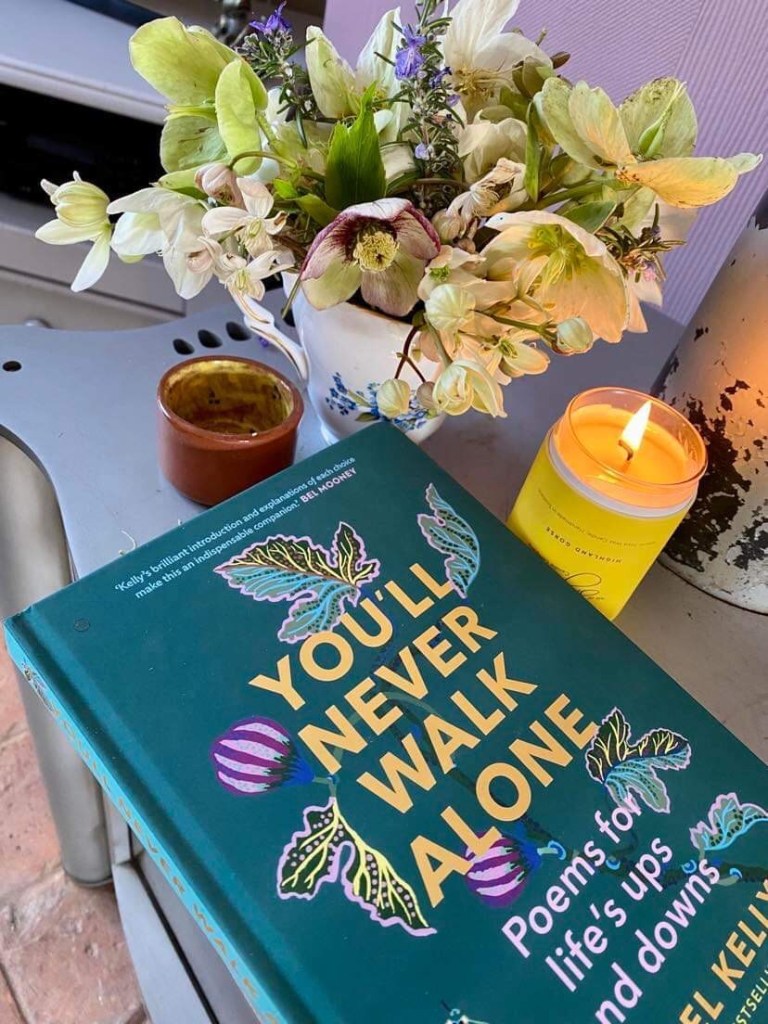
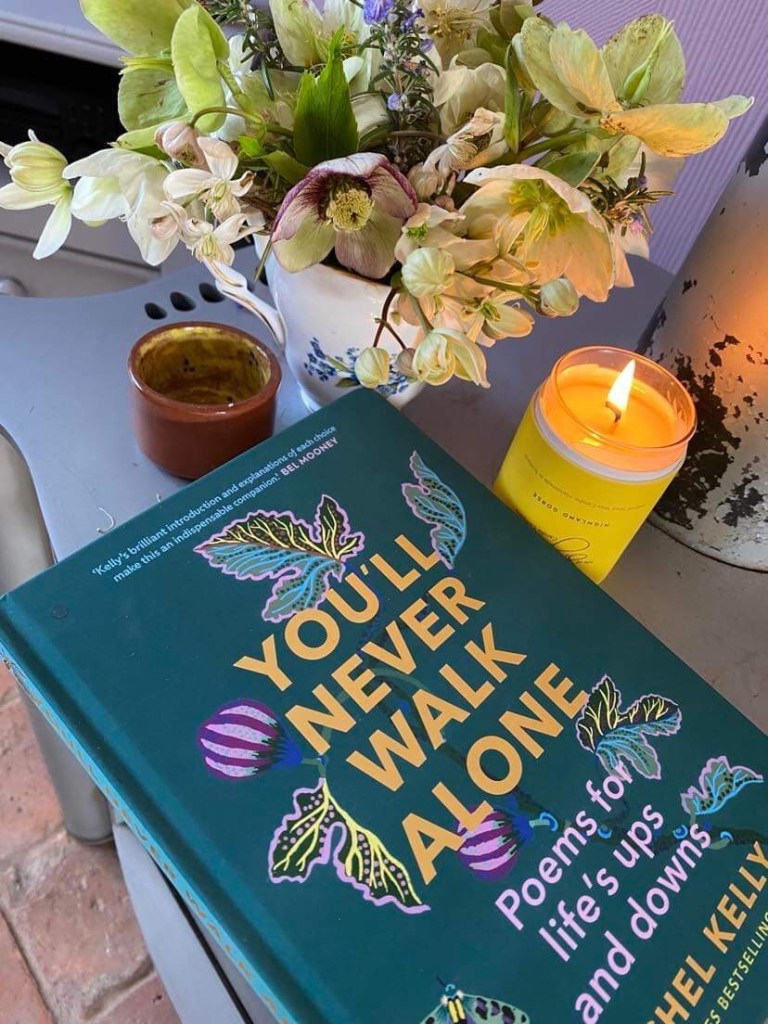
I’m continuing my series with Rachel Kelly’s collection of poetry for each season of the year. Today I want to share with you another poem from ‘You’ll Never Walk Alone’ because it speaks to me about being authentic and I know how liberating that can be.

Wild Gees by Mary Oliver

You do not have to be good.

You do not have to walk on your knees

For a hundred miles through the desert, repenting.

You only have to let the soft animal of your body

Love what it loves.

Tell me about despair, yours, and I will tell you mine.

Meanwhile the world goes on

Meanwhile the sun and the clear pebbles of the rain

Are moving across the landscapes,

Over the prairies and the deep trees,

The mountains and the rivers.

Meanwhile the wild geese, high in the clean blue air,

Are heading home again.

Whoever you are, no matter how lonely,

The world offers itself to your imagination,

Calls to you like the wild geese, harsh and exciting –

Over and over, announcing your place,

In the family of things.

In You’ll Never Walk Alone – Poems for Life’s Ups and Downs. Ed. Rachel Kelly. Yellow Kite. November 2022.

I love that we come to this poem in the middle of a conversation. Editor Rachel Kelly suggests that it might feel odd at first, to hear this voice telling us we do not have to be good – a lesson we are taught from being a small child. In order to be loved these days we are told we must be good, but also to behave in certain ways and look a particular way. We must have no body hair, thick lustrous hair on our head, the perfect figure and whitened teeth. But this poem says no, a goose only has to be a goose, the natural way a goose is meant to be. It follows it’s inner instincts, to fly to warmer climates in winter and back home in the spring. It isn’t trying to be something it’s not. It is unapologetically itself.
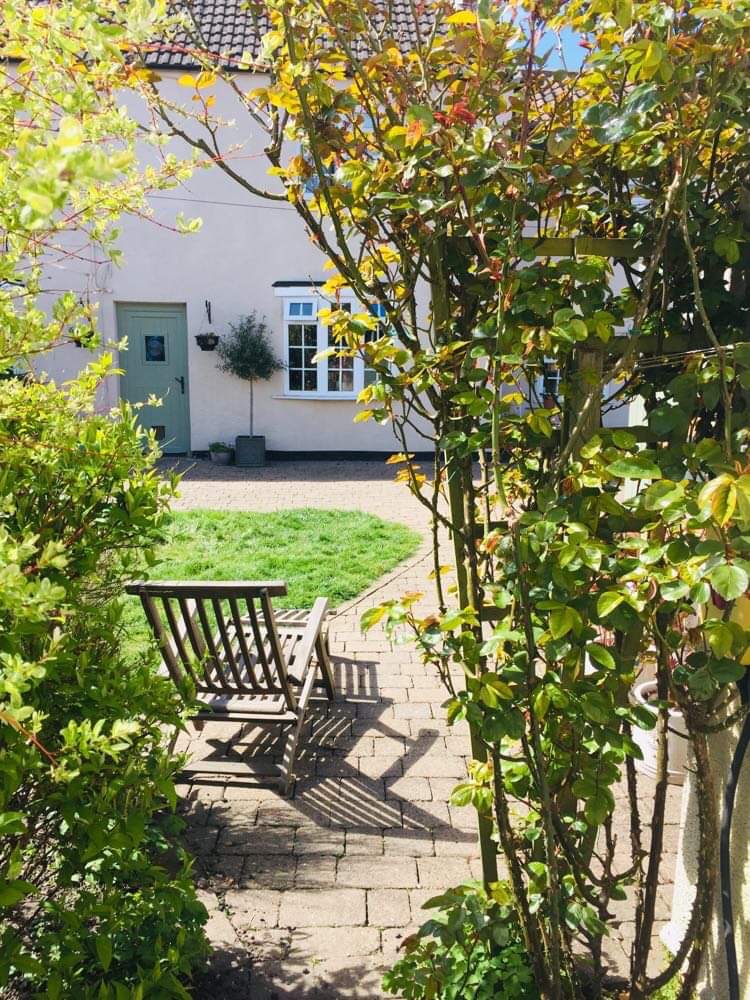
At this time of year I can go out with a cuppa into the garden and I identify the different clumps of leaves, what will become the aquilegias, daffodils, tulips and even foxgloves. Every year they are in the same place in the garden and will bloom at their set time, bringing bursts of scent and beautiful colour into my world. Even when I’m struggling with pain and I can’t walk far, I can get into my garden and enjoy my flowers. The consistency of their blooming brings me so much hope: of warmer days coming, having the doors and windows open, reclining in my garden chair with a good book – usually with a cat or two in my lap. When I did an authentic self workshop this was one of the activities when I felt most like my true self, just being outdoors with my animals and enjoying a good book. Nature is the backdrop to this and is grounding in a way. ‘The natural world unfolds anyway’, Kelly tells us not because it was told it must or should be a certain way. She goes on to talk about the metaphor of the geese, flying freely, following their instincts and but also being part of something bigger. It’s a powerful message, that we have a place in nature and can return to it any time for sustenance and to quieten that constant noise we’re bombarded with.

To listen to your inner self I ask clients to get out a notebook and write down the times in life when they’re at their most comfortable with themselves. ‘When you’re not questioning how to be or whether you’re wearing the right thing. When you feel totally in tune with what you’re doing and in the present moment’. This will be different for everyone but my first list was:

When I’m with my dog walking on the beach or in a forest

When I’m at a concert, caught up with the singing and the crowd

Sitting in the garden with a good book and my cats with me

At the theatre watching a ballet or a compelling play

Watching wildlife

From that I could pick up certain patterns, such as I like quiet or activities where people aren’t expecting conversation. I like solitary activities or being in a crowd that’s in tune with each other. I like to observe more than participate or perform. I find animals and nature soothing. This meant I could lean more towards activities that felt natural rather than activities that made me anxious or feel out of place. I will look back to this poem from time to time and probably use it in sessions, because it does remind us to take time in nature but mainly to stop trying to be what others tell us we should be. Be who you are and love what you love.

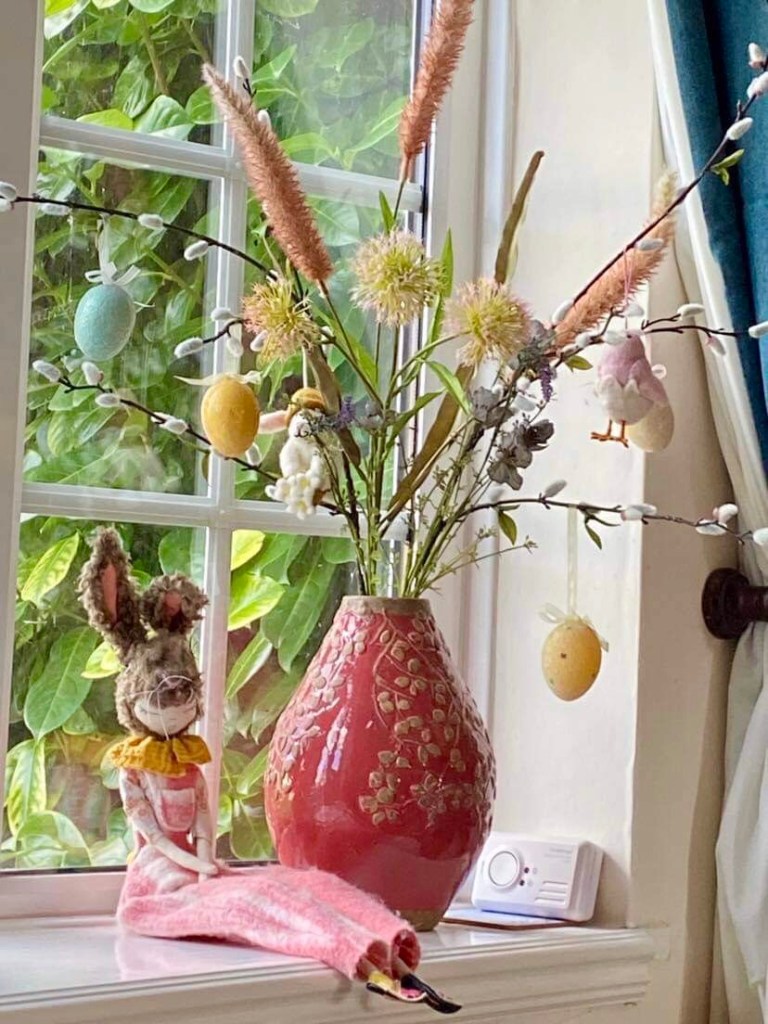
Happy Easter everyone.
Posted in Netgalley, Publisher Proof

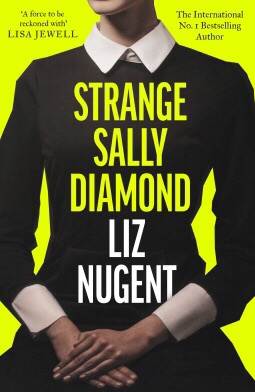
Strange Sally Diamond by Liz Nugent

The first thing I have to say is ‘Wow! What an opening.’ I read the first page then went to find my other half so I could read it to him. He’s one of those people who say ‘just chuck me in a bin bag’ so I thought he’d love it too. Of course it’s horrifying, but I also found it blackly comic and with Irish ancestors myself I can honestly say it’s an Irish trait. We laugh at the story of Mother – my great-grandmother – putting her head in the oven and wondering why it was taking too long. Slowly realising it was an electric oven. Tragic, horrifying, but hilarious at the same time. I felt this all the way through the story of Sally Diamond, a young woman having to negotiate a new life after the death of her incredibly protective father. He was an academic doctor and it turns out Sally was his subject. He leaves Sally letters to read after his death to give her all the information about what to do next. However, Sally can be very literal and by carrying out his verbal wishes to be in a bin bag, it turns out she may have committed a crime. Luckily family friend and GP Angela comes to the rescue, explaining to the police that Sally is ‘different’ she’s been sheltered and her childhood before her adoption was very traumatic. In fact her father left specific instructions in his letters, but as Sally points out he should have labelled the envelope ‘open this as soon as I’ve died’. Sally learns that she was born in terrible circumstances and it’s only chance that saved her. How will Sally cope with the detailed news about her past and how will she integrate into the community and learn how to manage by herself?

I found Sally rather endearing, despite her tendency to ask personal questions and disappearing to play the piano when things get too much. Sally knows that her mother died, in fact she committed suicide after their escape. Sally was born Mary Norton, in a locked extension attached to the home of Connor Geary and his son. Sally’s mother was abducted by Geary and brought back to the specially built annex where he chained her to the radiator. Denise Norton was subjected to all forms of abuse and violence and gave birth to her daughter in captivity. They were only found when a burglar broke into the house and Denise shouted to him ‘I am Denise Norton’ over and over, in the hope he’d tell the authorities. Sally doesn’t remember anything about her earliest years, but when she’s sent a grubby, old teddy in the post she knows instinctively that he’s hers. Sally was adopted by the husband and wife psychologist team who were treating her and her mother after they left hospital. After a short space of time, it became clear that Denise would not recover well and it was decided that in order for her to develop, Mary must be removed from her mother. Tragically, as soon as this happened, Denise committed suicide. Ever since, and with the new name Sally, she has lived an isolated rural life in Ireland. Sally has her quirks: she asks deeply personal questions; she would tear out her hair if upset; she could be extremely violent. As we followed Sally’s journey it started to feel really uplifting and I was so happy for her, finding the ability to live a fuller life would be a real happy ending to the story.

Then the book changes and we’re listening to a boy called Peter from New Zealand, having emigrated from Ireland. I found Peter’s father terrifying, he is a misogynist and incredibly controlling to the extent of telling his son he has a rare disease that means he can’t touch other people. This lie will have terrible consequences, when Peter tries to make connections with others. Slowly a terrifying story emerges about their home in Ireland and the ghost who lived through the wall. Sometimes he’d hear the shrieks and moans from that room. When Peter was left to be looked after by the ghost, something terrible happened and the trauma has stayed with him for life. I felt so moved by Peter’s story, but terrified by what he could become. I felt as if the loss of his friend Rangi that was the turning point. Peter can also be extremely violent and even though he is assailed by guilt afterwards, the damage is done. I hoped and hoped for a point of redemption for him. When his father starts to build a barn and look for another victim he has no choice but to be complicit. If something happened to his father, would he able to come clean and let them victim go? Does he ever wonder about what happened to his mother’s family in Ireland?

I was hoping that these two damaged people would get to meet each other. Both of them need family and a sense of where they’re from, even when the truth is awful to comprehend. The author has such a talent for playing with the reader’s emotions, letting us feel for a character then finding out they’ve done something terrible or making us feel sorry for a character we dislike, because of something they’ve experienced. Her characters are always complicated and flawed, but this was the next level. I loved watching Sally start to thrive with the support of those around her. She uses the money she inherits to renovate a cottage closer to the village. She starts to build relationships with her dad’s sister Aunt Christine and her Uncle Mark too. The high point is a lovely party at Sally’s cottage with a bouncy castle for the kids, which she is even persuaded to try herself. Then a stranger from New Zealand turns up at her door and I was riveted to the story from then on to see how this will affect Sally. Can two damaged people console and support each other, or will they drag each other down? We are about to witness the difference of growing up on opposite sides of the wall. This was a fascinating novel, especially if you love psychological thrillers and studying how someone’s start in life contributes to the person they are. I was also fascinated with the idea that those who heal can also hurt. When your adopted child is also your subject, your academic reputation and possibly even your funding, lines become blurred. I desperately wanted a happy ending for Sally because she’d made so much progress but can so much trauma ever be left behind? The author created a character that I was so emotionally invested in, she will definitely stay with me. She’s so complex and nuanced that she felt completely real to me. The book is incredible and is up there with my top reads of this year, it’s one of those that will keep coming back to me until eventually I grab it from the shelf and read it again.

Meet the Author

Liz was born in Dublin in 1967, where she now lives. She has written successfully for soap opera, radio drama, television plays, short stories and animation for children.

Liz’s first novel Unravelling Oliver was published to critical and popular acclaim in March 2014. It quickly became a firm favourite with book clubs and reader’s groups. In November of that year, it went on to win the Ireland AM Crime Novel of the Year at the Bord Gais Energy Book Awards and was long listed for the International Dublin Literature Prize 2016. She was also the winner of the inaugural Jack Harte Bursary provided by the Irish Writers Centre and the Tyrone Guthrie Centre in Dec 2014. Her second novel, Lying in Wait, was published in July 2016 and went straight to number 1 where it remained for seven weeks. Liz won the Monaco Bursary from the Ireland Funds and was Writer in Residence at the Princess Grace Irish Library in Monaco in Sept/Oct 2016. In Nov 2016, Lying in Wait won the prestigious RTE Ryan Tubridy Listener’s Choice prize at the Irish Book Awards.

Aside from writing, Liz has led workshops in writing drama for broadcast, she has produced and managed literary salons and curated literary strands of Arts Festivals. She regularly does public interviews and panel discussions on all aspects of her writing.

Posted in Netgalley

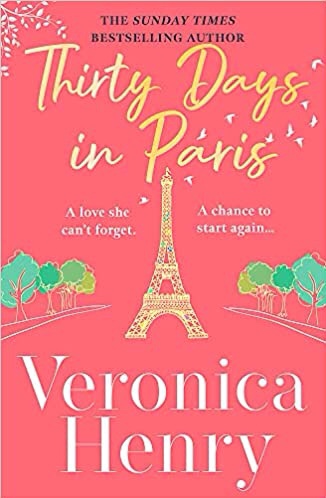
Thirty Days in Paris by Veronica Henry.

Because Paris is always a good idea…

Years ago, Juliet left a little piece of her heart in Paris – and now, separated from her husband and with her children flying the nest, it’s time to get it back! So she puts on her best red lipstick, books a cosy attic apartment near Notre-Dame and takes the next train out of London.

Arriving at the Gare du Nord, the memories come flooding back: bustling street cafés, cheap wine in candlelit bars and a handsome boy with glittering eyes. But Juliet has also been keeping a secret for over two decades – and she begins to realise it’s impossible to move forwards without first looking back.

Something tells her that the next thirty days might just change everything…

I hadn’t read any of Veronica Henry’s novels until I did a blog tour for her novel The Impulse Purchase. I found it delightfully escapist and optimistic while exploring female relationships, especially familial ones, in an interesting way. In her new novel we’re more focused on one woman; Juliet is a middle-aged, ghost-writer who’s at a huge crossroads in life. She and her husband have taken the very brave decision to separate as their last child leaves home for university. Most of their friends think they’re crazy, because the couple still get along, they’re probably the best of friends in fact. However, they feel they’ve drifted into two different paths. As her husband has embraced all things cycling – including the Lycra and the diet – Juliet isn’t enamoured and would rather curl up with a good book or go to the theatre. They’ve each become comfortable in their own routines and as the time to sell their large family home has come around, they can’t see the point of trying to meld their differing lifestyles into another joint home. So each will take half of the house sale and do their own thing and Juliet would like to take a trip into her past. Years ago, when she was still a teenager, Juliet went to work as an au pair in Paris, but returned in shame and sadness only a few month later. She has rented an apartment for a month to reacquaint herself with the city and spend some time writing her own story. However, revisiting the past is never easy and Juliet finds there are experiences she still needs to process and come to terms with.

I found reading this book a little lie watching Sex and the City or perhaps more aptly, Emily in Paris which I binge-watched over the Christmas period. Everything about Juliet’s time in Paris is simply gorgeous from the description of the patisseries near her apartment, to the clothes worn by her friend ….. and the work Juliet starts on her book project. Thanks to the two series mentioned, along with a teenage diet of Judith Krantz novels, I find Paris ridiculously romantic and imagine it full of quirky shops, artists, vintage bookshops and incredibly elegant women. Every walk she takes I was imagining the decorative shop windows, acres of pastel coloured macarons and fairy lit trees, not to mention the incredible bridges, cathedrals and art galleries. I’m also a sucker for transformation shows like the old Gok Wan and those wedding shows where people choose their dress and I also had that vibe too. This might seem like I’m making the book sound trivial or all about appearances, but it’s far from that. This isn’t just about visual transformation. The author takes what can be a difficult period in a woman’s life: empty nest syndrome; menopause; relationship breakdown and that sense of having lost who you are. Veronica Henry takes us into that process of grieving and growth and I kept reading in the hope Juliet would come to that place of finding herself – the person she is now and the way she wants the rest of her life to be. Before she can do that she needs to face what happened all those years ago when she was such a young girl and just starting out in life.

I really felt for the younger Juliet and these sections leapt off the page. I loved how brave she was in leaving her cozy home and family to do something completely different. That sense of being a fish out of water really comes across as she tries to settle into the apartment of the French family she’ll be living with. Her French is minimal and I could feel the nerves as she tries to fit in, especially when the children’s mother is quite volatile and erratic in mood. However, the father seems kind and tries to make Juliet feel at home by taking her out for Sunday lunch with the children. Juliet comes across as a kind young girl, good with the children and concerned about their mother whose moods fluctuate between treating Juliet like a little sister and angry, tearful outbursts. I warmed to Juliet because she doesn’t become angry or resentful, but is worried that her employer is struggling as a working mum of three children and perhaps needs extra support. I had concerns about the way the children’s father acted around Juliet early on and couldn’t decide whether he was trying to make her feel like family, or whether the late nights, sharing a bottle of wine, might lead to more. Juliet’s affections are completely engaged by Luke as soon as they meet. Her friend calls it a ‘coup de foudre’ or love at first sight and it does seem to be an immediate connection, as if their souls know each other before they even speak the same language. In the present day sections, Juliet hints at a disastrous ending to her time in Paris and a separation from Luke that leaves unfinished business. I wondered whether she would feel the urge to reconnect and explain what happened all those years before.

If you’re looking for an enjoyable, escapist read this winter/spring then this is definitely the book for you. Juliet is interesting and her earlier years in Paris really help us understand her character’s choices later on. I wondered how much her stable, but safe, marriage was a response to these early romantic mistakes and terrible heartbreak. I would say that her return to Paris, especially her rekindled friendship with Nathalie, brings out her spontaneous and playful side. Nathalie takes risks, from visiting less salubrious parts of the city, to accepting random invitations and wearing some quirky outfits. Their friendship picks up where they left off and I would definitely be the demographic buying Nathalie’s memoir and cookbook. I loved the way Juliet tackled what happened in the past and it showed the difference in attitudes between then and now; where once Juliet took on a lot of the blame, she can now see other people’s part in what happened and how they took advantage of her naivety. While I wasn’t necessarily rooting for a romantic ending to the story I was rooting for Juliet to build a totally new life for herself where she’s with the people who inspire her. I enjoyed the ending and felt it worked well for the character, especially when a call from home dangles her old safe life in front of her. I wanted her to continue growing and trying new things, because just reading about it felt like taking a holiday.

Meet The Author

I was so interested in reading Veronica’s author section on Amazon because it’s so personal. So I’ve reproduced part of it below.

‘People often ask me what kind of books I write and it’s a very difficult question to answer in one sentence. Primarily, I love to take my readers somewhere they might like to be, whether a gorgeous house in the countryside or on a seaside clifftop. There, my characters go through the trials and tribulation of everyday life, embroiled in situations and dilemmas we can all relate to. Love is at the heart of it, but all kinds of love, not just romantic: the love of friends and family, or a place, or a passion for what you enjoy (food, wine and books, in my case . . .)

I have a background in writing television drama (Heartbeat, Holby City) so that has been an influence – creating lots of characters whose lives impact on each other. Working on The Archers I was taught ‘Make ’em laugh; make ’em cry; but above all, make ’em wait’!

I hope my books are beautifully written, uplifting and a little bit escapist. I’d love to know what you think, so do leave a review. Or you can contact me via Twitter @veronica_henry, or on Facebook or Instagram @veronicahenryauthor

A little bit about me: I live by the sea and head to the beach every day with my dog Zelda. I love cooking and discovering new restaurants on city breaks, with a bit of yoga to offset the calories – and I’ve just bought an e-bike. My biggest writing influences are HE Bates, Nancy Mitford, Jilly Cooper and any book that has a big rambling house and an eccentric family.’ From http://www.amazon.co.uk

Posted in Random Things Tours

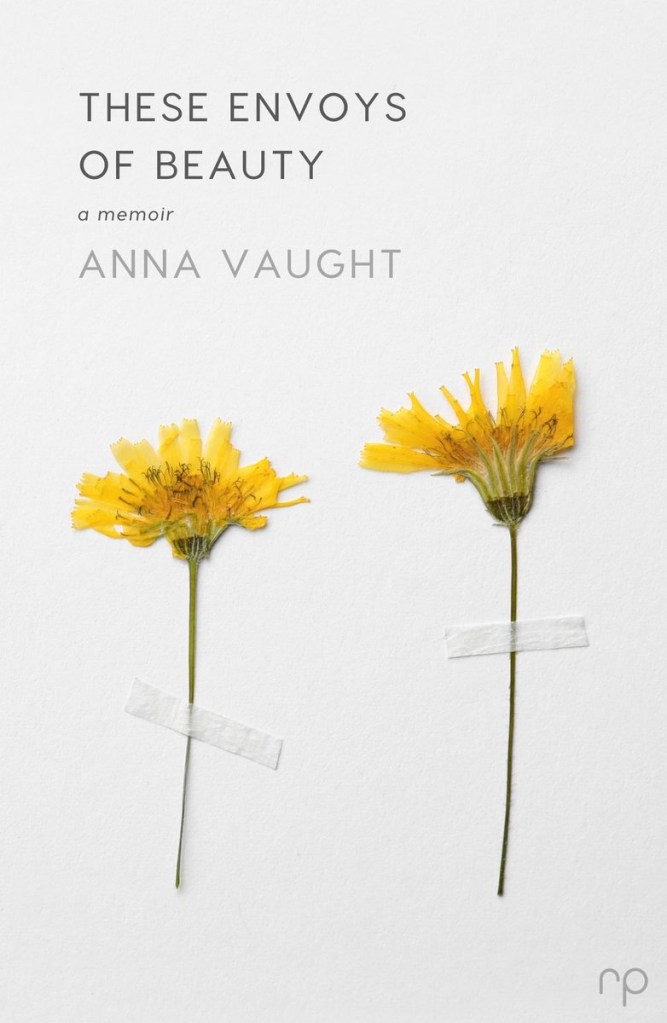
These Envoys of Beauty by Anna Vaught

It was only yesterday on the blog that I was welcoming spring by talking about a book of poetry aimed at helping people with their mental health. Nature was one of the main ways we could boost our well-being, so it seems very fitting that I was also reading this beautiful memoir by Anna Vaught where she shares her very personal mental health journey and how nature became her best coping mechanism from a very young age. The book is made up of a series of essays, each one beginning with a quote from Ralph Waldo Emerson’s Nature including the book’s title.

If the stars should appear one night in a thousand years, how would men believe and adore; and preserve for many generations the remembrance of the city of God which had been shown! But every night come out these envoys of beauty and light the universe with their admonishing smile.

Ralph Waldo Emerson. From Nature, Chapter One.

His words bring a sense of wonder to the natural world, and if kept and nurtured, that sense of almost childlike wonder is an amazing antidote to the hurried and stressful way of life we now have. In fact if we still have that ability to stop and be with the natural world around us, it becomes a time out of time. We come out of those moments and back to reality amazed at how much time has passed and how everything else in life receded and allowed us that enjoyment. As some of my bookish friends know, I have recently been struggling with my mood due to the frustration of having a multiple sclerosis relapse. While I am in pain and battling fatigue, my very busy brain is desperate to carry on writing my book. Basically my body can’t keep up with the breadth of my imagination and the desire to put it down on paper. Yesterday, we drove to our local farm shop and on the way home we passed a field that’s had a winter crop harvested and is only just growing a short covering of grass. From a distance away I suddenly saw two young hares – my favourite animal – chasing each other, weaving and winding around each other at speed then every so often stopping to stand on their hind legs and attempt to box. We pulled over and for a short while we lost ourselves watching these mystical creatures performing the rituals of their ancestors. My partner commented on how my face lit up while watching them, possibly because one of my earliest memories involves a leveret found by my dad that I was able to hold in my palm. I remember the softness of it’s fur, the cartilage of it’s ears and the way the light shone through the pink inside of the ear to show blood vessels coursing their way through.

Like Anna Vaught’s family we were rural working class, with my father either a farm labour or working in land drainage – a very important role in Lincolnshire where the 14th Century system of dykes designed by Vermuyden still keeps the county’s land drained for farming. As children, my brother and I would leave the house in the morning and not return till late afternoon. Vaught’s description of her childhood reminded me of those days where we would lie and read in trees, suck the nectar from sweet nettle flowers and watch the wildlife. I was obsessed with the Country Diary of an Edwardian Lady, so while my brother was fishing I’d do botanical sketches of foxgloves, campions and cow parsley. These countryside hours feel idyllic, but the truth was my mum struggled with untreated depression till I was a teenager. Since then my brother and I have both had our own bouts of depression, but thanks to better treatments and to my training in mental health I had the skills to know what was happening and ask for help. I have also developed my own toolbox for days when my mental health and physical health are having a battle with each other. Like the author, spending time in nature is definitely a large part of that. I truly bonded with this incredible, honest and moving book and was profoundly moved by the author’s decision to share her more painful life experiences. This is partly why my response is also very personal.

The author bases each chapter on a plan, such as Rosebay Willowherb or lichen and moss. She writes about the wonder of each living thing, but it’s also a kicking off point for her own memories and feelings at the time. She writes a deeply moving section in the first chapter where she admits that she was reciting the Latin names of plants in her head to calm herself and try to get to sleep. She told many different adults – the dinner lady, the teacher, the vicar – that she felt compelled to say them out loud ‘so as not to make the dreadful thing happen’ possibly the emergence of OCD. These little glimpses of the child Anna show how lost and unsafe she felt with her parents:

If, as a child you are surrounded by a sort of passionate morbidity, by a frightening psychiatric incident in the family – which is frightening because it is spoken of behind closed doors and euphemism – it may be that you need to latch on to things around you which provide stability and reassurance. Much of this was in the natural world for me.

P26

Vaught is open, raw and deeply moving in the sections where she writes about her childhood experience and it is worth mentioning that the book contains childhood mental illness, emotional abuse, suicide, depression and anxiety. She places her own warning for these subjects at the beginning of the book so I felt they were worth mentioning here. It is emotionally devastating to read someone crying out for help, but receiving nothing from the people expected to care for her most. She describes feeling dissociated, cut off from the world and the people in it as if she was living behind a sheet of glass. She writes quite bluntly that her parents did not talk about it or try to help her. Her mother’s view was the depressed people were indulging themselves. Teenage moods and PMS were imaginary and people who professed to be mentally I’ll had ‘failed to control themselves.’ I felt this in my core. To be so dismissed and gaslighted to this extent in your own family must be devastating to self – esteem and leaves you questioning and testing yourself permanently. She writes that she felt, not just unwanted, but a malevolent creature that might easily do someone harm, an idea that meant making friends and keeping relationships with extended family was quite difficult. It was also instilled in her that it wasn’t just her mum, that other family members and visiting friends had notice she was different too. Her father was distant, but when she was allowed to go out with him she felt chosen and would chatter away to him, probably making up for lost time, until he would snap and tell her to be quiet. On one occasion telling her that they preferred to spend their time with their ‘Number One Son because he listens and likes to be with us, and he never says a word. And you should know you are here under sufferance.’ How crushing must it have been to hear that, especially with her mother so angry with her, something she can only say now after years of therapy.

However, this is far from a misery memoir. I would say it is a story of resilience, of finding the things that boost it and removing from your life those things that crush your spirit. She provides possible mindful exercises that might calm and lists the places she finds most inspiring to visit and experience nature. She signposts the reader to other books that might give you coping mechanisms, while being mindful there is no one size fits all approach because we are all very different. One thing that caught my eye was something I have taught to my groups with chronic ill health and pain; that even in the depths of depression we must be mindful without our bodies and our emotions. We must observe how depression is making us feel both physically and emotionally. What is it about the weeks leading up to this bout of illness that you notice? Were you under stress at work? Were there financial pressures? Were you worried about someone else in your life? Then also make notes on what you did during the worst weeks that made you feel okay? Which strategies brought calm when your mind was spiralling with anxiety? Which people were the best to have around and vice versa? So in this way, a bout of depression or mental ill health has taught us something – what are the best ways to live that might help boost our resilience in the future? As with illnesses like MS, M.E. and various types of chronic pain, stress does worsen symptoms. Using these personal strategies may not totally remove the mental or physical ill health, in fact we may live our lives in seasons ( I always know I will have a short relapse in spring and another in the autumn) but we can be resilient, we can keep in mind that despite being in the depths of winter we can always come out the other side. This is one of the main lessons that the author has always taken from nature, it’s ability to heal itself and come back in the spring. We have faith that at this time of year, plants will start pushing through and now the hellebores and snowdrops of late winter are giving way to tulips, daffodils and bluebells. We plant our brown, unpromising bulbs in the late autumn into cold soil with complete faith they will push through and bring us joy, just when the winter has seemed so long.

If you can cope with the internal winter of depression then depression can be your friend’.

P 117

Not that we would wish depression on anyone, but that it can be a learning experience. It can teach us how to manage the next time it recurs and realise that even a life with limits has richness. This is something I’ve taken on board while reading and it started me off writing a short journal piece about what my bouts of MS can teach me and again it’s resilience. That just as it’s sure to happen again, I can also be sure that it will pass. I can use it to rest, to read and scribble notes, perhaps even to read solely for pleasure. My relapses are simply my body’s winter. To finish I loved her reference to Wilson A. Bentley who lived in Vermont and gave a great deal of his life to studying snowflakes, a natural phenomenon that’s so transient, simply melting away as though it never existed. Bentley felt they were a reminder of how transient earthly beauty can be, but that rather than rendering his study of them pointless, it made it more special because:

‘In the ephemeral nature of phenomena, however, he also found comfort, because while the beauty of the snow was evanescent, like the seasons or the stars he saw in the evening sky, it would fade but always come again.’

Introduction, The Envoys of Beauty.

Meet the Author.

Anna Vaught is an English teacher, mentor and author of several books, including 2020’s Saving Lucia. She has also written a short story collection, Famished. She is currently a columnist for MsLexia and has written regularly for The Bookseller. Anna’s second short fiction collection Ravished was published by Reflex Press in 2022 and 2023 will see five books including this one published across Europe. She volunteers with young people and is founder of the Curae prize for writer-carers and edits it’s journal. She works alongside chronic illness and is a passionate campaigner for mental health provision. Anna is published by Reflex Press and is currently working on another novel.

Posted in Writing Therapy

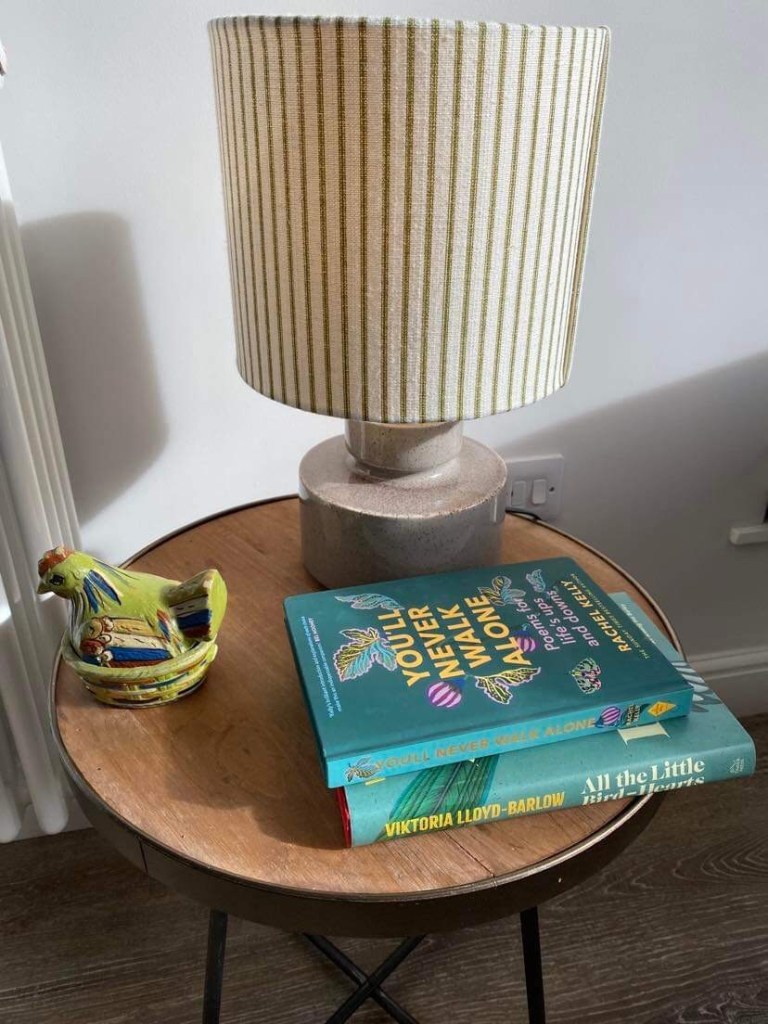
Springtime: You’ll Never Walk Alone – Poems For Life’s Ups and Downs by Rachel Kelly.

When I was offered this book of poetry to review I wanted to do more than just a basic review. This is the sort of book I would use when working with clients and the collection has been gathered with writing therapy in mind. For me spring is the perfect time to start working with clients, because it’s naturally a time of growth and change. It’s a much more natural time to make life changes or start to challenge ourselves rather than the dead of winter. Our moods tend to lift and we want to be outside enjoying the milder weather. So over the next few Sundays I’m going to use this book to show how I work with clients and some exercises you might want to try. Firstly, I’m going to write about how I felt about the collection and how it’s been framed by the editor and then look at how we respond to poetry.

Review

This is a fantastic collection of poetry, cleverly sectioned into seasons and the emotions those seasons might inspire in us. Alongside her chosen poems are illustrations and a thoughtful reflection on how each poem has come to mean so much both to the author and to years of readers. As Kelly starts off in her introduction, ‘words can be a way to make sense of our feelings’ and I would definitely back that up from the writing workshops I’ve held. Even when we can’t find our own words, reading someone else’s can light a spark of recognition in us. Not only does it help identify feelings, it shows us that someone else has felt how we do, We are not alone. This is where this book excels, it’s a companion. It would be a great bedside table book, then if we wake in the night feeling sad or anxious we can flick through and find someone who expresses exactly how we’re feeling. It’s good to keep a notebook to hand as well, to jot down your responses. The book also excels in the way it’s laid out, split into seasons of the year. There are specific emotions that we attach to the seasons and with it being early spring I noted how hopeful spring poems are. They signify beginnings, new growth, the banishing of winter and hopefulness. As growth appears in the garden, we hear the new dawn chorus or smell a hyacinth, it can’t fail to raise our spirits. So the seasons in the book can follow the emotional seasons we experience – for example, we can sink into hibernation when feeling low or depressed. The poetry chosen really does suit it’s season well. As a writing therapist I can see how I could use this book when designing short courses on identifying feelings, beginnings and endings, how to use poetry to boost your well-being and so much more. As a reader I think it’s a great collection, beautifully illustrated and a fantastic bedside book to dip in and out of from time to time when you need support.

Response To Poetry

One of the most astonishing things about working with words is that the simplest things work. I sometimes felt, early on in my practice, that I wasn’t writing nearly enough for a session. With experience I learned that just doing a couple of exercises – a check-in, warm up write, then a longer piece – is more than enough. You have to factor in feedback time and sometimes that can take longer than the writing itself. It’s vitally important, because not only does it help the participants process what they’ve written, it bonds the group together and lets that person feel safe and listened too. Putting something down on paper then sharing it aloud is a double process where we get to see it in black and white, then say it, releasing it into the world instead of keeping it hidden inside. Either or both can unleash incredible and unexpected emotions.

Responses to poetry are a simple and powerful way for a group to get to know each other and share where we are in our life journey. Spring poems are great for this opening moment because spring is a season full of the things we might identify with – beginnings, trepidation, light, promise, hope and relief. We might be putting down a heavy burden, perhaps for the first time, so we feel lighter, we’re letting sunshine in and we’re trusting things might get better. We might be skeptical, stunned by the sherbet lemon yellow in a clump of unexpected daffodils, yet reminding ourselves there might be frosts to come. It also sounds so easy doesn’t it? So we write down how we feel and miraculously feel better? The answer is yes, it’s a process of course, but I’ve never had a participant feel substantially worse.

So, the idea is to pick up an anthology of poetry like this one or search online for poems about spring, then simply flick through until something grabs your attention. Read it through a few times then make some notes. Ask yourself a few questions about the poem, here are a few ideas:

Note down any words or phrases that jump out at you. Is it the meaning of the words or their sound that grab you? What images jump out in your head? Does the poem conjure up pictures of people or particular memories and what’s their significance? Do any words lift your spirit and which ones? What meanings come to mind for the poem’s imagery or for the poem as a whole?

I did this for my favourite poem that evokes spring and is included in Rachel Kelly’s collection. Emily Dickinson’s ‘Hope is the thing with feathers’ is so meaningful to me that I had it turned into a decal for my bedroom wall. It was the first thing I saw when I woke up in the morning, alongside some carved wooden wings.

Hope is the thing with feathers/ that perches in the soul/ and sings the tune without the words/ and never stops at all.

This is so meaningful to me because when I first moved into the house I’d gone through the hardest years of my life. My husband had died from complications due to multiple sclerosis. A while later I’d met up with someone I’d known a long time before, when I was a teenager. We had a whirlwind relationship and married about two years after my husband died. What followed was two years of confusion, emotional pain, self-loathing and feeling like I was going mad. It took two different periods of counselling and re-education to realise I’d married an abuser. Someone who enjoyed dragging women down, eroding their confidence and telling them something was wrong with them. It took a terrible betrayal for me to leave, because if I’d stayed he would have succeeded in taking me away from my closest family members. I have no doubt the abuse would have worsened had I stayed. So I started a period of self- healing and it was hard, because I had a distorted sense of who I was, how I looked and my own worth. I thought that waking up to that poem every morning would help, would lift my mood and give me that grain of hope. It gave me that lift in mood, experienced when we hear the dawn chorus in spring. I also felt held safely by the promise that the bird’s song will never stop. That even when I was depleted and depressed, the bird would keep singing for me. Hope will always come, just like spring always follows winter. I have a tattoo on my back of a birdcage with an open door and the bird flying off into the distance. It represents this time too and my eventual ability to fly and sing for myself.

Meet The Author


Rachel Kelly began her career as a journalist at The Times. She is the author of four books covering her experience of depression, recovery and her steps to wellbeing. Rachel writes for the press, gives interviews and public talks sharing her motivational and holistic approach to good mental health. Her memoir ‘Black Rainbow: How words healed me: my journey through depression’ (Hodder & Stoughton, 2014) on the healing power of the written word was a Sunday Times bestseller and won the Best First Book prize at the Spear’s Book Awards. All author proceeds from the book were donated to mental health charities – Rachel is an ambassador for SANE, Rethink and The Counselling Foundation and campaigns to reduce the stigma surrounding mental illness. ‘Black Rainbow’ is published in Sweden and the USA and in 2020 it will be published by Larousse in France. She has also written about the holistic approach which helped her recover – her second book, ‘Walking on Sunshine: 52 Small Steps to Happiness’ (Short Books, 2015) is an international bestseller and has been published in Canada, Croatia, Germany, Poland, Turkey, the USA, Korea and China. In 2016, Rachel co-wrote ‘The Happy Kitchen: Good Mood Food’ (Short Books, 2017) with the nutritionist Alice Mackintosh, a happiness-focused cookbook which offers over sixty recipes that promote mental wellbeing. ‘The Happy Kitchen’ has been published in the USA and Canada. Her latest publication is titled ‘Singing in the Rain: An inspirational workbook – 52 Practical Steps to Happiness’ published by Short Books in January 2019. 

Follow Rachel on Twitter @RachelKellyNet or visit http://www.rachel-kelly.net.

Posted in Personal Purchase

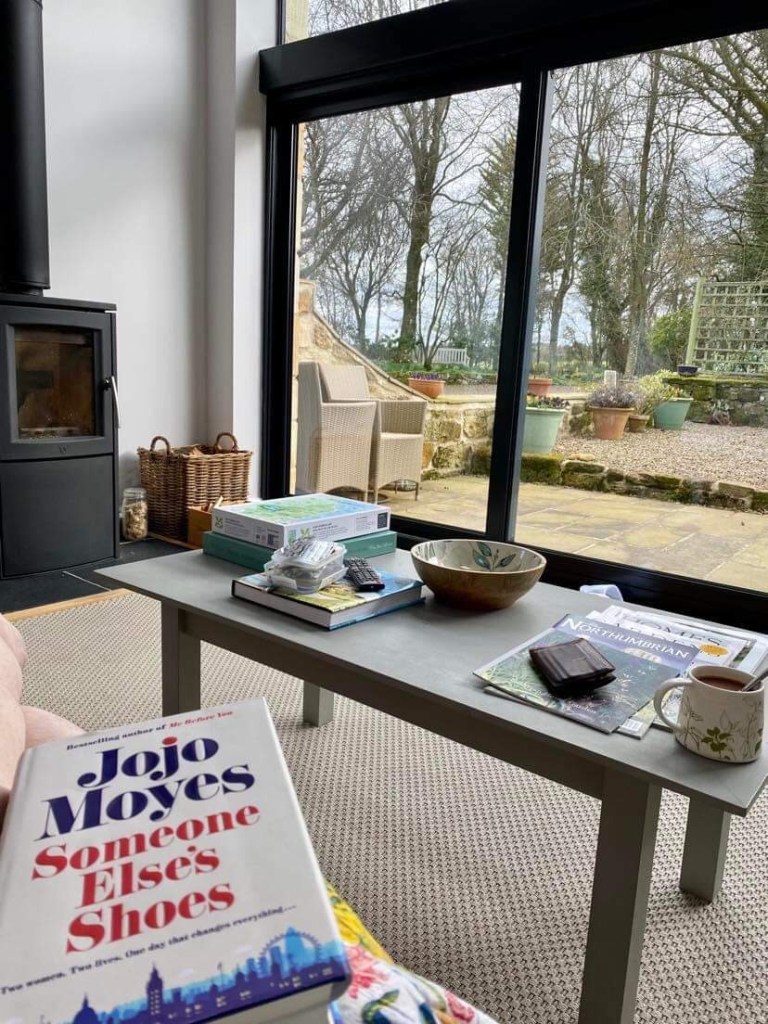
Someone Else’s Shoes by Jojo Moyes.

MEET SAM
She’s not got much, but she’s grateful for what she has: a job she’s just about clinging on to and a family who depend on her for everything. She knows she’s one bad day away from losing it all – and just hopes today isn’t it . . .

MEET NISHA
She’s got everything she always dreamed of – and more: a phenomenally rich husband; an international lifestyle; and . . . she’s just been locked out of all of it after her husband initiates divorce proceedings . . .

Sam and Nisha should never have crossed paths. But after a bag mix-up at the gym, their lives become intertwined – even as they spiral out of control.

Each blames the other as they feel increasingly invisible, forgotten, lost – and desperately alone.

But they’re not.

No woman is an island. Look around. Family. Friends. Strangers.
Even the woman you believe just ruined your life might turn out to be your best friend.
Because together you can do anything – like take back what is yours . . .

When Sam and Nisha swap bags accidentally at the gym, one a Marc Jacobs knock-off, the other is the real deal, they are in very different places in life. Nish is living in the penthouse suite of the Bentley Hotel, even though her husband Carl owns several homes around the world. She is living the high life and has for the past eighteen years. She’s used to the best service and the bespoke experience, as Sam finds out when she opens the bag before a business meeting to find a pair of red Christian Louboutin heels instead of her trusty black pumps. Destined for a business meeting where she can’t turn up bare foot, Sam has to take the plunge and put them on. They’re the sort of shoes that get a woman noticed, not always for the right reasons. Sam is so easy to get to know and love, because if you’re a middle aged woman you’ve probably been there. She’s feeling the squeeze of still having a teenage daughter at home, while taking on the shopping and cleaning for her parents too. Husband Phil has been no further than the sofa for months, he lost his job and then his dad died. Since then Phil’s been suffering with depression, but won’t go for counselling or go to the GP for medication. He’s not touched the camper van he bought with the last of their savings and can’t even get up to let their geriatric dog Kevin out. Sam is greeted by dog mess in the hallway and a tired husband who immediately goes off to bed on her return. Yet this day feels different. When Sam notices clients looking at her shoes, they make her feel powerful. At the end of the day she’s made three out of four deals for the printing company, but will that appease new boss Simon who seems to have made a beeline for the only 40+ woman in the office?

Nisha is also facing massive changes since the bag swap. On her return to the hotel she is told that Carl has given orders to his security not to let her in. He’s locked her out of the penthouse, their bank accounts and his line of credit at the hotel. All she has is Sam’s bag and the clothes she’s standing up in. Left penniless and homeless after eighteen years, Nisha is mourning the loss of her life and the fact she can’t call her son in New York to let him know. Ray is in a mental health unit and usually they speak every day. Hoping to gain access to the penthouse and all of her clothes, Nisha dresses like one of the housekeeping staff but is mistaken for the real deal by Jasmine, a senior housekeeper who rushes Nisha through checks and has her working alongside her in minutes. Nish can’t believe she’s fallen from the penthouse, to scrubbing poo marks off a toilet bowl. However, she needs something to pay for the cheap B and B she’s found. All the time she’s scrubbing, she’s assessing her eighteen year marriage and realising she’s come out of it with no friends, no family and not a single person she can call for help. After a disastrous attempt to get her clothes, Jasmine stands up for her and fixes the issue. Once Nish has come clean, Jasmine becomes her guardian angel and takes her home to the little flat she shares with daughter Grace that’s covered with laundry and clothing needing alterations – Jasmine’s second job. When she finally gets to confront Carl she’s baffled by his position; there will be no financial settlement until she has the red Louboutins back. Nisha has no idea how to find them, but is determined try as it is the only way she can be reunited with her beloved son.

There is a little touch of romance in the novel, which was a lovely thread, but I loved the sense of sisterhood in the novel most, particularly those who come to learn the importance of the women in their lives. Nisha needs to learn about female friendship, having had only one friend in NYC who Carl persuaded her to give up. She’s stunned that Jasmine would help her and the depths of her generosity in giving her a job, a bed and a roof over her head. This flat that Jasmine shares with her daughter Grace is not large and what space they do have is often covered with clothes that she’s either laundering or altering. It’s amazing to Nish that someone who has so little, is prepared to share it. When Sam and her friend Andrea come along, the last thing Nish expected was to like her, but she’s also impressed with the way Sam lives. She notices that Sam’s home is a huge contrast to the way she’s been living. Having several homes and living in a hotel is impersonal. While she wouldn’t want Sam’s decor, she can see it’s a celebration of her family and their life together. This is something Nish has never had. She’s stayed in some of the most expensive places in the world, but has never had a home. Could this group of women become that for her? I loved how they all embraced each other and the times that they were all together simply leapt off the page. These are complex, funny and generous women who felt completely real and made me miss my women. I’m out of the habit of socialising after shielding during lockdown and I miss that camaraderie, swapping wisdom and having a laugh. It has inspired me to reach out to my friends and try to see them a bit more, because when it comes to those tough parts of life, it’s your women who hold you up and see you through.

Meet the Author

Jojo Moyes is a novelist and screenwriter. Her books include the bestsellers Me Before You, After You and Still Me, The One Plus One, The Giver of Stars, the forthcoming Someone Else’s Shoes and her short story collection Paris for One and Other Stories. Jojo’s novels have beentranslated into forty-six languages, have hit the number one spot in twelve countries and have sold fifty-one million copies worldwide. Me Before You has now sold over fifteen million copies worldwide and was adapted into a major film starring Sam Claflin and Emilia Clarke. Jojo lives in London.

Posted in Netgalley

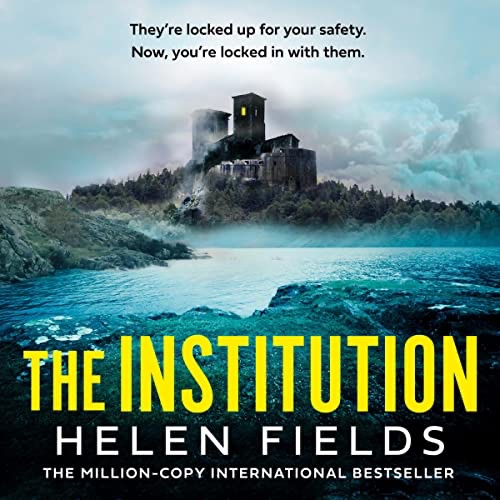
The Institution by Helen Fields.

I was eager to read this having loved her previous novel The Last Girl To Die, so I’ve felt very lucky to be granted early access to it on NetGalley. Our heroine is Dr. Connie Woolwine, a behaviourist and profiler rather than a psychiatrist, she works privately alongside her investigator Brodie. She has access to The Institution to look for a killer within the high security wing. Housed in one of the towers, the wing is known as ‘heaven’ and has six inmates, all of whom are either serial or spree killers. Her cover story is an unusual one. Brodie will go deep undercover as a potential inmate, with Connie as his current therapist. Brodie has been in the millitary and suffers from PTSD amongst other issues, so Connie is there to assess the ward, meet the inmates and decide whether it’s the best place for Brodie to be treated. The truth is a lot more gruesome. A nurse from the ward has been found dead on one of it’s treatment rooms. Tara was restrained and had a rudimentary caesarean performed on her, but was then left to bleed to death. The baby has not been found and the killer could only have been on the unit. With a grieving family waiting for a ransom demand, staff and inmates at the unit have been given a different story about this well-liked member of staff. They are told that Tara will be resting at home for the final stages of her pregnancy. Now Connie is on the clock, desperately trying to find baby Aurora and which one of the killers could have murdered the ward’s most popular nurse in such a brutal way.

Connie seems maverick, with strange methods such as talking to, sniffing and touching Tara’s body. She’s an unusual narrator because I didn’t always feel sure of her. We find out that when she was a young woman she was admitted to a mental health unit after an accident left her mute and doctors couldn’t find a physical cause. She was given ECT and treated by psychiatrists until a new doctor decided to re-scan her brain and found a previously hidden blood clot. Once removed, Connie could speak again. This experience has left it’s mark and it seems very important to her, even when self-disclosing to a patient, that they know she wasn’t really mentally unwell. We’re mainly in Connie’s world with interspersed short chapters on an assessment session, each subject’s name as the title. These sections read like session notes and give us Connie’s views of each inmate. Rubio for example, acts like a baby and wants to be cuddled and nursed. He gave me the creeps, especially when he’s wearing a nappy. The Professor is more on Connie’s level intellectually, but acts very superior. I didn’t feel that the sessions were helping me understand who might have done this. In fact I think I learned more about Connie than the patients. In the meantime, poor Brodie is living with these inmates and has gone through being sedated and restrained by staff. The staff are incredibly suspicious, with orderlies who enjoy their power too much, nurses who seem to resent Connie’s presence and a male doctor who makes a pass at her almost immediately. I kept wondering who would choose to work here, in such a dangerous and bleak place?

I felt it was clever to keep the reader questioning Connie and it wasn’t just her inner world that worried me. There were points in the story where her instincts really concerned me, such as going off alone to very remote places in the building and on the grounds. There was also a major flaw in the plan, in that her investigator is so confined by his role as a patient he can only observe. This really does leave Connie to take on the more dangerous part of physically investigating, but as she’s untrained for this role and potentially more easily overpowered, it left me feeling on edge. Also someone who is thinking ahead of her could use her seemingly erratic behaviour and appearance to make her worst fears comes true. The tension is unrelenting and nowhere is safe, including rooms that have a lock! The claustrophobia is intense and works like a set of Chinese boxes: from the location and the effects of the storm, the compound, the locked building, the high security tower within the whole institution, all the way down to the treatment room and it’s restraints. These layers of confinement did make me uncomfortable and when a character is further confined with drugs or the threat of ECT, it brings it home how powerless patients and the murder victim were. These layers also emphasise the brutality about drugging someone and stealing a baby from the ultimate place of safety, their mother’s womb.

There is a strange fascination in hearing about the inmate’s crimes, mainly because they seem so at odds with the men we encounter through Connie. Her sessions feel slightly strange from a therapy perspective, but of course Connie is not really there to engage in a therapeutic relationship. Unknown to them and the staff, she’s using the session to assess whether they’re behind the crime and I was interested in the ethics of this approach. As disaster strikes and the ward has to be evacuated, the tension jumps up a level with men who are usually in their cells now roaming free. For those left on the ward it becomes a fight for survival, with only a basic knowledge of the inmates to inform them about which ones can be trusted and those who must be avoided. This was an exciting end to the novel and really did keep me gripped to the bitter end, waiting for the perpetrator to admit their role in the murder and kidnap plot. I was biting my nails, worried that Connie wouldn’t find baby Aurora before it was too late. This was an intelligent thriller, full of tension and unexpected twists and turns. It’s cemented my suspicion that Helen Fields really is a must-buy author.

Meet the Author

An international and Amazon #1 best-selling author, Helen is a former criminal and family law barrister. Every book in the Callanach series has claimed an Amazon #1 bestseller flag. ‘Perfect Kill’ was longlisted for the Crime Writers Association Ian Fleming Steel Dagger in 2020, and others have been longlisted for the McIlvanney Prize, Scottish crime novel of the year. Helen also writes as HS Chandler, and has released legal thriller ‘Degrees of Guilt’. In 2020 Perfect Remains was shortlisted for the Bronze Bat, Dutch debut crime novel of the year. In 2022, Helen was nominated for Best Crime Novel and Best Author in the Netherlands. Now translated into more than 20 languages, and also selling in the USA, Canada & Australasia, Helen’s books have won global recognition. She has written standalone novels, The Last Girl To Die, These Lost & Broken Things and The Shadow Man. Her first UK hardback, The Institution, comes out in March 2022. She regularly commutes between West Sussex, USA and Scotland. She lives with her husband and three children. Helen can be found on Twitter @Helen_Fields for up to date news and information or at http://www.helenfields.co.uk.

Posted in Random Things Tours

The Walled Garden by Sarah Hardy

I found this historical fiction debut absolutely captivating from the beginning. It begins with Lord and Lady Rayne who live in the big house, Oakburne Hall, with just enough room to avoid each other as much as possible. In fact since he returned from the war, Stephen has slept in a small room in the servant’s quarters while Alice lays alone in their marital bed. She finds refuge in their garden, hoping that even in these dark post-war years some seeds of hope will grow.

‘Some secrets are too terrible to tell. And in 1946 Britain is a country where most keep silent. What you witnessed during the war, what you sanctioned, what you are still afraid of, is left unsaid. For those bitter years of conflict and separation you buoyed yourselves up on sentiment, crooning ‘We’ll Meet Again’. And we did meet again, thinks Alice Rayne, only to discover we have nothing to say to one another.‘

No one survives war unscathed and though bodies are healing, their psychological wounds run deep. Those who were left behind are just as scarred as those who left to fight. Stephen Rayne was once sweet and gentle and his wife Alice truly loved him. Yet he has returned a man that she doesn’t recognised. He is bitter and angry, destroyed emotionally by what he has seen and done, holding on to secrets Alice can only guess at. She is lonely and although she hates to admit it, she is increasingly afraid of the man her husband has become, Alice is struggling to put together the pieces of her marriage and save Oakbourne Hall from total collapse. After two lots of death duties, money is incredibly tight so she begins with the walled garden and, as it starts to bear fruit, she finds the seeds of a new and forbidden love being sown.

I had so much empathy for Alice and all women who longed for the man they loved to return, only to find their relief and joy cut short when a stranger came home in their place. I’ve read a lot of novels set post-WW1, but not many set after WW2, but the same social changes come up in 1946. People are struggling financially, at the big house two world wars have taken two heirs in quick succession and the family can’t afford to repair or develop the hall. The villagers are coping with grief, poverty and rationing, and still waiting for men who’ve not yet returned. Women have once again stepped into the breech and taken on men’s jobs, giving them even more freedom and an unwillingness to be pushed back into their traditional roles. In this village, it’s not only Stephen and Alice who are suffering and as they come up against other people’s trauma the results are profoundly moving. The social change is well explored through the character of the village GP, another changed man whose longing for social justice leads to arguments with his wife and children, not to mention Stephen. Clergyman George holds so much guilt, because his ill health meant he didn’t go to fight. How can he minister to these men who’ve been through so much, things he can’t even imagine? As Stephen isolates himself more from his wife, Alice finds solace restoring the walled garden and in talking to George with whom she strikes up a friendship. He is learning about gardens and she is learning about his love of classical music.

As the friendship between George and Alice deepens, she has to think about what she wants. She has loved Stephen for so long, but his angry and violent outbursts are scaring her. Can she love this new person? George listens and appreciates her opinions, in a way she hasn’t had for a long time. When she takes a break from Oakbourne and visits her sister in London, she meets with George in a pub where his beautiful singing voice is in demand at the piano. This interlude is like a time outside of reality, where all worries and cares are set aside. With the late hour and room for George to stay at her sister’s flat will emotion boil over? In all this time, George is struggling with his ministry and his feelings for Alice. When Stephen also confides in him he has a terrible choice to make, does he guide Stephen towards speaking to his wife and saving his marriage? On the other hand, he could advise him in a way that would benefit his feelings for Alice. It’s a terrible choice to have to make, even worse he knows that his lungs are deteriorating and if he doesn’t take up the GP’s offer of treatment abroad he has only months to live. Will he follow his heart or will he sacrifice his own feelings to minister to this couple as their spiritual guide?

This is such an emotional crescendo, especially since we’re also sent back into the war and Stephen’s time infiltrating the french resistance and helping them to fight against the Germans. There, he has to make a horrible choice in order to save someone from a worse fate. His choice haunts him, although in reality he is forced to act by his knowledge of the barbarity of the German soldiers. The Maquis hail him a hero and now want to give him an honour, setting off terrible flashbacks, insomnia and guilt. Even if he tells Alice everything, can their marriage recover? I was so involved with these characters, they were so incredibly real and full of complex emotions. I loved the walled garden as a symbol of hope for the future and Alice’s work there is an act of faith, planting her hope in a symbolic gesture to her marriage and the country as a whole. I think the most moving thing about the whole novel is that this is a war that my grandparents lived through. We are so used to seeing this generation as an example, even recently our actions through Covid and the current cost of living crisis are meant to resemble their grit and determination. I believe the famous David Cameron quote is ‘we’re all in it together’ evoking the stiff upper lip of this very generation. I think because of this nostalgic view on WW2 we forget that this generation had the same emotions and complicated relationships that we do now. This book stopped me from thinking of that generation as a whole and instead to think about individuals and what they went through, how it affected them and their families and the emotional turmoil wrought by couples being apart for years. It was the wartime sections of Andrea Levy’s Small Island that first made me think about these issues and this novel woke those thoughts up again, just in a more rural setting. No generation is better than any other when it comes to trauma, we are all human. This is a stunning debut from Sarah Hardy and I’d love to read her work again.

Meet the Author

Sarah Hardy has lived for the last 10 years on the Suffolk coast which is where her novel is set. Before that she lived in London, Dublin and the Hebrides. She has worked on national magazines and newspapers.

Posted in Squad Pod

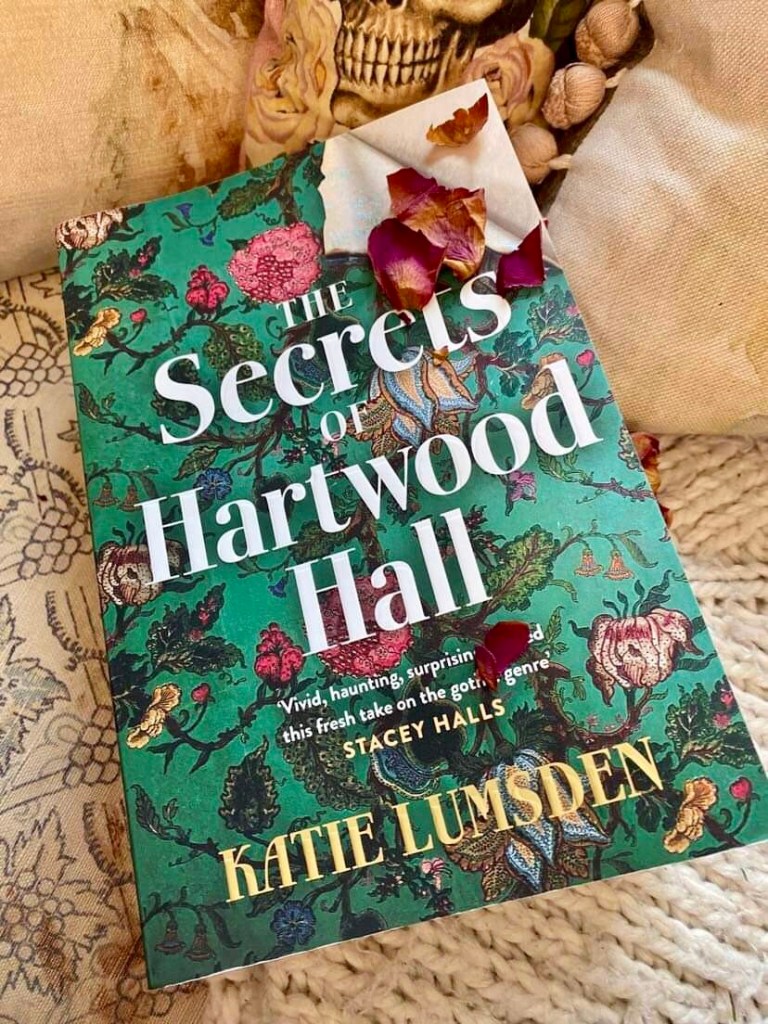
The Secret of Hartwood Hall by Katie Lumsden.

There couldn’t have been a better choice for a squad of female bookworms than this gothic mystery, full of spooky incidents, forbidden love, an orphan governess and within a house that holds many secrets. There was such a Jane Eyre feel about the book and also an hint of the Daphne Du Maurier opening as our narrator looks back to the hall’s approach.

‘when i think of Hartwood Hall, there are moments that come back to me again and again, moments that stain me, that cling like ink to my skin. My first view of the house: a glimpse of stone, of turrets and gables, tall windows and long grass’.

Our heroine is Margaret Lennox, recently widowed and forced to find paid work when her husband leaves his estate to his mother. She is offered a post by the mysterious Mrs Eversham, to educate her son Louis. This should be a moment of freedom for Margaret, but she notes the strange mood of the coach driver as soon as they enter the boundaries of the hall. Local people do not come near here. There is also a very clear rule: do not enter the East Wing of the house, because it is no longer used. As Margaret starts to find her way in Hartwood Hall and enjoys her time with Louis, she does notice a few strange things. She seems under suspicion from one of the existing staff, Susan. She has noticed Margaret’s response to a letter she receives at the breakfast table and is keen to find out more. Stranger than that, she has seen a distance figure in white out in the gardens and followed a figure with a candle down the stairs and towards the East Wing. Maybe the house is haunted, but there are other mysteries too such as what happened to Mr Eversham and why do people in the village treat this woman and her boy with such suspicion and fear?

I was hooked by this story straight away. Just like the author, Jane Eyre was the first grown up book I ever read and I was enthralled with it as a gothic story, years before I started to deconstruct it’s complexity at university. I was also hooked by the Sunday teatime BBC series starring Timothy Dalton as Mr Rochester. It’s the perfect mix of ghostly mystery, intrigue and romance. This book was inspired by the classic but breaks new ground of it’s own in terms of forbidden relationships, marital abuse, and freedom. The freedom of women making their own choices, having freedom of sexual expression and to earn their own living. The governess has always been a liminal figure in literature because they are educated more than other servants and even the woman of the house. They are usually single so have more freedom in their lifestyle and finances. Here Margaret is a widow, she chooses her own destiny and can shape her life as far as choosing where she works and for whom. She also has the choice of what to do with her spare time, no household chores or husband and family to consider. We learn that Margaret’s marriage was not a happy one and she has never felt the love that’s spoken of in literature and poetry. In fact she is surprised to learn it exists and it is joyous to watch her explore that chemistry, even if I did fear for her recklessness. She also becomes the face of Hartwood Hall in the village, choosing to take Louis to church and sit in the hall’s pew, whereas the hall’s gardener sits with his family. She even makes friends with the minister’s wife, although the rest of the village seem to avoid and ostracise them.

As always in these mysteries Margaret is drawn towards the very part of the house she is told not to enter, in fact it is a perfect way into the house after the main doors are locked at night. She is sure she’s seen a candle moving around the East Wing’s rooms when walking in the gardens one evening. There are also noises in the dead of night that can’t be accounted for, but for me the tension really arises at the less mysterious points in the novel. The sly, unpleasant Susan really made my pulse race at points and her blackmail of Margaret feels grubby. She really enjoys the power of knowing something that gives her power over the other person and she seems to enjoy taking something valuable or precious from her victim. The way she commits little acts of dissent when only Margaret is looking, such as stuffing bacon in her mouth in the breakfast room shows resentment about her position. As I could see Margaret settling and enjoying her new pupil I desperately didn’t want Susan to ruin it. The period where both Louis and Susan are ill was truly tense as the whole house waits for the fever of the measles virus to pass. The isolation of Mrs Eversham and her boy is brought into stark relief when they can’t secure a nurse from the village to care for the patients. Mrs Eversham is in despair:

‘So these people will let a child and a young woman die because they suspect me, because they distrust this house? […] Because they believe in ghosts and spirits and curses? Or because they think I am a woman of low character, that I have never had a husband?’

This speech reveals another possibility about their isolation, that Mrs Eversham’s widowhood is not what it seems. It also shows me that Mrs Eversham has a different set of morals to the Victorian norm, she is wiling to set aside ideas about decency and propriety when it comes to saving a life. Margaret is so relieved when Miss Davis appears from nowhere claiming she’s come from the further village of Medley because she heard there was a child who needed a nurse. Yet the other servants seem uncomfortable and even Mrs Eversham seems on edge. Margaret wonders whether Mrs Pulley knows something troubling about this young woman. This brings another yet another layer of mystery to the house: why isn’t Miss Davis as prejudiced against the hall as the locals? Where did she spring from so quickly? By this time I was fascinated and couldn’t stop myself from picking the book up at every opportunity to resolve all my suspicions. Needless to say that when the truth comes out, it was nothing I expected and I loved it! I loved that these strong, determined female characters were living according to their authentic selves. There’s a lot of discussion around the ending of Jane Eyre, I’ve even had an argument about it at a literature talk. A woman said that she felt let down by the ending and Jane’s choice to return to Rochester, because it betrayed her feminism. I argued that she goes back a different woman, with her own money and able to make her own choices. Rochester is her choice and their relationship is on her terms. The ending of Hartwood Hall definitely goes further. It was really heart-stopping, but also satisfying. Both Mrs Eversham and Margaret make their independent choices and decide to live life on their own terms. I throughly enjoyed this atmospheric gothic mystery and it’s strong, forward-thinking, female characters.

Meet the Author.

Katie Lumsden read Jane Eyre at the age of thirteen and never looked back. She spent her teenage years devouring Victorian literature. She has a degree in English Literature and History from the University of Durham and an MA in Creative Writing from Bath Spa University. Her short stories have been shortlisted for the London Short Story Prize and the Bridport Prize, and have been published in various literary magazines. Kate’s YouTube channel Book and Things has more than 20,000 subscribers and was long listed for the Book Vlogger of the Year Award at the London Book Fair Awards 2020. She lives in London and works in publishing.

Posted in Paperback Publication, Squad Pod Collective

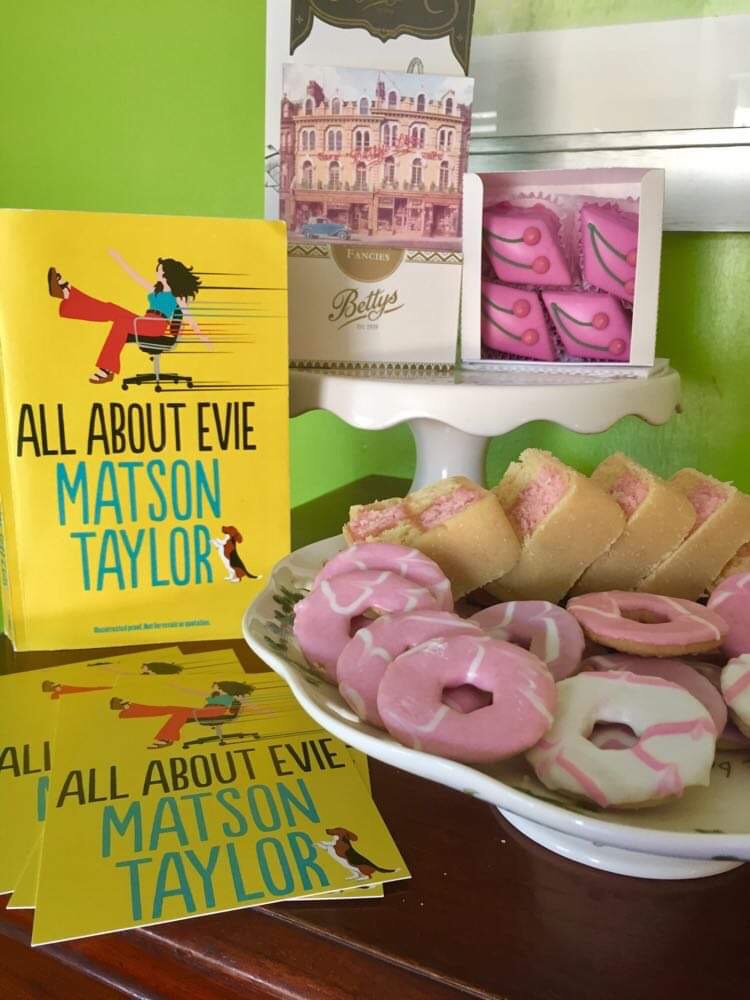
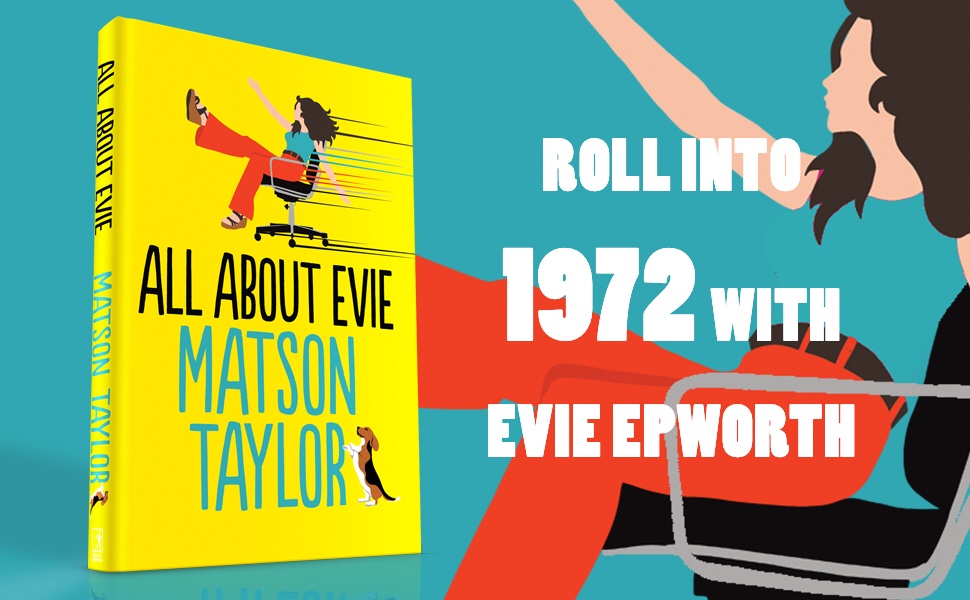
All About Evie by Matson Taylor

This novel is the second in Matson Taylor’s series following Evie Epworth (Yorkshirewoman, Fashion Lover, List Maker). So now, I can categorically say that each time I finish a book about Evie I have a big sunny smile on my face. Of course all books make us feel things, even if it’s to throw them out of the nearest window, but it’s a rare book that gives us a real physical reaction such as the spooky ones that give us goosebumps on the arms or lift the hairs on the back of our neck. I’ve only spontaneously burst into tears once, thanks to David Nicholls’s One Day and that twist none of us saw coming. Not only is Matson is great at those laugh out loud moments, such as the ‘cow incident’ that precipitated her car accident in the first book. As I finished All About Evie I found myself unable to stop smiling. This book feels like liquid sunshine being poured into your veins.

Our previous book ended as Evie is being waved off to an adventurous new life in London, alongside mentor Caroline, the unconventional and glamorous daughter of Evie’s lifelong neighbour and baking partner Mrs Scott-Pym. All About Evie starts ten years later in 1970’s London, where Evie is working in a junior role on BBC Radio Four’s Women’s Hour. Previously, we met Evie at time of great change and this novel is no different. Thanks to a terrible incident with a visiting Princess Anne and the misuse of a mug Evie is sacked from the BBC. Does this mean her life in her little London flat is in jeopardy? Caroline thinks this is an opportunity to try something new so Evie tries working in an art gallery. When it turns out art, particularly the modern variety, isn’t for her she lists things she’d like to do and falls upon the idea of writing for a magazine. She finds the magazine Right On in an office above a sex shop – handy windows for checking one’s hair before walking into the office – and asks for a job. Assuming she’s been a journalist at the BBC, NickStickUpBum and NickWithCollars agree to give her a trial on the listings pages, essentially long lists of what’s on in London across the arts from opera to poetry evenings. With the offer of help from Lolo (Radio Three producer, homosexual, basset owner) on the classical music listings, Evie decides to give it a go and sprinkle some sunshine over her work, in her own inimitable way.

In between Evie’s story there are a couple of flashbacks to other character’s lives. Evie’s neighbour Mrs Scott-Pym has died recently and we see her packing a case for Evie, with little artefacts to remind Evie of their time together – including a pestle and mortar wrapped in a tea towel of Bolton Abbey. Evie is grieving for her old friend, but the reminiscences become even more emotional when we realise that Mrs Scott-Pym was, aside from Dad Arthur, the only link back to Evie’s mum Diana. Preserving her memories of their friendship for Evie is so poignant and it does make Evie think about her future. Can she keep dating totally unsuitable men, who she carefully and comically lists for us, or does she want to meet someone she can share her life with? I thoroughly enjoyed the tension between Evie and her rather hippy dippy workmate Griffin. Griffin is a proponent of high culture and wants the magazine to remain intellectual rather than popular. So to try something a little more highbrow, Evie accepts Lola’s invitation to her first opera. Afterwards, NickWithCollars suggests she write a review for the magazine. This infuriates Griffin who thinks Evie is definitely low culture and would rather they published one of her own poems. When the men are out of the office, Griffin places herself in charge and gives Evie petty tasks to fulfil, often creating a mistake to trip Evie up or keep her working late. Evie tries to take the high road, but her yoga chant trick is absolutely brilliant and well deserved. I couldn’t wait for Griffin to receive her real comeuppance! Meanwhile, there’s a lovely friendship forming between Evie and Lolo, as well as his basset hound.

Yet underneath the humour, there’s so much more going on. A beautifully poignant thread running through the novel is that of motherhood. There are memories of Evie’s mum of course and we’re aware of all the life experiences Evie would have loved to share with her. Evie’s mum never got to see her grow and all that promise is encapsulated in one little throwaway object from the suitcase. Evie has many mother figures though, obviously Mrs Scott-Pym and her friend Mrs Swithenbank who gives Evie a call every week just to check in. Caroline and her lover Digby are disagreeing over the possibility of becoming parents, particularly as Caroline would have to carry the child and believes she doesn’t have that maternal instinct. However, both women have been invaluable to Evie, she even loves popping in and watering their plants while they’re away. Their house gives her the sense of having a family in the city, an anchor that keeps her from being swept away amongst the crowds. We see Evie draw on all these maternal figures when Mrs Swithenbank’s daughter Genevieve turns up in London in search of a fashion career. Genevieve carries just one suitcase, but is full of ideas and her outlandish outfits were so funny – one inflatable hoop dress brought back terrible memories of being stuck in a dress in Laura Ashley’s changing rooms and having to ring my Mum to get me out. Evie feeds Genevieve, lets her stay and starts introducing her to the right people. Every day she comes home, dejected from receiving lots of knockbacks, despite her inventive fashion portfolio. Every time Evie props her up and brings her spirit back. It was lovely to see Evie in this life stage, being the mentor and feeling so confident. As much as I love London, it was also nice to see her at home on the farm with old friends reunited and new ones being introduced, plus a very exciting finale which gives us a nod towards what Evie might do next. I can’t wait to celebrate this fantastic novel with a 1970s party. I’m hoping for a cheese and pineapple hedgehog and Babycham to toast this joyful new stage in the Evie story.

Published 21st July 2022 by Scribner UK

Meet The Author

Matson Taylor grew up in Yorkshire (the flat part not the Brontë part). He comes from farming stock and spent an idyllic childhood surrounded by horses, cows, bicycles, and cheap ice-cream. His father, a York City and Halifax Town footballer, has never forgiven him for getting on the school rugby team but not getting anywhere near the school football team.

Matson now lives in London, where he is a design historian and academic writing tutor at the V&A, Imperial College and the Royal College of Art. Previously, he talked his way into various jobs at universities and museums around the world; he has also worked on Camden Market, appeared in an Italian TV commercial and been a pronunciation coach for Catalan opera singers. He gets back to Yorkshire as much as possible, mainly to see family and friends but also to get a reasonably-priced haircut.

He has always loved telling stories and, after writing academically about beaded flapper dresses and World War 2 glow-in-the-dark fascinators, he decided to enrol on the Faber Academy ‘Writing A Novel’ course. All About Evie is his second novel.