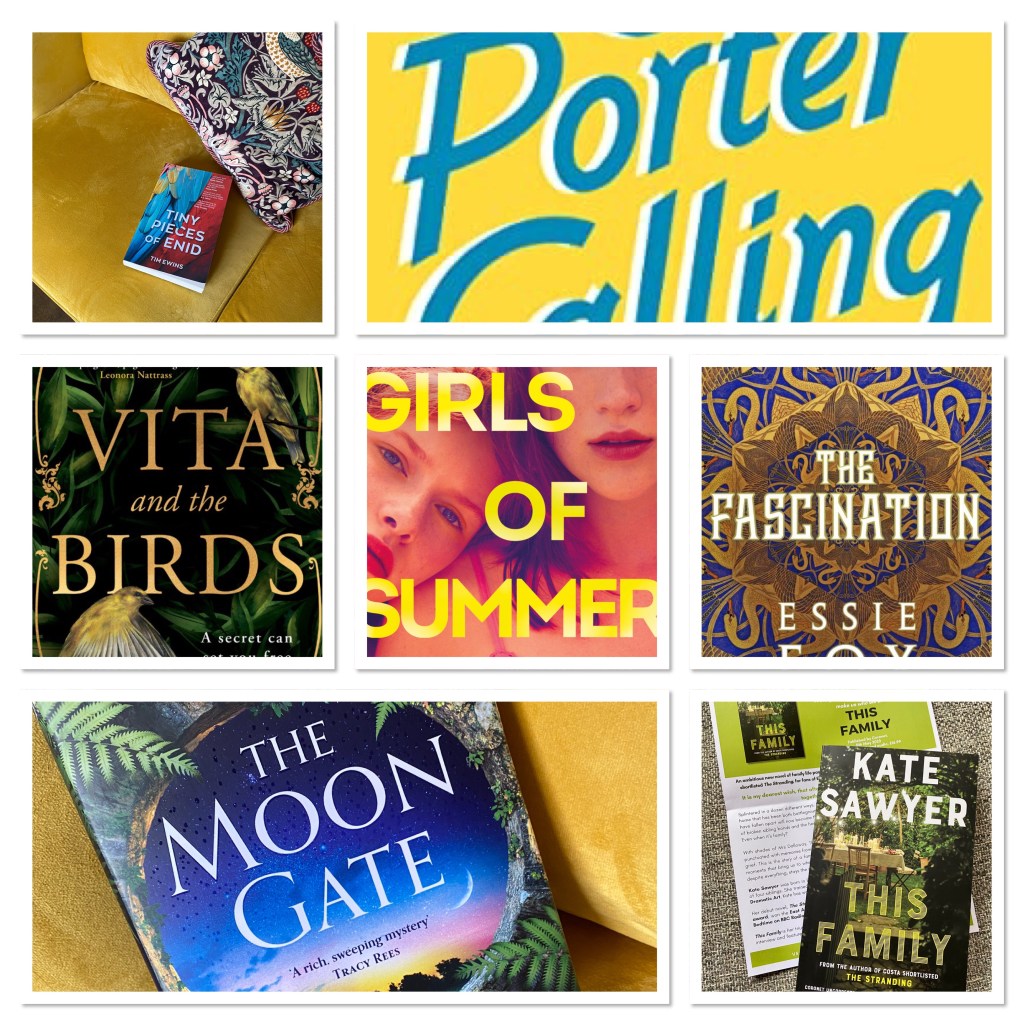
Blog Feed

Posted in Monthly Wrap Up

June Wrap-Up 2023

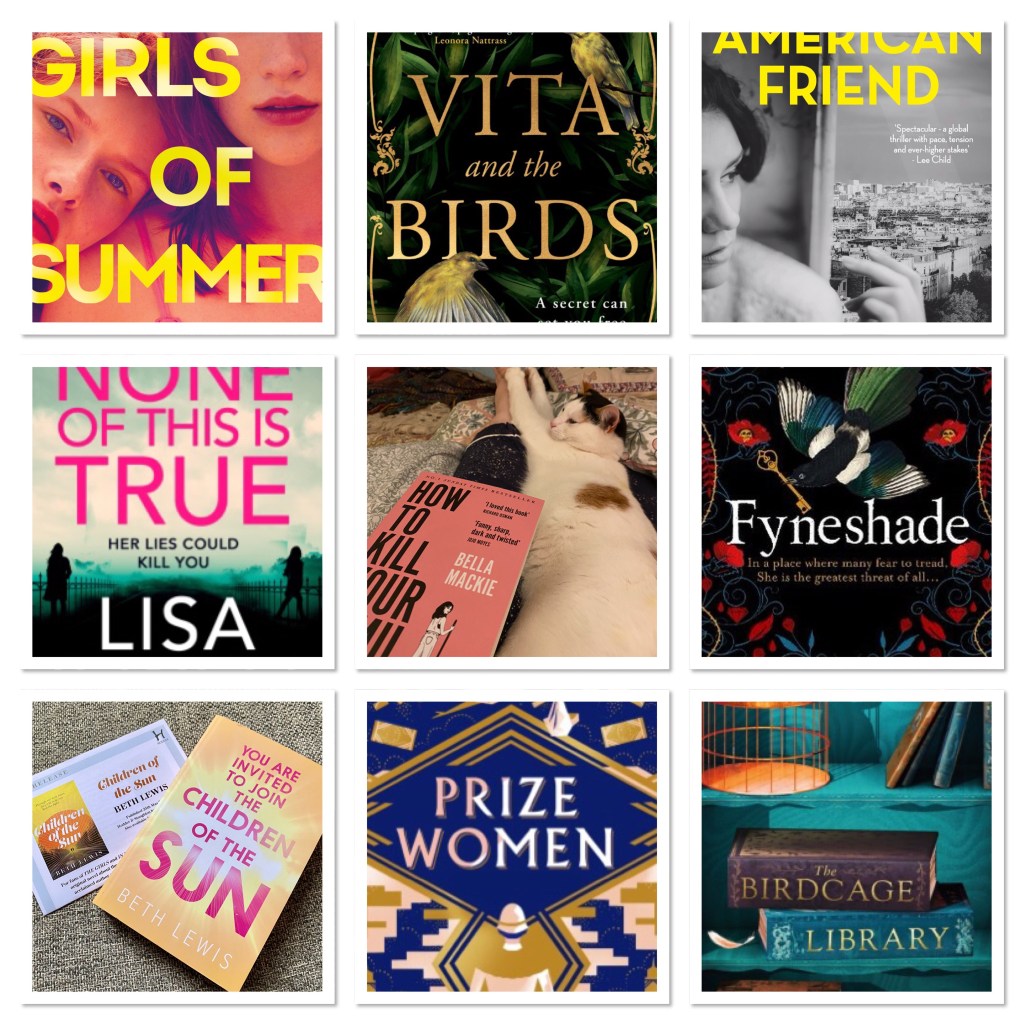
Hello Readers, this has been a very tough personal month and it’s a surprise to me when I look at my blog to find how much I’ve read and then written about the above books. These are some of the best books I’ve read this year and for some it’s meant reading a couple of prequels beforehand which were equally good. I haven’t posted towards the end the month because I’ve had a bereavement. I lost my beloved dog Rafferty and I’m still not fully taking it in, never mind anything else. My energy is low, my sleep pattern is ruined and I feel bereft without his warm body next to mine. When Rafferty finally started to struggle with his heart it was difficult to contemplate a life without him in it. He’s been with me for sixteen years and it’s not been enough. Usually when reading he’s as close to me as he can be, so it’s odd without him. As we move forward we’re going to try and do some of those things that have been impossible while he’s been ill. We’re staying in a hotel for the weekend, returning to our old habit of visiting the cinema weekly and perhaps going abroad which we haven’t done in five years. I know that I’ll slowly learn to live with the loss and we’re all lavishing lots of love on our two cats which they’re lapping up! Here’s a quick look at my favourites this month, all of which I recommend highly.
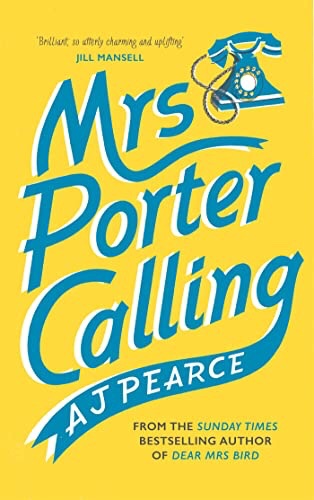
This was a Squad Pod Collective read and since this was the third in the Emmy Lake series I decided to read all three and they were all fantastic. They’re based in WW2 and are full of historical detail, but also genuinely uplifting. We follow Emmy as she goes to work for a magazine, the Women’s Friend, in the hope of starting a career as a reporter. However, her job is to sort through and choose the letters for the problem page, presided over by the formidable Mrs Bird. Her rules are clear, nothing vulgar or remotely distasteful will ever grace her page. Yet Emmy is a modern woman who thinks differently, she would love the page to offer solutions and ideas for real problems faced by real women, tasteful or otherwise. By the start of this book, she has achieved that goal and is in charge of the problem page as well as writing a series of features on women doing war work. Things are settled when the owner is persuaded to sign the magazine over to his niece Mrs Porter in lieu of her inheritance. She has an entirely different vision for the magazine, a scrapbook of society parties and weddings, real fashion instead of the tips for looking good on a budget and no more dreary war features. How can Emmy and her colleagues keep their loyal readership, whilst trying to get rid of Mrs Porter? It’s not all magazine talk though. There are serious storylines set around Emmy and her friend Bunty’s work with the fire service and the horrors of the Blitz. There’s romance and having to keep the faith while the one you love is far away fighting in another country. There’s also a lovely camaraderie between women, as Emmy becomes closer to women from her war work articles. The issues facing women in WW2 were new to me and they’re shown in the raw, but still overall the books leave you feeling inspired by this loveable character’s resilience and spirit.
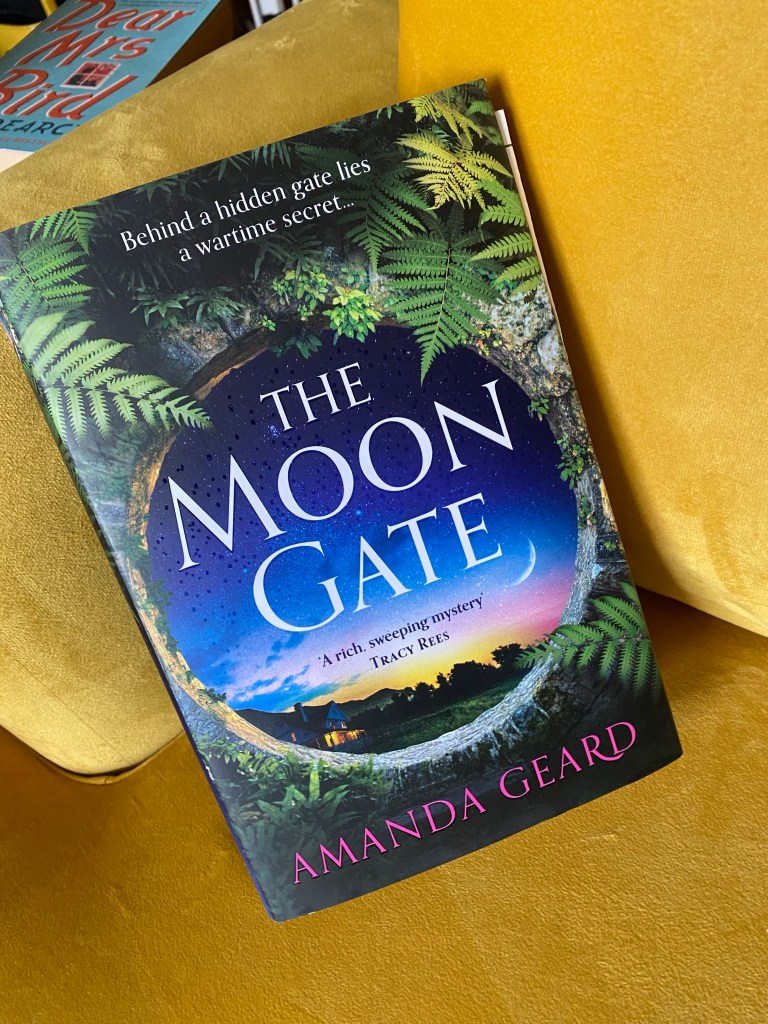
Another historical novel here from Amanda Geard, also set in WW2 but down under in Tasmania, intertwined with a storyline from the 1970’s and another towards the end of the 20th Century. The story begins as war seems inevitable and two little girls are sent to their aunt and uncle’s house Towerhurst in Tasmania, in the hope they’ll be safe from a war that’s expected to be contained within Europe. Grace Grey is Marcus and Olive’s niece, while Rose who travels with her is the daughter of their housekeeper. Rose is quite beautiful and the one people notice first, whereas Grace is rather awkward preferring to spend her time writing and reading poetry. They’ve escaped a household where the views of Oswald Moseley have become their cause and Grace’s mother was a proud black shirt. In Tasmania Grace falls for charismatic Daniel McGillycuddy, but can she seen past Rose’s beauty? What is it about these teenagers that spawns a story that lasts half a century? In the 1970’s Willow and Ben receive an anonymous inheritance, a house called Towerhurst in NW Tasmania. It sends Ben on a journey to find out about Tasmanian poet Daniel McGillycuddy, who returned to his native Ireland after fighting in WW2. Ben’s fact finding trip to London leads to a tragic accident and Willow bringing up their baby alone. In 2004 Libby flies from Tas to London to claim a satchel her father lost at the Moorgate Tube disaster. Using the clues within she tries to uncover a mystery that dates back to those two girls escaping the Blitz in 1936. This is the story of an incredible love, interrupted by war but never diminished.
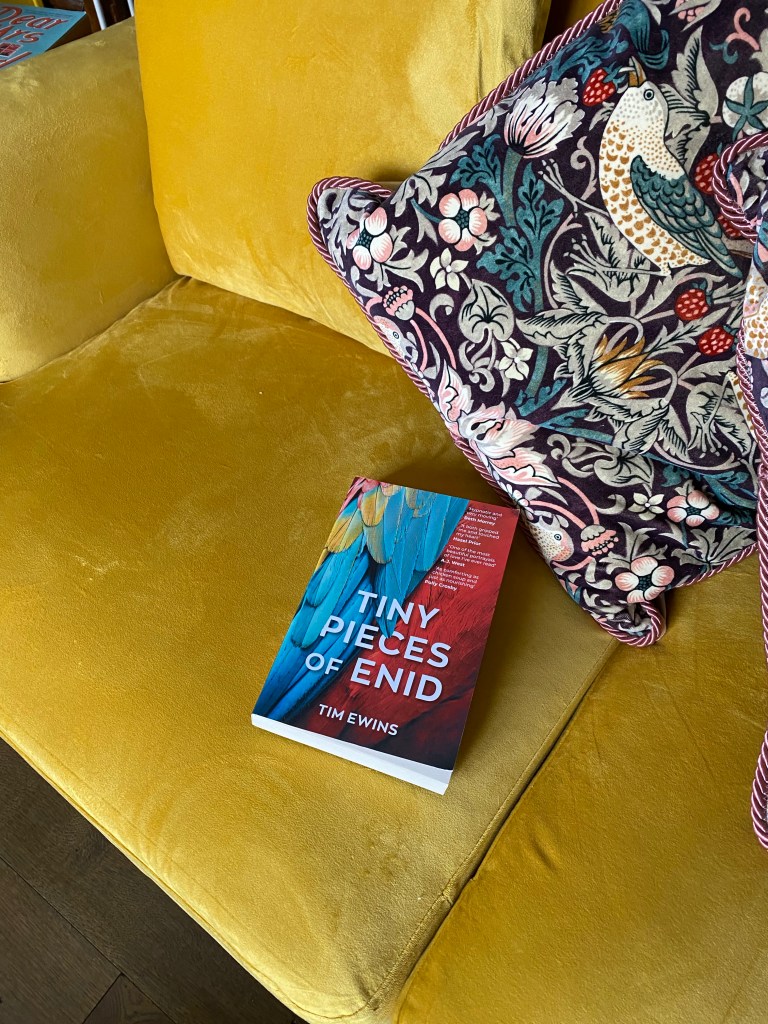
My recommendations for this novel were some tissues, some chocolate and a cat to cuddle. I found it so deeply moving. Enid is struggling with aphasia, a symptom of stroke and dementia that affects comprehension and formulation of words. In fact Enid’s dementia is causing accidents and confusion, so much so that daughter Barb wonders if she should be living alone. However, this would mean separating her from her husband Roy, a devastating blow for both of them. Enid thinks this is temporary and Roy will join her in due course, meanwhile Roy is at home alone missing his wife. Tim Ewins writes Enid in such an intricate and beautiful way: sometimes she is watching life pass her by, sometimes she’s in the past falling in love with Roy or playing with her little girl and other times she’s further in the past with her first husband and all the terrible memories she has of his anger and violence. She’s experiencing all this in the same day, believing each reality to be the present. However, sometimes she has a surprising clarity and is very present, with a great sense of humour. Being so in touch with her past allows her to recognise the signs when a visitor comes in for another resident. Sometimes, Olivia is with her husband and Enid can see what this man is, he’s angry and dismissive. Enid builds a friendship with Olivia, but she wants to help her, to make her see that she doesn’t have to stay and that there is happiness, just look at her and Roy. I loved how Tim shows his main character living with an illness, despite her different realities she has formed a friendship and made someone’s life better. Tim has tacked his subject with his usual compassion and care, creating a book that had me reaching for the tissues.
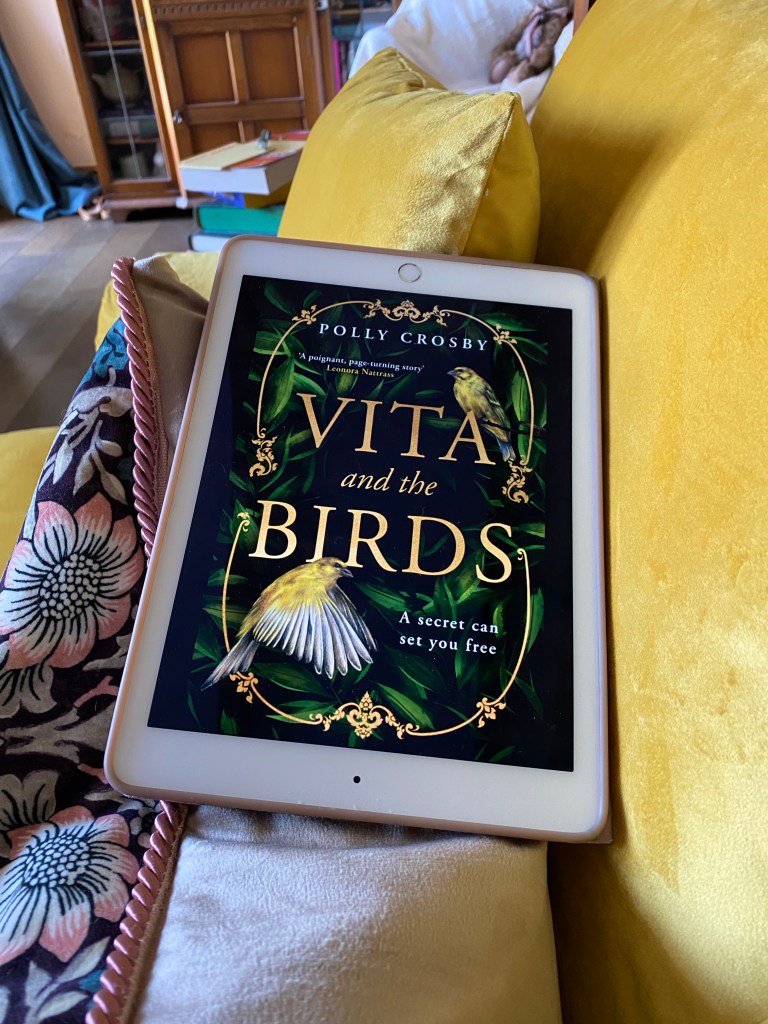
I’m a big fan of Polly Crosby and this beautiful historical novel has cemented her position as a ‘must-buy’ author. In 1997, Eve is encouraged by her brother to stay in the rundown artist’s studio where her grandmother Dodie lived on the coast. Having lost Dodie and her mother, Eve has felt a little lost. This place reminds her of them both and family holidays where she and her brothers would fall asleep cuddled together like puppies after a day on the beach. Behind the studio stands the incredible Cathedral of the Marshes, a glass construction built by the Goldsborough family in the early part of the 20th Century. When clearing out her grandmother’s things, Eve discovers that Dodie had a link to the building. She painted Vite Goldsborough there, just before the war in 1938. In an echo of the past, Eve takes a commission to paint a local lady who is the key holder for the building. It’s the first time she’s been inside since accepting a dare to go in when she was a teenager. Slowly Eve begins to uncover long buried secrets that change the way she thought of her grandmother and also that night she first entered the glass cathedral and saw a portrait of herself. It’s a wonderful history of a family’s female line during the 20th Century and how much has changed for women in terms of making choices. This is a beautiful historical story of friendship, love and being your true self, no matter what others may think.
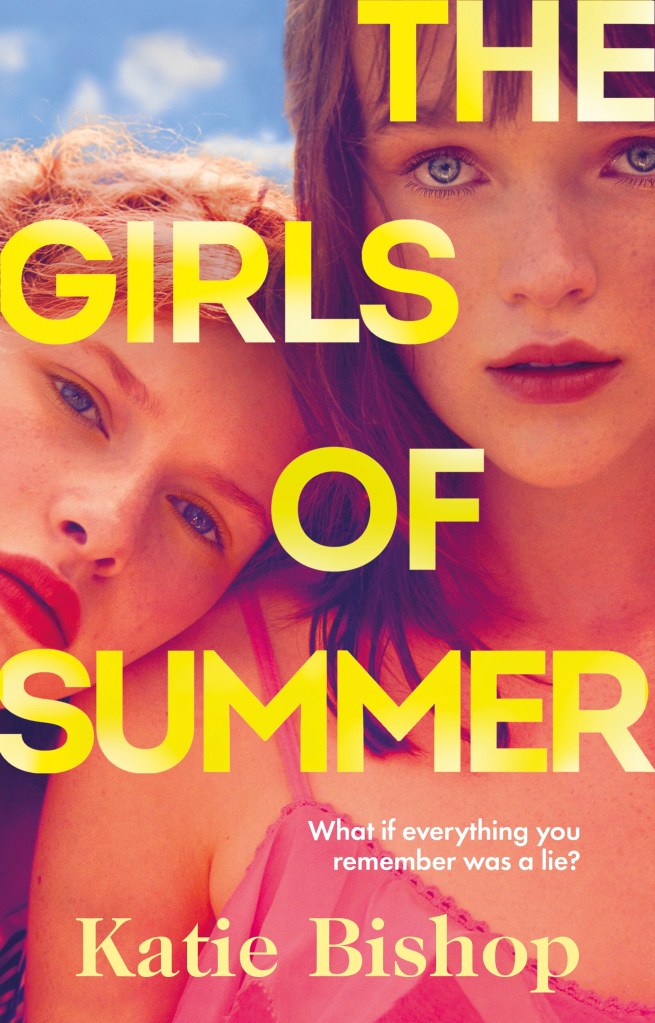
This is one of those books that takes precedence over everything, from the TV to the housework. I was utterly engrossed! Rachel is in her thirties and married to Tom, but part of her heart is still with a man she met on a Greek island in the summer after her A’Levels. Alistair was her first love and their relationship was special. It has given Rachel something to aim for in relationships because their love was the ideal. It was what love is supposed to feel like and Rachel isn’t sure she’s ever had that since. She and Tom almost ‘fell’ into living together, it was easy and they are best friends. Alistair was the kind of love everyone dreams of and her memories are reignited when she and Tom visit the island as a couple and they see one of the girls Rachel knew back then. As they talk an altogether murkier story emerges, of a nightclub staffed entirely by young women and the parties with older, wealthy men who like pretty girls around, especially young pretty girls. Rachel decides to find Alistair and reassure herself that what they had was the real thing. Yet in the background, stories of exploitation and manipulation starts to emerge. Could Rachel have everything wrong? This is a brilliantly addictive story, perfectly pitched for the #MeToo generation and even those of us who lived through very different attitudes towards women. It’s a book that’s ripe for adaptation, in a similar vein to The White Lotus series. Be aware though, once you’ve started the book, nothing will get done for the next 24 hours.
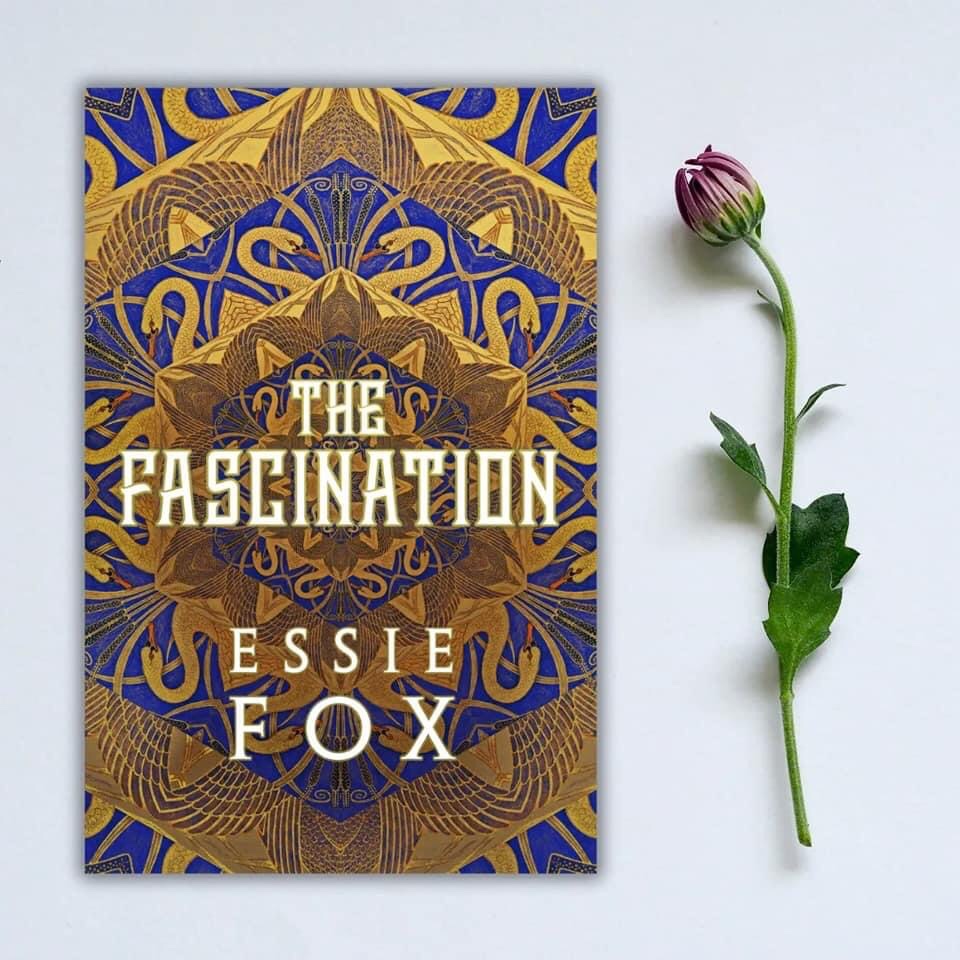
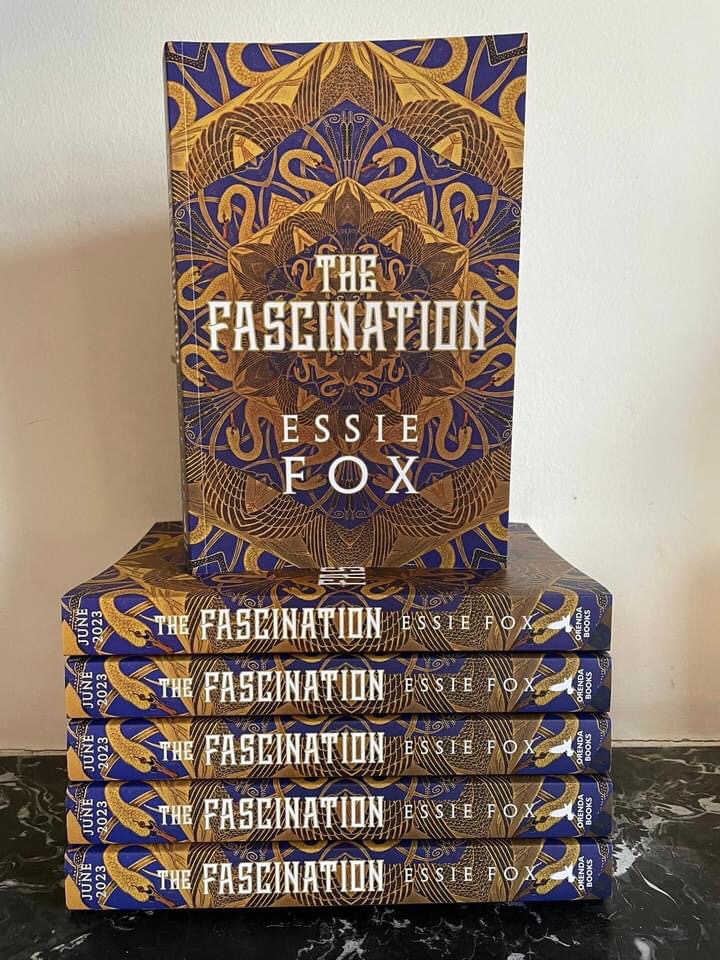
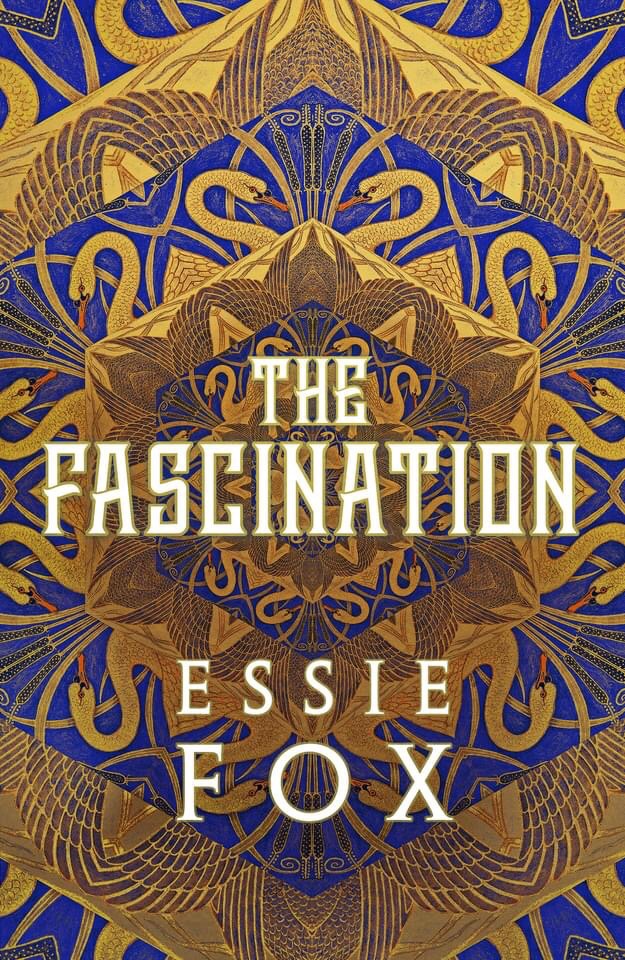
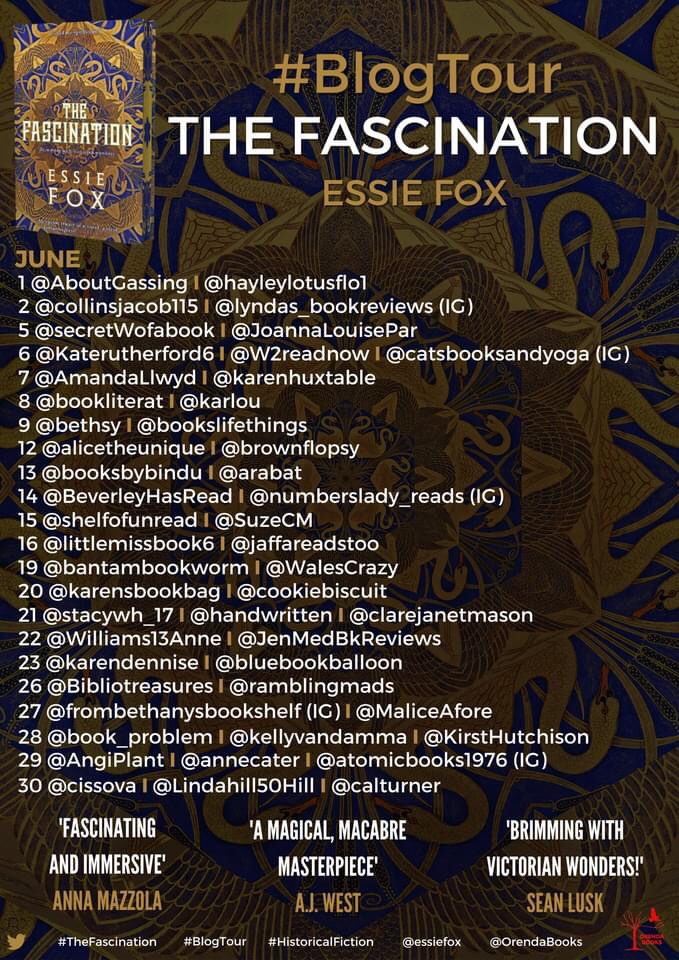
Essie Fox is an amazing author who covers subjects very close to my heart. The Fascination takes us to Victorian London and shows the seedy underbelly of what everyone thinks was a prim and buttoned-up society. We start in the rural fairgrounds and twin sisters Tilly and Keziah Lovell, whose father is a snake oil salesman, selling his elixir to people desperate for a cure. However it isn’t long before the girls are wanted as attractions, especially Tilly who is a perfect copy of her sister but in miniature. When their father sells them they end up with a troupe of curiosities working for the enigmatic Captain and Tilly is immediately in demand in London’s West End. Meanwhile, Theo first meets the girls when the fairground visits close to his home. His domineering father Lord Seabrooke has a unique collection of curiosities and exotic animals, so when Theo sees the girls he is fascinated. The lord’s remarriage is a turning point and Theo is cast out to find his own way in the world. His ambitions to be a doctor are thwarted without his father’s money, but his skills are a good fit for Dr Summerwell’s Museum of Anatomy in London. The girls and Theo’s paths will cross again, but it’s not long before his father hears of Tilly and her beautiful voice. If a man will discard his own son, just how ruthless will he be when pursuing a new item for his collection? Essie Fox has created an incredible world of fairgrounds, freak shows and theatre that was so perfect for this reader, fascinated as I am by disability history. I felt like I was watching a Baz Lurhmann film as the details of the fairground and the West End came to life. I was also frightened for the girls, desperate to know how their stories would end. This is an exciting and unusual period novel, telling the story of people who would have been considered ‘other’ and their unusual lives.
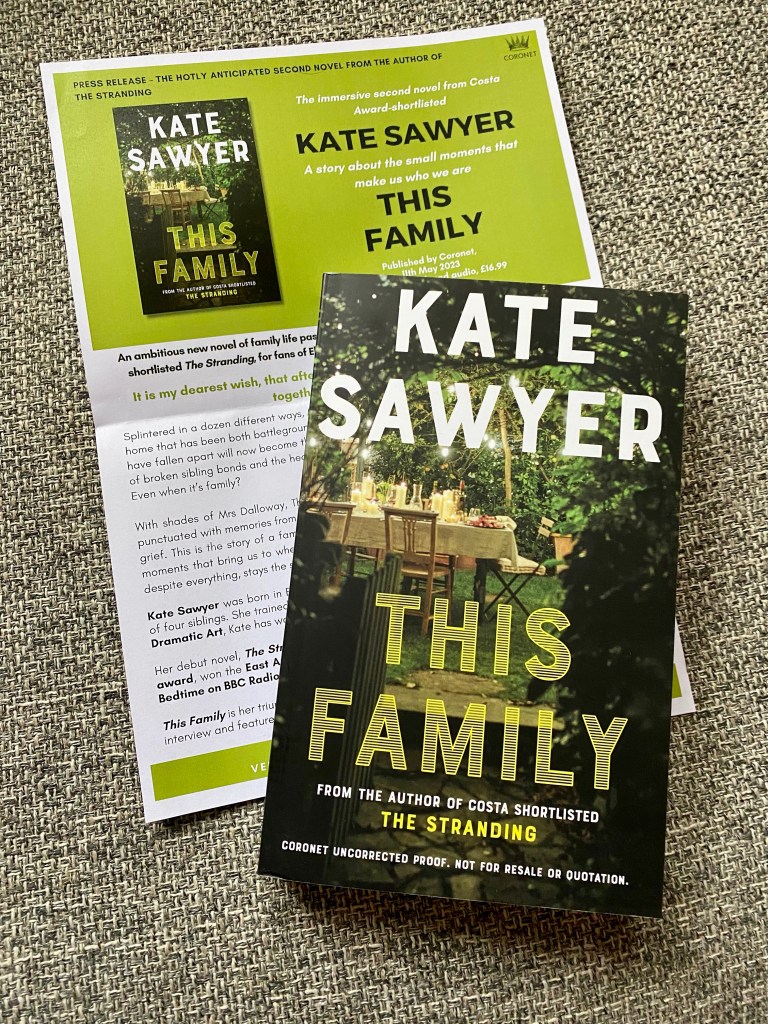
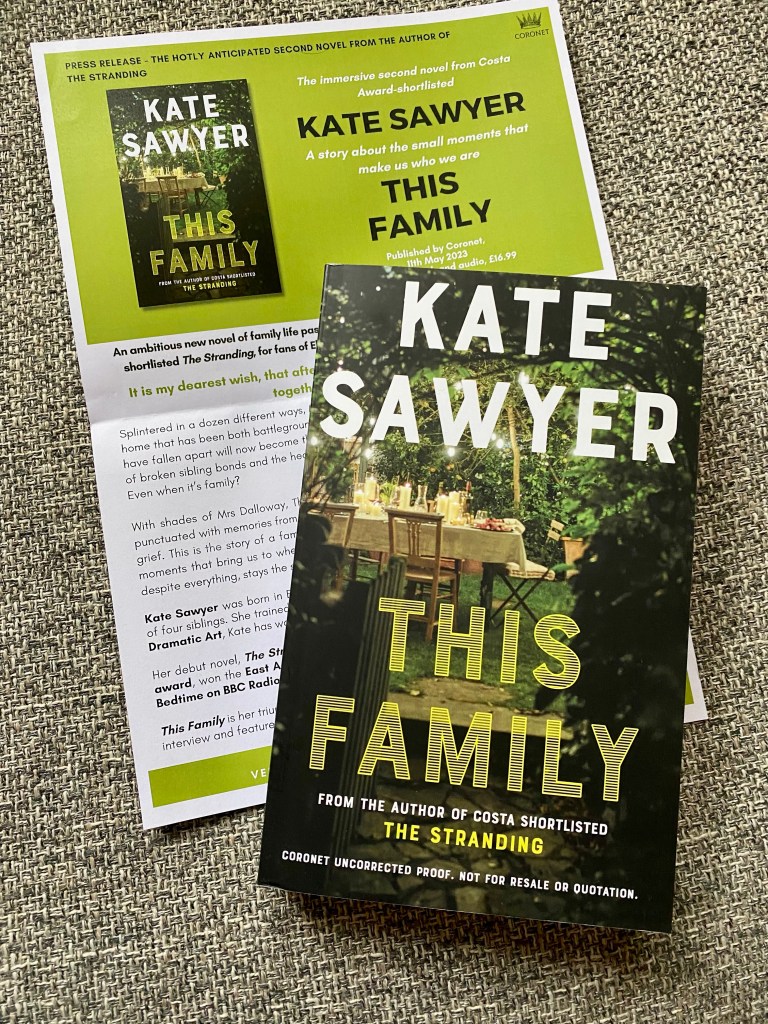
My final choice is the lovely Kate Sawyer and her new novel This Family. Set on one day, the matriarch Mary’s wedding day, this slightly fractured family come together and set aside all their differences to celebrate. Mary has three daughters and for this one day she wants Emma to speak to her sister Phoebe, she wants Phoebe to stay sober and for Rosie to stay quiet about the climate crisis. Just this once. Mary still lives in the house the girls grew up in and their father Richard lives in the annexe with his mother, who Mary has been looking after. The house is sold, so everyone is saying goodbye to a house full of memories including the huge tree in the garden where they’ll be eating dinner. Each sister has something to overcome. Emma’s childlessness has consumed her, so facing her new niece and nephew will be difficult. Phoebe hasn’t spoken to Emma for years. Rosie is the baby of the family, but her appearance in the family was difficult for the older sisters. Over the course of the day we hear from each sister’s viewpoint about their lives, sometimes the same event but from two different perspectives. The author shows us how different an event can look from two different perspectives. From all these fragments she weaves a tapestry of this family. She is always questioning how we construct reality, whether there is one true account of an event, or whether the story is fragmented, fluid and ever changing? This was a fascinating read psychologically and really made me think about how others see events we’ve shared and how families choose to overlook each other’s faults and bad behaviour, to come together and choose love, again and again.

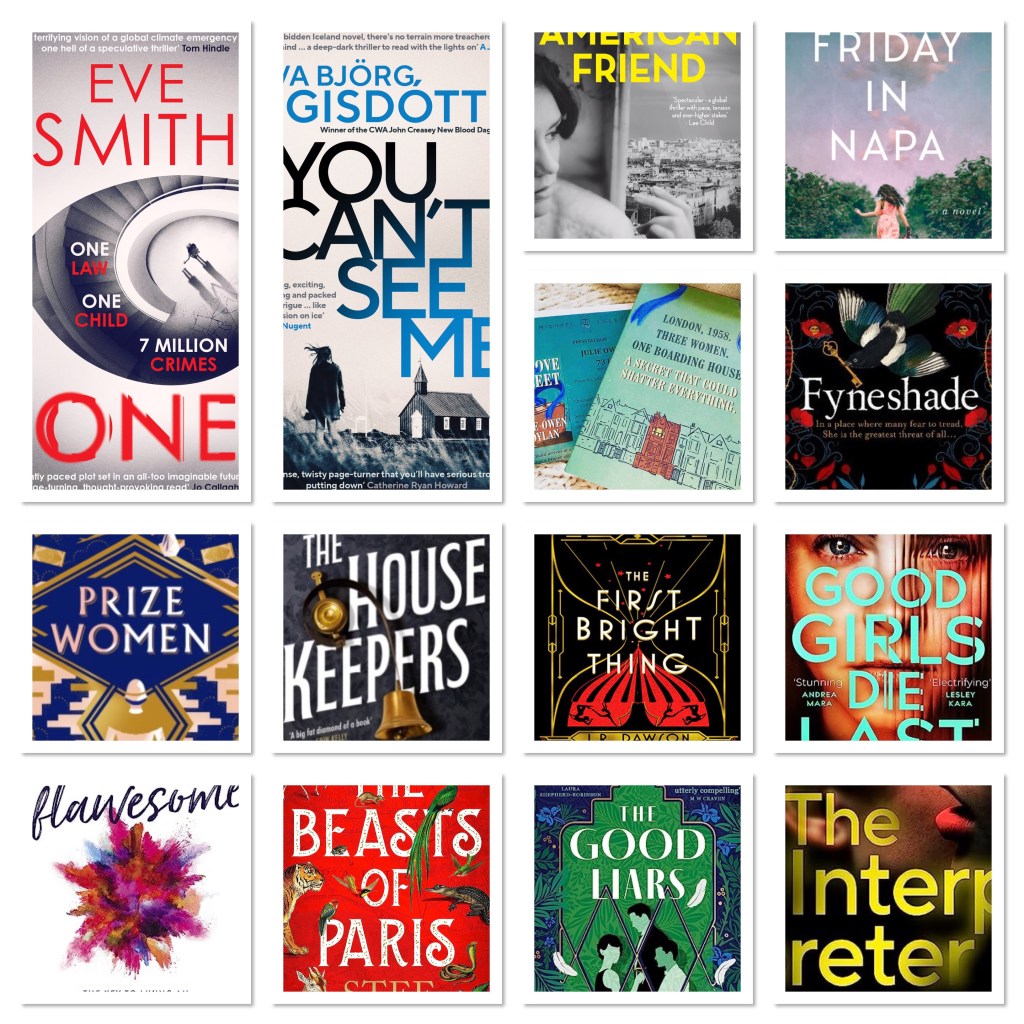
Here’s next month’s TBR:
And finally here’s a picture of my beloved Rafferty, ‘helping’ with my reading.

Posted in Monthly Wrap Up

May Wrap-Up 2023

May has been a lovely reading month because I have been able to read a few of my favourite authors – Essie Fox, Kate Sawyer and Lucy Atkins – but I’ve also been surprised by an author I hadn’t read before and an author that’s well known, but hasn’t been a favourite of mine until her last two novels. I’ve been able to read out in the garden for the first time this year. This is something I love because I really enjoy my garden in May/June. I can get settled on my day bed, with the cats and the dog usually squishing into my space, and enjoy being outside. Hopefully that can continue into next month when I have so much Squad Pod Collective stuff to catch up on! Here were my best reads of the month.

This amazing confection of historical and gothic literature from Essie Fox was right up my street! Using the backdrop of country fairgrounds, freak shows, the West End theatre scene and museums of curiosities, the author has created a reading experience with all the life and colour of a Baz Lurhmann film. We follow twins Keziah and Matilda Lovell, sold to the mysterious Captain at the county fair by their father, an unscrupulous snake oil salesman. Keziah and Tilly are identical except that Tilly hasn’t grown since she was five years old, she also has the voice of an Angel. There’s also Theo Miller, who catches sight of the twins at the fair then loses sight of them until they turn up in London. Theo is the grandson of Lord Seabrook, a rich man with a collection of human curiosities. Abandoned by his family, Theo turns up at a Museum of Anatomy, selling all manner of strange things from crystal balls to bats wings. When he sees Tilly perform in a West End pantomime he finds himself intrigued by the girls, but they have other admirers far richer and more dangerous than Theo. I loved this incredible story and how Essie Fox explores what it means to be other in 19th Century London. Fantastical, exciting and thrillingly different.

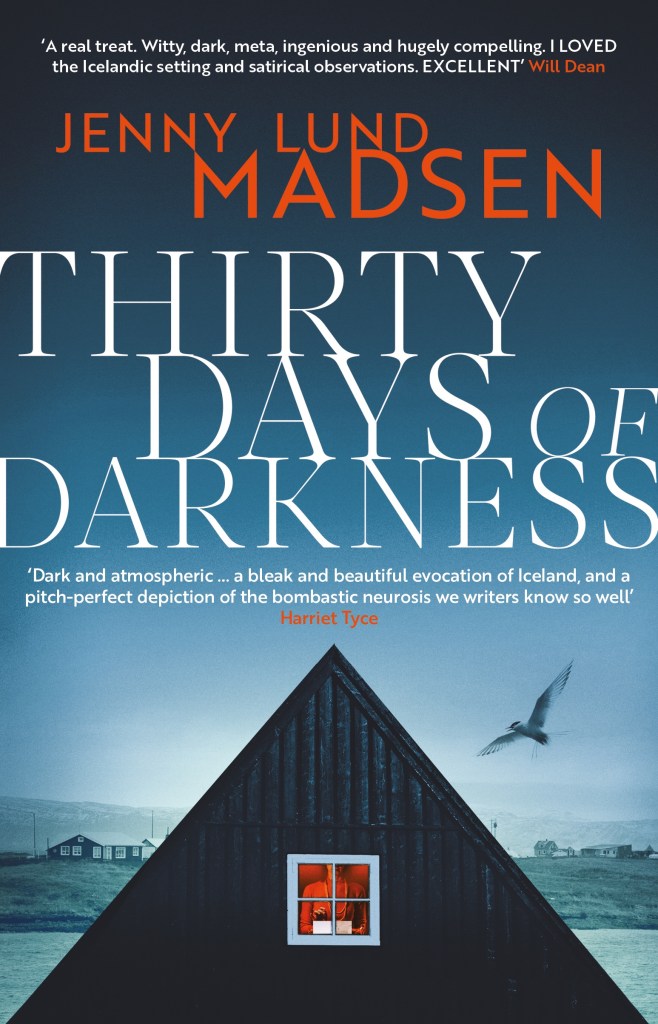
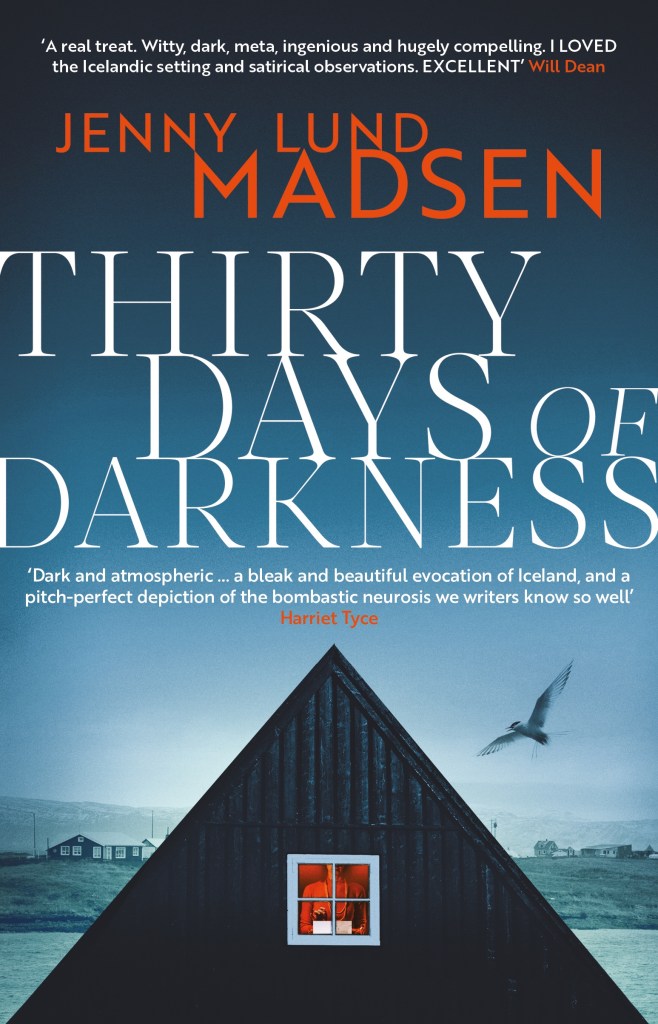
In a brilliant scene at a book event, author Hannah boxes herself into a corner. Used to writing literary fiction, she is disgusted to see the crowds gathering for a talk with popular crime writer Jorn Jensen. Hannah throws a book at his head and tells him she could write a crime novel in thirty days. Her friend and publisher knows a great marketing ploy when he sees one and dispatches Hannah to a remote town in Iceland. There she will stay with a woman called Ella who rents out a room in her house to writers. Unfortunately within days of arriving, Ella’s nephew is found murdered and Hannah finds herself in the middle of a real-life murder plot. If she can find out who the murderer is, maybe she has a good chance of writing a novel about it? However, investigating and having to listen to Jorn Jensen here and there, shows her that crime fiction is not the easy task she thought it was. In her debut novel Jenny Lund Madsen manages to give us a great murder plot, flashes of humour and a heroine who is both brave and flawed. This is darkly funny, dangerous and a clever satire on the bookish world.

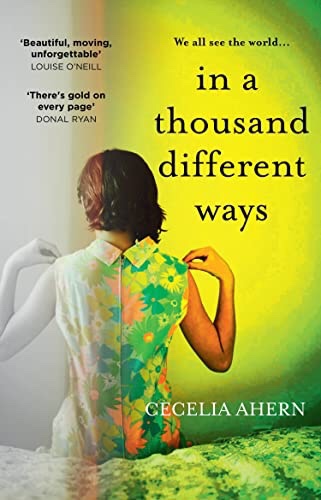
No one was more surprised than me when I found myself placing Cecilia Aherne’s Freckles into my favourite books of the year in 2021. Now here’s another novel from her that is emotionally intelligent, moving and shows a different way of looking at the world. Alice’s mum doesn’t cope very well after their father leaves and is often to be found still lying in bed when they return from school in the afternoon. There are also times when they get home to find her up and about, on one occasion frantically cooking pancakes in every pan they have while costing out the launch of a travelling pancake van business. They never know which mum they’re going to get. So when Alice returns home to find her mum unconscious with a blue haze hanging over the bed she decides to call the emergency services. She hid in her bedroom only to hear the screams of anger when her mum is finally woken by the paramedics. No one else can see the blue colour still hanging around her mum. From then on Alice can read other people’s emotions by their colours, from the happy yellows, to the relaxed greens and the terrifying reds and blacks. How will she negotiate the world with this strange way of seeing life? I loved this tale of growing up a little bit different and how the formative difficulties in Alice’s life affect her moving forwards. This is a beautiful look at one woman’s life as she negotiates her difficult family, work, love and motherhood.

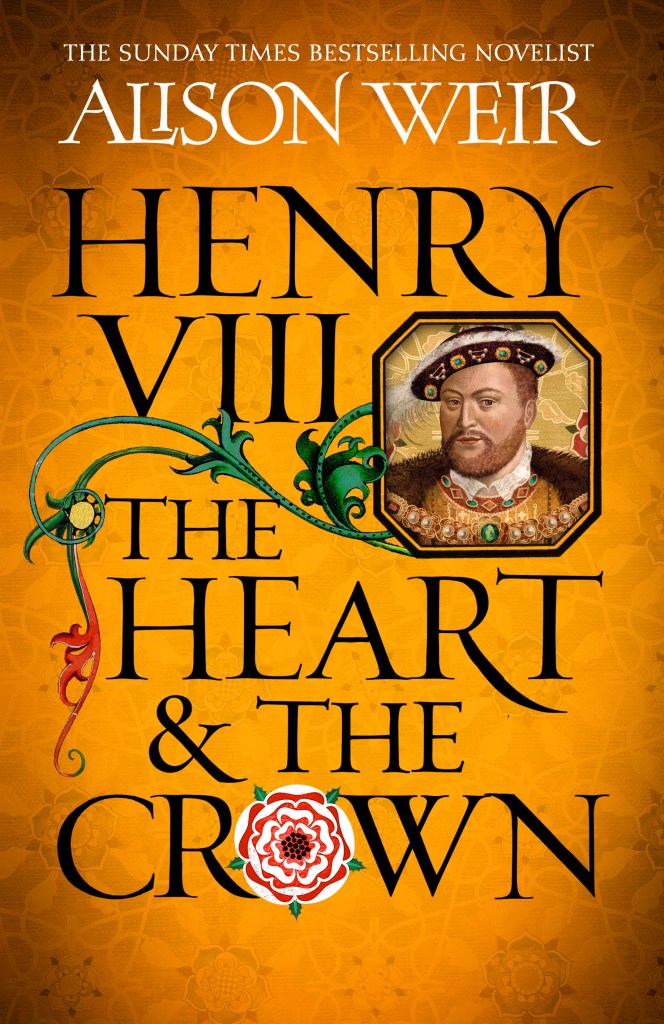
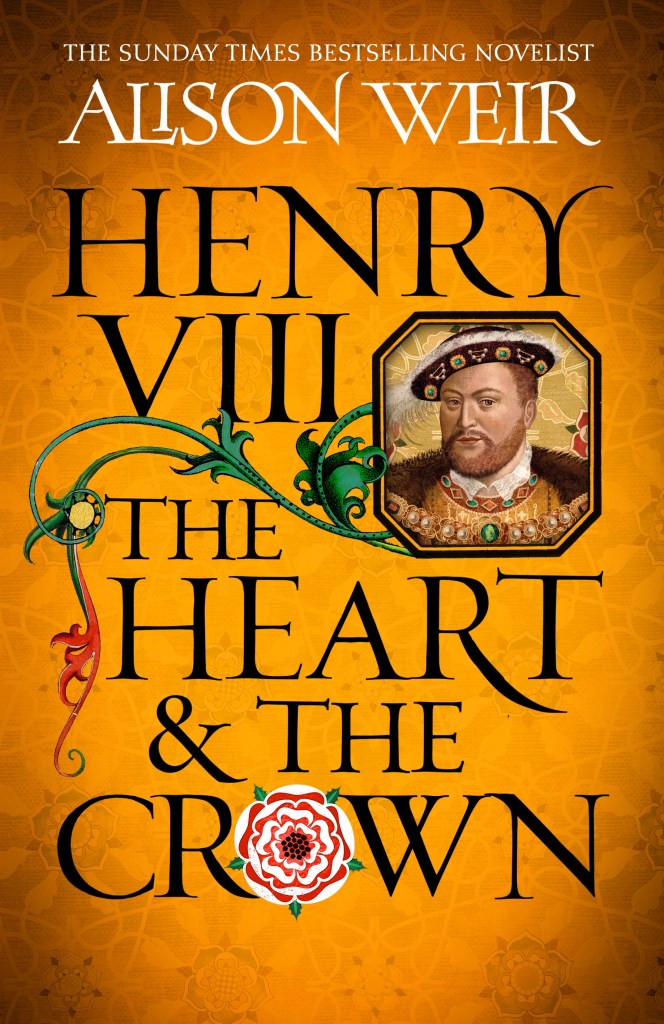
I’ve been fascinated with the Tudors for most of my life, influenced I think by the Holbein portrait of Henry VIII that sits in the library at Chatsworth House. He looks every ounce a King, just as his daughter Elizabeth I exemplifies the role of Queen in the Armada portrait. In later years I read more about the women surrounding this complicated King, from his six wives, to his mistresses, mother and grandmother. Henry, like his contemporary namesake, was the ‘spare’. Never intended to be King he remained with his sisters and mother in London, while the heir Prince Arthur got his own court at Ludlow and a beautiful wife in Katherine of Aragon. After writing a novel for each of Henry’s wives I was interested to see how Alison Weir would portray the man himself and I enjoyed the way she presented this complex and controversial man. This is the same story we all know but told by Henry, as he sees it. What I enjoyed most was the way Henry’s reign was put into context, the bloody years of the cousin’s wars showing what happens when a crown is disputed. His father Henry VII was constantly paranoid about his place on the throne, terrified that one of Edward IV’s sons might appear and claim it after their disappearance from the Tower of London. Finally, his brother’s death showed that not just heirs but spares were necessary in order to secure the crown. Weir is unparalleled as a historian and here she brings all of that knowledge to life. I felt as if I was there at court thanks to her wealth of description and it certainly left me feeling more sympathetic for Henry than I have previously.

I loved Kate Sawyer’s first novel The Stranding, so I was very excited to receive this novel about one day in the life of a family, gathered for a celebration. Mary, the mother of the family, is getting married and they are celebrating with lunch in the garden. As they all get the garden ready for the party we learn about the family from each character’s point of view, starting with Mary but extending to her ex-husband Richard and his mother Irene, plus the three daughters and their partners. Everyone has a different part of the tale to tell and they all see it differently. Blending together each character’s voice and perspective, Kate Sawyer builds a rounded view of this family. We see every side, the memories that are painful and those that bring joy, as these family members try to give Mary the day she’s asked for – the family altogether with no arguments and everyone keeping the peace. That’s hard when things are so complicated, especially between the sisters Phoebe, Rosie and Emma. I felt for each of them as they rubbed up against each other, remembering terrible things said and resentments long held. This is an honest account of a modern family, warts and all. It’s so moving and I was exasperated with a character one minute, then understood them when I heard their side of the story. Emotional and honest, with moments of joy.

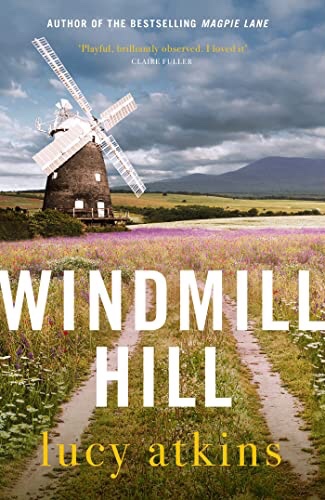
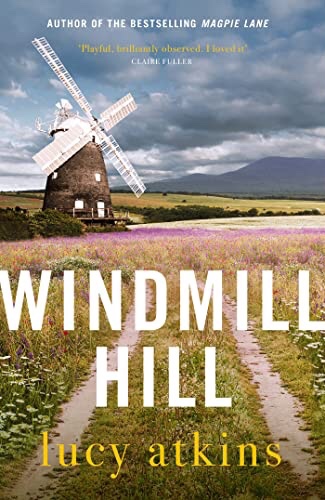
I’m a big fan of Lucy Atkins so I was eager to have her new novel straight away, she’s one of those writers I just pre-order without question. I was lucky to get an early copy on NetGalley this time. This is her fifth novel and centres around two older women who live together in a windmill with several dachshunds named after brands of gin. Astrid was a successful actress, but is perhaps more well-known for her stormy marriage to the actor Magnus Fellowes. There’s also notorious ‘the incident’ at a remote hunting lodge where a young movie star was the victim of an assault. While Magnus went on to global fame, Astrid retired to her crumbling windmill. She still lives there with friend Mrs Baker, a woman who came to clean twenty years ago and never left. Now Magnus is writing his memoirs and his son, Dessie, has hired a ghost writer. Nina visits the windmill because she wants to hear Astrid’s side of the story, mainly because she’s finding herself censored by Dessie, who wants to control his father’s narrative. She finds the two women in the aftermath of the ‘incident’ often referred to but not explained at first. She passes on that Magnus might like to see a Astrid for one last time. The women in this are such fantastic characters, each in their own way hiding from something but both have learned that life has seasons and they are in control of this one. I loved the friendship they both build with Nina who is open to a friendship with two older women, perhaps realising how much wisdom and life experience they both have. There’s also a great tension that builds around the recent ‘incident’ and the one from years before, as Astrid leaves for Scotland feeling strangely unmoored but determined that this time Magnus will not be in charge. This is a thriller, but with humour, warmth and dachshunds.

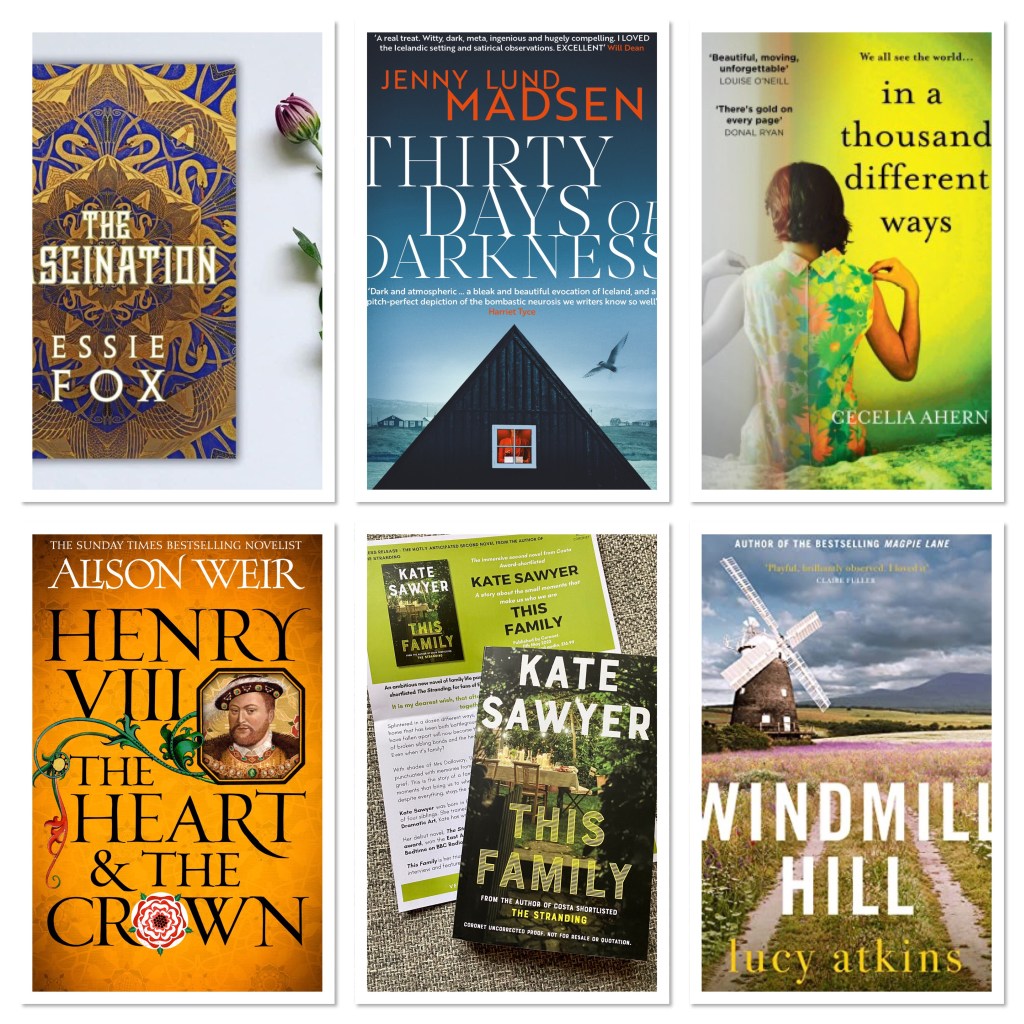
Next month’s reading looks something like this:

Posted in Orenda, Random Things Tours

The Fascination by Essie Fox.

Victorian England. A world of rural fairgrounds and glamorous London theatres. A world of dark secrets and deadly obsessions…

Twin sisters Keziah and Tilly Lovell are identical in every way, except that Tilly hasn’t grown a single inch since she was five. Coerced into promoting their father’s quack elixir as they tour the country fairgrounds, at the age of fifteen the girls are sold to a mysterious Italian known as ‘Captain’.

Theo is an orphan, raised by his grandfather, Lord Seabrook, a man who has a dark interest in anatomical freaks and other curiosities … particularly the human kind. Resenting his grandson for his mother’s death in childbirth, when Seabrook remarries and a new heir is produced, Theo is forced to leave home without a penny to his name. Theo finds employment in Dr Summerwell’s Museum of Anatomy in London, and here he meets Captain and his theatrical ‘family’ of performers, freaks and outcasts.

But it is Theo’s fascination with Tilly and Keziah that will lead all of them into a web of deceits, exposing the darkest secrets and threatening everything they know…

Exploring universal themes of love and loss, the power of redemption and what it means to be unique, The Fascination is an evocative, glittering and bewitching gothic novel that brings alive Victorian London – and darkness and deception that lies beneath…

As regular readers to this blog know, I am never happier than when I’m reading a book about the seedy underbelly of Victorian society. I love being able to disabuse people of the notion that the Victorians were so buttoned up they would cover the legs of a grand piano! In fact the Victorians were no different to us, trying to keep a veneer of respectability on the surface whilst having all manner of private interests and lifestyles underneath. Essie Fox has created an absolute phantasmagoria of fairgrounds, travelling ‘snake oil’ salesmen, freak shows and private bestiaries. Her vivid descriptions really grabbed me early on and they create such a strong, colourful sense of place. This is the written equivalent of The Greatest Showman or a Baz Lurhmann film like Moulin Rouge, a dazzling spectacle that tantalises the senses. However, as with all shows, away from the bright lights and trickery there is a darker history and the author doesn’t shy away from showing it to us. There are those addicted to opium to dull their mental and physical pain and others who are dependent on the fake ‘cures’ offered by the twin’s father. Out of all people who are other, some find the relative safety of a troupe or family put together by someone like the Captain, others are less lucky and end up enslaved, forced into degrading displays with no means of escape. There are greedy men, pillaging the world for various specimens of flora and fauna, similarly there are more specialist collecting men like Lord Seabrook who keeps a private collection of human freaks with no understanding that these are people not specimens.

Women are shown to be particularly vulnerable to exploitation. Our central characters, Keziah and Matilda are sold, but are very lucky to end up with the Captain who keeps them and places Matilda in various pantomimes and shows in the West End. There’s a conflict here between our outlook on disability today and that of 150 years ago. We might look at freak shows and displays with distaste, but without a welfare state and with superstition and shame surrounding disabilities and disfigurements, they were a legitimate and lucrative way to earn money. If the decision to display their unusual body was an independent one and they received a decent portion of the money they earned it could allow a person with a disability to support themselves. Matilda has the addition of a beautiful voice, a talent that would interest London theatres rather than a freak show or circus. The vulnerability of all women is shown by those like Mrs Miller, friend and patron of our hero Theo, who admits to an unexpected pregnancy in her youth and a baby born with wings or shoulder blades that developed outside the skin. Her condition left her penniless and abandoned by her lover, then bereaved when she wakes after the birth to be told her child has died. Women with differences were exploited terribly, from freak shows to private displays in gentlemen’s clubs and large private homes, all the way to brothels who had workers for the more unusual tastes. I feared for the twins who are both vulnerable, but especially Matilda who craves the pretty clothes, the bright lights and the adulation of the crowd. The author fills her performances with a sense of wonder as she flies over the heads of her audience with her iridescent fairy wings. Her love for this incredible feeling does lead her down a dangerous path, with Keziah and the Captain worried for her life.

The twins path crosses with Theo’s as they travel with their father and the fairground, but it’s as he meets them again in London that their stories cross over and his fascination with them continues. His father, Lord Seabrook, has a love of human curiosities and the ruthless way he dispenses with his own son made me wonder what lengths he might go to if he sees something he wants for his collection. I enjoyed the crossover between Theo’s interest in medicine as a career and the way he ends up earning a living at Dr Summerwell’s Museum of Anatomy. Obviously, medical researchers are also interested in difference and disfigurement, just with a slightly different gaze. Yet I don’t think Theo expected to be in a shop with leathery bats wings hanging from the ceiling and a model of the insides of a pregnant woman on display. The history of medicine is fascinating and this type of medical study leads to the classification and medicalisation of disability we see today. The author cleverly explains the changes in how disfigurements were viewed in the character of Martha who has a hare lip and wears a veil outside to cover her face. In times past a ‘hare’ lip, now known as a cleft lip/palate, would have been viewed with superstition and it was thought to be caused by a hare startling the pregnant woman. It’s now known that the lip and palate don’t develop properly and it’s usually corrected by surgery. Here Essie Fox tells us about the new operations in the 19th Century using pieces of wood or a piece of flesh taken from the leg to stitch the skin over and close the gap. It shows how something once inexplicable goes from being magical or suspicious to become something medical to be cured. I really enjoyed and appreciated the background research lying underneath the fantastical surface.

This really is a magical bit of storytelling with a couple of great heroines who I was rooting for throughout and a hero I was very unsure of till the end. I admit to being a little bit in love with the Captain with his long silver hair, his musical talent and his lost love. Having a disability myself I was firmly on the side of those thought of as ‘other’ and there are messages here about accepting difference that are just as pertinent in the 21st Century. I also felt there were warnings about over-medicalising difference. Labels are important in some ways, but they can also restrict and mislead. When counselling, if I see people with my disability, multiple sclerosis, I remind them that this is known as the ‘snowflake’ disease; from a distance it’s the same, but when you look closer we’re all uniquely different. This is a wonderfully Gothic tale, but is also full of colour, humour, love and life – in all it’s wonderful forms.

Meet the Author

Essie Fox was born and raised in rural Herefordshire, which inspires much of her writing. After studying English Literature at Sheffield University, she moved to London where she worked for the Telegraph Sunday Magazine, then the book publishers George Allen & Unwin – before becoming self-employed in the world of art and design.

Always an avid reader, Essie now spends her time writing historical gothic novels. Her debut, The Somnambulist, was shortlisted for the National Book Awards, and featured on Channel 4’s TV Book Club. The Last Days of Leda Grey, set in the early years of silent film, was selected as The Times Historical Book of the Month. Her latest novel, The Fascination is based in Victorian country fairgrounds, the glamour of the London theatres, and an Oxford Street museum full of morbid curiosities.

Essie is also the creator of the popular blog: The Virtual Victorian She has lectured on this era at the V&A, and the National Gallery in London.

Posted in Publisher Proof, Random Things Tours

Henry VIII The Heart and the Crown by Alison Weir

I came to this book with quite a store of Henry knowledge – I promise not all of it comes from The Tudors, but this has been a great excuse to dig out the series again and enjoy Henry Cavill in leather trousers. In my previous home I had the alcoves each side of my fireplace turned into bookshelves and one side was all books on the Tudor period. A mix of novels and non-fiction it covered all the usual authors: David Starkey, Phillipa Gregory, Lucy Worsley, Alison Weir and many more. I have read each of Weir’s six wives series and her other novels on Elizabeth I and Lady Jane Grey. Her last novel was based on Elizabeth of York, Henry’s mother and daughter of Edward IV. All of them have been that brilliant mix of sound background research and an ability to get inside the characters and bring them to life. However, you don’t have to read any of her earlier work to enjoy this book, I’m just a Tudor Nerd! I wondered how Henry would fare, given that her previous books have shown great empathy for the position women found themselves in at the Tudor Court, especially where that ill treatment was at Henry’s hands. Interestingly, I read this alongside Prince Harry’s autobiography Spare, something that fascinated me given that Henry VIII’s story is largely influenced by that dynamic of ‘heir and spare.’ Henry is the man who was never intended to be king. Only the death of his brother Arthur, Prince of Wales, opened the way for a king who seemed almost meant to be. How could this well-built, ornately dressed and powerful man of the Holbein portrait not have been the King? It seems strange to think he was probably destined to be Duke of York and of much lesser importance than the huge presence he still is in our royal history. Did I see parallels between the man whose Twitter followers call Good King Harry and this similarly red-haired Tudor spare? Only a few!

I thought what Weir did really well was put Henry’s controversial and bloody reign into context. It’s easy to forget where Henry comes from and how violent and treacherous the route to the Crown was prior to his birth. As Weir explains, Henry’s maternal grandfather was Edward IV, a man who took the crown in the years of fighting between the York and Lancaster royal houses, known as the Wars of the Roses after the county emblems of the white and the red rose. However, it was also known as the Cousin’s Wars and to put that in a modern context it’s as if Princes Harry and William fought for the crown against Princesses Beatrice and Eugenie. It took a concerted effort by Henry’s grandmothers Margaret Beaufort and her rival Elizabeth Woodville to bring both houses together with a royal marriage and the new emblem of the Tudor Rose. Margaret was Henry VII’s mother and fought hard for her son to claim his crown, which he eventually did on the battlefield against Richard III. Elizabeth was Edward IV wife and despite losing both her sons, the rightful heirs to the throne who are believed to have been murdered in the Tower of London, she encouraged her daughter Elizabeth of York to make a political marriage to Henry Tudor, the new King. The emblem of their arranged marriage was a red rose for Lancaster with a white centre for York. These became known as the Tudor Rose and can be seen in many Tudor palaces and churches like York Minster. The country had endured years of in-fighting, from huge battles to hidden murders such as Edward IV and Richard, then Duke of York, allegedly murdering their brother by drowning him in a barrel of malmsey. Henry’s parents brought some stability to the country, despite Henry VII’s constant paranoia about usurpers and the lost Princes from the tower reappearing. If we imagine all of this followed by the death of Henry’s elder brother Arthur who died without heirs, it’s possible to see some of pressure upon the young king’s shoulders. Considering the paranoia he witnessed in his own father and his grandmother Margaret who drilled it into Henry that the only way to keep the crown secure was to have heirs, we can see the seeds of Henry’s own obsessions, paranoia and hatred of betrayal.

Often we only see the later King Henry on television and in fiction, because those latter years of his reign from meeting Anne Boleyn onwards are so dramatic. It’s easy to forget that Henry ruled and lived happily with his first wife and Arthur’s widow Catherine of Aragon from 1509 until he met Anne Boleyn in 1525, although he remained married to Catherine until 1533. There are only fourteen years between his marriage to Anne until his own death in 1547, in which he married, divorced or beheaded four more wives. I loved how Weir captures the earlier and often ignored years of Henry’s reign because we see something of the great prince that all of Europe were talking about. A tall, handsome and robust young man in direct contrast to his brother Arthur, he was also a great horseman and a competitive jouster. He was often reprimanded for missing lessons in order to go hunting or practising in the tilt yard with his companions, usually Charles Brandon. Yet he wasn’t just an imposing physical presence, Henry was very intelligent in that he spoke French and understood Latin and was even taught by the philosopher Erasmus. He could compose music and was an elegant dancer, with a definite eye for the ladies of the court. Even his early happy years with Catherine were littered with affairs, the most famous being Anne’s sister Mary Boleyn and Bessie Blount, both of whom were rumoured to have the King’s illegitimate children. It was interesting to read about Henry’s role in welcoming Catherine as Arthur’s bride and how much he admired her from a very young age. After Arthur’s death he was adamant he wanted to marry Catherine, with a dispensation sought from the Pope for their union. Henry’s father seemed reluctant to solemnise the match, despite a betrothal ceremony taking place. I have read elsewhere that the King had considered Catherine for himself and it was only when the King died that their marriage took place, in fact it was one of the first things Henry did as King. He may not have been faithful physically but there was a constancy in Henry’s feelings for Catherine, he admired her greatly and felt she would be a fitting queen for him.

Weir also shows how different Henry’s court was from his father’s. Henry VII had faults, but he was contemplative, careful when making decisions and had financially secured their reign after finding a depleted treasury due to years of war. Henry wanted to be a generous King, known to keep a a celebratory and ostentatious court. He undertook building new palaces, promoting art and culture, keeping a generous table and was determined to use some of the money saved by his father to take Calais and become King of France once more. He wanted to excel in all things, but this extravagance was also a sign of things to come, developing from generous young King to a petulant and spoiled man with a body ruined by greed, excess and risk taking. The most damaging risk being his jousting accident, where he was knocked out cold for some time and sustained a leg wound that never healed, caused intense pain and smelled terrible due to infection. I have often wondered whether it was possible that he sustained a head injury in this accident, because it does seem to be a turning point in his life, after which he made several questionable decisions. He decreed that his courtiers should acknowledge and accept his relationship with Anne Boleyn as well as his plan to make her Queen. His insistence on this point led to a relationship breakdown with one of his most trusted advisors, Sir Thomas More. The day he executed More was also a point of no return, I believe it haunted him for the rest of his life that he’d killed a good man, a man of God.

Weir made me look at Henry’s early life with more empathy than I have before. She brings to life the childhood loss of his mother (another event in common with our Prince Harry) and the huge impact it had. He remembers her softness and her gentle voice, a memory he needs when his father is preoccupied with duty. Henry has to grow up early, but little reminders of his mum pop up everywhere, especially her smell. I felt he could have been a different man if she had lived. There are some warning signs of the tyrant he becomes, because he’s jealous of Arthur from a young age. Arthur keeps his own court in Wales and Henry would love to have his own court, his own income and a bit of Arthur’s power, not to mention wanting Arthur’s bride from when she first arrived in the country. When all of it becomes his I did wonder whether there was a bit of survivor’s guilt. His father’s paranoia about losing the crown and his over-protectiveness after the death of his first son, mean he keeps Henry from carousing in bars with his friends and preserves some of his reputation for marriage. Weir shows us the weight of that history and expectation on the young prince’s shoulders. It’s something Henry is constantly pushing against, so that when he does unexpectedly become King he is determined to make changes. He has a tendency to promote men who are self-made, above the usual courtiers or advisors of his father’s. He relies on Cardinal Wolsey and after that he promotes Thomas Cromwell, a commoner and son of a blacksmith. The men who advised his father are old now and have known Henry his whole life, they’re aware of a recklessness in the young King that needs reigning in. Newly made men show the deference Henry expects as a King, but being younger and perhaps more aware of the way the world is changing they also allow him to take risks. We also see Henry’s own paranoia emerging when he and Catherine start to lose children, most particularly his two month old son. I felt like I understood Henry better after reading this novel and it was interesting to see some thoughts I’d had about Henry’s personality and behaviour placed in context. I didn’t like him more, but I did feel sorry for him in parts especially in his difficult relationship with his father. Weir provides possible reasons for the cruel and changeable behaviour that made Henry the most famous King in our history. I felt completely immersed in his psyche but also the whole Tudor court because Weir breathes life into a story we all know something about, turning historical caricatures into real people. Their problems also seem less far-fetched given Royal headlines over the last few years, although this spare ended up with the crown.

Many thanks to Headline Review and Caitlin Raynor for my proof copy of this novel and to Anne at Random Things Tours for my place on the blog tour and your support.

Meet the Author

Alison Weird is a bestselling historical novelist of Tudor fiction, and the leading female historian in the UK. She has published more than thirty books, including many leading works of non-fiction and has sold over three million copies worldwide. Her novels include the Tudor Rose trilogy which spans three generations of history’s most iconic family – The Tudors, and the highly acclaimed Six Tudor Queens series about the wives of Henry VIII, all of which were Sunday Times bestsellers. Alison is a fellow of the Royal Society of Arts and an honorary life patron of Historic Royal Palaces.

Posted in Netgalley

Windmill Hill by Lucy Atkins

One night in a remote hunting lodge with a Hollywood director causes an international scandal that wrecks Astrid’s glittering stage career, and her marriage. Her ex-husband, the charismatic Scottish actor Magnus Fellowes, goes on to find global fame, while Astrid retreats to a disintegrating Sussex windmill.

Now 82, she lives there still, with a troupe of dachshunds and her long-suffering friend, Mrs Baker, who came to clean twenty years ago and never left. But the past is catching up with them. There has been an ‘Awful Incident’ at the windmill; the women are in shock. Then Astrid hears that Magnus, now on his death bed, is writing a tell-all memoir. Outraged, she sets off for Scotland, determined to stop him.

Windmill Hill is the story of two very different women, both with painful pasts, and their eccentric friendship – deep, enduring, and loyal to the last.

I’m a big fan of Lucy Atkins and I love the multi-faceted female characters she creates and Windmill Hill is no exception. Astrid is in her eighties and shares her rather unique home with her friend Mrs Baker and several dachshund’s named after brands of gin. They live in a cottage attached to a windmill which has a quite a history but is now derelict and badly in need of renovation. We find the women in the aftermath of a terrible incident, something that is referred to but not explicit. A young writer is on her way to talk to Astrid about her ex-husband’s memoir. Nina has been hired by Magnus’s son Dessie and it’s Dessie who is shaping his father’s story and perhaps censoring the less palatable aspects of his life. Nina’s visit is about a party that took place in an old Tudor Lodge, where one thing happened between Magnus, the director Rohls and an aspiring young actress called Sally. Astrid was present and was blamed by the tabloids for the whole thing, it ruined her reputation, her career and her marriage. Dessie wants Nina to stick to the ‘official’ story, but Nina knows it’s not the truth and would like to hear it from Astrid. There’s also the fact that Magnus is dying and he would like to see Astrid one final time. Will she travel all the way to Scotland to confront him?

The more recent ‘incident’ that took place only a few months ago is only hinted at and involves Mrs Baker. She has always been mysterious, coming to the cottage as a cleaner, with no family or friends to speak of, then staying. I was immediately intrigued by her past, what was she escaping from? There are hints of a man called Alan, possibly a violent ex and I wondered whether her past had finally caught up with her. We’re seeing this through Astrid’s eyes and having it all replayed through Astrid’s memory. It didn’t take long for me to wonder whether Astrid’s memory was reliable. There’s an opacity to her recollection and the information comes in fits and starts. At one point I wondered if we were delving into magic realism, because she almost seems to slip back into the past like a time traveller. I think it was the intensity of the memories that drew her back. Some of these memories she avoided for a long time, popping them in a lockable box and tucking them to the back of her mind. So, once she did open the box it was like reliving the memory all over again. By dropping these little nuggets of information, the author kept me reading and wanting to know more too. However, Astrid also learns what can happen when these locked memories are addressed and let into the open. Lucy has a brilliant grasp of psychology and complicated relationship dynamics. We often see our ‘self’ as the constant, never changing core of us, but Lucy has been so clever here by showing us how fragmented, fleeting and changeable the self can be. There are maybe some core traits, but our sense as self can be eroded, altered by experience and through these women she shows that life has seasons.

The women’s relationship is the real strength of this novel and I loved that these two women lived together and are each other’s significant person. They’re not in a sexual relationship, but they are each other’s support, strength and companionship. These qualities are seriously underrated and when I look back in my own life it’s women who have kept me standing and helped me survive some of life’s hardest experiences. Some of the happiest times in my life have also been with my women friends. There’s also the fact that both women are survivors and that has created a strong bond between them. What better way to live your later years than with your best friend? Soul mates don’t have to be lovers. Men don’t come across well in this novel, although age and perspective have mellowed some of them and allowed them to be vulnerable and honest. Nina is a lovely character who I really warmed to soon after her arrival. The fact that she’s giving Astrid a right to reply speaks well of her, because she could have taken the money and written the book Dessie wanted. She’s more honest than that and is risking her contract by travelling to the windmill and asking awkward questions. She’s also open to friendship with these eccentric older women and their various dogs in wooly jumpers. A lot of people overlook friendship with people older than them, but they can be the richest relationships and I’ve learned so much from friendships with older men and women. Nina also wants to help the women with the windmill, a character in it’s own right. Through letters that Astrid finds in the windmill she’s let into the world of Lady Constance Battiscombe who owned the windmill in the 1920’s. I loved her antics and how they scandalised the village. It felt like the windmill also had a life of many seasons from the terrible story of the little girl killed by one of the sails, to Lady Constance’s bohemian scandals. Now, with the help of Nina, the windmill will shelter Mrs Baker, Astrid, the dogs and Tony Blair the taxidermy stoat, but will last beyond them too into another season. Full of wit, warmth and fabulous characters this is a great addition to Lucy’s body of work.

Meet the Author

Lucy Atkins is an award-winning British author and journalist. Her latest novel, MAGPIE LANE, was picked as a ‘best book of 2020’ by BBC Radio 4’s Open Book, the GUARDIAN, the TELEGRAPH and GOOD HOUSEKEEPING MAGAZINE. Her other novels are: THE NIGHT VISITOR (which has been optioned for TV), THE MISSING ONE and THE OTHER CHILD. Lucy is book critic for The Sunday Times and has written for publications including the Guardian, the Telegraph, the Times, and many magazines. She teaches on the creative writing Masters degree at the University of Oxford. 

She has written several non-fiction books including the Amazon #1 parenting guide, FIRST TIME PARENT (Collins). 

For news, events and offers see http://www.lucyatkins.com

Follow Lucy on Twitter @lucyatkins Instagram @lucyatkinswriter

Posted in Cover Reveal, Squad Pod

Orenda Books and Awais Khan Cover Reveal!!!

Author of the bestselling #NoHonour @AwaisKhanAuthor returns with an exquisite, heart-wrenching, eye-opening new novel #SomeoneLikeHer

And LOOK at this jacket!

The blurb:

A young Pakistani woman is the victim of an unthinkable act of vengeance, when she defies tradition … facing seemingly insurmountable challenges and danger when she attempts to rebuild her life.

Multan, Pakistan. A conservative city where an unmarried woman over the age of twenty-five is considered a curse by her family.

Ayesha is twenty-seven. Independent and happily single, she has evaded

an arranged marriage because of her family’s reduced circumstances. When she catches the eye of powerful, wealthy Raza, it seems like the answer to her parents’ prayers. But Ayesha is in love with someone else, and when she refuses to give up on him, Raza resorts to unthinkable revenge…

Ayesha travels to London to rebuild her life and there she meets Kamil,

an emotionally damaged man who has demons of his own. They embark on a friendship that could mean salvation for both of them, but danger stalks Ayesha in London, too. With her life thrown into turmoil, she is forced to make a decision that could change her and everyone she loves forever.

Exquisitely written, populated by unforgettable characters and rich with

poignant, powerful themes, Someone Like Her is a story of love and family, of corruption and calamity, of courage and hope … and one woman’s determination to thwart convention and find peace, at whatever cost…

Out in August! Pre-order your copies today!

Print – https://geni.us/AXv7bEbook – https://geni.us/6hAyuR

Meet The Author

Awais Khan is a graduate of the University of Western Ontario and Durham University. He has studied creative writing with Faber Academy. His debut novel, In the Company of Strangers, was published to much critical acclaim and he regularly appears on TV and Radio. The critically acclaimed No Honour was published in 2021. Awais also teaches a popular online creative writing course to aspiring writers around the world. He is currently working on his third book. When not working, he has his nose buried in a book. He lives in Lahore.

Posted in Orenda, Random Things Tours

Thirty Days of Darkness by Jenny Lund Madsen

The first thing I loved about this book was that stunning cover. I hadn’t fully taken it in when I received the book, but once I’d found my reading glasses I couldn’t stop looking at it. That tiny lit up window, a little orange glow of creativity in the darkness really fired up my imagination. I’d love Orenda to create some book posters to accompany their author’s work. The blurb drew me in with it’s conflict between genre authors and their supposedly high brow literary fiction colleagues. Hannah writes literary fiction and is dismayed at a book festival to see the crowds attending a Q and A with Jørn Jenson, the darling of Scandi Noir, who churns out a formulaic book every year. Yet he’s filling a tent with fans and she’s in a lonely booth waiting for someone to drop by. I loved that she launched a book at his head! In the ensuing row, Jensen goads Hannah into saying she could write a crime novel in a month. Her agent uses the incident as a great marketing strategy and pours fuel on the fire, talking to the press about the wager and even putting Hannah on a plane to Iceland as a writing retreat. There she will live with a lady called Ella and hopefully, within thirty days, complete a commercial success. Yet within days of Hannah’s arrival there’s a real life crime, as Ella’s nephew Thor is found drowned in the waters of the harbour. Can Hannah use the case to write her crime masterpiece? As she starts to ask questions about this small town community will she find inspiration, or will she be in more danger than she ever imagined?

Hannah is an interesting heroine in that she isn’t all that likeable at first. She’s prickly, arrogant and a definite book snob.

“Hannah Krause-Bendix has never received a bad review. Not once has anyone had a negative thing to say in any of the reviews of her four novels. A literary superstar, twice nominated for the Nordic Council Literature Prize. Didn’t win, but that doesn’t matter; anyway, she doesn’t believe the mark of good literature is how many awards it’s won. She’s actually refused the numerous other prizes she’s won over the years. No – Hannah sees herself as a forty-five year old living embodiment of integrity and will always maintain that it is beneath her to seek commercial success.”

I was starting to feel sorry for her editor and publisher. Her disgust for the current literary scene is obvious. She hates festivals and signings, prizes, social media and is dismissive of bloggers (how dare she – *swoon*). As she picks up Jensen’s latest book as if it is ‘a pair of homeless man’s lost pants’ she notes that most of the reviews are from obscure bloggers she’s never heard of. She’s no better as she arrives in Iceland, annoyed that her new landlady is late, that her jeep looks and sounds like it’s five miles off it’s new home at the scrap yard, plus she drives with her steamed up glasses so close to the windscreen that Hannah wonders whether she can drive, or even see. Then she makes the terrible faux pas of calling her friend and publisher Bastian to get her a flight back to Copenhagen, assuming Ella can’t understand her. Of course she can. I was cringing about her behaviour. Yet I didn’t dislike her. Despite these failings, plus the alcoholism, infidelity, snooping and complete conviction she’s in the right, there’s something rather freeing about her impulsiveness. We all have those thoughts, those imps of the perverse, that pop into our mind and encourage us to poke that person who’s bending over to reach a low shelf in the supermarket. We don’t do it of course, but Hannah does. In the course of the novel she randomly feels a homeless man’s head, buys the town teenagers alcohol, starts an affair with someone she’s barely met and as we know, tries to hit a man in the head with a book. She seems disconnected from others in the sense that we don’t know her family, she has few obligations and she thinks nothing of asking very personal questions in entirely inappropriate circumstances. I sort of loved that.

There is definitely a blackly comic element to this story and a satirical eye for both the book world and crime fiction in general. There’s a meta element to the story too, as Hannah makes observations and discoveries about crime fiction that then seem to bleed into the actual case. She observes that her investigations are suggesting the case is actually quite simple to solve, Jørn, who has followed her to Iceland, advises that in crime fiction the killer is never the most obvious suspect. Subsequently, her enquiries move from the her current suspect and start to take a darker turn, towards the last people she’s suspected. Jørn tells her:

“ a good crime novel has three crucial components. One: a spectacular and violent opening, preferably a murder. Two: false leads and false suspects. […] Point three is surprises.’

He also rather amusingly points out that the protagonist shouldn’t be likeable, because no one enjoys a likeable protagonist in crime. In fact during a violent clash with her first, rather boringly obvious suspect, she even doubts her own credentials as a protagonist. As she fights for her life, she berates herself for her stupid plan of luring him to a window, because she’s now in front of an open window with a possible murderer.

Of course, he isn’t the murderer after all. In the end the crime is complex and rather like the book of Icelandic sagas that Ella gives her to read. The roots of this murder lie way in the past with the last people Hannah suspected. In fact in the echo of the saga, someone takes something that is highly prized and didn’t belong to them, setting in motion years of secrets, lies and denial. Yes, there’s a lot of the clever stuff going on that us ‘weirdo’ readers like, as one teenager describes Hannah’s fan base, but there’s also a solid thriller as well. It’s a bleak and claustrophobic atmosphere as soon as Hannah reaches the island where she knows no one and feels alien. The remoteness of the town and it’s isolation when the bad weather comes just add to that sense of being completely alone. This is not a place to be injured or to be a victim of crime; there is only one police officer in town, with back up over an hour away on a good day. Jørn may preen and prance around like the archetypal action hero, but he is surprisingly very useful to have around in a sticky situation and despite his woeful writing, is possibly a good friend to have, especially where he’s the only familiar and friendly face. Alongside Hannah I suspected three or four different people and the author kept me guessing, just leaving tiny clues along the way. At first there was a little bit of scepticism -I remember watching Murder She Wrote with my parents when I was younger and my dad wondering why nobody told Jessica Fletcher to ‘bugger off and mind her own business’. However, once the action started to heat up I forgot that Hannah had no business interrogating suspects and just kept reading. She’s no Jessica and this is definitely not cozy crime. It’s dark, disorientating and scary as hell, but you’ll not be able to put it down. This is an incredible debut and I’d love to see where Hannah ends up next. Now back to that cover – I think it would make a lovely tote bag ……
Meet The Author

Jenny Lund Madsen is one of Denmark’s most acclaimed scriptwriters (including the international hits Rita and Follow the Money) and is known as an advocate for better representation for sexual and ethnic minorities in Danish TV and film. She recently made her debut as a playwright with the critically acclaimed Audition (Aarhus Teater) and her debut literary thriller, Thirty Days of Darkness, first in an addictive new series, won the Harald Mogensen Prize for Best Danish Crime Novel of the year and was shortlisted for the coveted Glass Key Award. She lives in Denmark with her young family.

Posted in Netgalley

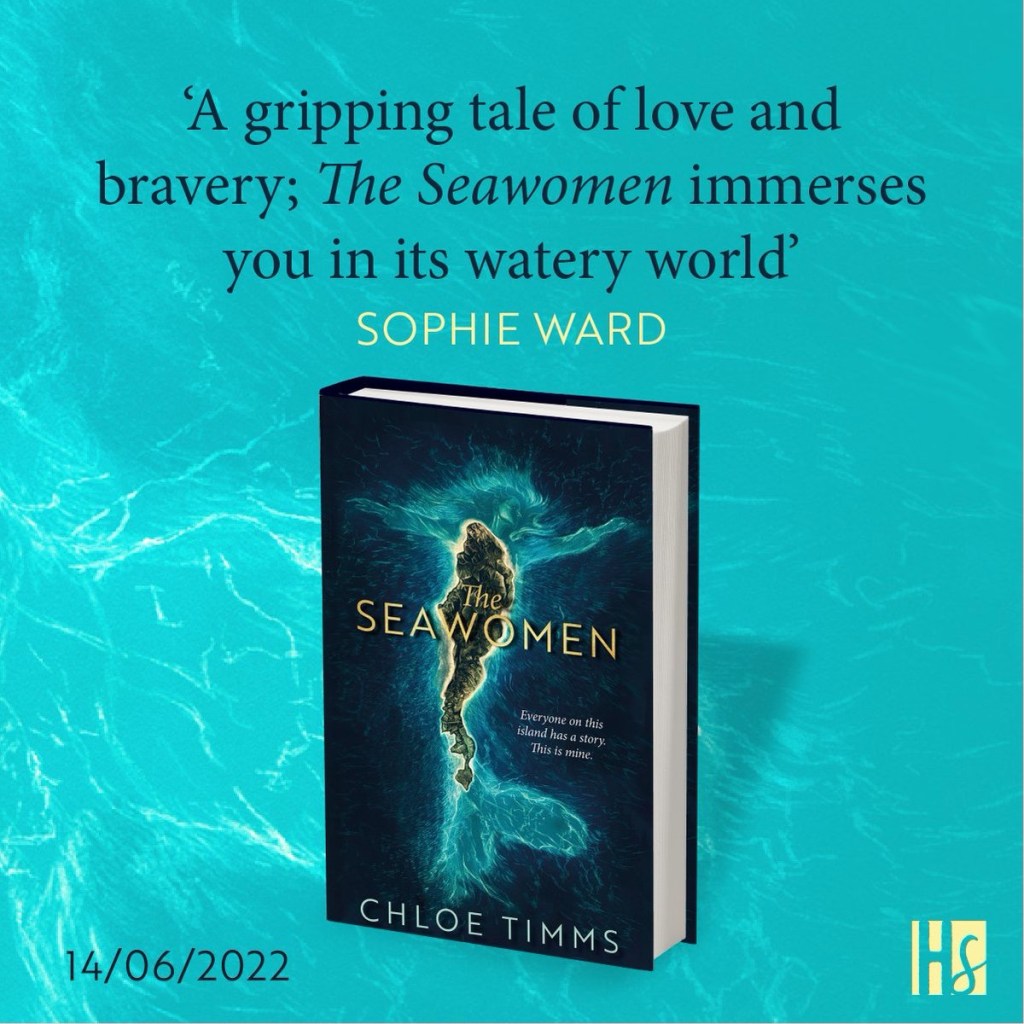
The Seawomen by Chloe Timms

The memory of that day is a part of me now, tough like hardened skin. You never forget your first. You hope and pray it will be the last you ever see. You already know. Deep down. It’ll happen again and you will have to watch. The screaming, the waiting, watching her body tied down, the boat rocking and shunting, capsizing. Drowning. The point where you can see with your own eyes what it means to be a woman.

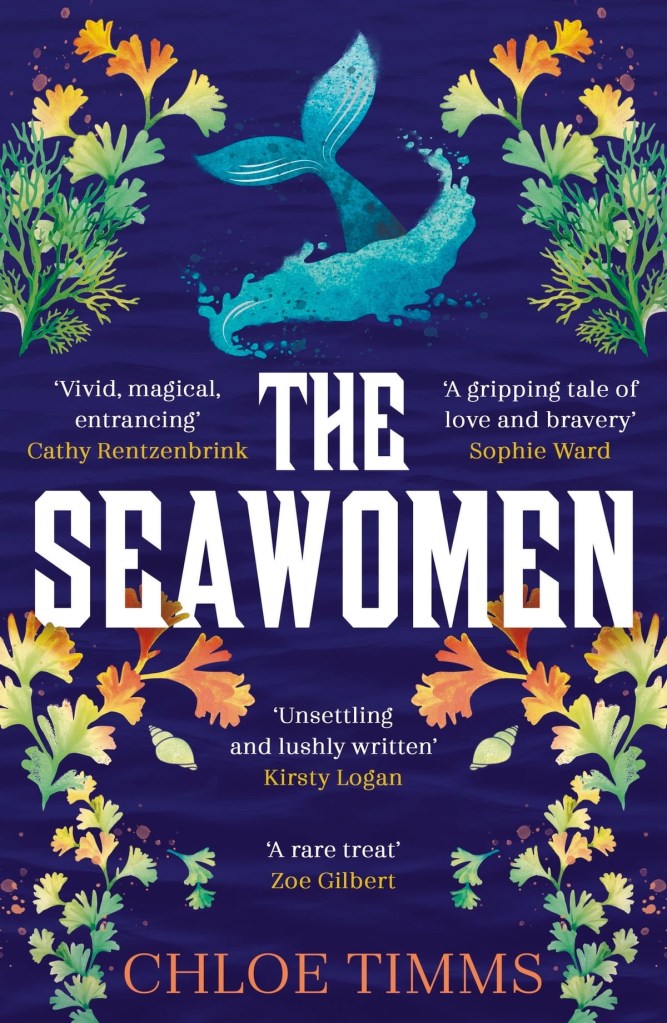
Wow! This book was so evocative, from the author’s descriptions of the island’s landscape to the way of life followed by it’s inhabitants. It felt oppressive and bleak, but also strangely mystical. On an isolated island with no access to the ‘Otherlands’ beyond, a religious community observes a strict regime policed by male ‘Keepers’ and female ‘Eldermothers’ under the guidance of their leader Father Jessop. There were shades of The Handmaid’s Tale in this community, that polices it’s borders and it’s women. Women must not go near the water, lest they be pulled into the wicked ways of the Seawomen, seemingly a species of Mermaid. The water can breed rebellion in the women and cause bad luck for the islanders. Any woman could be singled out by the Eldermothers, so they must learn to keep their heads down and stay away from the water. Any bad luck – crop failure, poor fishing quotas, storms, pregnancy loss – all can be blamed on the community’s disobedient or disloyal women, influenced by the water. Each girl will have their husband picked out for them and once married, the Eldermothers will assign her a year to become a mother. If the woman doesn’t conceive she is considered to be cursed and is put through the ordeal of ‘untethering’ – a ceremonial drowning where she is tethered to the bottom of a boat. Esta is a young girl who lives with her super religious grandmother, but often asks questions about the mum she has never known. Her grandmother insists she sees a darkness in Esta and is constantly praying and fasting so that Esta doesn’t go the same way as her mother. The sea does call to Esta and she goes to the beach with her terrified friend Mull, to feel the water. There they see something in the waves, something semi-human, not a seawoman, but a boy. Will Esta submit to what her community has planned for her or will she continue to commune with the water?

The book opens with a description of an untethering ceremony, throwing us directly into the brutality of the Keepers and the terror of the drowning woman. It’s a visceral opening and cleverly leaves the reader very aware of the fate our heroine could face. I felt this really added to the atmosphere of the book, raising the tension and our trepidation for this bold and intelligent young woman. We don’t want to see her life mapped out for her with all the restrictions it implies, but we equally don’t want to see her become the next victim of this barbaric, patriarchal society. I also felt strangely unmoored by the setting. I saw in my mind’s eye, a rugged and weather beaten Scottish isle, miles from it’s neighbours, yet I couldn’t pinpoint it’s place in history. The clothing and the attitudes are strangely old-fashioned. The religion is very puritan in tone: a personal relationship with God is encouraged, along with modesty, industry, male domination and of course obedience. Having been brought up in an evangelical church I can honestly say these attitudes and expectations, especially the pressure on young women, is still alive and well in those types of communities. So we could be in the 19th Century or it could be yesterday. Father Jessop’s preaching is that that Otherlands are toxic, their land contaminated and their ability to produce wholesome food curtailed by their inability to listen to their God. This gave me the sense of a dystopian future, where perhaps global warming has decimated most of the planet and only these remote outposts survive. Adding to this sense of disorientation are the islander’s names, more like surnames than forenames the men have names like Morley or Ingram whereas the women have names like Seren and Mull. I felt genuinely uneasy about the island and felt something evil lurked under the piety and the fatherly control, something far uglier, that a rebel like Esta might awaken.

Esta’s questing mind is what drives the story forward. There are too many secrets in her background. She knows that the burn scarring on one side of her face happened when she was a baby and the house burned down killing her mother and whoever else was inside. Only Esta survived and her grandmother’s negativity surrounding her only daughter is excessive and this doesn’t allow Esta to ask questions or hear about a different side to her mother. She knows that there’s more to her history than she’s been told. Another conundrum is her grandmother’s cousin Barrett, a fisherman who lives by the harbour, as close to the water as he could be. He lives alone after the death of his wife and is possibly the only islander to have come across a Seawoman up close and was injured in the process. However, he doesn’t talk about his wife or where he went in the sea after her death. There are too many questions for a girl who’s already unsure whether she believes in the dark myths of the Seawomen, or the darkness she is potentially harbouring at her centre. Despite her upbringing there is a part of Esta that does question, that challenges and most importantly can accept that those in authority might be wrong. It’s a self belief and confidence that will stand her in good stead for what’s to come.

I had so many suspicions and theories of my own as the story unfolded, not just about Esta’s past, but about the patriarchal society itself. The last third of the book really did pick up the pace and we see the iron will of Father Jessop and the cruelty he is prepared to inflict in order to stay in control. I was so deeply pulled in by Esta’s will and her instinct to get away, that I felt anxious. I wanted her to have something in life that most of us take for granted, another person who truly cares for her and loves her. This feeling intensified as she is promised in marriage and goes to live with her husband’s family; a family who have a very low opinion of her and a husband who loves someone else. The way the author opens up the truth of the island is by using one of the older women who has some of the answers and also shows Esta that there are others who think the way she does, they just fly under the radar so they remain safe. To Esta this is unthinkable, to know the truth but continue to live under the false tyranny imposed on them feels cowardly to her. What will happen when the Esta’s story reaches its conclusion, when she might face the very ceremony she feared so much at the beginning? Will these free thinking individuals stand up for her? Even more important to me, was whether or not Esta reaches the Otherlands and the freedom she longs for, or whether she is fated to be forever one with the sea.

Published 14th June 2022 by Hodder Studio

Meet The Author

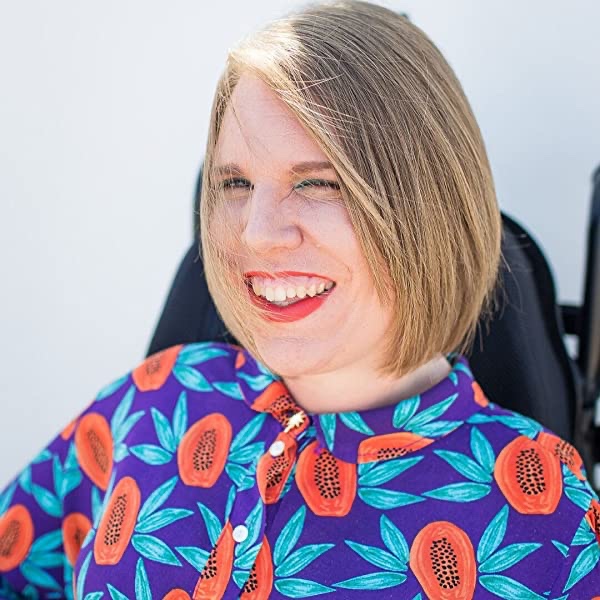
Chloe Timms is a writer from the Kent coast. After a career in teaching, Chloe studied for an MA in Creative Writing at the University of Kent and won a scholarship for the Faber Academy where she completed their six-month novel writing course. Chloe is passionate about disability rights, having been diagnosed with the condition Spinal Muscular Atrophy at 18 months old, and has campaigned on a number of crucial issues. The Seawomen is her first novel.

Posted in Squad Pod

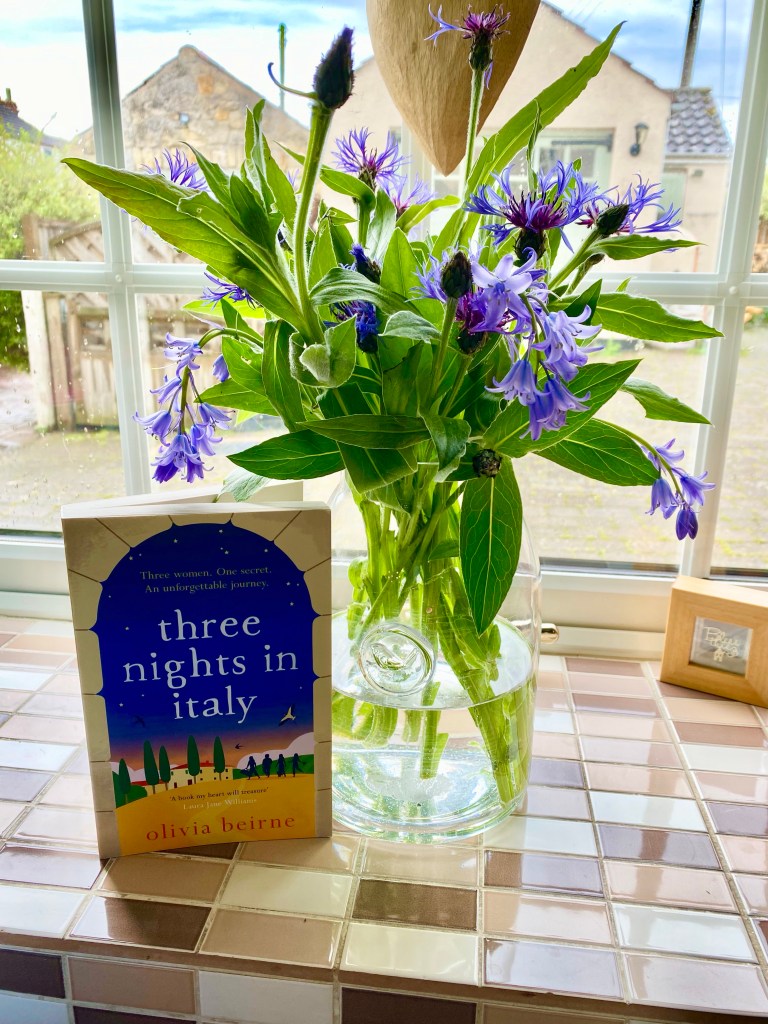
Three Nights in Italy by Olivia Beirne

As this novel opens Zoe has just lost her grandmother, a larger than life, charismatic artist who lived in Italy. Zoe and her mum Ange are left grieving in Cornwall, but they grieve differently and Zoe is worried about her mum, who appears to be in a trance but answers ‘fine’ when anyone asks how she is. Fine is a word banned in my counselling room, so I could understand Zoe’s concern. It’s a form of masking how we truly feel. Uncle Reg is dealing with all the legal and financial stuff, holding an auction of his mother’s belongings only a week after her funeral in Italy. Zoe and Ange plan to stay in Cornwall, but Zoe is uneasy about Uncle Reg and so was I. Her grandma promised her the beautiful emerald engagement ring that she claimed had magical properties. So, when Aunt Fanny turns up after being missing for fourteen years, she encourages them to travel out to Italy. She should know if it’s necessary, after all she was once married to Uncle Reg. With a reluctant agreement from Ange, they agree to travel to Italy for three nights only. They must go to grandma’s house and search for the ring before Uncle Reg even knows they’ve left the country.

Our young heroine Zoe shares the narrative in short, snappy sections with her friend Harriet, Mum Ange, and of course, Aunt Fanny. There are times when her voice gets a little lost amongst these other sparky and formidable women, especially Fanny who has chosen this diminutive of her true name Fenella just to see the blushes it causes. Zoe has stayed in her home town since school and works as a high end wedding coordinator. It’s as if she hasn’t really started in life, adept at creating and delivering the dreams of others she has forgotten her own. I loved her sparky little assistant Kitty who was giving off perky Reece Witherspoon vibes. Zoe hasn’t travelled, had a long term relationship or been to university. Her most important relationship is with close friend Harriet who also seems stuck, but we’re given more access to her inner world and she knows she’s treading water. It’s always been just Harriet and her mum, so it was a shock when Mum met someone and now has a newborn baby. They feel like a family and Harriet has felt like she doesn’t belong. Zoe has also had an all female upbringing made up of Mum and Aunt Fanny, along with holidays in Italy with her grandmother. Mum Ange remembers meeting Fanny just after she married her brother Reg and despite being so different they clicked instantly. Fanny is distinctly upmarket and while Reg always seemed embarrassed that his sister and niece were dressed by Next, Fanny never made her feel like that. With Reg working away the two women became Zoe’s parents and Zoe remembers the shock they felt when Fanny left suddenly and never contacted them till now. Zoe doesn’t have the pizzazz or individuality of her aunt or grandmother and it seems she has really suffered from the absence of these women in her life.

I enjoyed the women’s camaraderie and the way they supported each other. Despite seeming a bit disconnected from Mum at the moment, Zoe is devoted to her and wouldn’t think of leaving while she’s in this trancelike state. Aunt Fanny is the backbone of this group and such a formidable woman in her stilettos and her trademark ice-blonde bob that’s never out of place. She is loud, flirtatious and determined to live life to the full. She seems unbreakable and undaunted, buying everyone’s ticket to Italy, convincing Ange to come, overcoming obstacles and hiking in four inch heels! She grabs every opportunity to have fun and takes adversity in her stride, she even encourages the others to let their emotions out. Yet there are so many questions: where has she been for fourteen years? How does she keep her bob so immaculate? Does she really have a fortune from inventing a nail file? Why does she have other people’s credit cards? And why did she leave in the first place?

There is some romance too, with a love interest for Zoe in red-headed Sam who she meets by knocking a drink over him at the airport and pops up in the most unexpected places. They have a first date in Grandma’s town and I loved the women helping her get ready, just like they would when she was younger and going out. Even our older ladies (my age actually) have their flirtations, but this book is mainly about personal transformation though and finding your authentic self – something that’s not always easy for women who are bombarded with messages about who and how they should be. This is personified by Zoe’s grandmother whose presence is huge, despite her absence. I felt the book would have really benefited from more flashback moments between her, Ange and Zoe. She’s present in the laidback town where she lives, in her hillside home, and most of all in her paintings. The painting that’s a self-portrait of grandma in dungarees with her paint brushes in her pocket, seems to leap off the page with her life force. The depth and number of vivid colours show how vivacious she is and captures her love of life. It’s just so perfectly her, living her best life. I couldn’t bear to think of this stunning painting being sold at the auction. Even more than the engagement ring, it would have been the thing I had to keep. All I kept hoping was that Zoe could take some of grandma’s magic and apply it to her own life, to find out who she truly was and live her own fabulous, authentic life.

Thank you so much to Headline Review, Olivia Beirne and the Squad Pod Collective for the chance to read this book.

Meet the Author

Olivia Beirne is the bestselling author of The List That Changed My Life, The Accidental Love Letter and House Swap. She has worked as a waitress, a (terrible) pottery painter and a casting assistant, but being a writer is definitely her favourite job yet. Three Nights in Italy is her fourth novel.

Posted in Netgalley

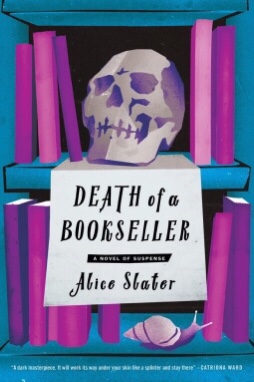
Death of a Bookseller by Alice Slater

From listening to blogger’s conversations over the last couple of weeks I’ve learned a lot about reactions to this book and it seems to have completely divided readers. Maybe all bookworms can be divided into Lauras and Roaches – I certainly found a few clues about which on I was, so that made me smile at my own ridiculousness!

“I knew she was a bookseller as soon as I saw her. She wore a green beret, the colour of fresh pine needles, and a camel raincoat like a private detective in a film noir. Over one shoulder, the grubby straps of a shabby tote bag. It was decorated with a quote in a typewriter font, and although I couldn’t quite read it, I knew what it would say: Though she be but little, she is fierce, or Curiouser and curiouser, or Beware for I am fearless and therefore powerful.”

Brogan Roach works at a small London branch of Spines – the ubiquitous high street bookshop. She pretty much runs her own workday, keeping a close eye on her precious true crime section and sneakily reserving books, but secreting them in the staff room to read later. Things are about to change though, when a new team move in to pick up sales and improve the store. They’re like bookshop troubleshooters. Sharona is the manager and her team Laura and Eli are very experienced booksellers, eager to help the public and make sure the pyramid displays are perfect. Laura Bunting is just one of those people born to work with the public. She has an easy manner, quick to smile and engage customers in conversation, magically able to sell the book of the month. People warm to her immediately, but she hasn’t warmed to Roach.

“Laura Bunting. Her name was garden parties, and Wimbledon, and royal weddings. It was chintzy tea rooms, Blitz spirit, and bric-a-brac for sale in bright church halls. It was coconut shies and bake sales and guess-the-weight-of-the-fucking-cake.”

Laura and Roach are incredibly different characters anyway, but the rot sets in on a poetry evening. All the staff go, but Laura is performing. Her poetry takes the killer out of the murder narrative. She performs found poetry created from serial killer narratives, but telling the story of the women instead. Roach seems to miss the point though and as Laura comes off stage she greets her with excitement as if she’s a fellow true crime enthusiast. She wants to engage Laura in a debate over whether adding the violence she’s omitted might make the poems more exciting, or appeal to a larger audience. This would be fine if they were both enthusiasts, but they’re really not. For Laura, this is personal. Years before, Laura’s mother was the victim of Leo Steele, a prolific strangler. Laura hates true crime because it always tells the killer’s story. The whole point of her poetry is to right that wrong so she becomes furious when Roach misses the point. Other than that the pair just don’t click, not everyone does. Laura is the type of bookworm I know and love – she has the tote bag with the literary quote and all the book paraphernalia that signals to others she’s a bookworm. Roach sneers at this, she loves her genre but she seems to be reading exactly the same book throughout. It’s unforgivable when Roach re-inserts the violence and torture into Laura’s poetry, especially when it ends up published online. She has no concept of how much pain this will cause Laura, both personally and professionally. Laura’s full of memories of her mum that have nothing to do with her death or her killer and she thinks of her every time she walks to work.

“I think about the rhythm of my feet on the cracked path and about Patti Smith in New York, and of Joan Didion in Sacramento, and how each footstep is another connection between me and my neighbourhood, the streets on which I learned to ride a bike, where I walked hand in hand with my mother, and that despite all the pain, and the loss, and the grief, I’m tethered to Walthamstow because she still exists in the fabric of it, a ghost imprinted on every familiar sight. She knew these streets, these trees, these bricks, these bollards. These paving stones remember the bounce of her running shoes. I still can’t quite bring myself to walk past her old shop, even though it’s changed.”

Laura takes opportunities to dig at Roach and the genre she holds dear, but on Roach’s end there are sinister acts of sabotage. I found them disturbing, targeting Laura’s very sense of self. Both women are vulnerable in their own way with binge drinking and destructive sexual encounters shown as symptoms of low self-esteem. Laura’s encounters with Eli are particularly painful and indicative of relationships we settle for when we’re young and unsure of ourselves. Roach seems to have the confidence to embrace who she is, but is constructing her entire identity around her true crime fandom. There’s clearly either a jealousy or deep obsession where Laura is concerned. Is it Laura’s charm, her easy way with customers, her talent? Or is this much darker, an obsession with Laura’s proximity to a real life true crime story? Instead of seeing Laura’s work as an inspiration and a starting point for her own creative path, she decides to steal it. She even reasons that it isn’t theft, because many writers use other works in their own process. I was gripped, waiting to see if this would go further. I was unsure whether Roach even had her own identity, an idea of her authentic self, or whether this was another aspect of Laura she was willing to steal.

The book is fast paced and so addictive I read it in two short bursts over a Friday night and into Saturday morning. I was bleary eyed, but had to know. The title alludes to a death and I needed to know who would die and whether it was murder. Ironically, I found myself intrigued by the potential killers, just like any true crime fan. I loved the author’s sarcastic jibes about the book world and couldn’t help but laugh, even when I recognised myself. I thought she captured the loneliness of living and working in London as a young woman, especially in a relatively low paid job and the poor housing they find affordable. Locked in a solitary, damp flat with only books for company is a breeding ground for mental health issues, with heavy drinking used to self-medicate. It was tense towards an ending that could only be devastating for someone, but who? This was a brilliant debut thriller, that kept me rapt throughout.