Blog Feed

Posted in Random Things Tours

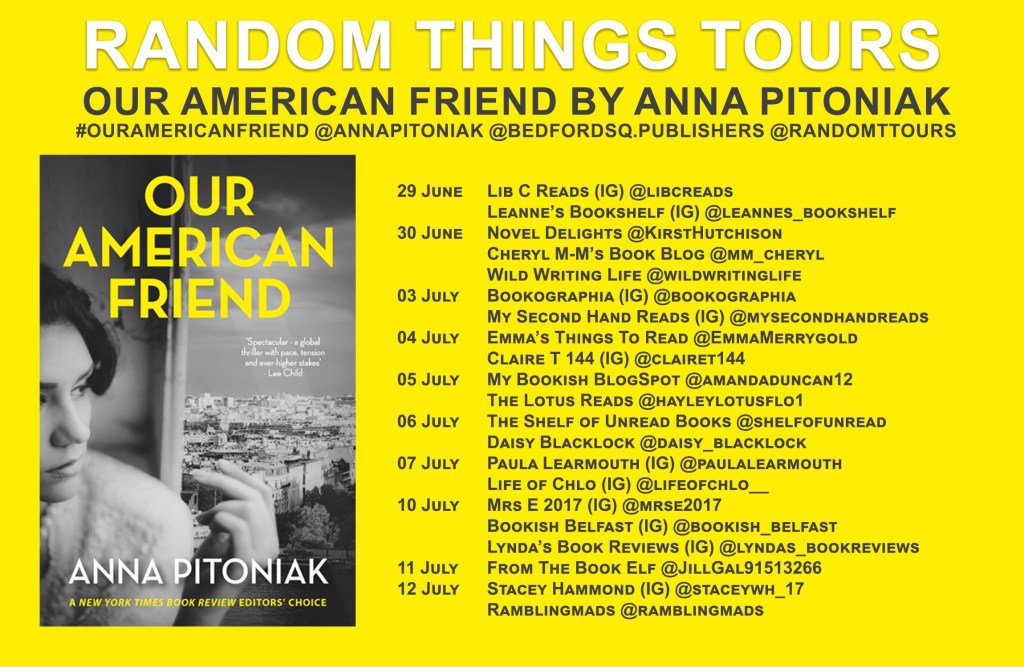
Our American Friend by Anna Pitoniak

A mysterious First Lady. The intrepid journalist writing her biography. And the secret that could destroy them both. Tired of covering the grating dysfunction of Washington and the increasingly outrageous antics of President Henry Caine, White House correspondent Sofie Morse quits her job and plans to leave politics behind. But when she gets a call from the office of First Lady Lara Caine, inviting her to come in for a private meeting with Lara, Sofie’s curiosity is piqued. Sofie, like the rest of the world, knows little about Lara – only that she was born in Soviet Russia, raised in Paris, and worked as a model before moving to America and marrying the notoriously brash future president. When Lara asks Sofie to write her official biography, and to finally fill in the gaps of her history, Sofie’s curiosity gets the better of her. She begins to spend more and more time in the White House, slowly developing a bond with Lara. As Lara’s story unfolds, Sofie can’t help but wonder why Lara is rehashing such sensitive information.Why tell Sofie? And why now? Suddenly, Sofie is in the middle of a game of cat and mouse that could have explosive ramifications.

I read a very odd tagline to a review for this book that likened it to Emily in Paris and the TV series Scandal – the comparison to either is inaccurate, because while this has the addictive quality of a thriller it goes much deeper and is clearly well-researched. The blurb immediately took me to Donald Trump and his rather enigmatic First Lady, Melania. A very different First Lady from her predecessor Michelle Obama, she certainly didn’t fit the usual mould and curiosity about their relationship and her past is certainly perfect material for a good thriller. I’m not the first to wonder whether they met at the notorious parties in NYC where very young models were supplied to meet wealthy and powerful men. The potted biography of our character Lara Caine certainly seemed to echo Melania’s journey towards becoming the President’s wife, so this hooked me straight away.

The author sets her characters within the current political climate, the era of fake news, conspiracy and what seems like a complete lack of accountability. I’m not alone in wondering who to believe any more and constantly searching for the truth beneath the headlines. The author certainly conjures up this complicated present and what it’s like to be a journalist within this maze of misinformation, but she also weaves in the fascinating Cold War era, a time absolutely ripe with complicated plots and conspiracies. It’s a clever combination, because when we think back to America and the Cold War we think of the containment of Russia, the Berlin Wall, the arms and space race between the US and USSR, and the Cuban Missile Crisis. At this time even a hint of collaboration between East and West rising to the surface, was investigated robustly and punishments were harsh. McCarthyism was the epitome of the type of paranoia on display as actors and other people working in Hollywood were interrogated and their movements restricted if any socialist or communist sympathies were found. In this country the Profumo affair brought to light a sexual scandal where our Secretary of State for war was having an extra-marital affair with 19 year old model Christine Keeler, who was also sleeping with a Russian naval attaché. Again the root of the problem was secret parties held by osteopath Stephen Ward, where he introduced young models that he knew to powerful men in politics and possibly in the Royal Family too, as portrayed in the series The Crown. This book contrasts these two moments in history as we travel back and forth in time to uncover Lara’s story. It seems that where there were once barriers, there are now complex financial and political relationships between old enemies. Russian financing seems to be behind many Western political campaigns including our own Brexit referendum. Is this simply business or have our old enemies found a more creative way to destabilise the West? I find these complicated collaborations fascinating, so this was fertile ground for a very enjoyable novel as we moved through Paris, Moscow, Washington and New York.

Anna Pitoniak uses the character and background of Lara to explore these contrasting time periods in politics. She could have been a cipher, but she’s more than that and is definitely intriguing from the start. Why would the First Lady approach a journalist who is retiring from politics and whose own political leanings are at odds with the President? Why is she choosing to share her life now, especially when there are so many secrets and who is her reader? Is she perhaps getting ahead of a narrative she knows will come out anyway, creating a chance to influence the story and perhaps gain sympathy from the reader. Sofie has to wonder whether she’s been chosen because the First Lady has had a change in outlook or because her choice of a liberal journalist will influence readers into thinking the book is a fair account, more balanced than if she’d chosen a right wing author. All of these questions were running through my head while reading, as if there aren’t enough on the page. I was full of suspicion, but Lara seems open and welcoming, giving Sofie access to her life. Slowly a relationship builds between these two very different women, potentially a friendship. There is trust but does it really work both ways? Lara gives Sofie previously hidden stories from her childhood and adolescence with access to close family members as a back up. Yet I understand Sofie’s confusion, as she starts to like this woman but remains opposed to everything about Lara’s husband – his politics, morality and the way he’s conducted himself in office. So when Lara discloses a huge secret, something serious enough to upset not just her family but global politics too, she may as well have handed Sofie a ticking time bomb. It’s a journalist’s dream to have such a scoop, but there’s a certain amount of trepidation too. This is a slow burn of a novel, but it is engaging and once you’re hooked you’ll want to see what happens. There are some twist and turns to keep the reader entertained, but the author always keeps it intelligent and historically factual underneath, especially in the Cold War sections. While I didn’t form an attachment to either character I did enjoy the story, showing how the things most important to us like love and family become threatened when pulled into the world of espionage. There are also themes of complicity and the lack of integrity rife in modern-day politics, so current as we go through scandals such as Partygate and see the daily revelations from the COVID Enquiry. I also enjoyed reading a political thriller with two women as the focus, something often lacking in this genre. This is my first novel by this author and I look forward to reading others.

Released by No Exit Press in the UK on 29 June 2023.

Meet the Author

Anna Pitoniak is the author of The Futures, Necessary People, Our American Friend, and the forthcoming The Helsinki Affair. She graduated from Yale, where she majored in English and was an editor at the Yale Daily News. She worked for many years in book publishing, most recently as a Senior Editor at Random House. Anna grew up in Whistler, British Columbia, and now lives in East Hampton and New York City.
Posted in Publisher Proof

The Apple and the Tree by Clemmie Bennett

For her debut novel Clemmie Bennet has chosen to write something so complex I have to take my hat off to her. Ella has recently lost her beloved grandmother, Lolly. They used to spend a lot of time together, exploring stately homes and royal residences, particularly those from the Tudor period. Lolly left her granddaughter a beautiful gold and sapphire ring, one that’s very precious to Ella as she remembers her grandmother wearing it every day on a chain around her neck. However, it’s when Ella puts the ring on her finger that something very strange happens. Ella feels dizzy and passes out, waking up in a field next to what looks like Eltham Palace. As a man walks towards her, Ella thinks she’s fainted in the middle of an historical reenactment. He’s dressed in the rich robes of a member of the Tudor court and his manners are impeccable, offering to let Ella rest in the palace until her memory returns. Her rescuer is Henry VIII. As Ella finds herself in the court, becoming one of Katherine of Aragons ladies, she is a fly on the wall for some of the most dramatic events in royal and religious history. Is it possible to remain an observer, or will Ella find herself tempted to intervene and perhaps change the course of history?

I’ve been fascinated by Tudor history, ever since I saw one of the Hans Holbein portraits of Henry VIIII in the Chatsworth library when I was a child. Henry seemed like a curiosity in our royal history with so many wives and scandals to his name. Once I’d read the David Starkey books and Phillipa Gregory’s novels from The Other Boleyn Girl onwards. I was also drawn to the glamour and dubious historical content of the Showtime series The Tudors, with Jonathon Rhys Meyers Henry and his best friend the Duke of Suffolk, as portrayed by the rather delicious Henry Cavill. What all these sources brought home to me was how uneven his marriages were – he was married to Katherine of Aragon for as long as he was to every other wife combined. That’s without noting his devotion to her from the moment she reached England for her marriage to Henry’s elder brother Arthur, a devotion that survived his teenage years, her first marriage and his brother’s death. They were in love, he wasn’t faithful but Kings were not expected to be faithful. The idea of a character time travelling to that period threw up all sorts of questions and I was so impressed by the bravery of the writer. Writing historical fiction means researching your period throughly, so to do that and put your character in the middle of such a well- known series of events is such a risk.

I also applaud the author’s bravery in ripping up the rule book on time travel – we all know that it is important not to change anything in the past, but Ella ignores that rule. It’s a great choice because it gives her character more freedom, but I also think it makes an historical point too. I have always said that had I been in the Tudor court, I would do a Mary Boleyn and marry someone of little importance and get the hell out of there. I have always wondered while reading about the wives and friends of Henry why you would involve yourself in the political and religious machinations of the time. Wouldn’t a life in the country as a nobody be preferable? I think that the author allows Ella to get involved because she’s making the point that it would be impossible to live in that court and not become involved. It’s a game of survival and women are both marginalised and limited in their choices. They have a choice, to withdraw for a quiet life like Mary Boleyn or fight for their place and power like her sister Anne. Ella’s choices certainly raise the tension level! She’s playing a living game of chess, trying to keep within the rules but think three steps ahead of her opponent. Of course she has the benefit of hindsight and all the Tudor history her grandmother Lolly taught her, so she might be able to win.

I thought the book really brought to life the difficulties of the time period and being a subject of Henry VIII, particularly for women. We know there are ladies in waiting, but they’re often portrayed as companions the Queen and possible lovers of the King, but here we see more of their day to day activities and their emotional lives. Ella is a 21st Century woman and because of that we can see these women as being just like us. I loved the way she formed friendships and how the women supported each other. They are portrayed as emotionally open about their marriages and the dangers they face, whether from men or from their own bodies. Fertility plays a major part in the huge decisions of this court, in fact it still does today if we think of Prince Harry’s book Spare and the importance placed upon his father to marry and have both heir and spare. It’s always a huge part of the ‘King’s Great Matter’ that Katherine had not produced a male heir, but here the author explores what these struggles were like for the ordinary women at court. There’s a moment where Ella has to cope with getting her period in a time where underwear isn’t worn and she’s having all the same worries I remember having when starting my periods, all over again. It made me realise how vulnerable women were to sexual assault as well. It broke my heart to see how terrified women were of becoming pregnant, then dreading childbirth or losing their child. Having Ella there as a 21st Century comparison really heightened how different a woman’s lot really was and how the aristocratic practice of handing your child to someone else to look after caused such pain and grief.

I came away from this book with a different understanding of both the time and the court, even Henry himself. This Henry was intelligent, tender and seductive. Despite his shortcomings, there’s a compassion in Henry that seems missing from his actions in later years. It’s interesting to see how different the course of history might have been with just a few small changes. As Ella builds a friendship with Henry, I wondered how far her influence might reach and what might happen if she ever returned to her own time. This kept me reading and there was also a huge twist I didn’t expect! This was such an interesting premise and kept me intrigued enough to read to the end. I recommend this to anyone who knows a bit about the time period and maybe thinks they know all there is to know about Henry’s court. I would be interested to know what the author would change if she went back to Henry’s court, or whether she would choose to lie low? This is such an interesting debut and I hope to see Clemmie flourish as a writer of historical fiction.

Meet the Author

Clemmie Bennett is a writer, author of the historical fantasy “The Apple and the Tree.” A professional London-based French nanny, Clemmie has been working on her debut novel for over three years, but writing a book has been on her bucket list for as long as she can remember. When she is not writing or reading, she can be found wandering about ancient royal palaces or abbey ruins, most likely despairing that time travel is not a reality – like it is for her main character.

Posted in Netgalley

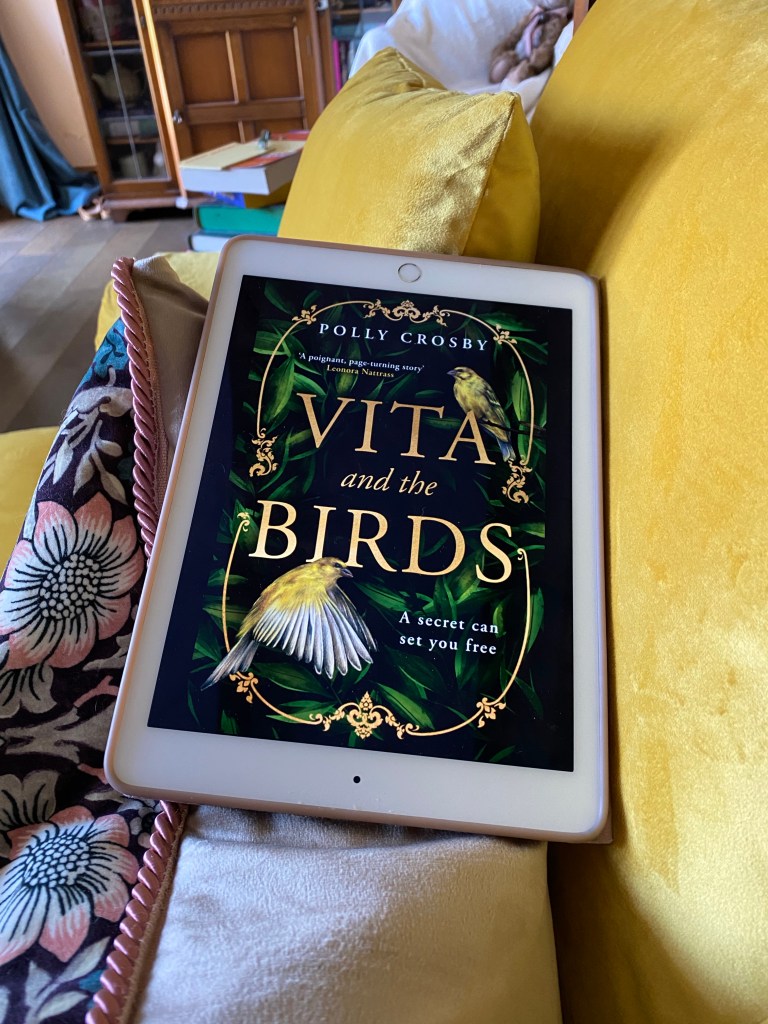
Vita and the Birds by Polly Crosby

1938: Lady Vita Goldsborough lives in the menacing shadow of her controlling older brother, Aubrey. But when she meets local artist Dodie Blakeney, the two women form a close bond, and Vita finally glimpses a chance to be free.

1997: Following the death of her mother, Eve Blakeney returns to the coast where she spent childhood summers with her beloved grandmother, Dodie. Eve hopes that the visit will help make sense of her grief. The last thing she expects to find is a bundle of letters that hint at the heart-breaking story of Dodie’s relationship with a woman named Vita, and a shattering secret that echoes through the decades.

What she discovers will overturn everything she thought she knew about her family – and change her life forever.

I’ve looked forward to the new Polly Crosby novel for a while, it was one of my most anticipated books of 2023. I love her writing so I gave myself a lovely sunny weekend to completely wallow in the story. It seemed fitting that I was outside, since nature plays a strong part in the novel both metaphorically and as an extra character that’s often more vivid than the inner spaces. Eve has felt adrift since her mum Angela died so her four brothers think it might be good for her to take a trip to the coast and clear out their grandmother’s studio. Grandmother Dodie was a painter and lived a fairly basic life in a small ramshackle studio just off the beach. Eve has fond memories of childhood holidays there, when her brothers would snuggle up with her like sleepy puppies on the studio floor at night. Close by is the strangely alluring Cathedral of the Marshes, a glass building so imposing it has the presence of such a holy building. Once, when she was a teenager, Eve had taken a dare to go into the cathedral with Elliot, one of the local boys. She remembers being terrified, but doesn’t remember much else about that night apart from seeing a painting standing on an easel. Strangely, it was a portrait of her and she ran out into the night, never to return. How will it feel to be back in a place that she has feared, but that still holds some of her best childhood memories? When she finds Dodie’s letters and reads of her relationship with Vita, she is plunged into a completely hidden part of her grandmother’s life.

This is a dual timeline novel, so through the letters we go back to the outbreak of WW2 and Dodie’s early years at the studio. She met one of her more notorious neighbours, Vita Goldsborough, resident of Goldsborough Hall and an owner of the glass cathedral. Vita and her brother Aubrey are the subject of gossip in the village. The stories are varied: Vita went mad and was put in a psychiatric hospital; Vita and Aubrey committed incest; they were to blame for ‘the vanishings’. They didn’t mix in the village and the stories around the siblings seemed to multiply and when a local girl vanished they were the first to be blamed by villagers. Strangely, as Eve arrives, a boy goes missing. It seems like an echo of the past, a foreshadowing, as if this is a thin place where memories and historical events seem close enough to touch. The physical sorting of her grandmother’s belongings is a simple enough task, she will just hire a skip, but when it comes to finding things that evoke memories and emotions they’re not so easily thrown away. Now Eve finds herself questioning the past and discovering things about this place and her beloved grandmother that she’d never imagined.

I thought this was a fascinating story highlighting women’s history and showing how much Victorian attitudes still prevailed in aristocratic society. The way Aubrey Goldsborough thinks feels around forty years out of date and the power he has over his sister we would now label as coercive control. Vita tries to explain to Dodie that his hold over her is so powerful he doesn’t have to force her, he simply has to tell her what to do and she obeys. He wants Vita to be respectable and only spend time with the right sort of people. Becoming friends with a bohemian artist like Dodie was definitely unexpected and she is the epitome of the wrong sort of company. Vita decides that Dodie must paint her portrait, something that her brother can’t really object to. Aubrey would like her to make a good marriage, but Vita’s interactions with men are fast and short-lived. Vita’s rebellions had to be passive aggressive – she gathers her jewels and keeps them in a box chained to the bottom of a pond in the glass cathedral. Hopefully, she can sell them without Aubrey knowing and have some financial freedom. She and Dodie hide in plain sight after Aubrey goes to war. They set up home in the cathedral, able to see everything around them, but thanks to the reed beds outside they are very unlikely to be seen. In another echo of her grandmother’s past, Eve meets an elderly lady in the village who asks to have her portrait painted. Eve isn’t usually a portrait painter, but can’t turn down the generous money offered for the work. She has the key to the cathedral and suggests they use it for their sitting, so Eve stands where her grandmother did many years before. What might this lady know about that time and her grandmother’s life?

The outside spaces seem to have an effect on Eve and I noticed a more natural, authentic part of her shine through. When she’s wild swimming or having a campfire on the beach with her brothers it feels like she belongs here. I was fascinated with how Polly plays with interior and exterior spaces, mirroring the parts of themselves her characters are revealing and concealing. Dodie’s studio has one glass side, leaving the whole living space open to view and her only concession to privacy is a screen where her models can undress. This is so in keeping with Dodie’s character, she is who she is and nothing is usually concealed. A beautiful detail comes when Eve is aware that putting the light on opens the space up to the outside like a stage set, but switching it off opens up the landscape outside. The cathedral is something of a paradox because I thought at first the glass would be very exposing, but Aubrey had designed it with living spaces that were kept private. I was imagining it like a Victorian glasshouse or orangery, very ornate with an almost tropical climate inside. The central ‘Turkish Room’ where Vita sits for her portrait has an otherworldly feel, with a smell of vegetation and rotting fruit. A large pool sits at the centre and church pews are placed around it upholstered with Turkish throws and pillows. There’s a sensuality to this space, the heavy warmth and the softness of pillows contrasts sharply with the glass. The room is hidden by the marsh reeds and it feels like a world apart, a feeling echoed by the ornamental bird cage engraved just for them. It holds Vita’s canaries, until one day they escape out through a hole in the roof. Yet they come back and visit Vita, eating out of her hand and filling the room with beautiful bird song. The name Eve finds scratched on the cage alongside that of Vita and Dodie should be no surprise. It’s a hope that person will return and bring a new generation back to the cathedral, represented by the flock of yellow and brown canaries Eve sees fly into the cathedral – the ancestors of those first two birds returning to their home.

As with previous novels, Polly really knows how to pile on the layers of mystery and create an undercurrent that’s quite unnerving: the painting that looks like Eve; the birdcage and the names engraved on it; the earrings Eve finds under the sink in the studio that she’s never seen her grandmother wear. Eve’s mind plays tricks on her, confused by the likeness between Vita and her grandmother, but also with herself. She’s still confused about that night when she was a teenager, when she went into the cathedral on a dare. Did she really hear a woman’s voice? Was she holding something when she ran away? Was it a shard of glass? As we move towards finding out what happened in the cathedral all those years ago the tension builds and I worried whether the two women would be safe from someone like Aubrey. Eve knows that he was found dead in the cathedral cut by a shard of glass, but was it suicide or murder? Whatever happened to Vita, someone her grandmother never talked about? There’s also the question of Eve’s mum Angela, born around the same time period but brought up by Dodie alone and has never known her father. As Goldsborough Hall was obliterated by a bomb during the war, only the cathedral remains and I wondered who owned it now? I was totally engrossed by this point and dishes went unwashed, the dog went unwalked and my other half, who knows when I’m lost in a story, kept me amply supplied with tea and toast. I do this strange thing when I’ve really enjoyed a book, I seem to hug it to my heart as if it can reach the characters inside. This was one of those books. It’s a beautiful hidden love story and an intriguing mystery as well, told with compassion and empathy.

Meet the Author

Polly Crosby grew up on the Suffolk coast, and now lives with her husband and son in the heart of Norfolk.

Polly’s third novel, Vita & the Birds, came out in May this year. Her first novel for young adults, This Tale is Forbidden – a dystopian fractured fairytale with hints of the Brother’s Grimm and The Handmaid’s Tale – is out in January next year with Scholastic.

In 2018, Polly won Curtis Brown Creative’s Yesterday Scholarship, which enabled her to finish her debut novel, The Illustrated Child. Later the same year, she was awarded runner-up in the Bridport Prize’s Peggy Chapman Andrews Award for a First Novel. Polly received the Annabel Abbs Creative Writing Scholarship at the University of East Anglia.

Polly can be found on Twitter, Instagram & Tiktok as @WriterPolly

Website: pollycrosby.com

Posted in Squad Pod Collective

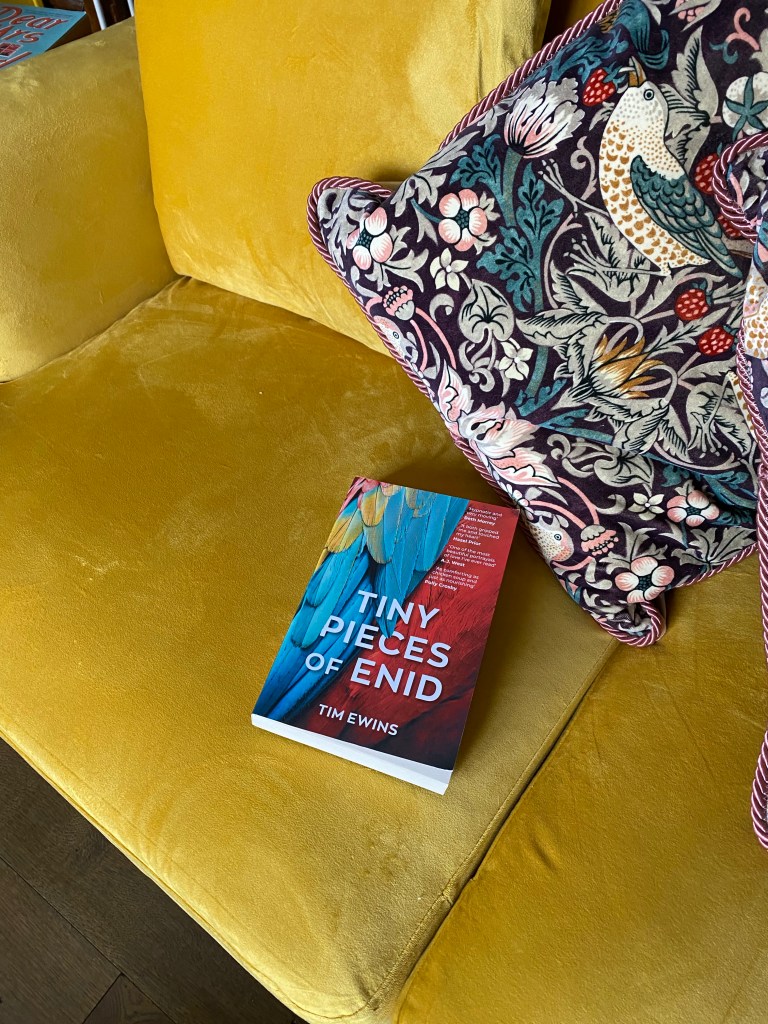
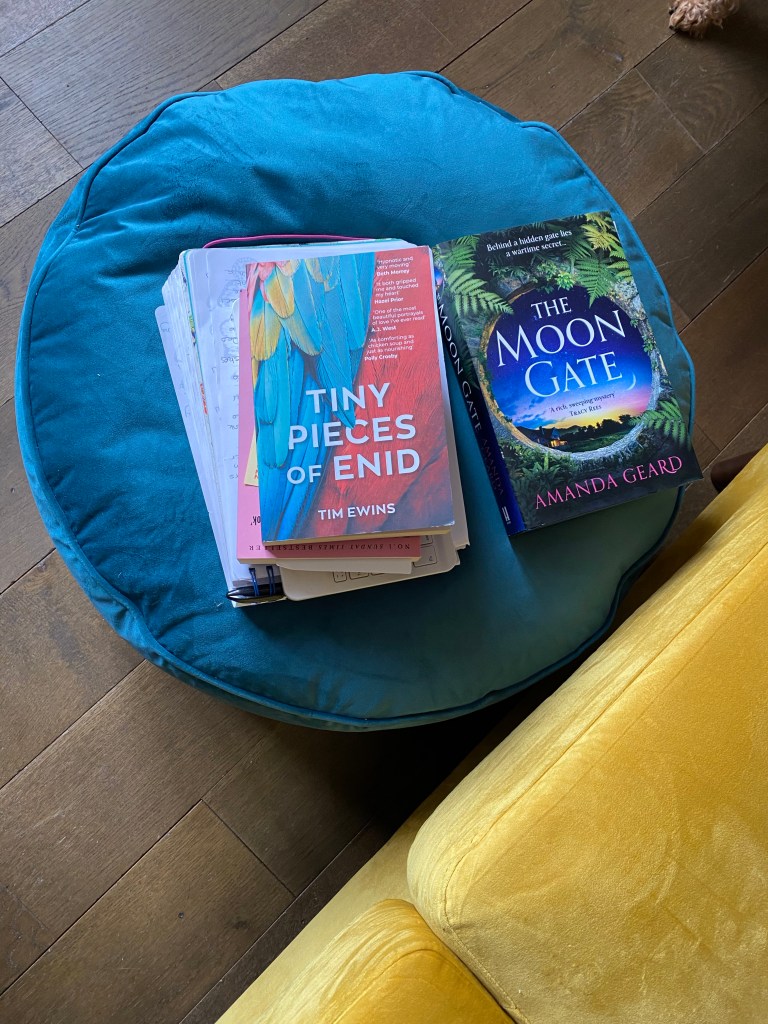
Tiny Pieces of Enid by Tim Ewins

I was so emotionally invested in this deeply moving story, written with such care and empathy for the characters, but also the people who are going through similar experiences in real life. I would also suggest hankies or tissues, a big bar of chocolate and a cat to cuddle. This is an incredible read – but you will cry, in fact if you don’t there’s probably something wrong with you. Our heroine Enid has had a stroke and also has a diagnosis of dementia. She has aphasia causing problems with comprehension and formulation of words. Often, people with aphasia know what they want to say, but find something stops them expressing it. Having looked after people who’ve had a stroke I know it is one of the most frustrating neurological symptoms someone can have. The author has set the book inside Enid’s brain – we learn that she’s not completely senile, in fact she has moments of incredible clarity and is often witty, with a great sense of humour. However, she is forgetful and shows a lot of frustration about her lot. Enid has lived with husband Roy for many years, but after another incident at home their daughter Barb has to make a horrible decision. She decides her mum would be better in a specialist nursing home, but this means separating her from her beloved husband. Enid believes that this is a temporary separation and that soon Roy will come live with her in the nursing home. Meanwhile Roy is trying to cope alone, missing his wife terribly but having to plod on without her.

In the home Enid meets Olivia, a young mum who frequently visits another resident and they have an affinity. While they might seem to be very different on the surface, they connect on a deep emotional level. Every time Olivia visits, Enid is reminded of her first marriage and the memories are painful. Enid’s husband was violent and she can see that Olivia’s husband is also a very angry man. She wants to help, to explain that she doesn’t have to stay with him, that there is happiness beyond here. The fact that Olivia and Enid become friends, despite all of Enid’s challenges is so important because Enid’s life experience could help Olivia make a definitive decision. To save her own life. Their experience shows that friendship comes in so many forms and we shouldn’t make snap judgements about who can bring something meaningful to our lives. It made me think of an observation I made a long time ago, when someone has a long term illness their life doesn’t stop at the time of diagnosis. Some people seem to think that an unwell person steps out of life, has treatment, then comes back when they’re cured but it isn’t so. There are so many of us out here, like Enid, living with an illness and even if our lives look different they’re still meaningful and worthwhile.

When Enid isn’t watching life pass by she’s remembering, it’s like her own personal movie running behind her eyes. She sees Roy, from their earlier life together and when they’re falling in love after the trauma of her first marriage. There’s her old home and her daughter Barb who was fascinated with birds, her Tom Jones & Elvis records waiting to be played. She then remembers a scar she has on her forehead. When was that from? It feels like another life. Then she’s back with Roy. Remembering their love story. Roy is her best friend.

The way the author has constructed Enid’s inner world is brilliant. All the information is there, but it’s fractured and complicated. It isn’t always there when she needs it. She’s a time traveller, not present in the moment but enjoying her early years with Roy. Then she’s with a little girl, her daughter. These memories are so clear, but the moments of lucidity are so fleeting and we’re aware that eventually they may disappear altogether. I’ve worked in a dementia unit and every week I would push one of our residents down through the village to the home he’d shared with his wife. He seemed to have no idea where we were, he was rarely, fully in the room. Mostly we would do jigsaws and he would try to wipe his nose on my cardigan. One day we were sat with his wife in the kitchen and I was helping him with his cup of tea when he looked over at her. Then he looked at me and said ‘I don’t know who this lady is, but isn’t she kind? I like her’. It made me cry that they had a whole history that he couldn’t recall, but in that moment he knew she was special. There was a little glimmer of feeling. It’s hard to live separately from someone you’ve had a life with, especially when the relationship hasn’t ended. You’re living like a single person again and while you can always visit your partner (and appreciate the respite from being a full time carer) there are parts of that person you miss. The tragedy is you didn’t need to separate from the person, just their condition. So it was easy to understand Roy’s decline without Enid, he’s lost the shared jokes, the conversational shorthand and that sense of it being the two of them against the world. Although Enid is safe, part of Roy will wish she was still at home with him. I would imagine he must miss her sense of mischief more than anything. Enid will try anything to be with Roy again, and she relies on an imaginary parrot to help her.

Tim Ewins has written a really special book with such fully rounded characters who have busy inner lives, including Enid. I have a long-term illness and it’s great to read a writer who understands that journey and shows how rich our lives can be, even if they are different. My late husband had the same illness as me and this book reminded me of the snatched moments we spent together between carers, district nurses, palliative stays and hospital admissions. Despite all of that ‘stuff’ no one could take away that connection we had and some of my happiest memories were in those snatched moments; the tiny pieces of life that Enid remembers might seem commonplace, but they are the very moments I’ve treasured and remembered ever since. This is a special book, written with such heart and compassion.

Meet The Author

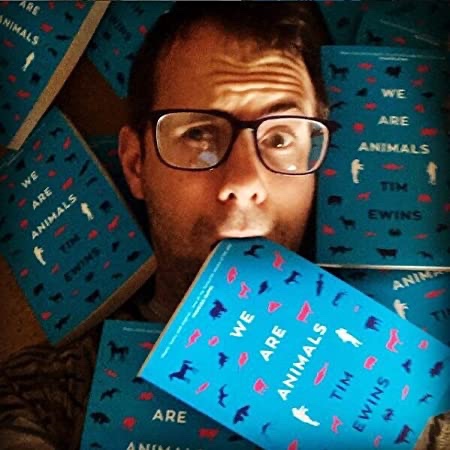
Tim has enjoyed an eight-year stand-up career alongside his accidental career in finance.

He has previously written for DNA Mumbai, had two short stories highly commended and published in Michael Terence Short Story Anthologies, and enjoyed a very brief acting stint (he’s in that film Bronson, somewhere in the background). We Are Animals is his first novel.

When not writing, he enjoys travel, reading (of course), cycling and spending time with his wife, son and dog in Bristol. Follow him on Instagram @timewins and @quickbooksummaries where he writes inaccurate but humorous book reviews.

Posted in Publisher Proof

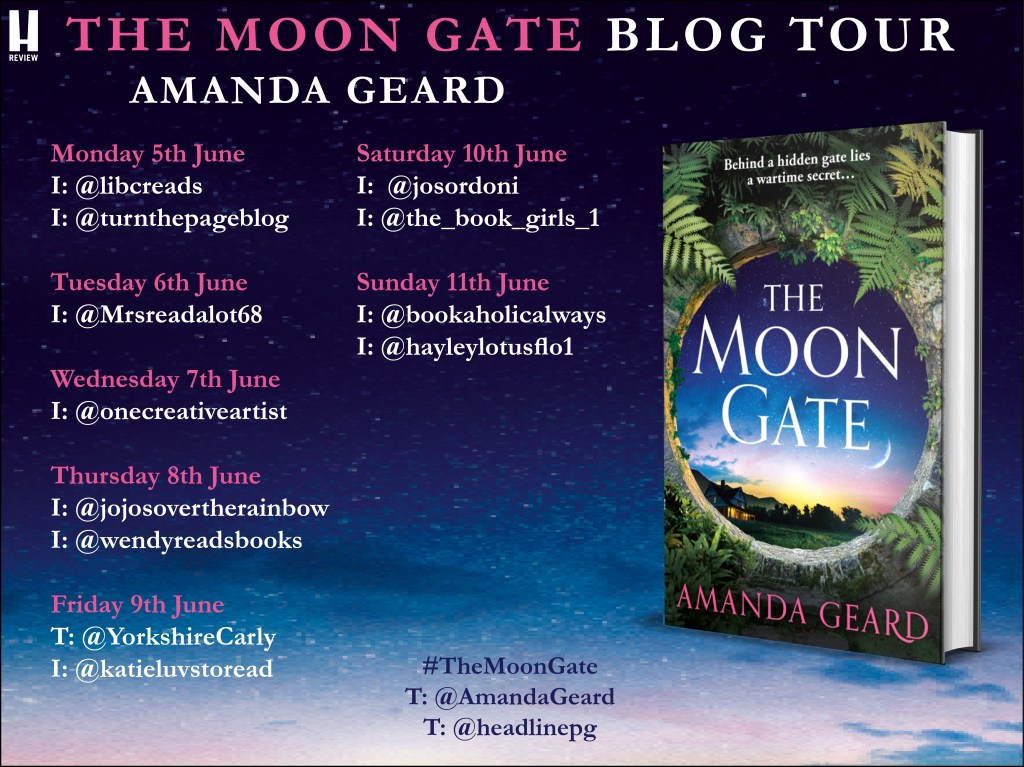
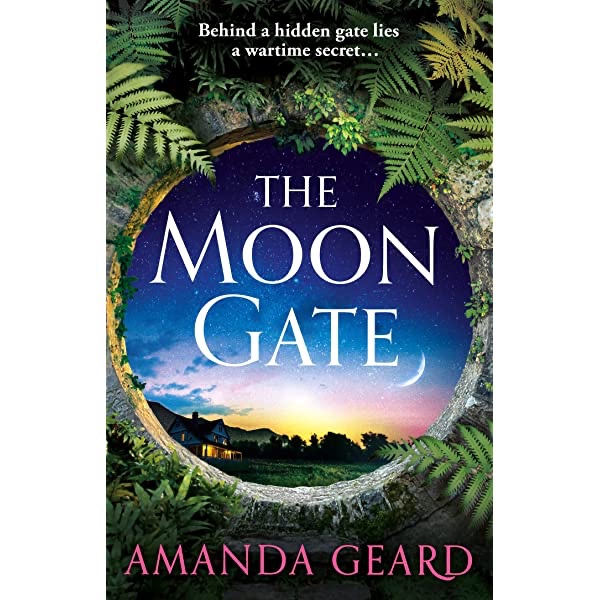
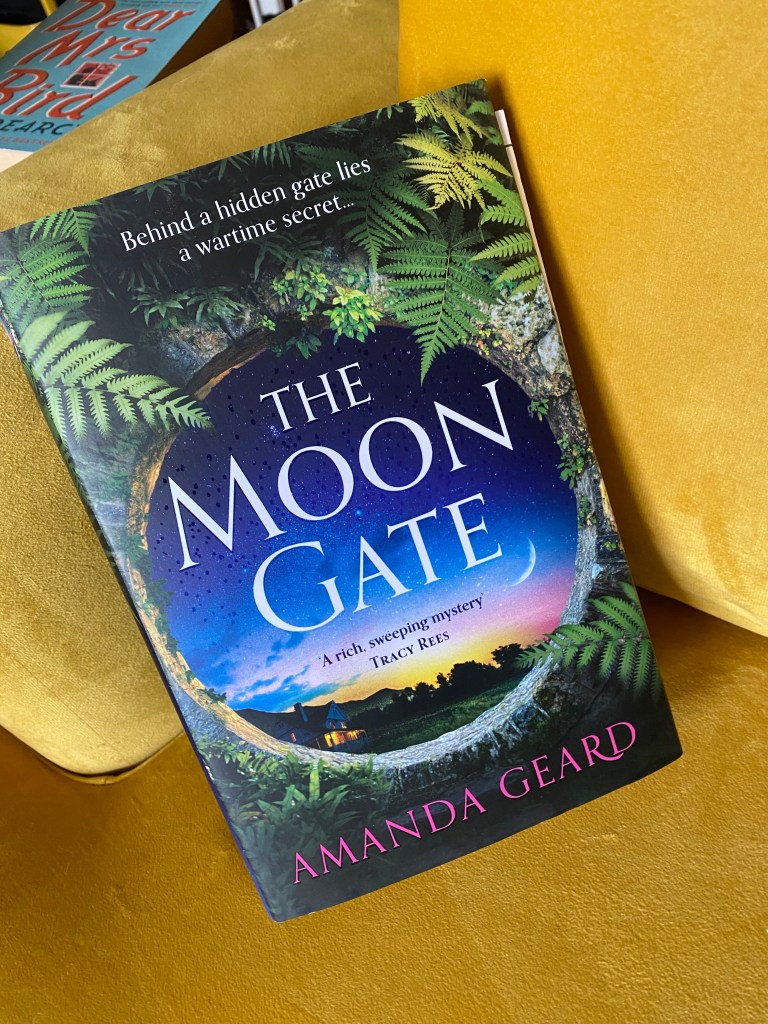
The Moon Gate by Amanda Geard.

1939 – Grace Grey lives in Grosvenor Place in London, with her mother Edeline who is a friend of the notorious Mosleys and wears the uniform of the Blackshirts. As war comes ever closer, Edeline makes the decision to send Grace and the housekeeper’s daughter Rose Munro to stay with her brother Marcus and his wife Olive in the north west coast of Tasmania. After an eight week voyage the girls are welcomed to Towerhurst, an unusual house with a whole tower where Uncle Marcus writes his poetry. Olive immediately takes to the beautiful Rose, but Marcus forms a bond with Grace over the poems of Banjo Patterson, an Australian ballad poet. Grace is reserved and shy, but is slowly coaxed out of her shell by Daniel McGillycuddy an Irish lad working at his aunt and uncle’s sawmill for Huron Pine. As war creeps ever nearer to their part of the Pacific there are dangerous emotional games at play between these young people with fall out that will extend over the rest of the century.

1975 – out of the blue Willow and Ben have been summoned to the north west of Tasmania because of a mysterious legacy. Willow has been left a house called Towerhurst, by an anonymous benefactor who placed it in trust. They decide it’s a great place for Ben to write and Willow to paint, but on their first visit Ben goes missing in the rainforest having fallen down an old mine shaft. What he finds there sends him on a quest that ends in London chasing a story about two young girls who lived at Towerhurst during WW2.

2004 – Libby has flown from Tasmania to London, wanting to claim the belongings of her father who died in the Moorgate Tube Station accident before she was born. Staying with her eccentric aunts in Grosvenor Square, she starts to follow the clues she finds in her father’s satchel: a publisher’s address, a book of ballads by poet D. McGillycuddy and the name Molly Munroe. Her quest will take her to a gentleman’s club, a narrow boat and eventually out to Ireland to solve a mystery that’s been laid buried for half a century.

I enjoyed Amanda Gerard’s first novel last year, so looked forward to reading her new one for a while. I was interested to see how her writing had developed over the last couple of years. To undertake a novel that takes in most of the 20th Century, three timelines and three different settings takes enormous confidence and she has definitely grown in confidence. This is a more complex novel, combining historical fiction with mystery and some romance too, but she pulls it off beautifully and I’ve absolutely loved it. From the historical perspective I learned a lot about living through WW2 in the Pacific Ocean, a completely different experience compared to Europe and the U.K. particularly. I thought Amanda beautifully captured how transient lives were at that time. This wasn’t just about the two English girls, Grace and Rose, uprooted from everything they knew and sent to the other side of the world. It was about the chaos of war, never knowing where your loved ones were, particularly if they were away fighting and whether they would ever come home again. For women that was especially difficult, left at home to wait but also left outside the experiences their men were having. Many women did their own war work, both to do their bit but also to feel a little closer to their men and as if they’re helping them to fight. War displaces people and there were huge shifts across the years of WW2 and afterwards as prisoners of war were slowly released and women who’d married a G.I. or perhaps a Polish airman travelled back to their native countries to start a new married life. It was a good time for people to disappear or slip away under the radar. I already knew a lot about the Blackshirts and their admiration of Hitler’s Nazi Party, but here I learned more about the women recruits and their activities. There was a breadth of research here, underpinning and enhancing the story across three different generations.

The main love story is so touching as the slightly awkward Grace is lured down to the beach by neighbour Daniel where he tries to kiss her. Sadly though it’s for a five shilling bet and as his mates turn up in a boat to witness her humiliation she runs away into the sea. It’s his friend Puds who has to rescue her, as she can’t swim and finds herself caught in an undertow. Daniel regrets his actions deeply, apologising the very next day and asking if Grace would perhaps share the book of ballads she’d been telling him about. They pass through the Moon Gate, a perfectly round doorway made of Atlantisite that leads to the waterfall and a small freshwater pool. Uncle Marcus claims that to pass through the gate is to become a new person and that certainly seems the case with Grace who not only forgives Daniel, but shares the ballad poems and agrees that he can teach her to swim. It’s so beautiful to watch them become close friends, but Grace knows that it’s Rose that Daniel finds attractive as everyone does at first. I felt for Grace deeply and I think a lot of other bookworms will too because she’s so uncomfortable in company, prefers solitude and loves words so much. My therapist side wanted to help her, because how does she learn to be herself and be confident in that, when even her own mother preferred Rose? When we’re not shown love from our parents, a child can’t understand that it’s a fault of the parent, so they learn there is something wrong with themselves. Grace is shocked by the help and affection she gets from Uncle Marcus, because her own mother is so austere and critical.

It was Rose who spent time with Edeline and became a member of the Blackshirts alongside her. Whereas Rose’s mother, the housekeeper Molly, can see something wonderful in Grace and so can her Uncle Marcus, it just needed to be coaxed out and nurtured. I was so invested in her feelings for Daniel and desperate for him to be clear about whether he had feelings for her. Rose is doing her bit in undermining and leading Grace to believe that Daniel only has eyes for her. She makes sure Grace knows when he writes from wherever he is in the world and if Grace shares news of her friend, Rose makes it clear she knew first. I’ve never wanted to slap a book character more! I wasn’t even sure that she genuinely loved Daniel, she’s just so used to getting one over on Grace that she hasn’t stopped to think it through. There are rumours in town about Rose and Uncle Marcus, she even winds Puds round her little finger but I wasn’t sure to what end? She certainly keeps her cards close to her chest, but when Rose takes up war work and isn’t around as much Grace can actually breathe. As I read I wasn’t sure what Rose was up to but I was certain there was something behind her manipulations and out of character support for the war effort. It’s a shock when her name comes up again in Libby’s investigations, was her father Ben simply interested in her fascist connections or is it something more personal?

There are definite echoes through the different time periods and motherhood is one of those themes that recurs. It’s an inter-generational trauma that starts with Edeline’s treatment of her daughter. Grace knows she isn’t her mother’s favourite, but is confused when this animosity seems to recur with her Aunt Olive. She asks a devastating question of her Uncle Marcus – ‘am I unloveable?’ because if her own mother can’t love her, why would anyone else? Willow has never known her birth parents, instead brought up with her two sisters who are twins. She never asked the question, even though she can see how different she is physically from her sisters. So when Towerhurst comes along, she starts to be intrigued by who created the trust and whether it could be one of her real parents. She finds out she’s pregnant alone, while Ben is over in London, but manages to tell him on the phone just before he is killed and they are both so happy in that moment. To then become a single parent, in such tragic circumstances must have been so difficult to come to terms with. Willow has never tried to collect Ben’s belongings despite knowing they were found and Libby clearly thinks her mother will disapprove of her choice to follow in his footsteps. Willow hasn’t been a terrible mother, just rather aloof and deeply engrossed in her work as a painter, where she demonstrates her terrible grief by only painting in black and white. She hasn’t grieved fully and I could see that Libby’s findings might bring those feelings to the surface. Luckily, Libby has had her eccentric aunts for support and it’s clear they adore her, but I hoped that Libby and Willow would have chance to talk and heal together.

As the mystery begins to unravel, there are revelations about these three generations that keep coming and a twist I truly didn’t expect. There are small disclosures, like the local police sergeant who helps the search for Ben is actually Puds, Daniel’s best friend who suffered a serious injury in the war and had to return home. How will he go about investigating what Ben finds in the mine shaft, when it might be better if they’d stayed buried? I was desperate to find the whereabouts of Rose, because all the hints are pointing to an answer I simply couldn’t bear! It seems possible that Grace never returned to England, but when Rose’s mother tells Ben she definitely saw Grace after the war he starts his search afresh. Could she have disappeared on this side of the world? I was constantly holding out a little bit of hope for the ending I wanted, so I had to keep reading – up till 2am again! There are so many layers to this story and often with dual timelines there’s a weaker section, but every timeline is intriguing, evocative and emotional. Tasmania sounds wild, dangerous, magical and atmospheric all at once. I loved the reference to the creature that lurks around the pool beyond the moon gate, could it be a shy Tasmanian devil? There’s such a massive difference between Tasmania and London, which feels more domestic than wild with very curated spaces like the old fashioned gentleman’s club and the minimalist narrow boat where Libby meets Sam. Then there’s Ireland, waiting like a promised land with all the answers and the beauty that Daniel shares with Grace right back at the beginning. We are left with an incredible tapestry of places and people full of colour, emotion and a yearning for home whether home is a place or a person.

Meet the Author

I have always loved dual-timeline novels, where stories from the past weave with those of the present day. I want to write books that transport you to another time and place, where secrets lie just beneath the surface if only the characters know where to look.

My new novel, The Moon Gate, is set across three locations I ADORE: Tasmania (my home state), London (where I rented a houseboat for many years) and County Kerry, Ireland (where I now live with my family). Each of these places is special to me and I hope you’ll feel you’re entering the temperate rainforest with Grace, opening the door to Towerhurst with Willow, walking through London’s layered history with Libby and stepping out to the heather-clad hills of County Kerry with … well, with several characters, the names of who I won’t reveal here!

The inspiration for my first novel, The Midnight House, appeared in the rafters of our Irish home, a two-hundred-year-old stone building perched on the edge of the Atlantic. Hidden there was a message, scratched into wood: ‘When this comes down, pray for me. Tim O’Shea 1911’. As I held that piece of timber in my hands, dust clinging to my paint-stained clothes, I was humbled that a person’s fingerprint could, in a thousand ways, transcend time, and I wanted nothing more than to capture that feeling of discovery on the page.

I’m also a geologist who loves to explore the world’s remote places. Luckily for me, writing novels provides a similar sense of wonder and discovery; but the warm office, fresh food and a shower in the evening make the conditions rather more comfortable! It’s also the perfect excuse to regularly curl up by a fire with a great book (often by the wonderful authors who write in my genre). I treasure my reading time, and I know you do too, so thank you for taking a chance on my books.

Come over to Instagram and Twitter (@amandageard) where I share plenty of photos of the wild settings in The Midnight House. You can also find me on Facebook (@amandageardauthor).

I love hearing from readers, so please get in touch!

From Amanda’s Amazon author page.

Posted in Squad Pod

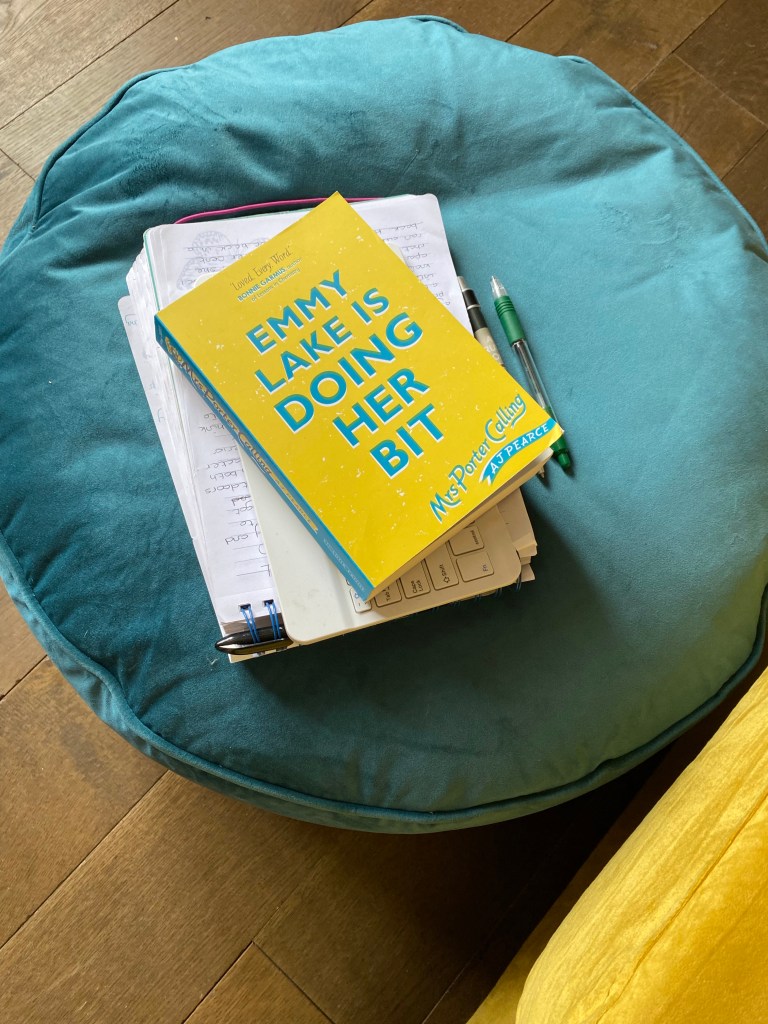
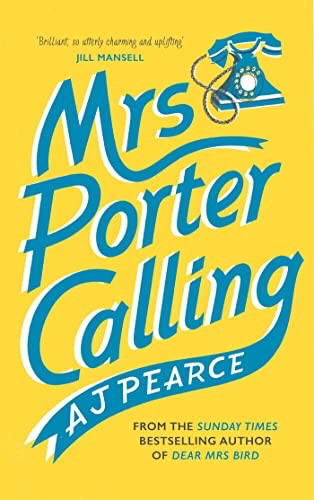
Mrs Porter Calling by A.J. Pearce.

I was new to A.J. Pearce’s world and her character Emmy Lake, so before reading Mrs Porter Calling, I decided to read the previous two novels; Dear Mrs Bird and Yours Cheerfully. Set in WW2, the books follow Emmy as she moves to London to start a career in journalism and soon finds herself in the middle of the Blitz, working for the fire brigade by night and living in her friend Bunty’s grandmother’s house. In Dear Mrs Bird, Emmy has taken up a job offer from Woman’s Friend magazine, working on the problem page. The formidable Mrs Bird is the agony aunt and Emmy must sort through the letters and weed out those that are deemed unsuitable – no funny business at all, not even a hint! Through the novel she moves from being engaged to single status, takes big risks in her job and works hard for the fire service at night dealing with the aftermath of the German bombing. I fell in love with this brave young woman who wants to move with the times and use her writing to help an extraordinary generation of women cope with the difficult situations they find themselves in. Over this and the next book, Yours Cheerfully, Emmy faces some serious challenges: being in love with someone far away and in danger; dealing with terrible loss; helping other young women who have been widowed or find themselves without a home. Yet this isn’t a tale of misery and hardship, there’s an almost relentless positivity to Emmy Lake that I absolutely loved. She’s perky, but not brittle. Her optimism and resilience seem to come completely naturally.

Yet in this latest book, Mrs Porter Calling, she will be facing some of her biggest challenges yet. Emmy has settled into being the lead on the magazine’s problem page and is continuing her series of articles on women who have taken on war work. Everything changes when the owner gifts Women’s Friend to his niece Mrs Porter in lieu of her inheritance. At first the team are optimistic about having a woman at the helm, but it soon becomes clear that Mrs Porter doesn’t want the magazine because of what it is. She wants to turn the magazine into her own scrapbook with society weddings and events alongside beauty and fashion articles that are a distraction from the war. Telling women what they should be rather than being a support. For a team who are used to teaching their readers to reuse and repurpose, this jump to expensive fashions and aspirational articles feels all wrong and Emmy thinks Mrs Porter has missed the whole point of the magazine. Women’s Friend is not aspirational, they don’t want to be dangling fripperies in front of their readers who can’t afford them. Emmy knows that if they change this much they will lose their readership. Even worse, Mrs Porter doesn’t want any more ‘dreary’ war work articles either. It seems that the realities of war haven’t reached her, the nightly bombs Emmy deals with must be muffled by all that jewellery and designer clothing. The team make a pact, to try and keep their beloved magazine as normal as possible while also introducing Mrs Porter’s ideas. In the meantime they will try everything to dishearten their new owner. Hopefully, if things become boring or difficult, she might drop her new hobby and move on. They just have to hope they have enough of a readership left when she does.

Away from the magazine, Bunty is still grieving for her fiancé and continuing her rehabilitation following the bomb blast they were caught in. However, there are signs that she is stating a tentative friendship with another fireman and Emmy has her fingers crossed that things may develop. Emmy and her husband Charles only had a two night honeymoon before he had to return to his posting, now he is moving into North Africa and Emmy depends on his letters. Both girls are forging new friendships with the women who work in a munitions factory and finding out it isn’t always easy to do your bit. I loved this aspect of the novel, because it taught me a lot about what WW2 was really like for women. Despite advocating that all women should find war work, to support their men overseas or help out on the home front, there were difficulties with this that the government seem to have overlooked. The author shows this through the factory women who have issues with childcare and finances. I was shocked to learn that when a Navy husband went missing his salary stopped immediately, but because he was missing and not dead, his wife couldn’t receive a widow’s pension. This loophole left women with no income and potentially homeless. If the factory women had children and worked awkward hours, they often couldn’t get childcare. Some women sneak their children into the factory and hide them so they can still work their shift and get paid, but if found they would be dismissed immediately. Emmy becomes involved in campaigning for factories to apply for the government grants available to set up a nursery for worker’s children. These are the women she wants to celebrate and help in her own time, but also in the magazine. These factory women don’t care about the lavish wedding of some honourable or other, they care about doing their bit, being able to keep a roof over their head and their man coming home.

Emmy has become a team player. Long gone are the early days of her career where she ran away with an idea without thinking of what it meant for those around her. What struck me so strongly was this sense of camaraderie and the sharing of everything – not just the hard stuff that the fire service go through together, but the food, celebrations, home, shelter and even families. I could see that Emmy was in exactly the right place to help when an unexpected loss devastates the factory women and Emmy herself. This tragedy could bring her the biggest challenge she’ll ever have, but I had no doubt she would rise to the occasion. I asked my partner whether he thought our current generation would pull together as well as this generation did and we weren’t sure, although we hoped so. Watching Emmy, exhausted from a day working, change into her uniform and put in a night shift on the fire service switchboard, then go home and reassure children whose house has been bombed out, made me wonder if I could do the same. The perky, excitable girl has become a woman, a woman with a core of steel. If you love historical fiction or just want an uplifting read about women dealing with daily adversity then this is the perfect book for you. I loved all three novels and have happily added them to my forever bookshelves.

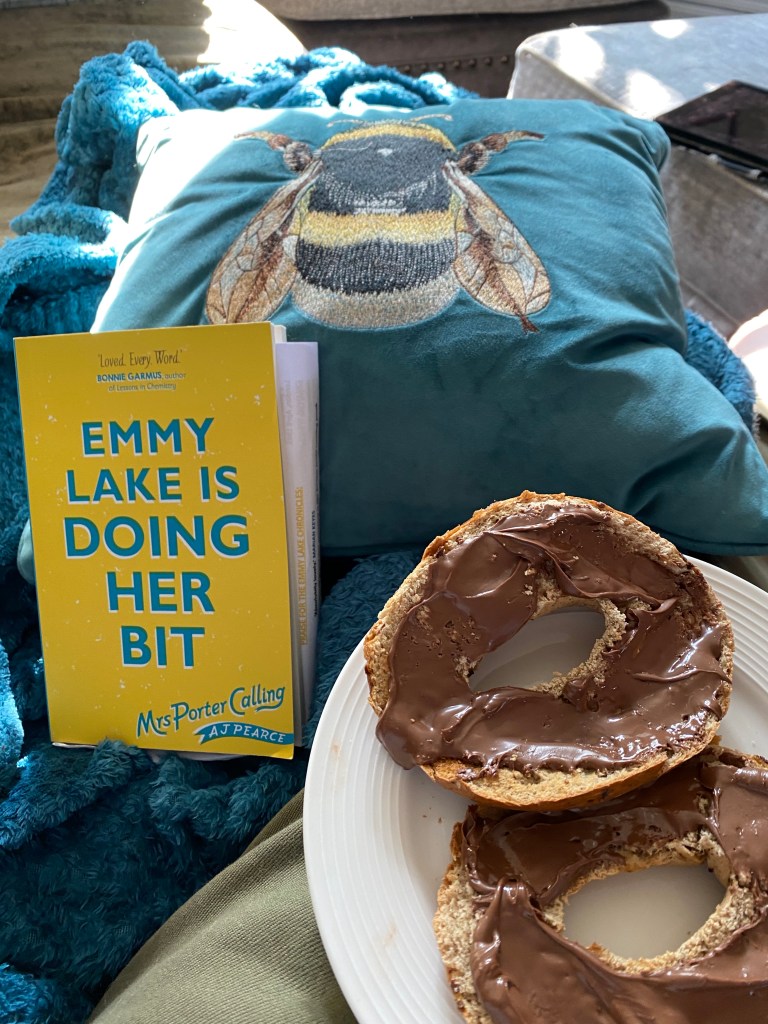
Weekend breakfast and a great book. Bliss!

Meet The Author

Pearce

AJ Pearce is the author of the Sunday Times Top 10 bestseller DEAR MRS BIRD, which was a Richard and Judy Book Club pick and shortlisted for Debut of the Year at the 2019 British Book Awards. It has been translated into fifteen languages and optioned for development for TV.Born in Hampshire, her favourite subjects at school were English and History, which now (finally!) seems to be making some sense. Her novel, Yours Cheerfully is the sequel to Dear Mrs Bird and is now available in paperback. AJ has just released the third novel in the Emmy Lake Chronicles series, Mrs Porter Calling. Follow AJ on Twitter, Instagram and Facebook: @ajpearcewrites

Posted in Publisher Proof

The Dog Sitter Detective by Antony Johnston

Meet Gwinny, an unlikely bloodhound, and her four-legged friends determined to dig up the truth.

Penniless Gwinny Tuffel is delighted to attend her good friend Tina’s upmarket wedding. But when the big day ends with a dead body and not a happily-ever-after, Gwinny is left with a situation as crooked as a dog’s hind leg.

When her friend is accused of murder, Gwinny takes it upon herself to sniff out the true culprit. With a collection of larger-than-life suspects and two pedigree salukis in tow, she is set to have a ruff time of it.

When I was offered a chance to review this novel I jumped at it because it sounded so quirky and charming. I was pulled into the novel quickly because it was a book that was perfect for the time – a cozy crime novel in the middle of some dark Scandi Noir – but also due to the author’s vivid characters. It was like putting on a cozy blanket and escaping into an Agatha Christie novel with added dogs. It had all the expected ingredients of a cozy crime novel; a country house, a wedding and the worst present of all – a body in the library. Especially when that body is one of the wedding party! At first it seems like an open and shut case, because the person stood over the body must be the main suspect. It’s not as simple as it looks though, the author has the odd red herring and revelation up her sleeve sending the police and the reader scurrying off in the wrong direction. Gwinny lives in an affluent part of town and from the outside it’s not exaggerating to say she lives with a certain amount of luxury. However, she is asset rich and money poor, with a bank balance that could do with a cash injection. Quickly! Since her father became ill she has been his sole carer and her acting career has paused indefinitely. She knows she can’t keep herself in the black if nothing changes.

A posh country wedding offers the perfect chance to pause and enjoy herself. So making promises to address the situation on her return, she plans to enjoy watching her best friend Tina walk down the aisle. Once the body is found the wedding grinds to a halt and for some reason Gwinny is volunteered to look after Spera and Fede, two beautiful Saluki dogs. With the dogs in tow she gets to work on the murder mystery, with her intuition and talent for deduction she knows straight away that something is ‘off’. I really enjoyed Gwinny’s character because she is so formidable, rather like that eccentric spinster aunt who has no time for idiots and won’t take any nonsense, from anyone. She can be rash and jump in with both feet, but she’s kind and incredibly loyal too. Even though she’s only just acquired the dogs she really does put herself out to protect them especially when other people don’t want them around. Her companion is Alan Birch, a retired police detective however, they blend perfectly together as an investigating team. The plot twists and turns in quite a modern thriller style, but then the author brings in that classic final scene when all the characters are brought together to unmask a murderer. It felt like the author loved this genre and although he updates it slightly, I think he really did give an elegant nod to classic cozy crime through his main character and the setting. Meanwhile keeping the story quite modern and crafting an ending that satisfies the reader. This was an enjoyable escape from everyday life and I would recommend it to anyone who enjoys classic crime novels with a dash of humour and a sprinkle of clever deduction.

Published by Allison and Busby 18th May 2023

Meet the Author

Photo Credit: Sarah Walton Photography

ANTONY JOHNSTON is a New York Times bestselling writer and podcaster. For more than twenty years he’s written books, graphic novels, non-fiction, videogames, film, and more. Much of it has been done with a snoozing hound curled up in his study.

Antony’s crime and thriller titles include the Brigitte Sharp spy thriller novels (The Exphoria Code, The Tempus Project and The Patrios
Network
) currently being developed for TV by Red Planet; The Fuse, a series of sci-fi murder mystery graphic novels (starring an older female police detective); adapting Anthony Horowitz’s Alex Rider books to graphic novels; and the Charlize Theron movie Atomic Blonde, which was adapted from Antony’s graphic novel. He also wrote Stealing Life, an SFF crime caper novel, and Blood on the Streets, a ‘superhero crime noir’ for Marvel comics.

His productivity guide The Organised Writer has helped authors all over the world take control of their workload, and he interviews fellow writers on his podcast Writing and Breathing. Antony is joint vice chair of the Crime Writers’ Association, a member of the International Thriller Writers group, a Shore Scripts screenwriting judge, and formerly sat on the Writers’ Guild of Great Britain’s videogames committee. Born in Birmingham, Antony grew up in nearby Redditch before moving to London for work. He now lives and works close to Pendle Hill in Lancashire.


Find out more about Antony’s other work at AntonyJohnston.com, and follow him on Twitter at @AntonyJohnston.

Visit https://dogsitterdetective.com/

Posted in Random Things Tours

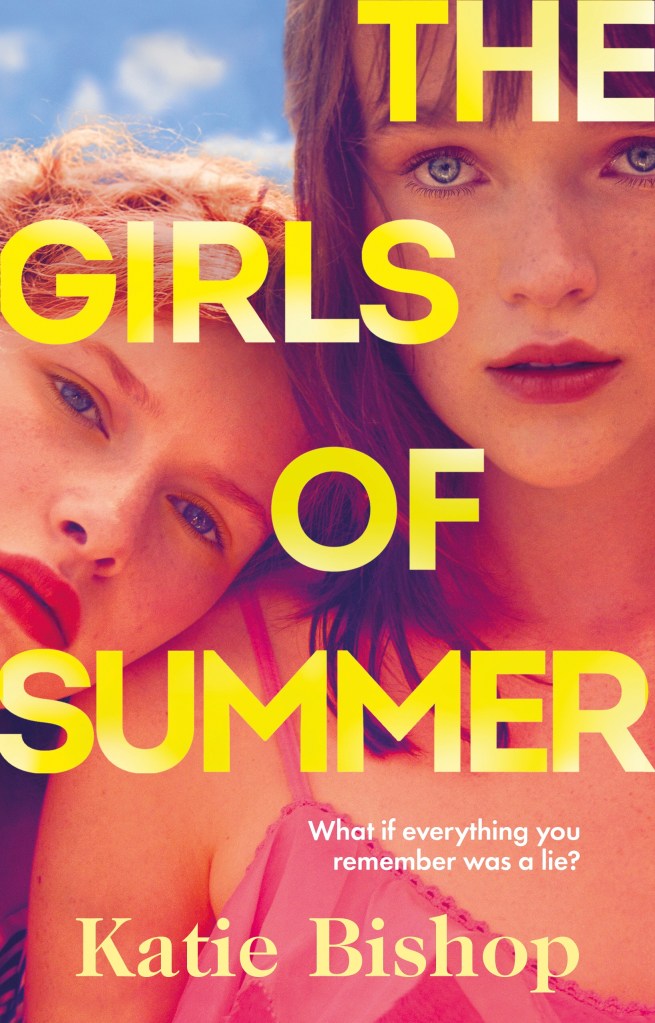
The Girls of Summer by Katie Bishop

Rachel has loved Alistair since she was seventeen.

Even though she hasn’t seen him for sixteen years and she’s now married to someone else.

Even though she was a teenager when they met.

Even though he is almost twenty years older than her.

Now in her thirties, Rachel has never been able to forget their golden summer together on a remote, sun-trapped Greek island. But as dark and deeply suppressed memories rise to the surface, Rachel begins to understand that Alistair – and the enigmatic, wealthy man he worked for – controlled much more than she ever realized.

Rachel has never once considered herself a victim – until now.

I devote a lot of my time to reading, but there are times when a book makes me drop everything. I carry it in my bag to read while waiting for appointments. It takes precedence over Netflix and all the other streaming channels that lure us into watching the screen every evening. I spent my whole morning in pyjamas reading, because I needed to finish this novel in one greedy gulp. I was completely transfixed by this story of a young girl taking a holiday to Greece that completely changes her life. Rachel is a naïve seventeen years old when she sets out to the island for a holiday with her friend Caroline. She sells it to her worried parents as being no different to a gap year, just a year earlier than normal. Once on the island they meet a group of girls who work in a local bar, belonging to entrepreneur Harry Taylor. When Rachel meets his right hand man Alistair she feels an immediate attraction but does he feel the same way? Surely she isn’t going to capture the attention of a handsome and sophisticated older man. She does notice him looking at her and it sends a shiver through her. Rachel has never thought of herself as beautiful, especially next to the other girls here, but as Alistair singles her out for attention she feels special. They have a connection, so strong that she makes a huge decision. She isn’t going to return to England with Caroline at the end of the holiday. She is going to work in the bar alongside the girls she’s made friends with and share their rather chaotic house nearby. Why would she return to her parent’s suffocatingly ordinary semi and her A’Levels when she can be on this golden island with Alistair and frequent the glamorous parties held by his mysterious boss at his enormous villa in the hills?

The structure of the book is interesting, because usually in time slip novels we have a protagonist in the here and now trying to solve a mystery interspersed with glimpses into the past that make sense of the present. Here the author turns that on it’s head. Rachel, now in her thirties and married to Tom, knows what happened in the past. She holds her relationship with Alistair up on a pedestal, their love was special and those months with him on a beautiful Greek island have been her benchmark of how love should be. It’s a revisit to the island with Tom and bumping into Helena that starts to unravel the rather idealised past she’s been narrating to us. The present actually deconstructs her past. As each new revelation washes over Rachel in the present it takes us into a past that’s changed a little, becoming murkier and more sinister. Rachel is still friends with Jules, a friend she made on the island who was separate to the bar. In fact it’s Jules who gives seventeen year old Rachel a warning, the locals think there’s something ‘off’ about the bar and perhaps it would be best to stay away. In the present Jules and her husband have Rachel and Tom over for dinner. They’re chatting about having a family, but Rachel and Tom have been trying for around a year without success. Tom mentions that they’ve talked about seeing a doctor to have a few things checked out when Rachel responds angrily that he wants to see a doctor, she hasn’t agreed to anything. Her harsh responses change the night and seem out of character. She’s told us about how easy it was to fall in love with Tom and how they’d taken steps to move in together almost without realising it, when she’d stayed for a few days while some work was being done on her flat. Of course by now we know that Rachel has Alistair’s number and has made plans to see him again. Could that have made her less invested in her future with Tom? Later we see that she’s stashed her contraceptive pills in a box of sanitary towels under the bathroom sink, she’s still been taking one regularly every day.

IT’S TOO HOT to be outside for long. Sweat is starting to dampen my scalp, thickening in the roots of my hair and pooling in the crevices of my collar bone. My t-shirt sticks to my spine and my arms are tinged pink, an ungainly line of skin beginning to blister along the top of my thigh in the almost unseasonable blaze of sun. I curl my toes into the damp sand and feel the sharpness of a small shell against the sole of my foot.

Our setting so powerful, that beautiful sun soaked island with the sound of boats rocking rhythmically in the harbour and that incredible opening line that took me straight back to standing in the sea and feeling that sharp edge of a sea shell. She captures that push and pull between the tourists and the locals who, even thought they’re in exactly the same place, see it completely differently – rather like Rachel and the other girls. I could see the slightly scruffy house they all share and the chaos and fun of getting ready together, sharing clothes and cheap bottles of wine. Harry’s house in the hills is another contrast, sleek and modernist with contemporary art on the walls. Even the sea looks different from high in the hills, appearing flat and smooth like a lake on the surface, but with dangerous riptides underneath. The present sections mainly take place in London and the author shows us the city as visitors probably don’t see it. She describes a rather special Sunday evening feel to the tube when it’s almost empty and strangely quiet, as if having a rest before the Monday morning commuter rush. She describes sudden rain showers and people having to improvise and use their handbag to shield their hair from the downpour. Rachel loves living in the capital, compared to her parent’s suburban family home. There’s an energy and unpredictability to it’s rhythms, a sense that there are so many options, anything could happen. Whereas home has a particular tameness and routine that Rachel finds stifling. Could Rachel’s decision to stay on the island and even her attraction to Alistair have something to do with the way she views her mum and dad’s life? We see Rachel fighting something similar in her marriage, the ordinariness igniting that constant yearning for something more, something others can’t see:

She was ‘hoping this trip would reignite some of the heat that has been missing from my marriage. Instead, I look across at my husband and feel faintly repulsed. His underarms are damp and staining the shirt he put on especially for our last night here. He’s staring out at the sea, but I know he isn’t seeing it the way I do. To him it could be anything. Any view, anywhere. To me the swell of the tide speaks of secrets, the salty air smelling irrevocably of promise.’

It’s very easy to understand the teenage Rachel. I fell in love at seventeen and had my heart broken. For years I idealised that relationship, using it as a benchmark for subsequent relationships that in hindsight had much more potential. She is so naïve that she can’t see what’s happening and how much she is being controlled. It’s almost apt that the book should come out in the light of the Phillip Schofield scandal, because it struck me how the responses to what happened are very different to the responses we might have had when I was seventeen in the early 1990s. Our gradual understanding of coercive control, grooming and power imbalances in relationships have coloured the way we view all relationships completely. An affair with a much older man probably wouldn’t have raised much of an eyebrow then, it’s only with hindsight that it becomes worrying. It’s only once the affair is viewed through the prism of our later experiences, such as having our own daughters, that our perspective changes. The #MeToo movement has changed how we see things. When I watched the film Bombshell I talked with friends I’ve had since I was a teenager and as the author writes in her afterword, we’ve all had experiences: of being groped without consent while waitressing or working behind a bar; having a boss who was a bit ‘handsy’ or made inappropriate comments; being touched an a crowded dance floor at a club. One of the most disturbing stories I have ever heard was from a woman who had known ‘wrestling’ between boys and girls in the school playground turn into sexual assault. I love that my stepdaughters are so much better informed than I was and are very conscientious about keeping each other safe when out with friends, although it frustrates me that they have to be so vigilant just to go out on a Friday night.

The Girls of Summer was born out of this strange and sometimes conflicting intersection between nostalgia and trauma, memories and the truth, power and sexuality. It explores the grey areas of consent, deepening a debate that has shifted and broadened since the #MeToo hashtag first took social media by storm. It interrogates what it means when we are forced to reframe a narrative that is so central to who we are that we aren’t sure who to be when that narrative turns out to be false. Is it better to face up to this truth, and all of the pain that comes with it, or to keep it hidden in the dark?

The Girls of Summer, Afterword

Watching the teenage Rachel walk into danger is upsetting because this reader was ahead of the narrative and knew something was very wrong with the island set-up, particularly the extravagant parties. There was no explanation for all the male party guests and the mysterious Harry rarely appeared. On her way to a party, Rachel is excited and hopes Alistair loves her dress, she’s grateful that the girls have been invited never realising that they are the reason for the party. The gaslighting afterwards was painful to read – ‘you had fun didn’t you?’ Or ‘don’t feel bad about what happened, it’s okay, you enjoyed it.’ When they’re in the middle of that level of pressure, manipulation and controlling the narrative how would they be able to see through it and understand what’s truly going on? Even for an adult Rachel it’s hard. Her relationship with Alistair and it’s veracity is part of who she is, how she views men and relationships and determines her friendships with the very women who might understand her most. When the truth of everything is revealed, the horror of the Full Moon party and further painful revelations, it’s so hard for her to absorb and accept it. I found it deeply sad that even towards the end of the book, Rachel has still held a tiny shred of hope that her version of the relationship with Alistair will prove to be the love story she wanted.

When the truth is so deeply painful and damaging, isn’t it understandable that she would want to sugar coat things a little? To push away the truth and not have to confront what happened to you. To not feel like a victim. I could truly understand the women coming together to confront the past and I found myself thinking about how powerful men frame the narrative. They talk about a cabal or coven of women coming together to destroy them. Women who have been taking drink or drugs and having an encounter they bitterly regret in the morning. I can only imagine what effect it must have on the individual, to hear comments like Prince Andrew’s ‘I have absolutely no memory of ever meeting that woman’. For Rachel, who lost absolutely everything that summer, the denial of her experience actually brings the first chink of light into her situation. I felt hopeful that with the help of this group of women, friends like Jules and an acceptance of the truth she could start to rebuild. The fact that I’m talking about Rachel like this, as a real person, is testament to the brilliant writing of Katie Bishop. She has created a real, flesh and blood woman in Rachel and I found myself almost wishing I could see her as a client, I so wanted a recovery for her. This is a powerful story, that may trigger some people who’ve had similar experiences, but it’s important for stories like this to be told. I could really see this as a television series, with some reviewers seeing a similarity with The White Lotus – a beautiful setting, a luxury resort and the dark truths lurking underneath all that perfection. I loved the ending though, a return to that beautiful place but with the ability to see the reality instead of a fantasy. I wanted her visit to the island to be different to the one she had with Tom at the beginning of the book. To accept that she will never feel the excitement and promise she felt all those years ago, but that she will experience new feelings that are every bit as worthwhile.

I had thought I could recapture something of how I felt all those years ago by coming back here, but it has only served to remind me how slippery and impossible it is to summon the past. Perhaps this is simply the nature of growing up. Of growing older. Perhaps I will never feel the same again.

Meet The Author

Katie Bishop is a writer and journalist based in the UK. She grew up in the Midlands before moving to Oxford to work in publishing in her early twenties. Whilst working as an assistant editor she started writing articles in her spare time, going on to be published in the New York Times, Guardian, Independent and Vogue.

Katie started writing The Girls of Summer during the first UK COVID lockdown, after becoming increasingly interested in stories emerging from the #MeToo movement. The novel is inspired by her own experiences of backpacking, and by her interest in how our personal narratives can be reshaped and understood in light of cultural and social changes.

In 2020, Katie moved back to the Midlands, and now lives in Birmingham with her partner. She is a full-time writer.

Posted in Squad Pod

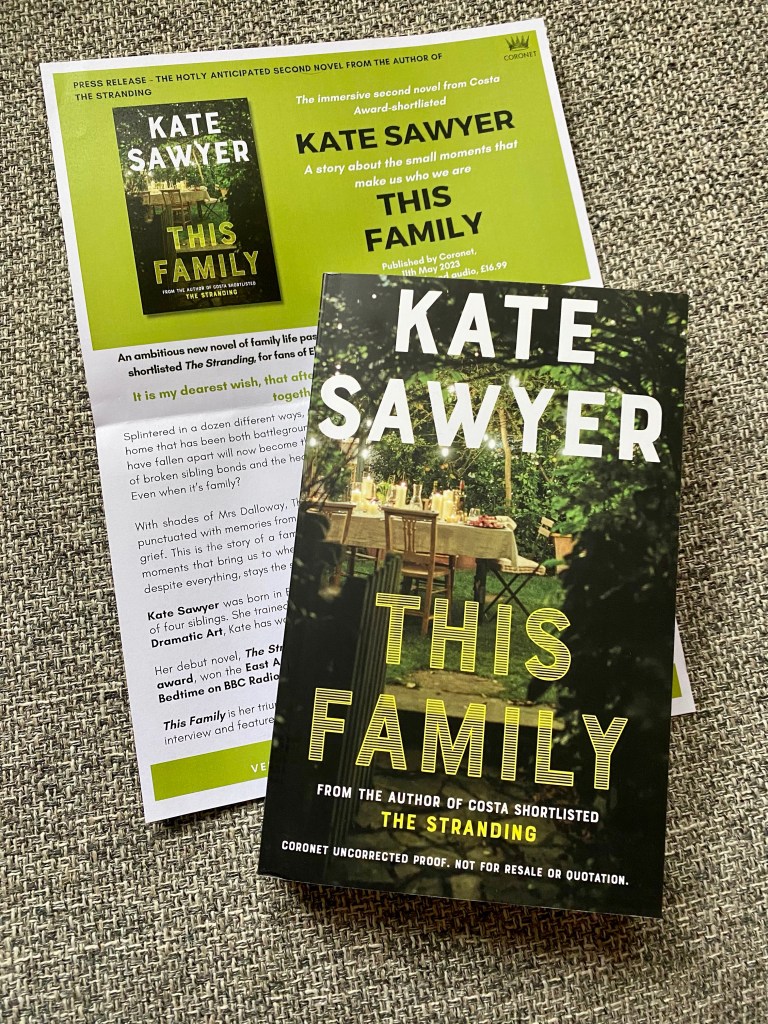
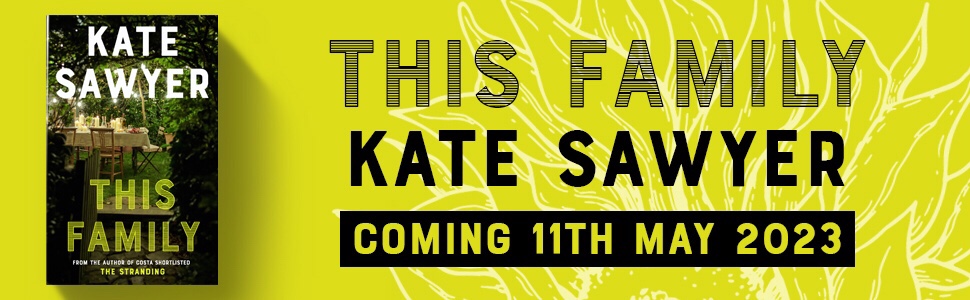
This Family by Kate Sawyer

I fell in love with Kate Sawyer’s imagination and writing skill when I read her debut novel The Stranding, so I was excited when the Squad Pod were able to confirm her new novel for our May book club. I didn’t know what to expect, whether there would be more of the same dystopian themes and emotional intelligence that I’d loved before or something completely different? This Family is different in that it’s set on one day where a family, with all it’s fractures and memories, are celebrating a wedding day. I often read books where I know I’m getting only a fragment of a much bigger picture. Kate Sawyer writes on several levels at once, from the personal to the universal. Each character has their inner world, their current outer world, other times and events, other people’s perspective on the character and events, then national and international concerns. It’s like someone shaking out the contents of my mind into a big jumble and seeing every single thought: I need to get some bread, last night’s dinner party was boring, thoughts of another dinner party years ago where I said something stupid, a worry about my dad’s health, thoughts on the book I’m reading, concern about the state of the health service and the war in Ukraine. Kate constructs her characters with all those levels creating a tapestry of this family’s life and how they all fit together to make a beautiful whole.

This was one of those books where I was conscious of empathising with an older character – Mary – who is getting married today and wants to have just one day where everyone behaves and is thinking of her happiness above their own concerns. She wants Phoebe to stay sober. She wants Emma to speak to her sister. Could her first husband Richard not be a dick? That’s all she wants. Just one day. As the family come together we see aspects of the day from different perspectives with all of the details I’ve mentioned. We see Phoebe’s inner thoughts. Then Mary’s thoughts and impressions of Phoebe. Rosie brings up a global concern – usually climate change, but Mary says it’s banned for one day. There is talk of COVID, the financial crisis, and even small boats crossing the Channel. Life is a tapestry of all these things, multi-layered and with contrasting colours. Kate gives each character their section, but she includes those events over the last few years that have stopped us all in our tracks like 9/11, theBoxing Day tsunami, the London terror attacks. Mary’s thread of worry when she hears of the tsunami, knowing one of her daughters is in Thailand. The thought she might be hurt pushing aside all irritations and harsh words. As a worker in the NHS Rosie’s proximity to the terror attacks and the pandemic cause other’s concern. This family is a jumble of memories, hurts caused, joint history, change, and then those moments of sharp focus when all that matters is their love for each other.

Their relationships are complex and at first it’s hard to know who everyone is and how they relate to each other. In fact the story of Mary is told so slowly I didn’t know who she was marrying until at least half way through the book. Going back over time, characters were married to different people and the relationships change. Even the sisters relationships with each other turn out to be complicated, yet they are still family. Emma’s story hit me deeply, because it was a story of childlessness and grief tearing lives apart. Emma married Michael, who was Phoebe’s best friend at university. Their marriage suffered due to pregnancy loss and when they lose their son, just as Emma was starting to think everything would be okay, it’s Mary that she asks for. She shuts Michael out and starts divorce proceedings, holding tightly to her feelings and unable to take on anyone else’s feelings of loss. Yet Michael will be at the wedding and will Emma be able to face him? There’s also her sister Phoebe to face and she has had a family, including a newborn. There’s a lack of communication between these two sisters, all pent up anger, jealousy and loss that they must put aside at least for today. When the truth of their rift is revealed the scene physically winded me. I felt for Emma, but could also see she’s her own worst enemy at times. It made me think about my own childlessness and the things people have said to me that hurt deeply at the time, but I could see if I held on to them I was hurting myself. At a time of great loss Emma cuts out the very people who might have helped and has missed seeing her niece and nephew.

Phoebe is a real talking point to and discussing her with other members of the squad has been enlightening, with many disliking her intensely. I could see where she’s hurt people with her reckless temper and with her addiction. Phoebe is now sober and married with a family, somewhere it’s hard to imagine her being when we delve into her past. I could understand how the family feel cannibalised by Phoebe’s successful newspaper column and her book, Mary particularly. She tried not to read it because she didn’t want to be blindsided by something her daughter recalls, in her own inimitable way. Phoebe needs her family, but their relationships with her are being slowly devoured, sentence by sentence. I found it interesting that when others recall terrible things Phoebe has done in the past, she really couldn’t see their position because she’s clouded by drink. She feels sorry for herself and can’t see past the self pity to wonder how others feel. As she recalls the terrible thing she said to her sister all the feelings of shame come bubbling to the surface, but she repeats a mantra to herself – ‘I do not hate myself; I hate the actions of my addiction’. She accepts that even though she has made amends, Emma doesn’t have to forgive her or accept her apology. Phoebe can only forgive herself.

I loved the meta-fiction element of how the story is told. Mary comments on the nature of stories, how the same event can be viewed differently by every person who was there just as the book’s structure shows. The wedding, when it finally arrives, feels like a natural full stop. As Mary looks out of the kitchen window and sees the three sisters laughing under the tree that made her want this house, she sees closure. As they laugh in the dappled un light and Emma holds her nephew Albie for the first time something has healed. This beginning – the start of Mary and her husband’s married life – is also an ending. He commits to a new chapter, leaving his first wife behind, but knowing that both he and Mary share their memories. Mary is moving from the house that the sisters have spent their whole lives in. She knows she will miss that tree. But she will no longer have the care of her previous mother-in-law, Irene. She observes that this day is only the end of a chapter, not the end of the book. More will happen, shown in that surprising fragment of an ending. We long for the closed answer, the neat and tidy ending, but that’s not life. Life is unexpected, messy, cruel and joyous. Then the author throws in a shock we aren’t expecting and despite Phoebe having done so much damage to this family, I didn’t want this ending for her. Yet her daughter Clara is only looking back, a memory she grasps at but can’t fully know. Is it a true memory, or is it a memory constructed from other people’s stories of that day? The author is always questioning how we construct reality, whether there is one true account of an event, or whether the story is fragmented, fluid and ever changing? This was a fascinating read psychologically and really made me think about how others see events we’ve shared and how families choose to overlook each other’s faults and bad behaviour, to come together and choose love, again and again.

Published by Coronet 11th May 2023

Kate was born in Bury St Edmunds, Suffolk, UK where she grew up in the countryside as the eldest of four siblings, after briefly living with her parents in Qatar and the Netherlands. 

Kate Sawyer worked as an actor and producer before turning her hand to fiction. She has previously written for theatre and short-film. Having lived in South London for the best part of two decades with brief stints in the Australia and the USA she recently returned to East Anglia to have her first child as a solo mother by choice.

Posted in Author’s Choice

Maybe It’s About Time by Neil Boss

This is Neil’s first novel and fulfils a long held ambition, possibly fuelled by the exact same crisis that hits all of his characters. It’s clear that there’s going to be some sort of social awakening for Marcus at this mid-point in his life. He’s been totally immersed in The Firm’s culture until recently and he’s only just realising how blinkered he’s been as he starts to see people in difficulties all around him – like the homeless man he shares a coffee with on the bench outside St. Paul’s Cathedral. His narration is alternated with that of Claire, who also has a huge landmark building dominating the skyline, Grenfell Tower. This is the south of Kensington and a place where gentrification is slowly pushing poorer and ethnic minority residents out of the area. Claire’s flat is social housing, it’s small but is also cozy and quite quirky especially her reconditioned egg chair that she worked on herself. Her children Alexa and NAME are well looked after and we get the sense that despite the shoplifting Claire is a great mum, just struggling to get by on the universal credit that’s supposed to keep her and her family fed. Claire relies on Gavin quite heavily for emotional support. She’s estranged from her family and friends fell by the wayside long ago. She’s happy to be offered a coffee by one of the new mums at school, Beverley who’s been living in Hong Kong and lives in a home straight out of an interiors magazine. Gavin also brings a little luxury into her life, with his Fortnum’s teas and now offering to come and cook a meal for her in the flat with his neighbour Marcus. For Claire it’s a chance to put on one of her dresses and have someone else cook for a change, something a step up from pasta and cottage pie. For Marcus it’s a chance to have something different from his wife and daughter’s relentless descent into veganism, something he doesn’t remember signing up for.

Marcus’s sections do have some financial jargon but it’s fairly easy to get a grasp of the type of company he works for and he certainly has some fun at their expense. His sections are laced with humour; training sessions in communicating without micro-aggression, joyless drone employees who ditched having fun before university, unhelpful departments like TOOL who seem guaranteed to take a financial pitch and turn it into a pantomime. I particularly loved his lock-down game ‘Through the Zoomhole’ complete with erotic paintings. His home life isn’t short of comic moments either, with his son’s contraband scotch eggs hanging out of his bedroom window advertising entirely the wrong sort of supermarket for their area. He hears about the mystery virus in China at the beginning of the year and his regular attempts to draw people’s attention to it fall on deaf ears. He becomes increasingly anxious as it draws nearer, incredulous that nothing is being prepared but still never realising the shattering personal impact it will have on his life. For Claire, who has asthma, and other residents of the flats it could be even worse. Mr Mahoney who pops in for cake and The Chase every afternoon is very elderly, neighbour Ian who has motor neurone disease and both could succumb to the virus. There’s a great contrast made in how the virus hits those in poverty hardest: Marcus’s boss Kelvin scoots down to his second home in Cornwall just before the lockdown starts whereas Claire and two children are locked down in a tiny flat with no outdoor space of their own. Those who can afford to bulk buy can hoard basic household items and food, whereas universal credit keeps claimants hand to mouth and if the shelves are empty on payday the only answer is to go without. As the circumstances really bite and Gavin is shut away on his parent’s estate in Scotland, it is Marcus who steps up for Claire in altruistic ways he might never have expected before.

I was lucky enough to have a discussion about the book with the author and I mentioned feeling conflicted about the balance of the story. There were long passages describing Marcus’s job where perhaps just a couple of scenes would have given us a flavour of working at The Firm and why Marcus was falling out of love with his role. I think it was an area where the author’s wealth of experience meant the writing flowed and more judicious editing could have cut some of that back. Neil felt the book needed this amount of focus on The Firm because he wanted to satirise the work culture and the corporate world in general. We discussed character and I observed that we had narration from Marcus and Claire throughout but nothing from Gavin’s perspective until the very end. He has some interesting anomalies in his life. He’s wealthy enough to have grown up on an estate in Scotland and while he isn’t the heir, he isn’t short of money. His flat next to Marcus would be unaffordable on a social worker’s pay and his extravagant taste in tea, wine and food is that of someone with an independent source of income. His lifestyle is possible due to a large inheritance from his grandfather, but this has dwindled a little – something explored briefly at the end of the novel and Neil promised there is more focus on this in his next instalment. I worried about Gavin because he seems such a solitary character and I found myself wondering what he did on those evenings when he wasn’t having dinner with Marcus. He has no significant other and dating or previous relationships are never mentioned. I wondered whether he had a lifestyle that wouldn’t have fit in with his wealthy and traditional family, hence the distance between his life and theirs. He is the most intriguing of the three main characters and these questions were never answered, so it was great to discuss them with Neil. I told him how much I wanted to hear Gavin’s perspective and live for a while inside his head so felt this was a wasted opportunity. Neil was happy that I was so involved with his character and told me that he deliberately left the question of Gavin’s sexuality ambiguous. He felt that Gavin was attracted to Marcus, but wanted the reader to think and make their own minds up. It’s a surprise when we do have a section narrated by him and witness something that came completely out of the blue and made me worry about his future. We discussed how, on the whole, I thought the novel made it’s point well and I really enjoyed the social justice aspects of the story as Marcus came ever closer to possibly changing his life. I was intrigued as to whether his wife Alice would be open minded enough to go with him and make radical changes to their lives. I certainly hoped so.

Out Now

I retired from a career in the corporate world in November 2019 with three objectives. To travel around the world and fly fish in the most exotic locations, to play my electric guitar better than I do and to write a novel that I could be genuinely proud of. The pandemic and lockdown in March 2020 put my first two objectives on hold leaving me no option but to start writing. Two and half years later, ‘Maybe It’s About Time’, my first novel, was published.

As a piece of work, I am incredibly proud of it. It makes me laugh and cry in equal measure. I am even more proud that readers seem to be enjoying it just as much and it is getting great reviews. 

Travel and fly fishing has now started again, my guitar playing is improving and a sequel to ‘Maybe It’s About Time’ is planned to start in 2023!