Posted in Netgalley

The Restoration Garden by Sara Blaydes 

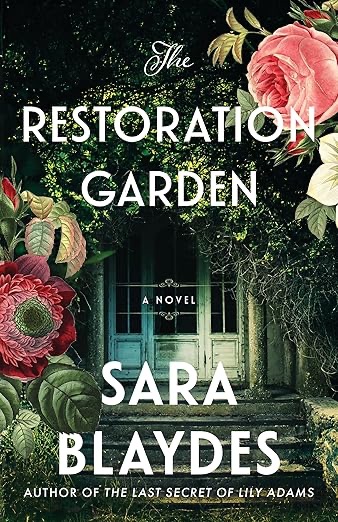
I love spending time in beautiful gardens. One of my favourite childhood places was Chatsworth House, mainly because I had delusions of grandeur and wanted people to ask ‘have you seen Hayley?” “This morning she was in the library.” I also loved the garden because it has such an incredible mix: cozy hiding places (I think I’ve always been Jane Eyre hiding in the window seat), highlights like a bronze willow tree that sprinkles water and creates rainbows, huge tropical conservatories and grand vistas that open up to reveal incredible views of the Peak District. My favourite place was The Grotto, a stone building next to a large pond that was like a bandstand with a pointed roof and open sides. I imagined sitting there and reading, able to look out over the valley below. Gardens are powerful places that can evoke so many different emotions and I was fascinated with our heroine Julia who is a garden restorer. This means having all the landscaping skills and plant knowledge of a gardener with an emphasis on the history of the place. It gives Julia’s job an added emotional element whether the client is trying to recreate a garden from their ancestral past or a garden that existed within the client’s lifetime, potentially bringing up the feelings it once evoked and whatever led to it’s destruction or decline. Here it is WW2 that interrupted the garden’s original beauty, particularly the moonlit garden that was repurposed as a kitchen garden to supplement rationing. Based mainly around greenery and white flowering plants, the emphasis was placed on plants the would reflect moonlight or only flowered at night. Julia’s client Margaret does remember the garden from before the war, but is struggling to convey to Julia the details. The 92 year old lady of the manor is rather enigmatic, but steadfast in her instructions that it should be exactly as it was. So Julia must do some digging into the family’s historical documents and photos so she can hopefully give Margaret those feelings once again. However, digging into the archives will unearth more than plants as family secrets come to light. 

“Moon gardens were often believed to be deeply spiritual places, where the barrier between the dead and the living thinned.” 

The author tells the story in a dual timeline with two narrators. In the present day timeline we follow Julia’s perspective and her strange position of living in Havensworth Manor with her nephew while she fulfils her contract. It’s a slightly awkward situation, with Julia worrying about the disruption of the house’s quiet, slightly stifling atmosphere. Margaret is her client, but she is often restricted from seeing her by Andrew, Margaret’s nephew who is also a GP. Bringing a curious and excited child into the mix does bring its moments, but there’s a sense of these newcomers bringing the manor back to life again. Sam bursts into this careful and structured home with all the innocence, excitement and curiosity you’d expect from a small boy and he’s a delightful character. Where Julia feels she has to be careful around Margaret, Sam asks the questions that Julia can’t, having been steered away from certain topics like the war by Andrew. More specifically the family don’t talk about Margaret’s sister Irene, but it’s clear that Irene and the garden have a strong link. When Julia finds a sketchbook filled with botanical drawings she is fascinated. In fact the book is a florilegium – where specific flowers are drawn together with their meanings underneath. The Victorians were fascinated by the language of flowers and this artist had a gift for expressing meaning through her flower drawings. We learn that Margaret’s elder sister Irene was the artist, but the two became estranged during the war when Irene fled the family home and brought disgrace on her family. Having both lost a sister, Julia and Irene could connect, with Julia still unable to separate the disparate emotions of grief and anger. Might this common experience help her with the garden? 

I felt like the book was a little slow to reveal things in the first third and I didn’t connect with Julia, who sometimes felt more like the catalyst for Irene’s narrative than a fully rounded character in her own right. However, Irene’s story immediately grabbed me as we heard how her life unfolded in her own words as compared to the family version in which she never saw her family or the manor again. All Irene wanted to do was go to art college but her parents refused, even though she was talented enough to be accepted. Art was a pastime for a lady, not a profession. Irene’s life at Havenworth is limited, leaving her both naive and frustrated. This is the perfect combination for James Atherton, a handsome RAF officer to sweep her off her feet, when he comes to stay with her brother. She has her head turned by his flattery, especially when it’s about her work and the romantic symbolism and sentiment of flowers and gestures. When he asks her to run away to London and marry him she only pauses to think about how hard it will be leaving Margaret. She’s soon in the thick of London nightlife, meeting new friends and shopping in Selfridges never stopping to wonder where the money is coming from. London is now in the thick of the Blitz and Irene will have to face the reality of her new life, especially when she’s asked to make a choice she could never have imagined. Her narrative gives the book its urgency and drama as WW2 slices through the life of this family like a knife. The author brings home the differences between life before and during the war, both at Havenworth and in the city, particularly for women. There’s a sense in which Julia and Sam’s presence thaws this family riven with secrets, they bring life into a largely silent house and although Julia worries that Sam might be too much, he seems to work his charm on Margaret and Andrew. As the garden starts to come back to life so do they, actually connecting as a family when it finally gives up its secrets. 

Out now from Lake Union Publishing

Meet the Author

Sara Blaydes has been obsessed with books ever since she demanded her parents teach her to read at four years old so she could steal her older brother’s comic books. It was only natural she start crafting stories where she, a perpetual daydreamer, could escape into worlds of her own creation. She currently lives in British Columbia with her handsome husband, two amazing children, and an overly anxious Boston terrier. She believes books are magic, summer is the best season, and parsley is never optional.
Posted in Personal Purchase

The Village by Caroline Mitchell 

Ten years ago, the Harper family disappeared. Their deserted cottage was left with the water running, the television playing cartoons, the oven ready for baking. The doors were locked from the inside. Overnight, the sleepy village of Nighbrook became notorious as the scene of the unsolved mystery of the decade, an epicentre for ghoulish media speculation.

For crime journalist Naomi, solving the case has turned into an obsession. So now, with Ivy Cottage finally listed for sale, it’s her chance to mount an investigation like no other. And her husband and stepdaughter don’t really need to know what happened in their new home… do they? But Nighbrook isn’t quite the village she expected. No one wants to talk to her. No one will answer her questions. And as she becomes increasingly uneasy, it’s clear that the villagers are hiding something—that there is something very dark at the heart of this rural idyll. And the deeper she digs, the more it seems her investigation could be more dangerous than she ever imagined… In raking up the secrets of the past, has she made her own family the next target?

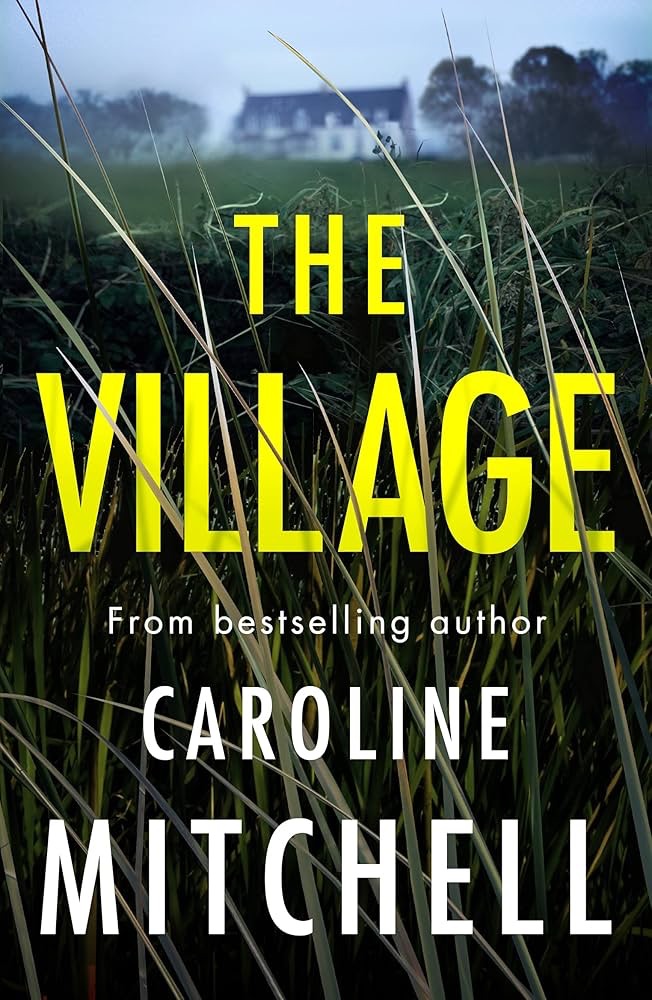
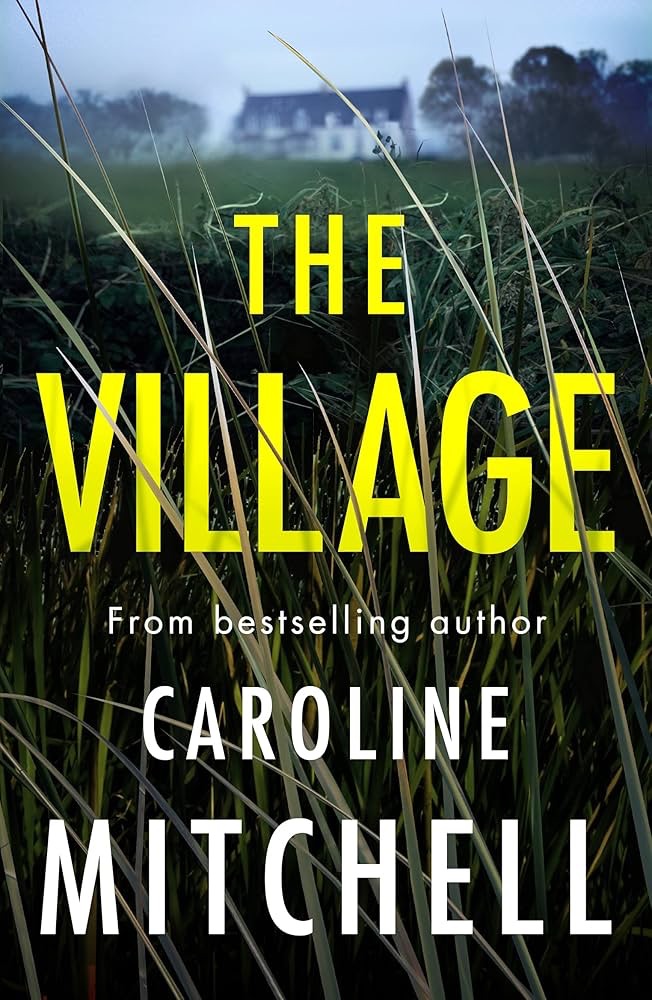
I came to this novel on the recommendation of another blogger and it’s certainly a page turner. Ivy Cottage isn’t the average house. It’s isolated from the village, tucked away in a forest clearing and inside it’s the archetypal haunted house – dated and untouched, full of cobwebs and creaking sounds. It feels like a house whose history is imprinted on the atmosphere. We also don’t know who can be trusted in this village. At first people are all smiles and welcome, so much so that Naomi takes cakes to the local cafe and the family gets to know local police officer Lloyd, who calls in to introduce himself. The tension is created by intervening chapters that delve into the past and cast doubt on characters that have seemed friendly in the present. They open up questions: why is a girl called Grace slipping out of the cottage in the dead of night and playing in the woods? Why is Lloyd watching? Is he trying to keep her safe or does he have more sinister motives for watching his ‘moonlight girl’. The author also creates disquiet in the reader with odd incidents that have no explanation. We don’t know who is responsible for locking Naomi in the attic one morning. Is her new stepdaughter Morgan resentful or actively dangerous? Who is the teenager talking to online? I found myself full of questions. 

I did have a lot of sympathy for Morgan who doesn’t seem to be such a bad kid, considering her circumstances. I found myself cross with her father Ed and Naomi for destabilising her, especially when she’s already estranged from her mother. Naomi and Ed have married in a whirlwind, then have taken Morgan from everything she knows into the middle of nowhere. They’re barely in Ivy Cottage when Ed announces he’s travelling to Scotland to track down Morgan’s mother who we’re told is an addict and has a life full of drama. It’s not hard to work out that Morgan must feel abandoned by both parents and is now stuck in this creepy house with a woman she barely knows. I felt quite angry with Naomi already, but when we realise she’s dragged her new family into her scheme to investigate the previous owners it seems positively reckless. Not even Ed knows the house’s past so Naomi has started a marriage by lying to everyone. To put a vulnerable teenager into this dangerous environment is at best selfish and at worst callous. Morgan is sullen and angry, which is understandable. When Naomi’s sister turns up she encounters Morgan wandering in the night and decides to give her a few ‘home truths’ which I found particularly spiteful. It’s no surprise that Morgan has started talking to strangers on the internet and wanders outside at night to meet new friends like Dawn, not knowing that she’s putting herself in danger. Can she trust anyone in this village? 

More tension is created by intervening chapters that delve into the past and the unusual life of a young teenage girl called Grace, part of the family who disappeared from this house. She has a very restricted life, plagued by unusual symptoms and even allergic to light. This level of control has led to her sneaking out at night and wandering through the forest, but out there she isn’t alone. Someone watches Grace and we’re not sure whether they’re benign or a danger. I’d worked out what was going on within the Harper family early on, but that’s only a small part of the mystery around Ivy Cottage and their disappearance. When Dawn asks Morgan to sneak out at night they play with an ouija board in the old church and Grace seems to speak to them. It unnerves Morgan but she’s not sure whether it’s a spectral Grace or Dawn she should be wary of. What we do realise is that there are still people lurking in the woods so Morgan and Naomi feel like sitting ducks. There are several twists and turns from here, with a double showdown coming – one for Naomi and Morgan and one in the past – it was nail-bitingly tense. I was also curious about the future of this whirlwind family if they came out of this alive. Would Ed forgive Naomi for lying to him and putting his daughter in unnecessary danger? Could they carry on living at Ivy Cottage? As the night of the Harper disappearance also unfolds I was on tenterhooks. The house was left with half-eaten food on the table as if they were spirited away with no warning. If Grace and her family came out of their ordeal alive, where are they and why did they leave the village? If they’re dead, then who is to blame? With mind games being played and a scene that may just have put me off cake, I’d have been packing my bags very quickly. I did feel there was a twist or two I didn’t need, but the author paints a brilliantly spooky atmosphere around the cottage and it’s hidden past. I didn’t know who to trust out of the villagers and my judgement was completely wrong! This was gripping and is one of those thrillers you’ll devour in a weekend.

Thomas and Mercer Jan 2022

Meet the Author

New York Times, USA Today, Washington Post and International #1 Bestselling Author. Shortlisted by the International Thriller Awards for best ebook 2017, the Killer Nashville Best Police Procedural 2018 and the Audie awards 2022. Over 1.8 million books sold.

Caroline originates from Ireland and now lives in a woodland village outside the city of Lincoln. A former police detective, she has worked in CID and specialised in roles dealing with vulnerable victims, high-risk victims of domestic abuse, and serious sexual offences. She now writes full time.

Caroline writes psychological and crime thrillers. Her stand alone thriller Silent Victim reached No.1 in the Amazon charts in the UK, USA and Australia and was the winner of the Reader’s Favourite Awards in the psychological thriller category. It has been described as ‘brilliantly gripping and deliciously creepy’.

The first in her Amy Winter series, Truth And Lies, is a New York Times bestseller and has been optioned for TV.

You can follow Caroline on:

X: https://twitter.com/Caroline_writes

Facebook: http://www.Facebook.com/CMitchellAuthor

Instagram: http://www.instagram.com/caroline_writes/

Her book site: http://www.caroline-writes.com

Her digital writing courses: http://www.caroline-mitchell.com

Posted in Random Things Tours

Scars of Silence by Johanna Gustawsson 

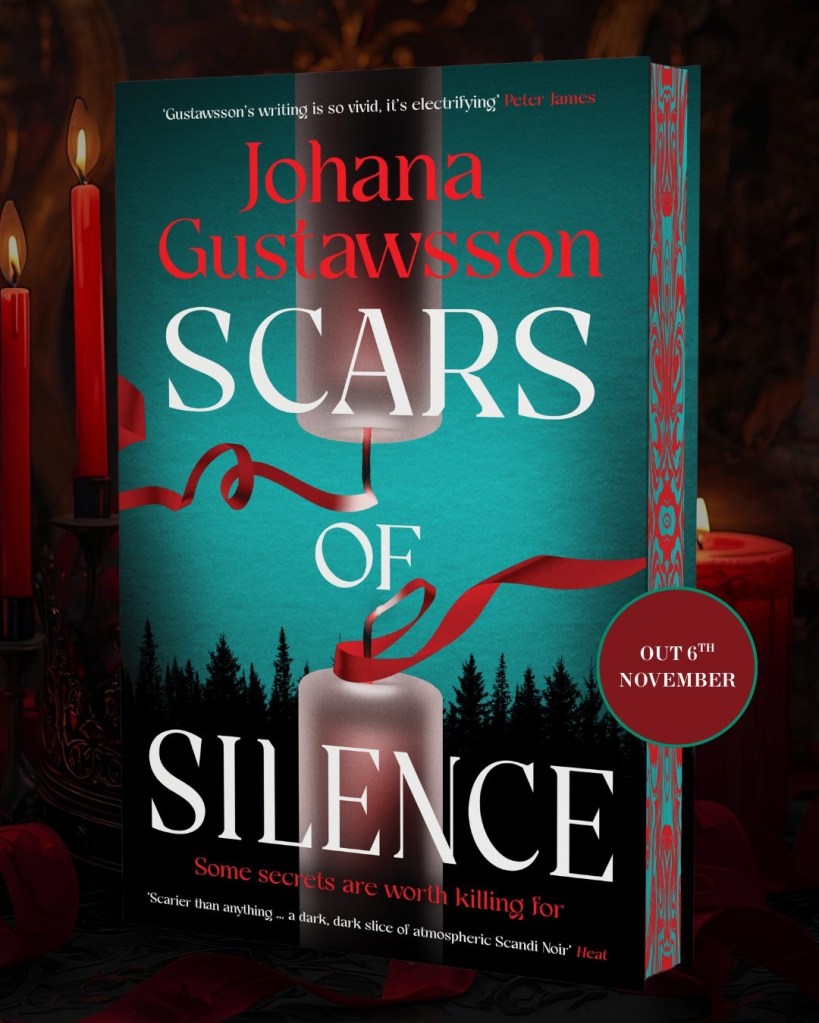
As autumn deepens into darkness in Lidingö, on the Stockholm archipelago, the island is plunged into chaos: in the space of a week, two teenagers, the son of the island’s mayor and that of a powerful businessman, are brutally murdered. Their bodies are left deep in the forest, dressed in white tunics with crowns of candles atop their heads, like offerings to Saint Lucia. Maïa Rehn has fled Paris for Lidingö, where her husband grew up, trying to come to terms with the death of their only child in a car accident. But when the murders shake the island community, the former police commissioner is drawn into the heart of the investigation, joining Commissioner Aleksander Storm to unravel a mystery as chilling as the Nordic winter. As they dig deeper, it becomes clear that a wind of vengeance is blowing through the archipelago, unearthing secrets that are as scandalous as they are inhuman. But what if the victims weren’t who they seemed? What if those long silenced had finally found a way to strike back? How far would they go to make their tormentors pay? And you – how far would you go?

I loved the timing of this novel from Johanna Gustawsson, her second set on the island of Lidingö in the cold, dark run up to Christmas. Here she bases her murder mystery around the feast of St Lucia and it begins when a body is found in the traditional dress of the festival. The victim is wearing a white tunic that’s been slit up the back, with a red sash and a crown of candles representing the festival of light. It reminded me of the locally held Christingle services, where small children in white hold a symbolic orange with a lighted candle in it and a red ribbon meant to symbolise Christ’s blood and his role as the Light of the World. It was something I’d never encountered before, being Catholic it wasn’t part of our tradition, but it fits into the many festivals that bring light to the winter months such as Hanukkah and Diwali. The festival and the victim’s clothing make the scene of the crime even more dramatic and hard to forget. It also throws up immediate questions about whether the date or the costume is a message from the killer. Visiting French detective Maia Rehn offers her help to local commissioner Aleksander Storm and they begin to investigate together. It soon becomes clear that the killer isn’t finished with the island community and the pair must work very fast, prizing secrets from people who are reluctant to talk and digging up long buried events that will devastate and destroy lives. 

One of the things I love most about this series is the atmosphere that the author builds. This is not the average crime novel, it definitely has a more Gothic feel that I would normally associate with folk horror. 

“It was hardly an ocean this mere strip of sea. A moat more like – cutting Lidingo off from the life of the Stockholm mainland. A ghost infested moat, surrounding a poisoned island”. 

This killing takes the community back several years to the murder and rape of a young woman dressed in her St Lucia costume. The victim is Jennifer, a well known and liked teenager in the community whose white dress and crown gives the impression of a angel in the snow. Jennifer was the daughter of Sophie Ackerman who bonds with Maia at a party, when they realise that both of them have lost a child. The pain and confusion of these unexpected and sudden losses have no descriptive word in the Swedish language, only the Sanskrit word ‘vilomah’ comes close, meaning ‘against the natural order.’ Motherhood and who we become when we lose a child is a theme of the novel and drives home that violent deaths affect a whole community. In fact, following the death of Jennifer Ackerman suspicions fell on her friend Gustav who found her body. The way the community treated Gustav, as well as the grief, caused him to commit suicide. It’s such an important theme that the novel’s opening takes us to a classroom on the island where Gustav’s mother holds everyone at gunpoint, blaming them for the death of her grief stricken son. These events and the darkening winter days hang heavy over the tiny island. Maia describes the loss of her son with such beautiful and haunting words that let us know he is still so present in her thoughts she almost expects him to materialise: 

‘He’s everywhere around me, so I’m always waiting for […] a word, a sound, the slightest caress from him. I find myself sniffing the air for the scent of him’.   

Sophie talks about her daughter Jennifer in the words of Cyrano de Bergerac, showing that she is still ever present for her too. It’s such a beautiful way of describing grief that comes in waves, some days it seems far away and other days it feels as if the loss was yesterday. I identified with this so much, knowing that even ten or twenty years on there are days when the grief feels painfully fresh. How much worse it must be with violent deaths where there are feelings of anger, guilt, resentment and so many questions left unanswered. 

‘Her name is in my heart like a bell. Every time I think of her it’s like I can hear that bell ringing and ringing and the memories and feelings resurface every time’. 

As the investigation unfolds it is clear that Maĩan and Aleks work quite differently, but complement each other. He is more of a facts person, whereas she picks up on emotion and her own feelings, heightened by tragedy, seem to have honed this skill. As an outsider she also seems more effective at getting people to talk, something that can be a struggle when a detective lives in the community they’re investigating. Their discoveries are both haunting and horrifying – especially a ‘trophy’ find that absolutely turned my stomach. Some of the themes were very timely, aside from the normal teenage themes of peer pressure, relationship angst and experimentation, there are also more up to date themes of incels, grooming and consent. I found it fascinating that Swedish law reform in 2018 placed the emphasis on positive consent so that rape was no longer defined by saying no, but the absence of actively saying yes. It recognises that when backed into a corner, freezing and becoming unresponsive are normal survival instincts and not consent, so threat and physical force don’t have to be present for an incident to be defined as rape. When we are finally taken to the night Jennifer Ackerman died it is hard to read, but that’s how it should be. This first incident is like a veil of darkness triumphing over light. It’s as if the island loses its innocence. I loved that the answers don’t come easily and the tendrils of the aftermath are everywhere. This is a vivid, symbolic and haunting crime story and the truth is devastating – a gradually revealed horror that has echoed down the generations of this isolated community. 

Out now from Orenda Books

Meet the Author

Born in Marseille, France, and with a degree in Political Science, Johana Gustawssonhas worked as a journalist for the French and Spanish press and Her critically acclaimed Roy & Castells series, including Block 46Keeper and Blood Song, has won the Plume d’Argent, Balai de la découverte, Balai d’Or and Prix Marseillais du Polar awards, and is now published in nineteen countries. A TV adaptation is currently under way in a French, Swedish and UK co-production. The Bleeding was a number-one bestseller in France and is the first in a new series. Johana lives in Sweden with her Swedish husband and their three sons.

Posted in Monthly Wrap Up

Best Reads October 2025

October brought many several wonderful things, as birthday months so often do. As always we went away, this time for two weeks in Dumfries and Galloway for book shopping at Wigtown and fishing for my other half. We knew we were onto a winner as we turned off the single track road onto a farm track that was a mile long! I’ve never stayed somewhere so quiet and because it was a Dark Skies area we got to stargaze too, with a meteor shower being a high point of the fortnight. I finally got to check out The Bookshop, run by author Shaun Bythell. The daily occurrences in the shop are depicted in his three books and I grabbed the latest one along with some second hand purchases too. As well as all the shops in Wigtown we stumbled across a little gem called Gallovidia Books in Kircudbright. This was a treasure trove of new fiction, poetry and children’s books as well as a good collection of biographies. The owner was very knowledgeable, definitely a real book lover and he recommended one of my choices above as his wife was reading it and was torn between savouring and devouring it. We alternate on holiday, when it’s a fishing day I stayed on the farm and had a fabulous view to enjoy while reading and getting some of my own writing done. After a couple of months without a kitchen it was a joy to come home to everything finished so I now have a functional kitchen again.

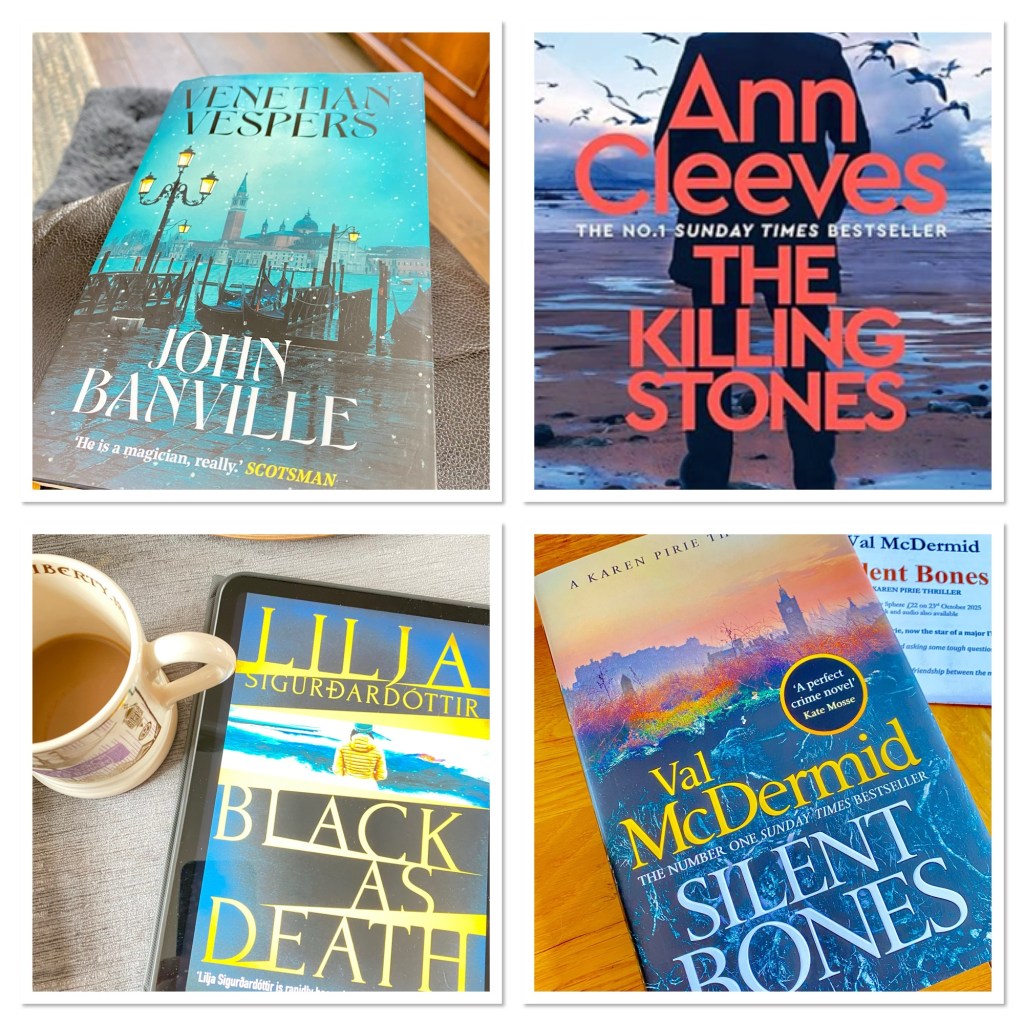
Bought on recommendation from the owner of Gallovedia Books I couldn’t wait to read this atmospheric book so dived straight in, This felt like the perfect autumn read – a sinister mystery filled with atmosphere and a slowly building sense of menace. Evelyn Dolman embarks on his honeymoon with his new wife Laura and it proves to be anything but the honeymoon he expected. With Laura settling in early for the night at Palazzo Dioscuri he decides to go for a walk and perhaps a drink somewhere close by and she suggests Florian, a cafe that first opened in 1720 and still serves Venetian visitors today. A chance meeting is followed by a night of drinking and one unforgivable act. So when he wakes in the morning, sluggish and nauseous and finds his wife isn’t next to him in bed, he imagines she has taken herself to another room. However, as the morning progresses it becomes clear that Laura has simply disappeared. 

There are clues to what is transpiring here but they are subtle. The writer has incredible sleight of hand and they seem inconsequential or at list explicable. Some completely passed me by. As I opened the book again for writing this review it made me think of The Sixth Sense and how no one saw the clues on their first watch of the film but when they watched for a second time they couldn’t believe they’d missed them. Each character is slippery and elusive with an unpredictable quality that felt dangerous. I lived this uncanny feeling the author created which grows organically from the city. This is a sparking jewel of a city that’s risen from the mud and brackish waters of the lagoon. Evelyn mentions the fin de siécle, that time of decadence towards the end of the 19th Century and that timing certainly informs some of the events in the book, particularly the fluid social order and sexual licentiousness. We’re told constantly that Venice is decaying and sinking. One day it may be completely under water, but the decay isn’t what you see when you first visit. Venice bewitches you with its golden domes, Morrison arches, coloured glass and the way sparkling light from the surface of the water bathes everything in a soft light. Then suddenly, only a street away you notice a tree growing out of someone’s house and at night most residences seem in darkness now that families can no longer live in the water logged lower floors. Banville captures this ‘double’ city utterly, describing the timeless romance of a gondolier serenading his passengers but also the jarring sound of the vaporetto. We see the sparkling water but also smell the mud as the passing boats churn it up. He links this duality with human nature, our surface selves and the real us, even the parts we avoid and keep locked away. Everything about this novel is a conjuring trick and I fell head over heels in love with it. 

I can barely contain my happiness at being back in the world of Jimmy Perez, this time in the Orkney islands where he grew up. Jimmy is living with partner Willow Reeves, who’s both his boss and heavily pregnant with his child. It’s Christmas and the couple are looking forward to the celebrations. Jimmy’s stepdaughter Cassie is spending the holidays with her father Duncan and his family on Shetland, so it just the two of them and son James. For the police, Christmas isn’t a holiday and as a huge storm passes across the islands, terrible discoveries are made. Everywhere there’s storm damage, but when a body is found at an ancient archaeological site Jimmy is devastated to find out it’s his childhood friend Archie Stout. Archie is a well known ‘larger than life’ character who’s the centre of every gathering and runs the family farm with a wife and two teenage sons. Jimmy finds that Archie has suffered a blow to the head and the murder weapon is a Neolithic stone covered in ancient runes and Viking graffiti, one of a pair taken from the heritage centre. Now Willow and Jimmy must investigate their friends and neighbours to solve the murder in the run up to Christmas, where events will traditionally bring the whole island together. The uncomfortable truth is that the murderer is likely to be someone they know and that means nobody is safe. 

I really loved Willow and the atmosphere she creates at home, particularly around Christmas. Just as dedicated to her work as Jimmy she takes an active role in the investigation, her pregnancy not holding her back at all. She knows it’s a delicate situation, working together and being in a relationship, especially when she’s the boss. Somehow they manage to keep the personal and the work life separate and she seems to know which responsibilities she must let Jimmy bear and those she’s happy to share. As Christmas Eve approaches fast she’s not running around like a headless chicken trying to make sure they have all the right things, they have food and she points out something I say every year – the shops are only closed for one day. It’s the traditions and being together that are the most important thing. She’s a great interviewer though, brilliant at picking up what people are not saying. She reads their body language and their tone, plus knowing each islander’s history helps too. What she picks up on are the unexpected or secret alliances, such as Archie’s investment in the hotel or his in-law’s apparent friendship with a regularly visiting academic. The case is fascinating, covering potential adultery, family tensions, environmental disagreements and historical conflicts, as well as academic jealousy. As everyone gathers on Christmas Day for The Ba and someone goes missing, my nerves were like violin strings! It’s this gradually rising tension alongside the beautifully drawn relationships that make Anne Cleeves’s novels. Jimmy has always had incredible empathy for others, feeling his own loss alongside theirs and understanding behaviour that might at first glance seem inexplicable. This is a hugely welcome return for Jimmy, both in a different landscape and place in life. Hopefully it’s the first of many. 

The haunting final chapter to an award-winning series

And a final reckoning…

With the fate of her missing sister, Ísafold, finally uncovered, Áróra feels a fragile relief as the search that consumed her life draws to a close. But when Ísafold’s boyfriend – the prime suspect in her disappearance – is found dead at the same site where Ísafold’s body was discovered, Áróra’s grip on reality starts to unravel … and the mystery remains far from solved. To distract herself, she dives headfirst into a money laundering case that her friend Daníel is investigating. But she soon finds that there is more than meets the eye and, once again, all leads point towards Engihjalli, the street where Ísafold lived and died, and a series of shocking secrets that could both explain and endanger everything…

I’ve been hooked on the story of Áróra and the case of her missing sister Ísafold for a few years now and the tension has slowly gripped the reader ever tighter with each novel as each one has brought it’s revelations. With this being the reason Àrora is in Iceland, it’s always been the over-arching narrative, but other cases run alongside. The combination of Áróra’s skills as a financial investigator plus the skills and powers of Daniel and Helena who are detectives, complex cases are profiled and attacked from different directions, making them a formidable team. We meet everyone after the discovery of Ísafold’s body in a suitcase deep within a fissure in a lava field. They were directed to it by an unusual little girl who claimed to be the reincarnation of Ísafold, something that was difficult for Daniel to accept. There’s so much more to understand and we get the narrative through different viewpoints, aside from Áróra, Daniel and his colleague Helena. Felix has fallen into working for a local dealer and we see his fear as the bag he has been sent to collect has disppeared from the car while he was getting some food. There are also flashbacks to the last few months Ìsafold was alive and we finally hear her story in her own voice, which I loved.

We’ve always had suspicions but have never known who killed Ísafold. The novel is gripping and of course we want this mystery resolved, but I didn’t feel any of that racing tension or triumph that I often get from thrillers when the killer’s revealed, especially when I’m right. This was just so desperately sad. I found myself taking a moment for this under confident woman who was so far out of her depth. A woman whose emotions dictated her life decisions. I was harrified and had that strange empty feeling of loss. A loss I knew Áróra would feel. The question is, if she does get all the answers she needs, what will Áróra do next? Unlike her sister Áróra has a clear sense of what she wants and needs to be happy and fulfilled. She makes decisions based on self-knowledge and it remains to be seen whether Daniel is a part of that eventual happiness. 

It’s delightful to be back in the hands of a consummate storyteller like Val McDermid. She takes us straight into the story and I always feel like these characters are real, going about their lives and then we drop into their world from time to time. Here the Historic Cases Unit are working two cases: the death of a high-end hotel manager and a body found after a landslip in heavy rain on the M73. Tom Jamieson’s death is flagged up by his brother in New Zealand. Thought to be an accidental death, Tom’s brother has footage that shows someone was behind Tom as he left the hotel after his shift and in the staircase where he met his death. If this man entered the steps after Tom and can be seen exiting then he must at least have seen Tom’s fall, or is there a more sinister explanation? The body in the M73 has to have been placed there deliberately. It turns out to be the body of investigative journalist Sam Nimmo, thought to have killed his pregnant girlfriend Rachel before going on the run about eleven years ago. The discovery opens up her murder case as well as Sam’s. I was hooked by the evidence that leads to a secretive book club of successful men who meet once a month in Edinburgh. They’re named the Justified Sinners, alluding to a James Hogg book that is based on the Calvinist principle that once a person is ‘saved’ they can commit any sin, even murder, and still enter the kingdom of heaven. Is this a joke between literary friends or something more sinister? Have they stumbled upon an unofficial Freemasons’ club where the members share business tips and inside knowledge? The team start to wonder about the potential benefits of becoming one of the twelve members and whether those benefits are worth subterfuge or even criminal acts. 

The book is rooted in the now with cancel culture, the MeToo movement, Covid and the corruption around it and the cost of living crisis all pertinent to these cases. I think the team are feeling overwhelmed, even without the quagmire surrounding the Justified Sinners and Sam’s quest for the truth. I thought that some characters did behave unpredictably, just like they do in life. The outcome isn’t straightforward and there were people to blame that I genuinely didn’t expect. This is an enthralling read from a writer at the very top of her game. Someone who knows exactly how to pitch a story and keep the reader engrossed until the final pages. She knows that the joy of a book is in the journey and that sometimes we don’t get the answers we expect. 

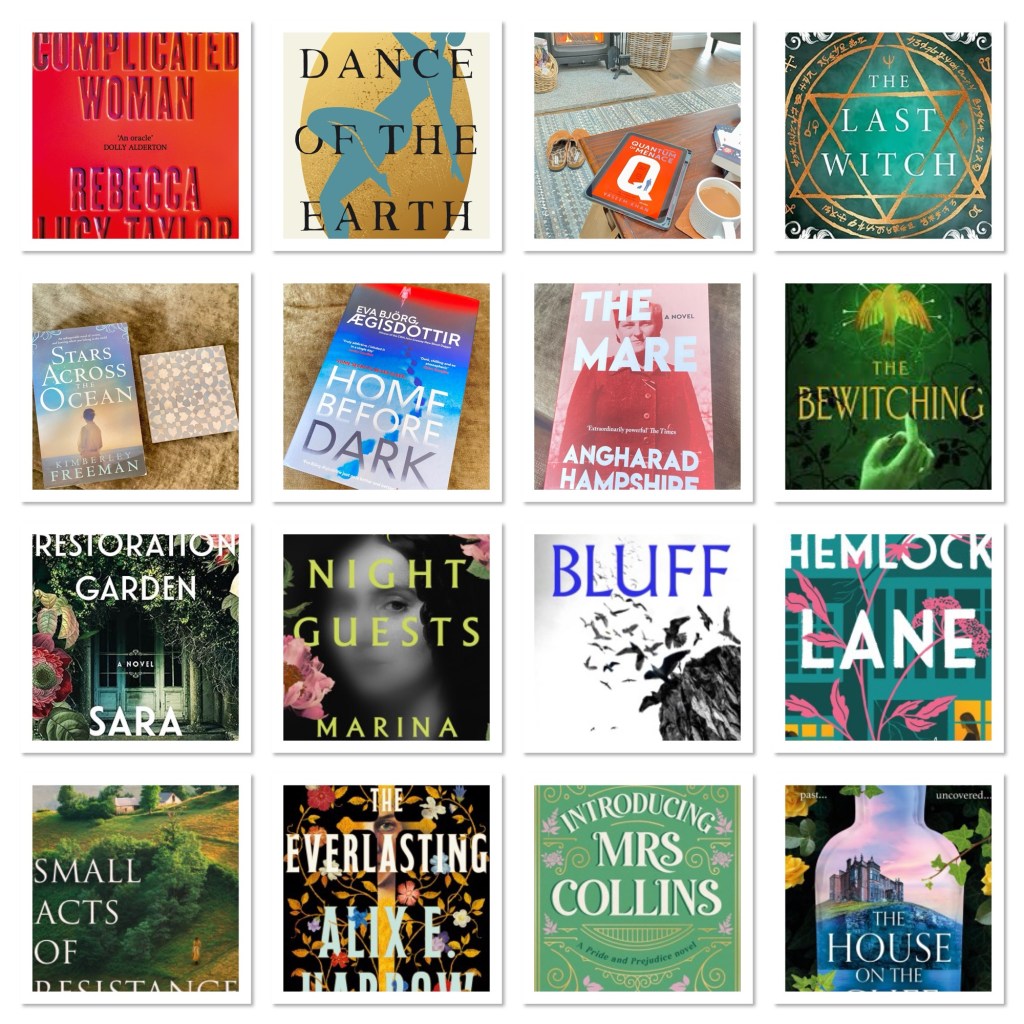
It’s getting quieter as we move into the last months of the year but here’s my expected reading for November:

Posted in Random Things Tours

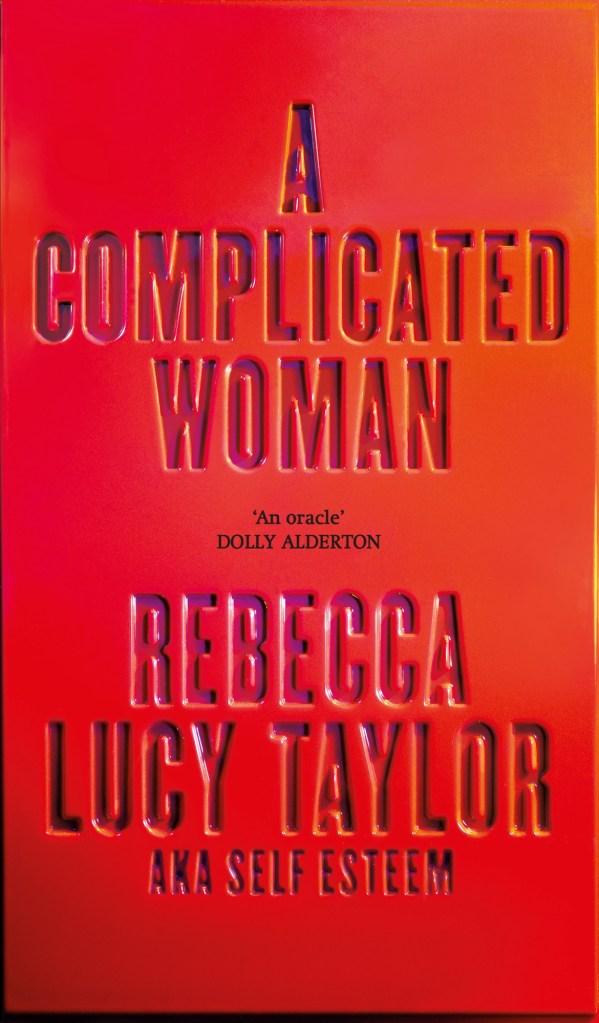
A Complicated Woman by Rebecca Lucy Taylor aka Self Esteem 

“I never could′ve told you anything I long for

While I was in the water swimming ‘gainst tides we′re taught to

Take it in our stride, laugh it off, take it on the chin just right

Don’t be too loud or too quiet, but I got all this fight

And now I see it clear with every passing of each year

I deserve to be here

And every time I fall, I crawl back like an animal

My focus is powerful.”

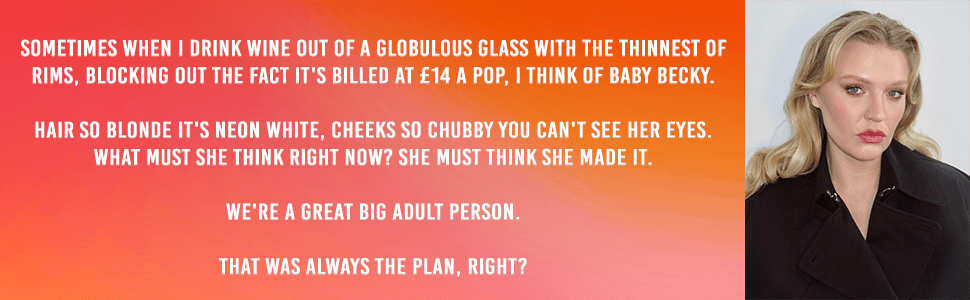
I knew I was going to love Self Esteem when I first caught her set at Glastonbury a few years ago, referencing 1990 Madonna with her black suit and corset. What made me stop and watch was that instead of the iconic John Paul Gaultier conical bra each breast was covered with the dome of Meadowhall Shopping Centre in Sheffield. At that point I didn’t know that Rebecca Lucy Taylor was born there but I could see she had a sense of humour, a sense of where she was from and had something very powerful to say as the above lyrics from her song Focus to Power show. In the intervening years Self Esteem has become a creative force with three solo albums, including A Complicated Woman this year. She had a Mercury Prize nomination for her album Prioritise Pleasure in 2022 and was the BBC Music Introducing act in 2021. She is not just a singer, she’s a multi-instrumentalist and has composed for theatre and became a West End lead in 2023/24 playing Sally Bowles in Cabaret. She’s been awarded an honorary doctorate in music from the University of Sheffield and a portrait of her hangs in the National Gallery. Now she has written a memoir, bringing together notes and lyrics, journal entries and observations on life as a woman in the 21st Century, referencing relationships, abuse, self-worth, creativity and living under the weight of the impossible expectations we impose on young women. The blurb refers to it as a ‘subversive anti-Bible’ and a ‘cathartic scream of a book’ and it is raw, emotional and so incredibly exposing. I will be buying it for my stepdaughters. 

The narrative is jagged and feels unfinished, a structure that underlines the theme of being the ‘finished’ article something that applies to both the professional and personal self. Creative work never feels fully done. I always imagined that when writing a book I would know when it was complete and I would feel satisfied that it was finished. A piece of writing is always open to change, but we have to let it go at some point and finishing is a collaborative process with mentors, agents, editors and might end up looking different to what you expected. Similarly as people we are never finished, the self is not one fixed thing and can be influenced by mood, something we watched, whether we slept well or not and interactions with others. I think we imagine as children that there’s a point where we become an adult and our self is a fixed thing, but the self is fluid and open to change until the last day we’re alive. The author writes that she wakes up knowing it’s going to be a day when her brain is against her. So out of all the options open she decides on the middle ground: 

‘Ultimately doing nothing garnished by a little of what I as a child imagined being an adult would be. A coffee in a cafe, walk to the cinema, watch an art house film alone, walk home.’ 

It’s almost a fake it till you make it idea. The self is just a raw block of clay but we still go out there, pretending to do what we think adults should.

Self Esteem at Glastonbury 2022

Toxic relationships are also a huge part of the book and it’s clear there was one in particular that was coercive and damaging. Tiny little snippets of information are dropped about him and I identified strongly with how she feels at these times. She addresses him remembering that: ‘ he made sure to take at least two pieces of jigsaw and hide them so it could finish it himself.’ It made me shiver with recognition. My heart broke for her in this paragraph: 

“I’ll never forget the first time it cracked and he became someone else. I spent that night trying to sleep on the floor and reaching back up to him in his single bed, sleeping soundly. Offering my hand over and over through the night. – And forever he held back. Each tendon in his fingers finally gracing me with tension. And in that moment the sickness in my stomach was gone and the addiction to his acceptance began.” 

She clearly spent years trying to please this person, to be enough but not too much. Enough in the right way that was acceptable to him. A rollercoaster of arguments followed by apologies to make things nice again, a blissful few weeks when he’s happy because she made herself smaller, then a withdrawal of affection, hurtful comments and arguments. It’s a place I’ve been and it only ended when I accepted I was enough, just as I was. I still feel sick to my stomach when something takes me back there and this really hit home. As she says, ‘tell me anyone who left when they should have.’ She also addresses the inevitable question of children, something women are always asked and I have noticed that I make a lot more sense to some friends now I have stepdaughters. The author wishes she could just have one, now, not because she wants one just because it would be done and people would stop asking. They ask as if you’ve forgotten to do it. There’s a point in the book though where change begins and it’s in a letter, because unsent letters have such power. It’s a letting go leaving the path clear to be whatever.

We get the sense of a person who has a huge and imaginative inner world, but is hampered by her own mind throwing out options, constantly questioning whether this or that is the right thing to do. There’s a very busy internal critic here and while the author may be an over-thinker and struggle with anxiety, I think this second-guessing herself is a habit many women have. It starts with parental pressures of what a girl should be, educational expectations influenced by gender, societal expectations of what an adult woman should want and how successful she should be. It’s as if feminism succeeded in giving women more choice, but also more expectations rather than equality. Yes of course we can have a career, but then you must go home and more than a fair share of housework, cooking, laundry and having the mental load of who eats what, which week a friend is coming to stay and an encyclopaedic knowledge of where every object belonging each family member might be found. On top of that are grooming standards, the endless opinions on whether women should age naturally or have surgery, when they should stop wearing short skirts and how to keep their sex lives spicy. No one asks a man when he’s going to fit in having a child or whether he should sacrifice his career for his family. This pressure is described beautifully here as it runs throughout the narrative alongside the extra pressures of being creative and a famous woman. Everyone talks about America Ferrarra’s speech in the Barbie film about what a woman is but I find the author’s words much more affecting as she writes a poem about herself as the woman she feels society wants her to be. A woman who eats the right things, who makes money but stays generous and humble, who is modern and desirable, but above all things maternal. It reads like a modern fairy tale.

‘I had one thousand friends and each and every one was happy with me, and felt I had given them enough time and attention’. 

It feels like slicing yourself into a thousand different pieces to be everything and keep everyone happy and they all think you’re amazing, but you’re still slicing yourself. It takes therapy, age and self-acceptance to throw off these expectations and doubts. In amongst this torrent of emotions there is a down to earth feel and a sense of humour that comes out a lot in lists – ‘things I should have said no to’ being one. There are also blunt truths that she clearly can’t say to the person but records in her diary – ‘I want to be fucked like that but not have to hear about your Edinburgh show.” I loved this directness, tempered with humour. It also shows how hard it can be for some women to say what they want and don’t want without judgement. 

She gives us an insight into how those judgements are magnified in the music industry, where you’re trying to get your creative work out there but are being told you’d sell better if you wrote a certain way or were a bit more attractive. If she’d compromised she’d have a record deal by now, she’s told, why is she so difficult? This is a tale we’ve heard again and again in the music industry but it has to keep being said till something changes. We’ve heard it from the incredible Raye who wrote for other people for years because her own stuff didn’t fit in a specific box, or Cat Burns who writes about how difficult it is to know how to be the human everyone expects. Paloma Faith is an incredible inspiration and I watched a clip of her speaking to students at the university graduation. She has delved into music, fashion, writing, broadcasting and art and she passed on an incredible bit of advice – she has always been brimming with ideas and would worry that she couldn’t fix on one way to get these thoughts and ideas out there. She remembered a conversation with one of the tutors who said she didn’t have to fit all of her ideas into one mould. One idea might be a brilliant book, rather than trying to condense it into a song but another might be better suited to fashion or art. She didn’t have to fit into one mould. I think Rebecca is the embodiment of that idea, brim full of ideas and happy to range across music gigs, theatre shows, dance, tv appearances and memoir writing. The point is the creativity, not the medium. 

I can think of so many women who can take something from this book and it will sit happily up on my shelf with writing from Caitlin Moran and Paloma Faith, hugely creative and intelligent women with a lot to say. It renewed something I’ve been wrestling with in my own head now I’m hitting menopause and middle age – it’s ok not to ‘grow up’ but take joy in every new incarnation of yourself and the changes it brings. It’s subversive in a world where we’re told we should be striving to stay young and relevant. to be unhappy getting older. I found so much inspiration in this memoir, both personal and creative, as well as a wonderful feeling of being seen. 

Posted in Random Things Tours

Dance of the Earth by Anna M Holmes

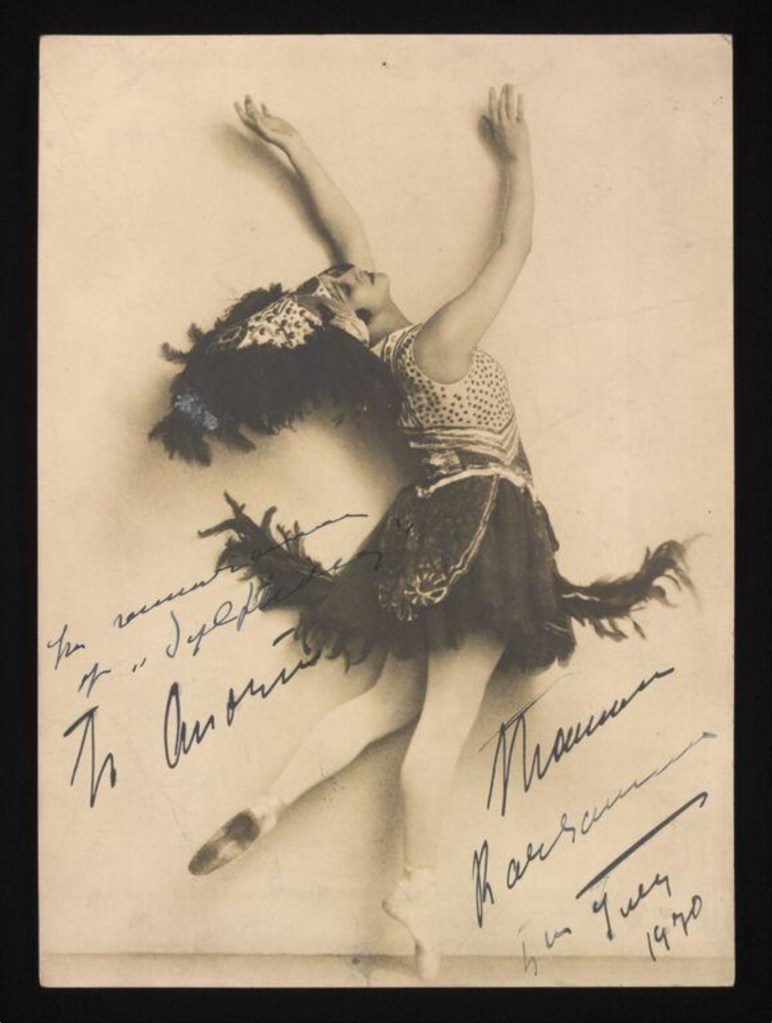
London, 1897. Nobody, least of all Molly, knows why she ends up taking the foundling home from her job at the Alhambra Theatre. Molly is a seamstress, creating costumes for ballerinas who perform within the music hall tradition. She loves dance but with her built up shoe and awkward gait she is as close to the stage as she can get. When a baby is discovered on the steps of the theatre everyone discusses who could be the mother, but they’re at a loss. It’s hard to hide a pregnancy in a shared dressing room and with seamstresses who note the tiniest change on a tape measure. She takes Rose home, but her upbringing is also at the theatre where everyone takes an interest in this little girl who grows up enjoying the colours, fabrics and feathers of the sewing room but reserves her love for the ballerinas. When she’s old enough she wants to learn and grows into a role in the chorus very quickly. Rose is determined to succeed and keeps pushing for that breakthrough that will give her the starring role. Molly knows Rose is pregnant before she tells her, the result of an affair with a wealthy married man, but the abortion they arrange is abandoned when Rose changes her mind. Rose’s twins are born backstage at the theatre, where life starts and then life ends as Rose’s dancing dreams die. So the boy, Walter, is sent to live with his father and stepmother and Nina stays with Molly. This decision means that Nina has the same upbringing as Rose and becomes even more determined than her mother to be the best dancer she can be. The younger generation pursue their ambitions, loves and dreams in a new world shaped by the pioneering Diaghilev and his dazzling Ballets Russes, Stravinsky’s dissonant music, and the devastating First World War.

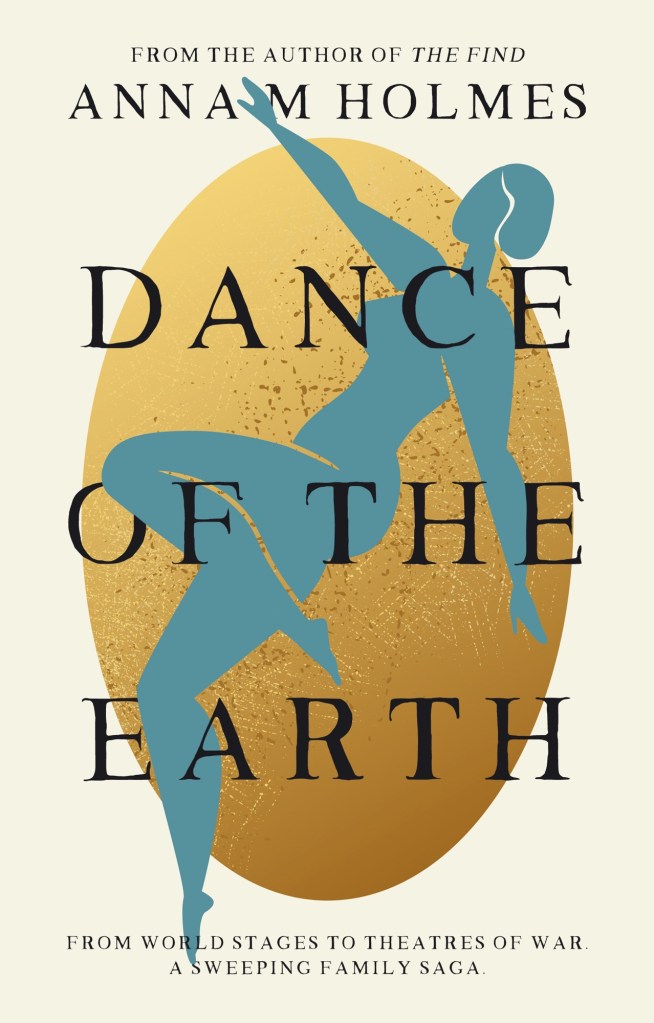
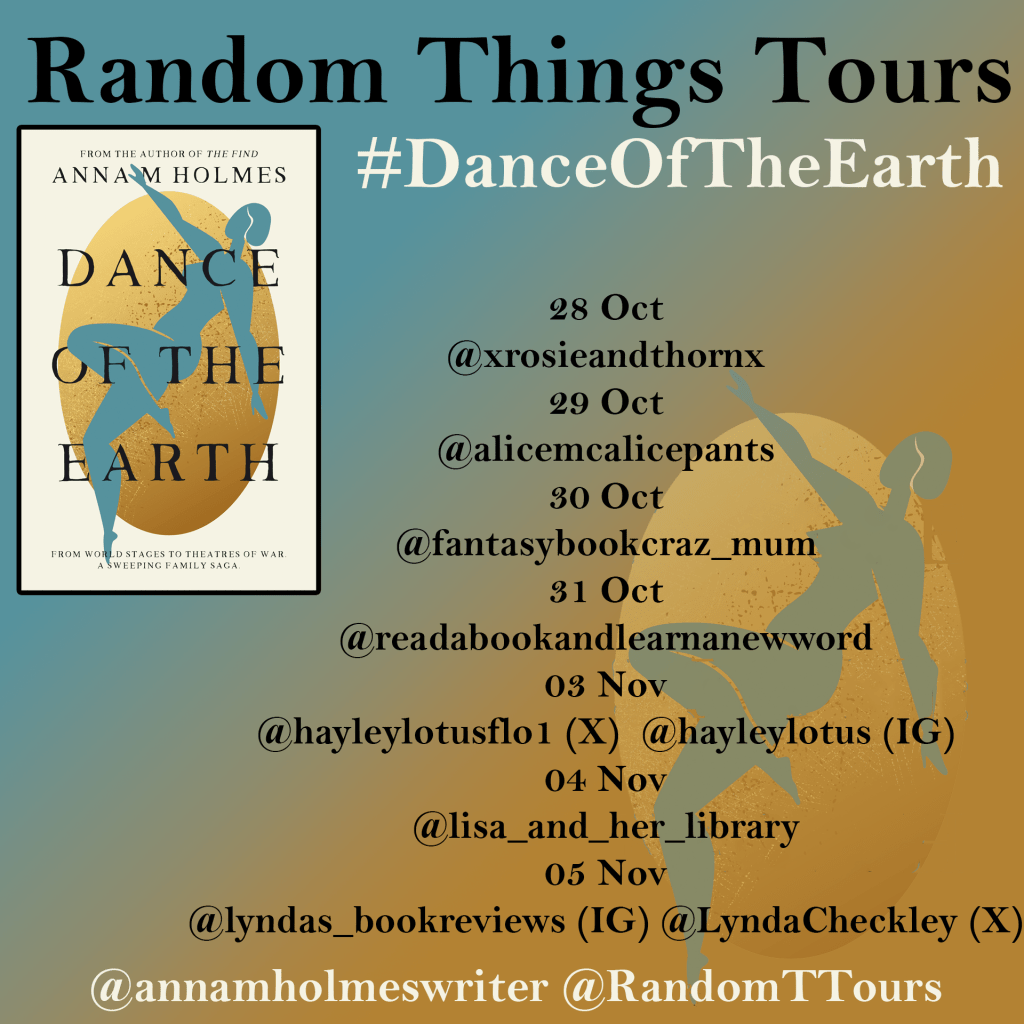
I asked to read and review this book because I enjoy ballet, particularly the more lyrical modern ballets by Mathew Bourne and the brilliant Northern Ballet based in Leeds who often do literary adaptations such as Wuthering Heights and The Great Gatsby. I’m also fascinated with this period of history, particularly when it comes to the huge impact of WW1 and the way it affected class structures and the lives of the women left behind. The author weaves her story into this time and society beautifully and with such care over every detail. Even the cover shows her themes of rebirth and regeneration with its large golden egg and a female figure as if drawn by Matisse, non-sexualised and not constricted by the corsets and crinolines of earlier generations. Her shape reminded me of the new ballets produced by Diaghilev and choreographed by Fokine that also showed more freedom in their movements and looser costumes. Rose and Nina have a very different upbringing from the average Edwardian woman, the music hall theatre wouldn’t be considered respectable by the middle and upper classes. Molly has no choice but to work so both Rose, and later her daughter Nina, fell asleep to the sound of sewing machines and have clothes that are colourful and unique, thrown together from fabric remnants. Both are dazzled by the dancers and want to be on the stage and both are successful to different extents. Nina is utterly determined and visits all the ballets she can while training, because she’s aiming beyond the music hall and into the world of modern ballet. She hears of the Ballet Russes and Diaghilev’s new approach, she identifies herself with his ‘Firebird’ – another symbol of renewal and regeneration:

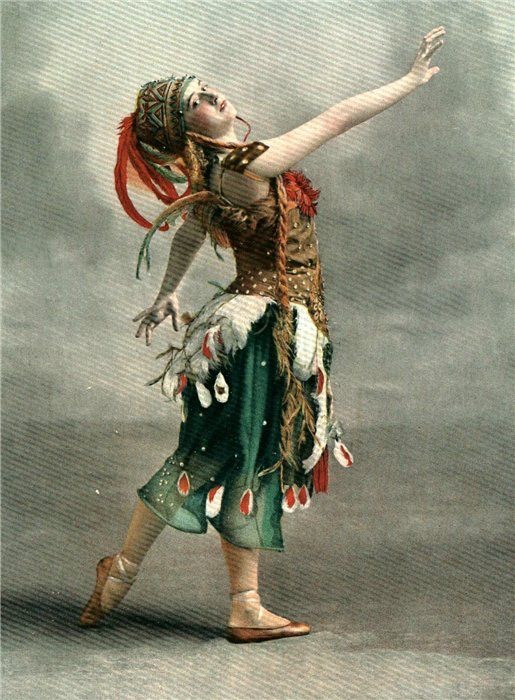
‘Tamara Karsavina wore a magnificent head dress – long flaming feathers quivering – a bodice of brilliant reds and oranges […] she adored the exotic creature”. 

The premiere of this ballet was in 1910 at the Opera de Paris and showed off the choreography of Diaghilev’s collaborator Fokine which was ground breaking. This dancer had to represent an element, with all the wildness of fire, something we think of as hard to contain and dangerous to be near. It’s definitely a force that’s in Nina and represented the changing roles of women in the early 20th Century: women who wanted to go to university, to have a career, to have the vote. Imagine how strange it must have been to see a woman on stage who’s a rebel and has power, especially with its incredible costume and free expressive dancing. 

‘This firebird was her – Nina – aflame, all sharp angles radiating determination’. 

The Firebird from V and A archive

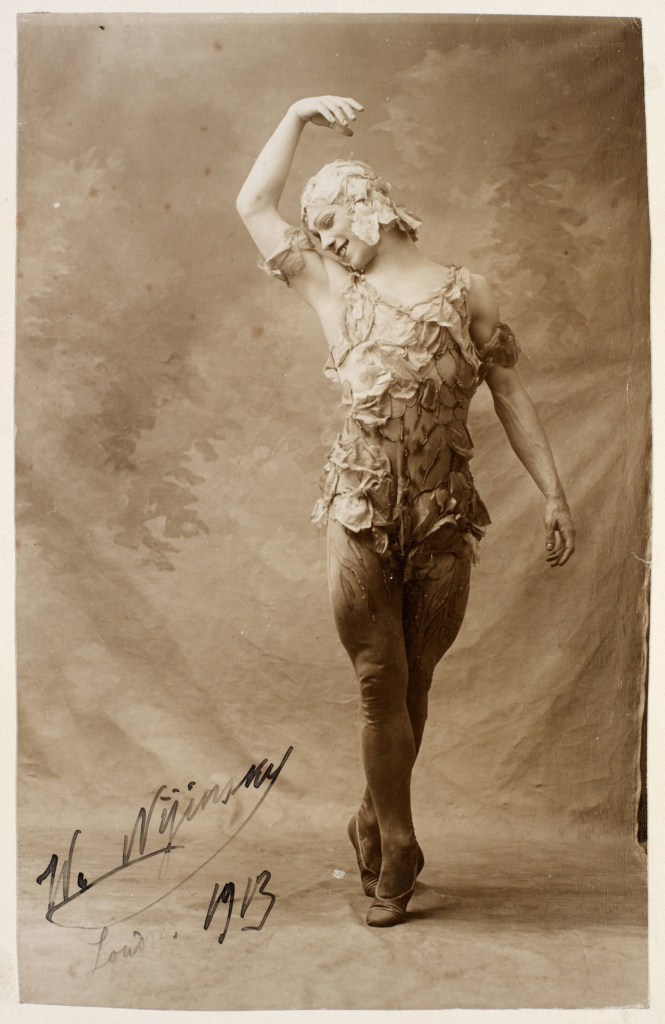
Walter is almost his sister’s opposite, a person you could easily miss in a room and caused by his upbringing. Brought up by his mother’s lover Arthur and his wife Beatrice, he is rich in every sense except the one we most need – love. Beatrice was cold, although it is hard to imagine what it felt like to meet the proof of her husband’s infidelity at the breakfast table each morning, especially when she couldn’t have children of her own. I was intrigued by the differences between the twins and what it said about the nature/nurture debate. Nina has been brought up by the entire theatre community of women from Molly’s fellow seamstresses to the dancers, which gives her so much confidence, drive and inspiration. She sees women making their own money and in a creative career, so she knows women can make it on their own in this world. All Walter seems to learn at home is to stay as small as possible and not upset anybody, something he takes to boarding school with him. His masters at school are trying to turn out traditional middle class men, who go on to university and have a profession. The assumption is they will have a career that can support a family, but Arthur’s only love is music but he doesn’t have the confidence or self-worth to make that happen. When Arthur died I thought Beatrice was particularly brutal in dismissing Walter, making it clear he will liaise with his father’s solicitor from now on. When children are rejected they don’t think something is wrong with the parent, they internalise the rejection and are left feeling something is wrong with themselves. For Walter this is compounded at boarding school where he is not athletic or competitive, he is teased, bullied and never stands up for himself. As he discovers his Grandmother and Nina he’s also having feelings that seem natural, but must be kept secret. When they all go to see the Rite of Spring he watches Nijinsky mimicking an ecstatic and sensual moment on stage and becomes aroused. He’s mortified and has to leave immediately. I kept wondering how he would cope with war on the horizon and the huge pressure on young men to enlist. I couldn’t imagine how he would survive the brutality of the experience. 

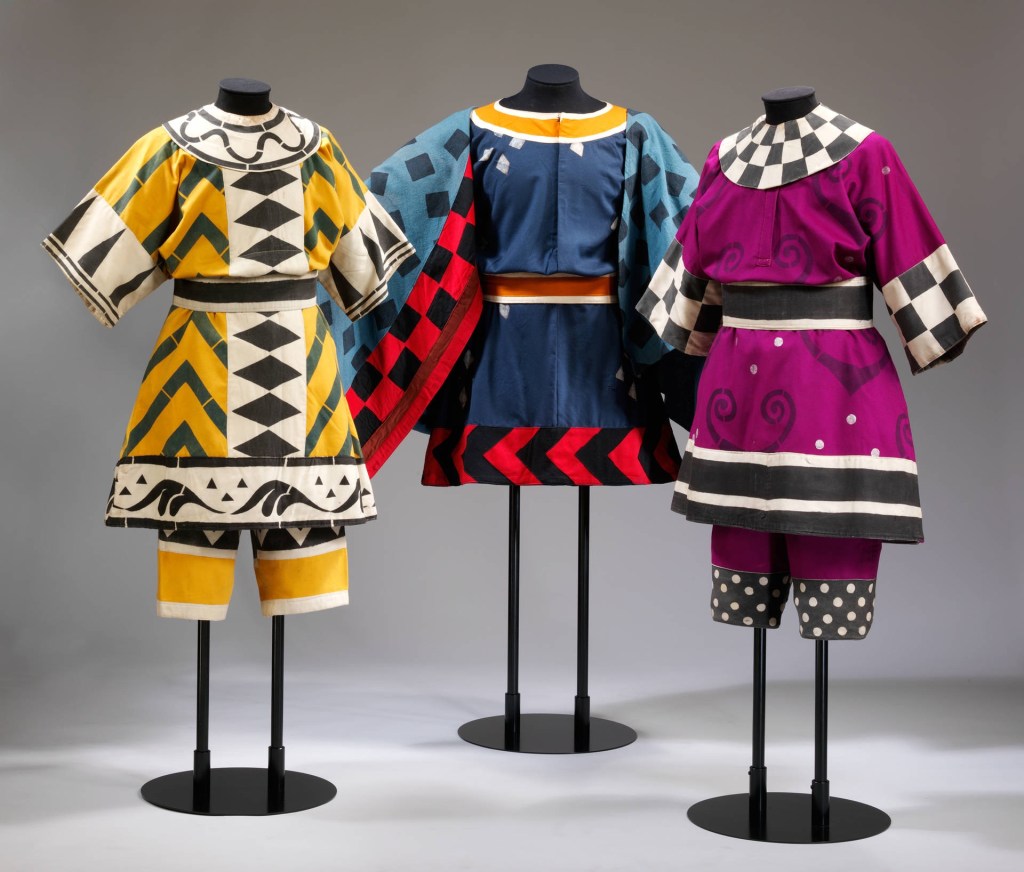
Costumes from the Ballet Russes

This fascinating family story feels absolutely real and that is down to the incredible amount of research the author has undertaken. She wholly embeds these characters into the history of the time, weaving social, cultural and political history around them, along with her incredible knowledge on dance history. I loved the vividness of the theatre, the backstage bustle and the magic that is produced for the audience especially when what they’re seeing is groundbreaking. She applies equal care to the war sections of the novel too. It feels like you are in those trenches because there’s an immediacy to them. These sections are also graphic and raw, which makes them hard to read about war when you’re invested in the characters. It had to be strong and true to life for us to understand how and why this war tore straight through the lives people had known before. Although changes were already happening at the turn of the century, WW1 was the first mechanised war and the sheer number of casualties were hard to comprehend. It wiped out a generation of men and afterwards there’s an acceleration of modernism that’s visible in the arts and everyday people’s lives. The aristocracy struggle to hold on to property and land as they are tied up with death duties, sometimes more than once. Middle class women who have always relied financially on men have to face life alone and discover ways of making money – less servants, taking in lodgers and finding jobs. If men came back, they came back changed forever due to shell shock (now PTSD) or physical injury and couldn’t work. Women didn’t want to give up jobs they’d done throughout the war and a freedom they’d never had before. Also contraception becomes more freely available and this was the earliest stages of some women not having to choose between career and relationships. As Nina joins the Ballet Russes she becomes more independent, travelling all over the world and living the life her mother had dreamed of. When we see her reach her first stop in the south of France she is utterly in her element and it’s no surprise that she enters into a controversial mixed race relationship, something more acceptable in that time within the bohemian and arty circles she inhabits. It’s almost as if the war curtailed the freedom of men, especially when conscription began, but emancipated women.  

Nijinsky

In 2010 I visited an exhibit at the Victoria and Albert Museum in London, called Diaghilev and the Ballet Russes which focused on costume and design including collaborations with artists like Picasso and the music of Stravinsky These sketches and costumes were like nothing I’d ever seen, seeming both weirdly modern but archaic at the same time. There’s nothing pretty about them and no tulle in sight, they’re loose with strong colours, geometric shapes and sharp zig-zags. I could see the point being made – by being so aggressively modern it almost forces change and expectation of what a ballet is. I could see how they matched Stravinsky’s music because there was a segment of the Rite of Spring with its themes of growth, fertility and desire. I could see why audiences found this piece so shocking because it has that same aggressive feeling with unusual rhythms and sudden loud bursts of sound. It’s harsher on the ear than the usual score for ballets and the sets were purposely sparse. The dancing had a primitive feel and the subject matter of a young woman sacrificed to the spring is like a modernist version of the contemporary horror film Midsommar. It was reported that people rioted at the premiere, which is probably an exaggeration, but I can imagine an audience finding it strange and confronting when we think of the opulence and beauty they were used to in ballet. It’s such an important piece in the history of dance and without it we wouldn’t have contemporary dance. I came away from the novel feeling I’d learned so much about dance and the early 20th Century in general. While all the characters touched me in different ways I did have a soft spot for Molly, who stands out within these themes of fertility and desire. I thought she was the most incredible mother, yet had never given birth to either of her children. She has a disability but spends her time within a world where bodies are pushed to their limit, creating beauty in their movement. Her love of dance is built into every one of the costumes she lovingly creates and the colourful outfits she makes for her daughters. She provides stability and love for Rose and Nina, plus she never judges their mistakes. She is the earth, grounding these fiery women and eventually Walter, for the rest of her life. She is the heart of this novel for me and Nina can only be what she is because of her. I could imagine her as the central character in an incredibly lush and powerful period drama with the war breaking through everything in its brutality. This is a must read for both lovers of dance and historical fiction. 

The Firebird

Meet the Author

Stories with big themes written as page-turners are Anna M Holmes’s speciality. With an extensive background in dance and theatre, Dance of the Earthis a story she has longed to write. Her novels- The Find, Wayward Voyage, and Blind Eye-are all typified by deep research. Anna worked as a radio journalist before embarking on a career in arts management. Originally from New Zealand, she now lives in South-West London.