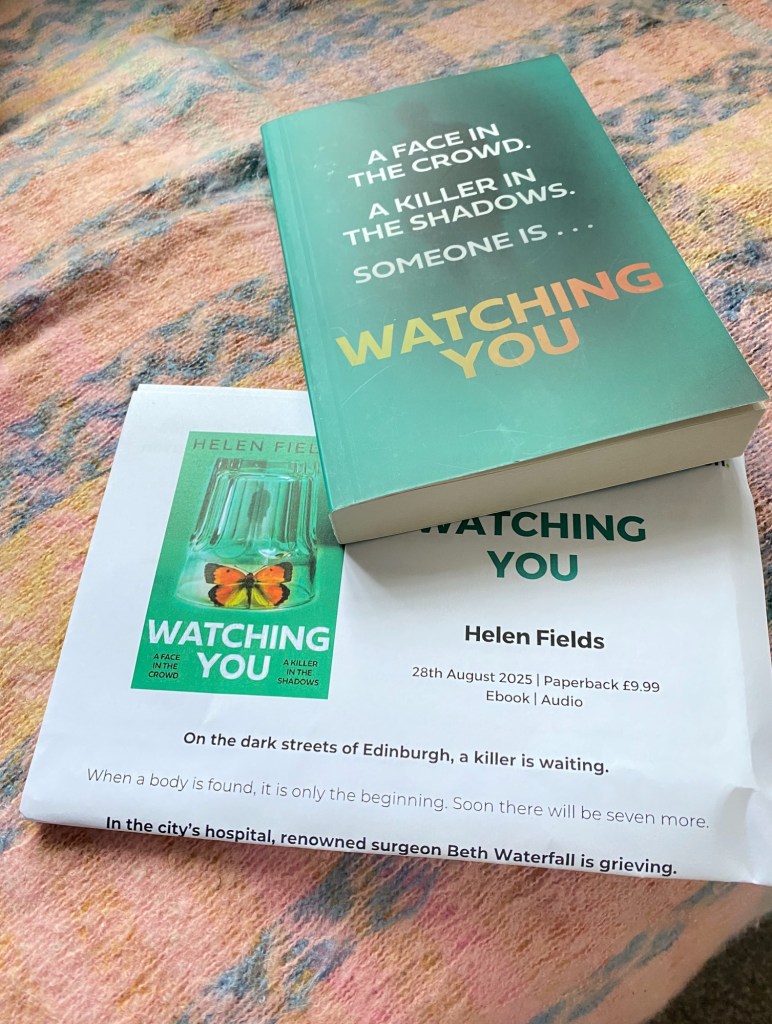
A few of Helen Field’s characters come together in this gripping novel that starts with someone being stalked in Jupiter Artland, the park where Laura Ford’s ‘Weeping Girls’ statues are situated. They become the only witnesses to an unspeakable act. It’s a great setting for a murder with five sculptures, each one of a little girl weeping in different poses. I’m a lover of public art but these are genuinely creepy and have an uncanny quality to them. I can’t think of a more fitting place to be hit with a shovel and buried alive – one of my worst ever fears. It’s a bold beginning and we get three more murders like this, each with a narrator who sounds almost bored and melancholy. It’s as if they’re present, able to recount every detail, but detached at the same time. They’re the literary equivalent of the archetypal TV pathologist weighing a pair of lungs one moment and eating a sandwich the next. It’s clear that Lively, Salter and the MIT have a serial killer on their hands but with each murder so different, how will they build a case? Superintendent Overbeck engages Dr Connie Woolwine to profile the killer and run the investigation, but it does seem to the team that the crimes and potential suspect don’t fully fit.
The story has several threads, each focusing on different characters. We go back a few years to a young artist named Molly who is being stalked and harassed with even parcels of rotting fruit and maggots turning up on her doorstep. She feels watched when outside and inside she is harassed by parcels and online rumours, or even worse deep fake videos. There’s the usual porn, but stranger and more sinister scenarios like her hurting an animal. It’s taken a toll on her mental health and her career. With the police unable to help she sinks further. We also have a character called Karl Smith, a carer for his father who had a stroke not long after his wife had a cardiac arrest. While surgeon Beth Waterfall tries everything to save her she dies on the operating table. So when his complaint against the hospital isn’t upheld Karl starts to see his mother. It’s mainly at home and she’s very unsettling. She’s clearly never been a nice woman to her son. She is a grotesque figure who Karl finds repellent. Not only is she unkempt and smelly, she likes to unsettle Karl by sitting very close and wafting her rotten breath into his face. She is cruel and determined that he keep up his campaign against Beth Waterfall. DI Sam Lively watches Beth try to save one of the victims, a homeless man with multiple stab wounds, and they strike up a friendship and a fledgling relationship. So when Sam receives a wound to his neck and it’s Beth that treats him, she takes him home afterwards to recover. It’s a gentle romance that works really well and he finds out Beth had a daughter, who took her own life after a campaign of stalking and harassment. The puzzle pieces are coming together, but I knew there would still be some surprises in store and I was gripped, waiting to find out if my suspicions were right. Desperately hoping they weren’t.

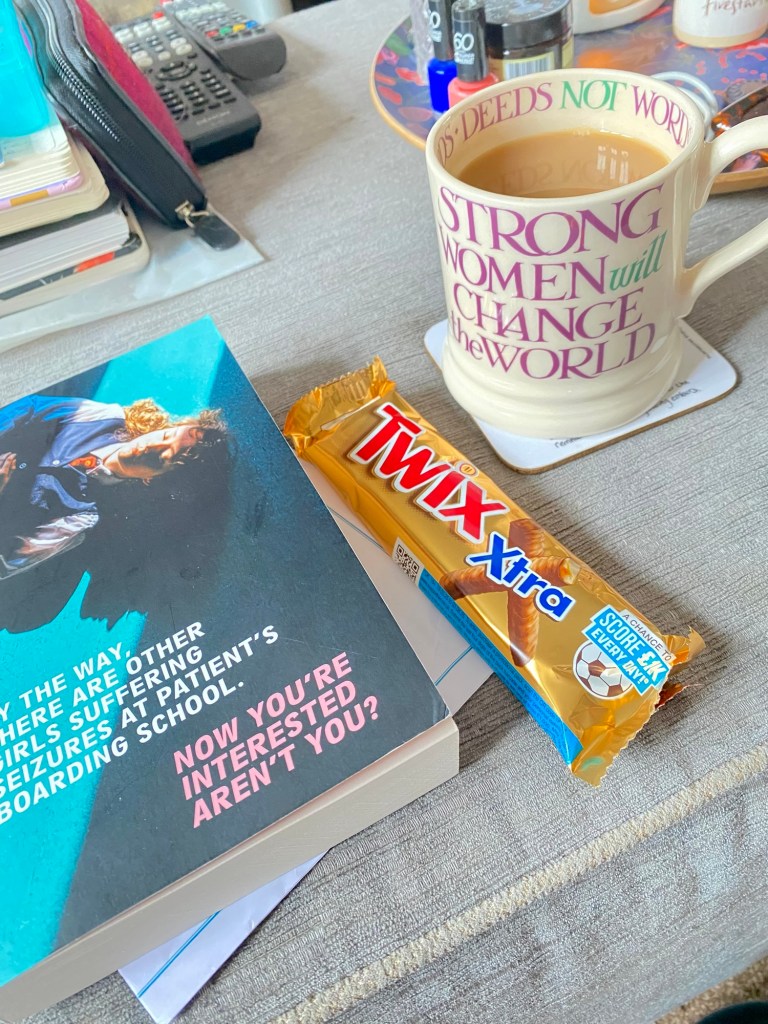
Dr Connie Woolwine is an acquired taste, but is always fascinating. Here I could see how she could really get under the skin of both suspects and colleagues. Brodie accuses her of snobbery, but it’s not that simple. Connie seems to relish having her suspicions about someone, then having them confirmed. She often tells people what she thinks without considering their reaction and it’s this compulsion to see what makes someone tick that might come across as thinking she knows better. It’s not a class snobbery, it’s an intellectual snobbery. I just love working people out, because the complexities of our brains are simply amazing. I’ve recently been reading up on Functional Neurological Disorder where neurological symptoms are present in the patient, without any disease activity. It’s as if the brain simply forgets how to send and receive messages from certain parts of body but without any of the disease activity common to neurological diseases like MS or Parkinson’s Disease. Symptoms range from functional weakness in a limb, to dramatic paralysis and seizures. It’s amazing how powerful the brain is and how it can be doing something so disabling in the background without knowing why, although it’s thought that the brain processes might mental stress or trauma as physical pain. However, this is nothing compared to Connie’s findings about the brain producing a brilliant twist at the end. I’m always pulled in two directions with Connie, she’s utterly brilliant but more than a little odd (talking to corpses) and manipulative, particularly where Brodie is concerned. She knows the power she has over him, but isn’t honest about it. She seems to fully relax and be herself when she visits Midnight, who is living a bucolic existence in Devon with her sister Dawn who has CP. With Dawn, ‘Wooly’ can drop her ‘therapist’s demeanour’ and just be in the moment. Dawn has no guile and has never learned to hide her emotions.
There’s some heart-stopping action here, especially in the finale which is brilliant. Salter and Connie are quite the team, with Salter able to jump in and secure a suspect while Connie has them otherwise engaged. I love that Helen’s female characters are mothers, carers and wives, whilst also competent at work, even formidable. Overbeck is brilliant, always holding MIT to a high standard, ready with a stern talking to and wears three inch heels all day! She tells Connie she’ll give her the name of the her nail technician because her nails are disgusting and it did make me smile. It’s a novelty to see Connie on the back foot for a change. The murder scenes are genuinely scary or moving. I was especially affected by the murder of Mrs Singh who is a lonely older lady, the victim of her own success. She made the huge move from India to Scotland in the hope of her children having a better life and he does, but that means they’re usually far away from you. She describes a boy who grew up with a Scottish accent, as if he was already moving away from her. The many pictures of her grandchildren attest to the distant between them. Her death is brutal and desperately sad. I loved how Helen brought all the puzzle parts together, despite such disparate victims who had nothing in common, not even their deaths. I could see Karl Smith had a rage in him but it mainly seemed to be for his own parents, could he be murdering complete strangers? I became more addicted as the novel went on until last night when I couldn’t leave the last few chapters and stayed up till 2am. Now I keep falling asleep. This is such a psychologically fascinating thriller that’s given me lots of side reading to keep up with Connie’s final verdicts. I can’t wait to see where she and Brodie end up next.
Out now from Avon Books

Meet the Author
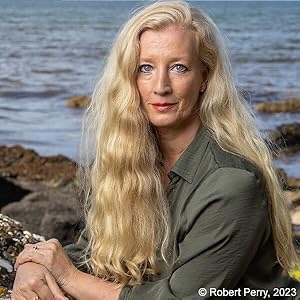
A Sunday Times and million copy best-selling author, Helen is a former criminal and family law barrister. Every book in the Callanach series has claimed an Amazon #1 bestseller flag. ‘Perfect Kill’ was longlisted for the Crime Writers Association Ian Fleming Steel Dagger in 2020, and others have been longlisted for the McIlvanney Prize, Scottish crime novel of the year. Helen also writes as HS Chandler, and has released legal thriller ‘Degrees of Guilt’. In 2020 Perfect Remains was shortlisted for the Bronze Bat, Dutch debut crime novel of the year. In 2022, Helen was nominated for Best Crime Novel and Best Author in the Netherlands. Now translated into more than 20 languages, and also selling in the USA, Canada & Australasia, Helen’s books have won global recognition. She has written standalone novels, The Institution, The Last Girl To Die, These Lost & Broken Things and The Shadow Man. She regularly commutes between West Sussex, USA and Scotland. Helen can be found on X @Helen_Fields









 The Lotus Readers