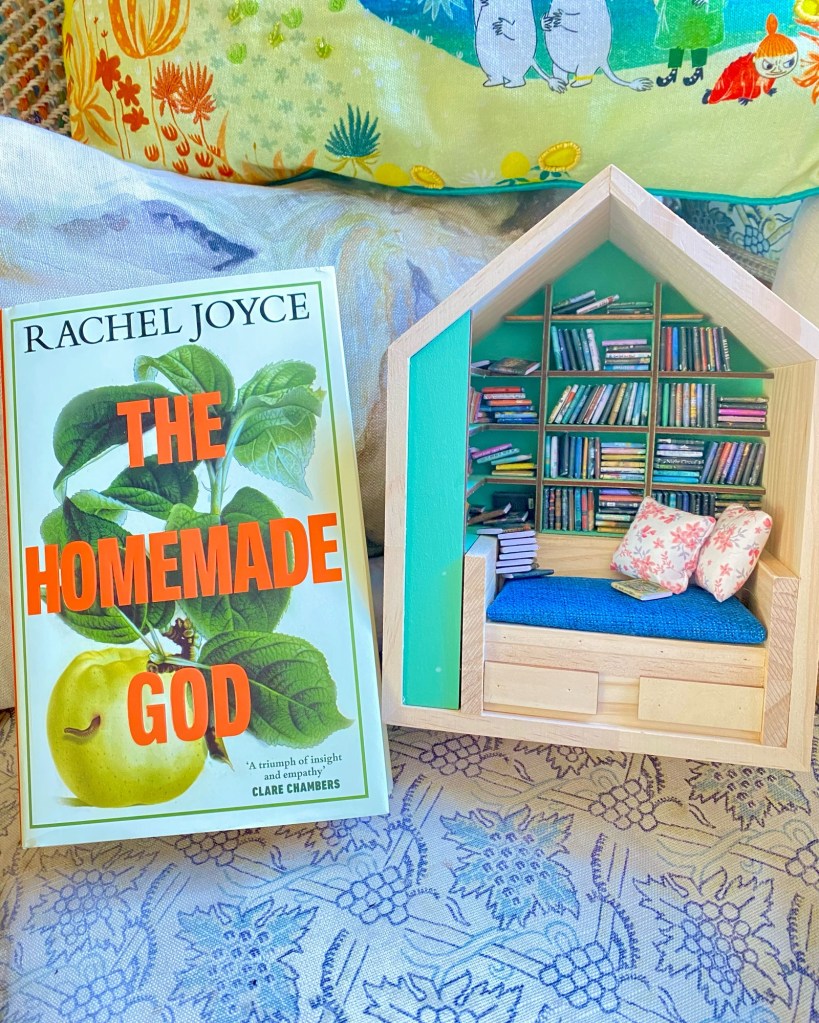
I have always loved Rachel Joyce’s work, especially the Harold Fry series, but I also adored her more recent novel Miss Benson’s Beetle. This novel was slightly different from her other work, while it did have an eccentric character on a very singular quest and kept that complexity of emotions she does so well, it also had an historical context which I loved. In A Homemade God we see similar complex relationships, but within a family who have a famous father. Vic Kemp is a painter and I have an absolute fascination with painter’s lives and relationships. I love art and have read widely on groups like the Pre-Raphaelite Brotherhood and the group who gathered around Vanessa Bell and Duncan Grant down at Charleston in Sussex. After seeing a Lucien Freud retrospective at the Tate I was intrigued by his family. His children seemed to be the epitome of that creative and eccentric family we come to expect from artists. Bohemian upbringings are just so interesting because of how the development and character of the children are affected by it and how that family copes with the ‘genius’ in their midst.
Here the family in question are Vic and his four children – Netta, Susan, Iris and Goose (short for Gustav and the only boy). They’ve been parented by Vic and a series of au pairs after the sudden death of their mother just after Iris was born. Their father’s art came first always and the conditions he needed in order to create were paramount, so the oldest girls often played the mother role for Iris and Goose, especially when Vic inevitably slept with the au pairs and they left. Vic was not an artist celebrated by the establishment. The description of his paintings brought Jack Vettriano to mind, criticised heavily by the art world, but very popular with the public. Many of Vic’s paintings had a sexual element to them, a sort of soft BDSM theme, except for his only painting of one of his children, Iris. Depicted on the beach with a sandcastle and a man in the background, it brings up mixed memories for Iris. Now grown up, his children are stunned when Vic suddenly starts losing weight and drinking green, sludgy health drinks. It’s just so out of character. His diet is being looked after by his new girlfriend, 27 year old Bella-Mae. None of his children have met her and she doesn’t seem keen on trying. Within weeks Vic announces they’re engaged and Netta suggests that they all stand back and give this the space it needs to fizzle out. A couple of weeks later, Vic announces their marriage with a single photograph from the family home in Orta on Isola Son Guilio with Bella-Mae in such a heavy veil they can’t make out her face. They are staying at the family villa, situated on an island in the middle of Lake Orta and only two days later Netta is stunned by a phone call from a stranger called Laszlo, claiming to be Bella’s cousin. Vic has been dragged from the lake, drowned after a morning swim went wrong as the mist descended. Vic knew that lake so well. Why would he go swimming in the mist? His children come together to travel to Orta, to finally meet their new stepmother and to find out whether she has killed their father.
I really enjoyed the different personalities of the Kemp siblings and how they complement and clash with each other. Netta has definite older sister energy. She’s the most organised and ambitious of all the siblings with a background in law. She is the most cynical too, convinced Bella’s health drinks have poisoned her father and now after two days of marriage she could inherit everything. Her instinct was to ransack Vic’s London home for the anything resembling a will and to find Vic’s final painting. There’s nothing, but maybe he was painting in Orta? Susan is also older and very organised especially when it comes to food or her stepsons. Married to Warwick who is a much older man she has some empathy and understanding for her father’s relationship. She hasn’t worked, but stayed at home to look after Warwick’s boys which has been a thankless task as they’ve barely accepted her. Susan is passionate about food, but she chose a relationship without that same feeling. Perhaps viewing the volcanic nature of Vic’s relationships she decided to go for a calmer and more stable love. It has proved a successful partnership but there are wild depths underneath Susan’s calm exterior and when she meets Bella’s cousin Laszlo they might rise to the surface.
Goose and Iris, the younger siblings, both seem lost somehow, perhaps because they don’t have those memories of their mother and only remember the erratic presence of Vic and the revolving au pairs. Since his father’s agent Harry set up Goose’s first exhibition, he has never painted again. When left alone just before his open view, he destroyed his canvasses and nobody knows why. He seemed catatonic and voluntarily checked into hospital for his mental health. He lives quite a lonely life and never talks about his sexuality or takes a partner home to meet family. He works quietly as his father’s studio assistant and lives alone. Iris lives alone too and she comes across a bit liked a startled fawn. She follows behind her sisters and dotes on her father more than others, struggling to keep her distance when Netta suggests it. She does keep secrets though, seismic in their power. As they all travel to their villa in Northern Italy, ready to confront their father’s 27 year old widow and her cousin, Netta tells them they have two objectives. Find anything that could be a will, even if it’s on the back of an envelope and find that last painting Vic claimed to be working on.
Bella isn’t what the siblings expect and nor is the villa. The villa looks beautiful and tidy for once. Bella seems insubstantial and too fragile to have caused such an uproar. She looks like she might blow away in a breeze. Yet they’ve pictured her with an iron will, imposing her diet on their father and gaining their inheritance. She will prove to be a mirror through which each of them evaluate their lives. I love family sagas and this one is brilliant. It’s psychologically fascinating and I’m not going to ruin that for you by delving too deeply. I was absolutely transfixed! I couldn’t work out whether there was deliberate manipulation at play or if this was just a case of an outsider causing people to view everything through a different lens. Is Bella a destructive force or a helpful one? Whatever she is, the siblings will have to look at themselves, their choices and their relationship to their father. Some revelations will be explosive and take place in public – one particular meal is cataclysmic. Other revelations are quieter, insidious or internal but no less devastating. Goose’s story left me furious and devastated at the same time. The book works almost like therapy, but without the care and ethics. No one will come out of this trip unaffected.
The author made me think about how we view artists and our expectations of them – whether they are potters, painters or writers. We read about their messy and eccentric lives with fascination, but we don’t always consider the damage they do to those closest to them. I’ve always wondered how Lucien Freud’s daughters felt about posing for him, especially in their awkward teenage years. Iris’s story gave me some insight and made me feel deeply uncomfortable. This was such a beautifully complex study of a family’s dynamics and how each sibling positions themselves within it. Rachel Joyce has depicted the way we mythologise people within our family groups and the stories we choose to represent us. We choose stories to tell others who we are and when we do that we can embroider or edit for the effect we want. Think about the stories in your families and whether they’re honest or whether you are trying to represent yourselves within a particular class, religion or other social structure? Do we do this consciously or unconsciously? This is a very different novel for the author but it’s definitely built on her ability to present very deep emotions and the truth of human experience. I think it’s her best yet.
After reading the novel, you might enjoy reading this article about Lucien Freud’s relationship with his daughter Annie.
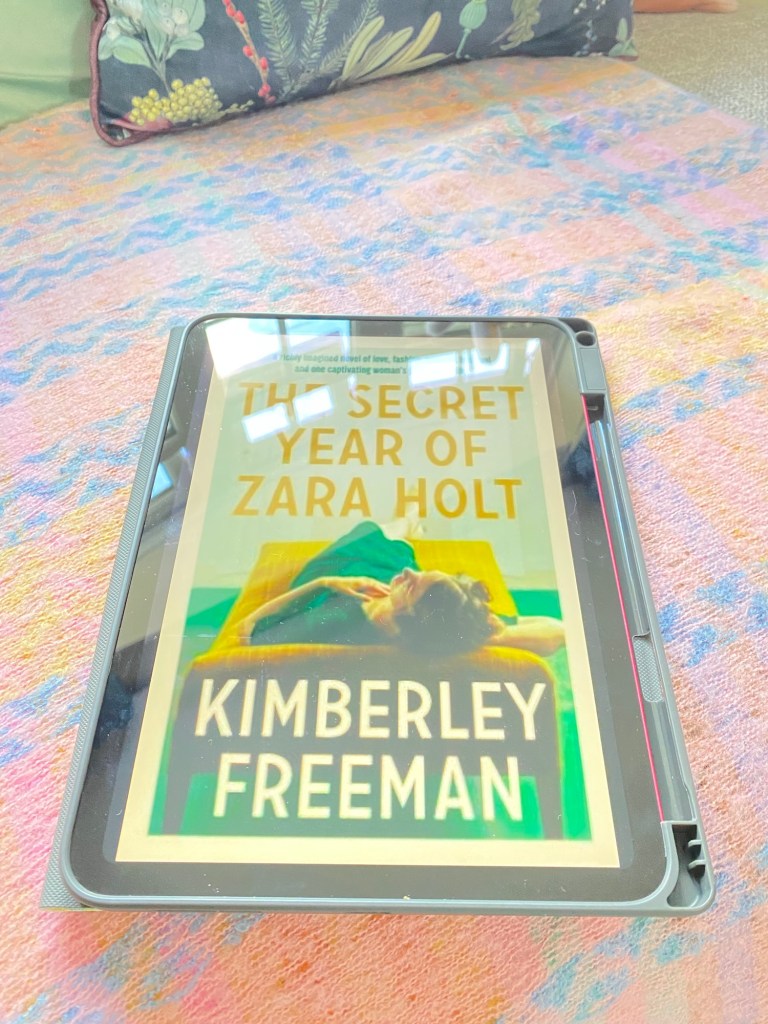
I discovered Kimberley Freeman’s novels about ten years ago and read all of them in one go. It was the combination of historical fiction, with an emphasis on Australian and women’s history that drew me and the romance element is always rooted in that context. I’ve been waiting a very long time for a new novel and this is particularly interesting as it’s based on a true story. I did drop everything to read it. She takes us through a large part of the early – mid Twentieth century through the life of Zara Holt. We join her as a teenager, living with her parents and dreaming of becoming a fashion designer. She spends hours drawing elaborate evening and wedding dresses with Betty her best friend. On a night out together Zara meets Harry, a handsome and ambitious young man who is aiming to get into law or politics. They have an instant connection and Zara feels it, almost like a jigsaw puzzle clicking into place. Their love will dominate her life as she also builds her own fashion empire and travels the world. As fiery as the couple are, it’s never an easy road and Zara will have to make difficult choices about whether she follows her head or her heart.
I had to keep reminding myself that this was set in the earlier part of 20th Century. Zara feels like a woman far ahead of her time, so that when she comes up against male attitudes and societal expectations it feels like a surprise. It did take me a little while to realise she was a real woman, born in Kew Victoria in 1909 as Zara Kate Dickens. In 1929 when she was still just 19, she approached her father who was a successful businessman for a loan. She made the case that her sister had an expensive wedding and since she had no plans to get married in the near future, could she use the equivalent money to start her own business. With the money and her friend Betty in tow, she opened a dress shop called Magg. They provided a bespoke service with Zara designing for the client and Betty as the seamstress. When Betty got married and left the business, Zara tried to continue alone but was exhausted by her own success. At this point she was expecting a proposal from Harry, which wasn’t forthcoming. On her mother’s advice she liquidated the business, coming out with $1500 ($125,000 in today’s money). She used her money to travel the world, including an impromptu trip to India with Colonel James Fell who she met on her return voyage. James did propose and became her first husband, but this wasn’t the end of Harry and it wasn’t the end of Magg.
Zara Holt
I found Zara such a compelling character and admired her boundless energy for business and travel. She is endlessly creative, never losing that urge to sketch a dress or incorporate a detail she’s seen into a new collection. She was particularly inspired by her time in India and the bold colours and decorative flourishes in women’s clothing. In later years, as Harry becomes more important in government she has to try combining her business affairs with the role of a political wife, using her new contacts and always trawling markets in other countries for fabrics to ship back to India. With more age and experience she manages to keep Magg running, even expanding and hiring new seamstresses and designers. I loved her little rebellions, such as talking to a gathering of women about business rather than her life as ‘first lady’. She also changes an opera fundraiser to a fashion show, both rewarded by the enthusiasm of her audience.
In her personal life she finds it a lot harder to stick to her guns. Harry is utterly single- minded and only proposes when he’s boxed into a corner. She has suspicions about his womanising early on, but it takes decades for him to be honest with her. He never makes promises he can’t keep, aside from his vows, and while he professes to love only her he will not hear ultimatums. What I found hardest to swallow was his disregard for places and people that were special to him and Zara as a couple, he trashes Zara’s special memories of finding a natural waterfall near Bingle Bay where they stay with close friends, eventually buying their own home there. Harry ruins both by taking a mistress there and my sympathies for him were gone at that moment. I wanted Zara to leave him and use all her energy into her work and children. I felt he did not hear her or deserve her. She is left with the age old compromise, that the little bit of him she does have is better than nothing.
Zara and Harold Holt
Kimberley has Zara narrate the full story and that’s wise because she really is the main draw of the book. I was full of admiration for the way she bucked the system. When living in India she finds out that their head servant is taking such a huge cut of the other servant’s wages they can’t afford to eat. She’s told it’s best to turn a blind eye and that the British don’t meddle in servant’s affairs, but she has him fired anyway. She also builds a friendship with an Indian doctor and academic that she meets at the stables, often riding out with him in the mornings. Her husband James forbids this and is furiously jealous. She has a sense of fairness and equality in how she approaches life which is appealing and interesting when you read about some of the policies that Harry works hard for as prime minister, when he eventually gets there. She stands up for her interest in fashion and is incredibly proud of knowledge and skills she’s built. She can look at any woman and see what dress style will best suit her body and how to combine current trends with what will suit the client. She knows how confident a woman feels when she is well dressed and aims to give all her clients that feeling of looking their best. She also defends it as an art form. Her designs are her preparatory sketches and the fabrics are her paints, what is created from her imagination and these materials is no less an art than an oil painting in a gallery.
I wanted her to have the same confidence in her personal life and to trust that she will find someone who loves her and gives her the attention and fidelity she deserves. Yet her love for Harry seems to transcend his behaviour. If you know anything about the Holts it’s probably the mystery surrounding Harry’s disappearance while swimming in a bay he knew well. It is assumed he was caught in a rip tide and drowned, but his body was never found. Zara wrote her own book about their life together. Her achievements included winning ‘Gown of the Year’ in 1961 and in 1962 Miss Australia, Tania Verstak, wore a Magg gown in the Miss International contest, which she won. Zara also advised on Australian uniforms for events such as Expo ‘67 in Montreal and the Mexico Olympic Games in 1968. In 1979 she was appointed as chair of the Yves Saint Laurent board in Australia. She had a bubbly personality and could say the wrong thing, occasionally portrayed as a bit scatterbrained by the press she was actually incredibly astute with a business brain. She also claimed that her eye for fashion was inspired by her own figure, being rather short and round in shape – something I share with her. When she died in 1989 she left over $5 million dollars and several properties to her three sons. I think Kimberley Freeman does an incredible job of capturing this fascinating woman, including the odd hilarious public gaffe. I thoroughly enjoyed getting to know Zara and I’m sure many other readers will too.
Out now from Hachette Australia
Meet the Author
Kimberley was born in London and her family moved back to Australia when she was three years old. She grew up in Queensland where she currently lives.
Kimberley has written for as long as she can remember and she is proud to write in many genres. She is an award-winning writer in children’s, historical and speculative fiction under her birth name Kim Wilkins. She adopted the pen name Kimberley Freeman for her commercial women’s fiction novels to honour her maternal grandmother and to try and capture the spirit of the page-turning novels she has always loved to read. Kim has an Honours degree, a Masters degree and a PhD from The University of Queensland where she is also a senior lecturer. She lives in Brisbane with her kids and pets and lovely partner.
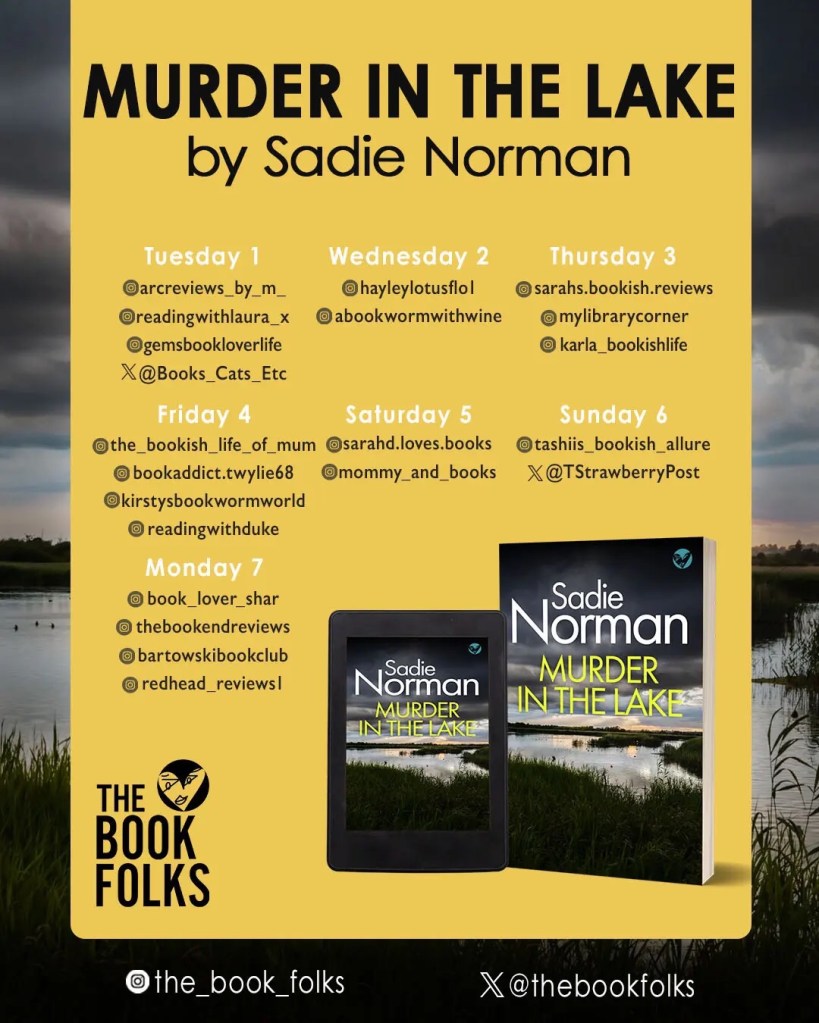
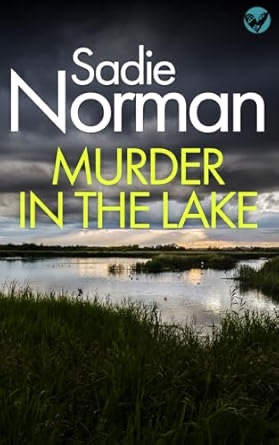
When a body is found in a Norfolk Lake it falls to the serious crime team to investigate whether this is an accident, suicide or murder. It’s identified as local man Barney King, who lives close to the lake in a row of worker’s cottages. It falls under the remit of DC Anna ‘Crazy’ McArthur who starts to investigate with her small team. The duty police officer has had a look around Barney’s cluttered cottage and has found a scrawled note laid on a pile of books and post on the dining table.
“I killed her. I deserve this for what I did all those years ago”.
This intrigues Anna because it brings up questions about the note and whether this might be a serious crime case after all. When they return to the station to report to their DCI Aaron Burns they’re shocked to find a coincidence. The derelict cottage next to Barney’s was once the home of Clara Burns and her sons Callum and Aaron and she was the focus of a missing person’s case. She disappeared when her boys were asleep upstairs and her husband was in the local pub. Anna is in a difficult position, her relationship with the DCI is a known secret in the team but not to the wider force. He has never told her about his mother, leaving her to believe both parents had died a long time ago. There’s no question that Aaron must distance himself from the investigation, but should Anna? If he wants Anna to find out what happened to his mother, he will have to distance himself professionally and emotionally. Now she’s under so much pressure, with a cold case linked to Barney King’s death and the need to solve them for both personal and professional reasons. Just to make things worse she’ll have to babysit a new DCI and Chase is a bit of a conundrum. He doesn’t know the area and could be here to spy for the Chef Constable. Finally, she has to do it without Aaron by her side for emotional support and to sound out ideas with.
I live in Lincolnshire so have some knowledge of the fen areas around King’s Lynn and Wisbech. They’re not that different from central Lincolnshire, having similar geography of flat farmland and dykes dug in the 14th Century to drain the land for farming. As you drive further south, rather than barley or oil seed rape, there are fields growing flowers and vegetables. In fact there are times of the year when you open the car windows and there’s a strong smell of brassicas in the air – cabbage, sprouts and broccoli. I also know the non-PC terms the used for the villagers that the author refers to. These are isolated and sometimes insular communities, quite some distance from a town, where everybody knows each other’s business and secrets are kept for generations. This is only part of our setting, with Norfolk being DC McArthur’s patch. It’s still a rural area though where wildlife, poaching, farm thefts and firearms licences would be a normal part of police work. The serious crime teams don’t usually touch on those daily matters but they do form part of this case. Barney King is elderly, a lonely man living in the middle of nowhere with a derelict house for a neighbour. His companion is his dog, which seems to have disappeared too. He lives by poaching to top up his pension and this forms one of the team’s first questions – why would a man who owned a shotgun choose to drown himself?
The team meet some very interesting characters in the course of this investigation and the author carefully paces the secrets and lies that are uncovered. Barney’s landlord and local farmer Harry is now so unwell he has a full time carer, Luisa. His son Garrett is taking over the running of the farm. When they find out Barney had visited the neurology department at the hospital just before his death, they view the CCTV and get a surprise. Why would Garrett and Luisa be visiting the hospital together? Especially since Garrett is married to the local GP. What happened to Barney’s own family? Anna manages to track down his daughter Mags and her granddaughter. They’re a fierce pair, arguing at top volume as the police arrive. Why didn’t they have a relationship with Barney? Even stranger, why can’t Anna find the death certificate for Mag’s mother, if she died of cancer several years ago?
The author paces this really well, slowly and methodically building the case, but with spurts of heart-stopping action including a firearms incident that shows us exactly why Anna earned her ‘Crazy’ nickname. All the while there are strange and uncomfortable undercurrents. As Aaron’s brother is drawn into the case, Anna is the awkward position of being connected to him but not able to say anything. She doesn’t know how to describe what she is to Aaron – girlfriend seems the wrong word for grown-ups, but so does partner when Aaron is asking for space. Are they anything to each other any more? Then there’s DCI Chase, sent as an outsider to oversee the team on this case. He partners up with Anna who can’t work out whether he’s socially awkward or has an ulterior motive. Occasionally he seems to stray into dangerous territory and Anna thinks he must know, but she’s also sure that no one on the team will disclose her and Aaron’s relationship. I couldn’t make up my mind about him, but he definitely set me on edge. This was a really compelling case and I didn’t guess how it would turn out. I was desperate throughout to find out where Barney’s dog was though. The final attempts to secure the murderer will definitely have you on the edge of your seat. I enjoyed this and will be going back to read the first two novels in the series.
Independently Published on 9th June 2025
Meet the Author
Sadie lives in West Norfolk with her husband, two children, and demanding cat named Random. She works in the education sector, but her real passion is for writing stories with a gripping mystery, attractive setting and a host of characters to love, hate, laugh with and root for.
I’ve had a lovely reading month, with the subject of love and relationships being at the centre of most of my best reads in June. Possibly due to it being wedding season, romance seems to have been in the air and all my reads looked at it in a very different way. A couple are set in the present day but others range from the late 18th to the mid- 20th Century. Yet there was a sense of familiarity, with each book showing the difficulties in how women and men relate to each other and negotiate the rules of their relationship. Women seemed to wait an awful lot, trying to balance a career and a relationship not to mention children and home life. Some women were waiting for proposals, for a man to commit, to be faithful, or for life to begin. They bring up the age old question of women having it all and whether that’s ever possible. There’s also a lot of travel involved from the UK, to America, Italy, France, Switzerland, India and Australia. I hope you all have a great tbr lined up for July and I’ll see you on the other side.
Walnut Tree Island sits in a tributary of the Thames and back in the 1960s its part derelict became a sought after music venue, thanks to the work of its owner George. Based on Eel Pie Island, Walnut Tree is a harmonious combination of up and coming musicians, artists and picturesque riverboats and in 1965 is a weekly Mecca for young people. One of them is Mary Star, a young girl with a beautiful voice and a head full of dreams. It’s there one night when musician and up and coming front man Ossie Clark notices Mary in the crowd as she’s hoisted up on someone’s shoulders. Ossie is about to hit the big time, but he’s captivated by Mary and when he meets her he encourages her to sing with him. They are so in love and lay down in the grasses by the Wilderness – the most beautiful part of the island. When reality hits Mary knows she has to make a choice for both of them, although Ossie doesn’t reject the idea of becoming a father. He asks her to go to America with him, but the adults in her life, including George, make her realise how difficult that’s going to be. There will be compromises and although Ossie can’t see it now, what if he resents her and their baby? She’s left with her baby Ruby and a broken heart, but also a place to live on the island gifted by George.
Years later her granddaughter Jo experiences first love on the island. Used to running wild between Mary’s cottage Willows and houseboats, she meets George’s grandson Oliver when he visits the island. He’s the island’s heir, but such things don’t matter to young people and they have a magical summer thinking their love is all they need to sustain them. Now Oliver has returned from NYC as the new owner of Walnut Tree Island which has become a thriving community of musicians and artists all supported by Mary who is the mother of the community. The whispers over what might happen to the island start fairly quickly, not least the ownership of Willows that has always been a verbal agreement with George. Jo now teaches art to children in one of the houseboats. Once an incredible artist she seems to lose her confidence in creating and her career never fully got off the ground. How will she cope with Oliver back on the island, as handsome as ever, but with a touch of New York sophistication? More to the point, how will Oliver feel seeing Jo again? It’s not long before the red-headed firebrand is at his door, fighting on behalf of Mary and the rest of the community. But does she really know what his plans are? Changes are coming to the island, but some things are as constant as the river flows. Could their love be one of them? This is a captivating and magical read, thanks to its romantic setting and relatable female characters. An excellent holiday read.
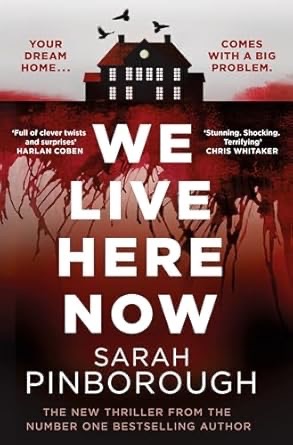
Emily and Freddie have been through the mill of late. After a terrible accident when they were on holiday, Freddie has surprised her with the home of their dreams. Emily fell from a cliff on a group holiday and not only did she break her leg in several places, she then developed sepsis and almost lost her life. Now she’s in recovery, still walking on a stick and has been thrust into a whole new life. Larkin Lodge sits just outside a village on the edge of the moors and could be their dream home, but Emily can’t believe Freddie made this huge decision without her. The house is gothic and in the mists and murk of winter it looks a little isolated and spooky. However, she can see that in spring the views will be incredible. As Freddie continues to work in London, Emily spends a lot of time alone and starts to feel uneasy. Sudden drafts and disgusting smells, then heavy footsteps moving across the second floor are unnerving. Freddie is convinced she’s struggling with post concussion syndrome and calls her ITU consultant for advice – much to Emily’s disgust for doing this behind her back. As she starts to look into the history of the house and questions some of the locals, all the different parts of her life start to fall apart. Secrets start to come to light and Emily wonders if the house is having an influence on her.
Emily is a sympathetic narrator although she’s not entirely reliable. It must be so disorientating to wake from a coma and know that your body has been present but your mind has been somewhere else. Added to that is the risk of ICU psychosis – a common condition causing auditory hallucinations, nightmares, sleep disturbances and paranoia. The author cleverly creates tension between what we know about Freddie and Emily and what they know about each other. They’re both keeping secrets and Freddie projects all their problems on to her. Even when she’s quite measured and reasonable or accepts his apologies he becomes angrier. Just occasionally he pauses and wonders where these thoughts are coming from? Is it the shock of Emily’s fall still working on him or is something more insidious at work? Of course it wouldn’t be a Sarah Pinborough novel without a supernatural element and this one is genuinely scary. It begins with the window on the landing, seemingly opening of it’s own accord. When she starts talking to older locals about the house there’s a moment that genuinely made the hair stand up on the back of my neck! The chapters from the raven’s perspective are very touching as well as creepy. Was this an edge of the seat thriller or a ghost story? We’re never quite sure, but I felt compelled to keep reading and find out. Sarah Pinborough is the Queen of this type of gothic thriller and this was another brilliant read, keeping you guessing till the very end.
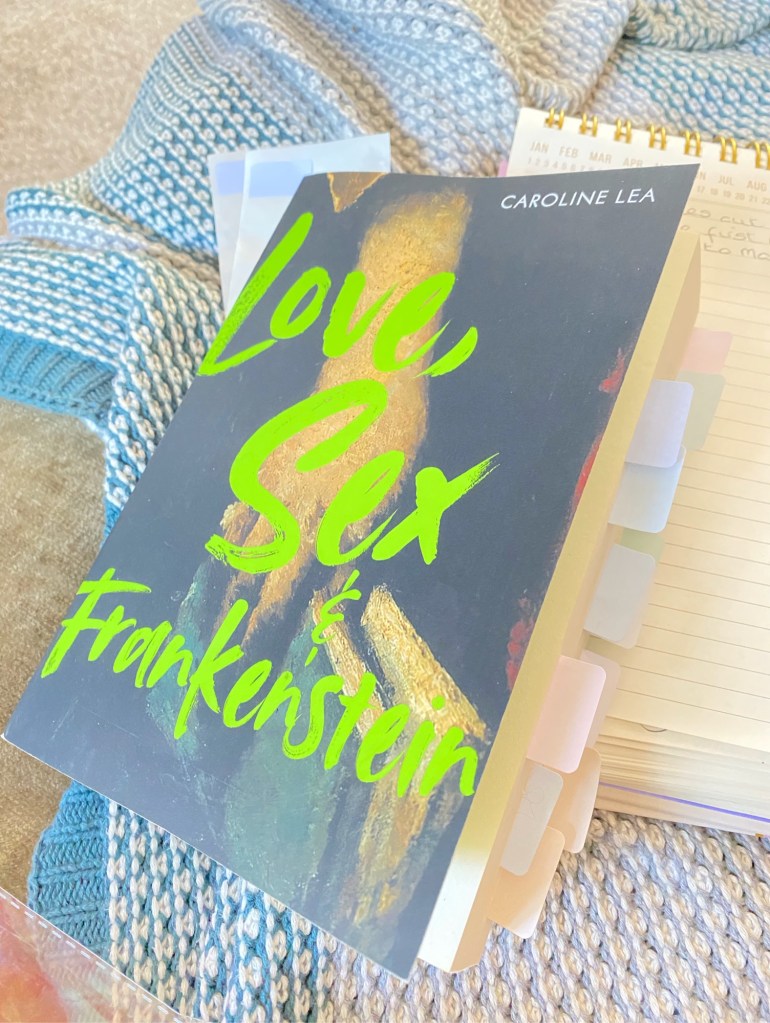
This book is definitely up there for my book of the year so far and it will take something momentous to knock it from that position. It’s the story of Mary Shelley and the origins of her novel Frankenstein which became a staple of the horror genre. I’d always known that it was a novel of monstrous birth, but the author has pulled all the ideas together so we can see the psychological background of the novel. I loved the idea that her story is stitched together by fragments, just like the monster himself. Her own emotions and thoughts feed into the emotions of the abandoned monster. She thinks of medical experiments and stories of medical students digging up bodies and stealing them for dissection. Frankenstein leaves his monster just as Shelley left Mary and their baby in squalor in London at the mercy of bailiffs. Frankenstein can be read as a criticism of men, creating with no thought for the thing they’ve created. Victor Frankenstein goes to sleep expecting his creature to die and feels nothing. The creature feels a combination of Mary’s grief and abandonment, having lost her mother at birth and then the losing of her father, as she runs away with Shelley, a married man. William Godwin brought Mary up to have a rebellious spirit and think for herself, but rejects her when she lives by these principles. Mary is this bewildered and angry creature and she gives her monster the equivalent of philosopher John Locke’s tabula rasa – the blank slate of a small child ready to experience nature, love and all that is beautiful. He embodies the nature/nurture debate in that the creature isn’t born evil, it’s other people’s cruel treatment of him that makes him monstrous. Her writing helps process all these feelings and. working through them makes her feel hopeful for the first time. She might return to London with her son and instead of being beholden to Shelley or her father, she could keep them both with her own writing.
Typically, blinded by his own arrogance Shelley doesn’t see himself in Victor Frankenstein at all. The book, like the creature at its centre, will be sent out into the wilderness looking for a creator. She’s fairly sure it will find one because she knows it’s special. Caroline’s book is an absolute masterpiece and made me think about Frankenstein from so many different angles. Caroline Lea’s Mary take us through the psychological angles and brings to life her relationship with Shelley, often told in a rather salacious or romantic way without any thought to the inequality between them. It traces the genesis of this incredible novel. It is stitched together from so many different parts, but here we can see them all and understand the circumstances they come from. What she’s written is a Bildungsroman, a novel of Mary growing up from girl to womanhood. Frankenstein is the chronicle of that birth, as messy, terrifying, horrific and momentous it is, it is also the genesis of Mary Shelley the writer.
London 1990s – An up and coming French composer called Stan is invited to arrange music for a stage production of Dorian Gray. Although the play is never staged, he does meet Liv and she becomes the love of his life. They live together, joined by a daughter called Lisa. Their happiness fuels his senses with vibrant colours and melodious music. Paris, Present Day – Stan lives in France at the Rabbit Hole, a house left to him by his aunt. He now shares his life with Babette, a lifeguard and mother of a teenage boy of Lisa’s age. They also share their home with Laïvely, a machine built by Stan and given Liv’s voice. As Stan becomes more engrossed in his past Laïvely starts to take on a life of her own. His life is about to implode.
Stan presents his life in two narratives, the present in France and the past where he was at his most creative, happy and in love. His relationship with Liv is almost idyllic. Anything he relates of his present can only suffer in comparison. We learn that he and Babette are compatible, but there is none of the life and vivid colour that comes from his reminiscence. We are all nostalgic about the past, but no relationship can be perfect especially when cramped into the average London apartment with a small baby. While it is touching and romantic, the cynic in me wondered was this a true picture? As for Liv, she is in technicolour in Stan’s flashbacks with her vivid red hair. However, all that life is now reduced to a communication device and no matter how Stan cuddles Laïvely to him, she is inanimate, merely a machine. In what way is this a fitting representation of the love of his life? The author brings the truth to light brilliantly and I feared Stan’s mind was splitting. Stan seems to imagine that he and Liv would have lived in this harmonious way forever, but as the truth emerges Stan’s perception of himself starts to shatter. Babette finds him catatonic and soaking wet, having to place him in a hot bath and slowly bringing him back to himself. It’s the most nurturing, selfless and loving part of the book and it’s all the more sad that he hasn’t before recognised or rewarded her love and loyalty. He also realises that there were times he was too distant and distracted with Liv, that he stopped paying her attention. It was as if he had imagined them always walking towards a common goal but truthfully, he knows they were out of pace with one another. As the ‘tick, tock’ of the clock at the Rabbit Hole reminds us that the end is approaching we fully comprehend this heartbreaking story. This is no ordinary loss and it’s clear that Stan has never faced the truth of their final days until now. This is an emotional end that has one final twist to impart and it is devastating. It seems that Stan has always held on to Liv’s portrait, but is was a ‘painting turned against the wall’, keeping it’s secrets until that final terrible reveal.
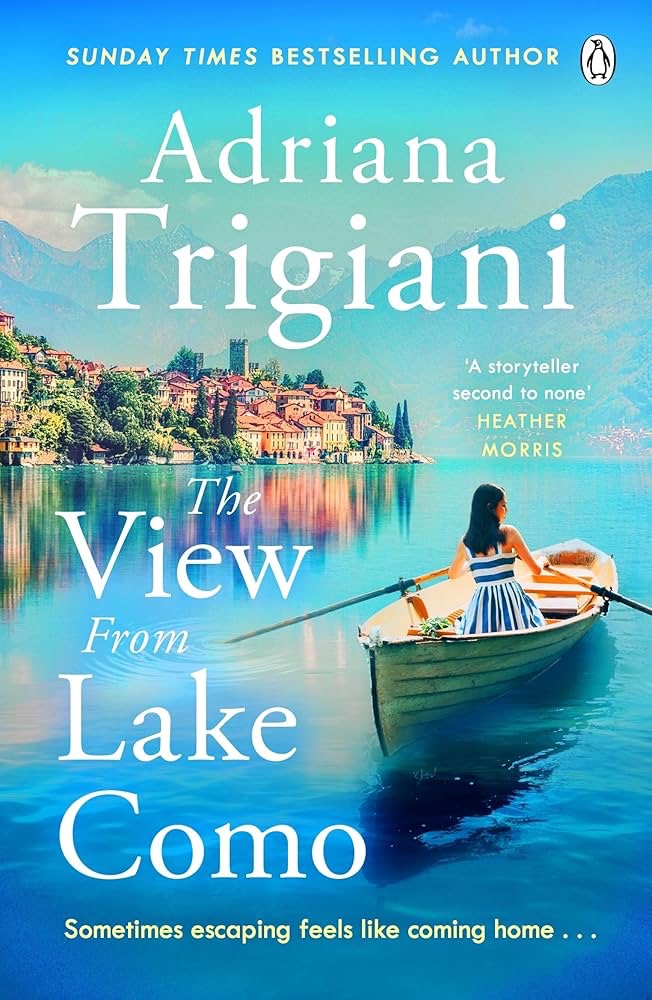
It was so lovely to be back in Adriana Trigiani’s world. It always feels like a hug in a book! Jess (short for Guiseppina Capidimonte Baratta) is an artist who designs pieces made with marble, everything from a garden fountain to a baptismal font. She lives with her family in the New Jersey town of Lake Como. Ever since she finished school Jess has worked with her uncle Luis at his marble business, shipping newly quarried Italian marble to the United States. Jess is at a stage in life when she’s longing for something new. After divorcing her childhood sweetheart and local heartthrob Bobby Bilancia she’s been living in her parent’s basement. Their mothers, who have a long held friendship, are openly praying for their reconciliation. Jess could see her whole life mapped out, in fact her namesake Aunt Guiseppina has given her the blueprint – the maiden aunt, chief baby sitter for her sibling’s kids, cook and bottle washer for family dinners, and eventually caring for their elderly parents. When the family experience an unexpected loss, coupled with financial worries, secrets come tumbling out of every closet. Jess decides to take the trip to Italy that had been planned for work. Now she’ll use it as a change of scene rather than just a work trip. Finally, she will see her ancestor’s homeland. Taking us to Lake Como via Milan, Jess falls in love with Italy and all it has to offer.
This story is a common narrative in the author’s novels. A young, ambitious and talented woman is looking for a lucky break or a foothold in the family business and has an adventure. Jess is slightly different in that she’s older and has already found her Prince Charming once. Stressful situations usually floor Jess, who has suffered from anxiety all her life. The family carry brown paper bags wherever they go. Yet Jess has withstood the questions and judgement about her divorce and sticks with her decision, only confiding in her online counsellor and her journal. She sets out to her Uncle Louis’s hometown to visit the marble quarries that supply their marble but also meet with local stonemasons who use it. It should be useful for her work but also give her the head space she needs after the divorce, her loss and those family home truths that left her very angry with her parents. When she meets Angelo Strazzi, a talented local craftsman, there’s instant chemistry and future possibilities start to open up. As always Italy is a revelation and Trigiani writes about it in a way that only an Italian American can. There’s familiarity and nostalgia that comes from knowing her family are from here, but there’s also the wonder and magic of the tourist view too. It’s the best of both worlds. Mostly I loved that Italy seems to set Jess free, in her own right. She’s away from a community that claims to know her better than she knows herself, but also from the suffocating combination of her own family and that of her ex-husband. Free from a future that she and her family saw for her – that of the maiden aunt. Maybe it’s the mountains but Jess can breathe in Italy. I came out of the novel feeling like I’d been on holiday. I won’t ruin the book by telling you what Jess’s choices are, but the ending isn’t the only important thing. I hope you enjoy the journey as much as I did.
I was three quarters of the way through this novel before I found out it was based on a true story. Zara was a fashion designer, founding a dress shop called Magg with her best friend Betty in her twenties. Freeman’s novel follows Zara’s life from her meeting with Harry Holt and their relationship, which would dominate most of her life. The novel takes us on her travels, into her career as a fashion designer and businesswoman and the volatility of her relationship with Holt. Harry comes across as a selfish and ambitious man, who clearly loved Zara but was slow to commit and couldn’t curb his womanising ways. Zara is constantly waiting, whether it’s for him to propose marriage or to be faithful to her. She is torn between wanting a monogamous relationship or accepting both Harry’s love and the fact it comes with many compromises on her part. I’m not sure I could have made those compromises, but despite breaking off their relationship and even marrying an officer from the British Army and living in India, she finds it impossible to leave behind those feelings. Aside from her love life, Zara is a remarkable woman and one of those multi-tasking geniuses I envy. She managed to create an empire that paid for the couple’s holiday homes on different parts of the Australian coast and even when on political trips abroad, particularly as Harry was moving towards becoming prime minister, she used local fashions as inspiration and bought fabric to be shipped back. I had to remind myself I was reading a historical novel when frustrated with societal expectations and attitudes, because Zara was such a modern woman and seemed ahead of her time.
As always I have a loose tbr for July while I’m project managing our kitchen renovation. I’ll be frazzled by the time it’s done as I hate change and noise, but I’ll need to be at home so lots of reading time ❤️📚










 The Lotus Readers