
Now on to Part 2 of my favourite reads this year and another eclectic mix of historical fiction, crime, thrillers and regency romance. First on the list is a book in quite a few Christmas stockings this week..
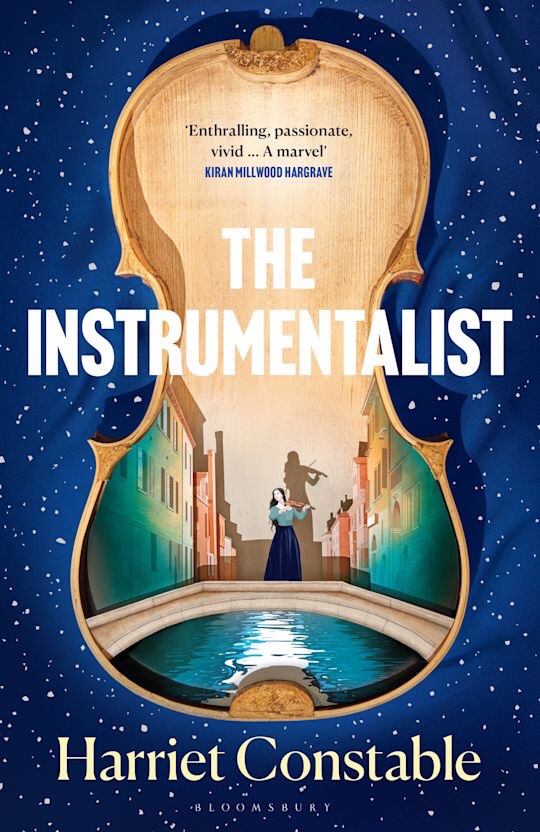
Wow! What an incredible debut this is. I absolutely consumed this book and even found myself furtively reading in the middle of the night with a tiny torch. Anna Maria della Piétro is a fascinating heroine and while not always likeable, I found myself rooting for her. Like all the girls at the Piétro, Anna Maria was posted through the tiny hatch in the wall of Ospedale Della Pietá. The author shows us the incredible splendour of Venice, a place I fell completely in love with, contrasted with it’s destitution and desperation – a state that seems more likely for women, especially those from a poorer background. The convent brings up it’s girls very strictly, according to the Catholic faith and the virtues of hard work from scrubbing the floors or working in the nursery. It is also a college of music. Each girl is taught at least one instrument with the best trying out for the orphanage’s orchestra, the figlio. Those chosen will work with the master of music and they will play in the some of the most beautiful basilicas and palazzos in all of Venice. Anna Maria’s great love is the violin and there’s no doubt she will try to become the best. Anna Maria is a bundle of youthful exuberance, fireworks, talent and ambition. She practically leaps off the page and it seems impossible for her to fail. She starts by aiming to be noticed by the master of music and after that to be the youngest member of the figlio. No sooner is one ambition fulfilled then she’s already thinking of the next. Although the music master isn’t named, you will eventually work it out and read with wonder at the thought a young girl might have had a hand in his music. Utterly brilliant.
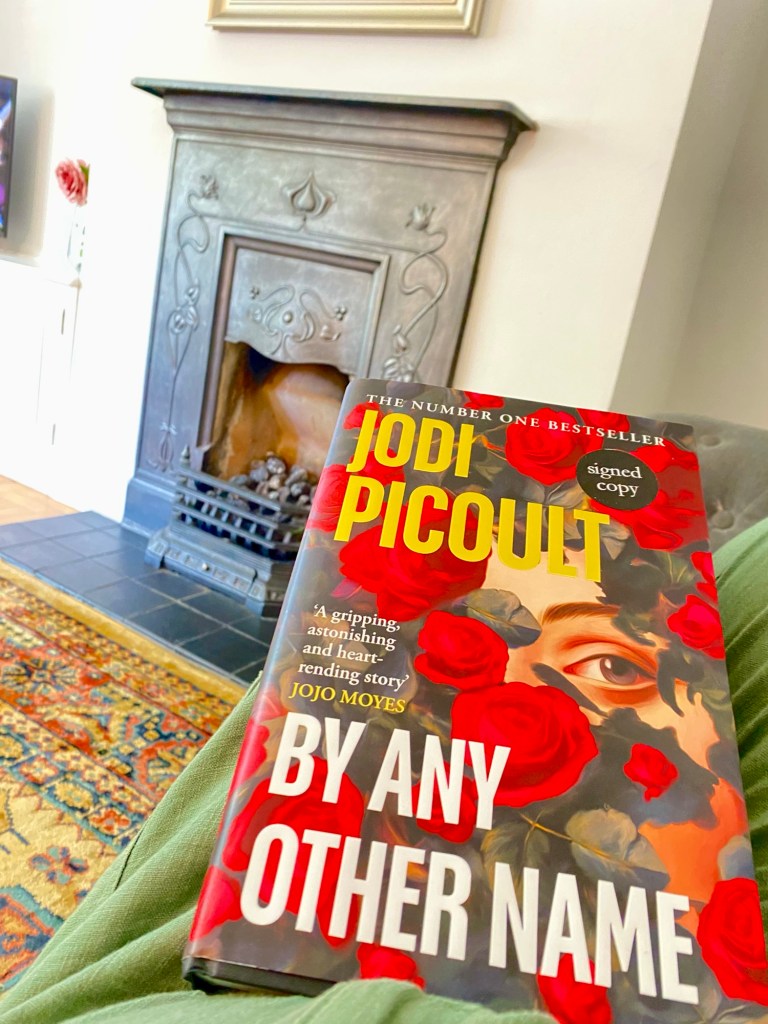
Another book that explores authorship and women’s roles in the creativity of the past was Jodi Picoult’s By Any Other Name. While the title gives the clue that this is about Shakespeare, he isn’t the central figure in the story. Picoult writes about Melina Green, a modern playwright struggling to have her work recognised until her best friend decides to take a chance. To prove that there are still barriers for women writers trying to make it in NYC, he submits her play to a competition under the more ambiguous name Mel Green. The play is about Melina’s ancestor Emilia Bassano who was a published poet and also wrote for the stage in the 16th Century. As the official mistress of the man in charge of the London theatres, Emilia has access to Elizabethan playwrights and poets like Spenser, Webster and her best friend Kit Marlow. Melina is drawn in by the question of whether Shakespeare was solely responsible for his incredible number of plays? Her research leads her to believe that the ‘real’ writer might have been a woman and the evidence points to Emilia as a possible candidate. She was a Jewish woman living as a Christian, part of a family of court musicians from Italy with an incredible talent for words. She has visited all the places that Shakespeare uses in his plays, understands how to fit in at court and on the street and knows what it is to be a strong woman – could the heroines Beatrice and Viola have come from her pen? This is a gorgeous piece of historic fiction with a heroine you’ll thoroughly enjoy and a mystery that draws you into her world.
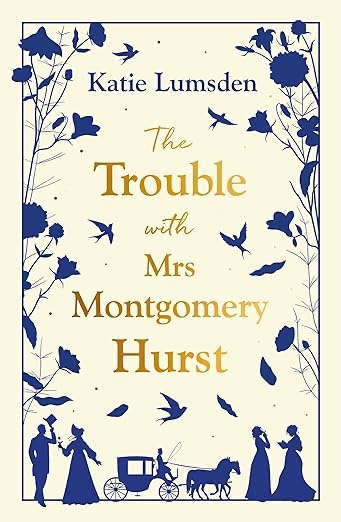
Katie Lumsden’s second novel has the feel of Jane Austen; light, witty and full of gossip. In this comedy of manners, where class and family reputation is everything, scandal is only ever around the next corner. Amelia Ashpoint is comfortable with her life as it is. She and her brother Diggory live at home with their wealthy father and younger sister Ada in their newly built mansion in the county of Wickenshire. In the summer of 1841, it’s the start of marriage season and Amelia is 23 so her father decides he must secure a husband for her. He has hopes of Mr Montgomery Hurst, the most eligible bachelor in their social set and the owner of stately home Radcliffe Park. At previous dinners and dances, he has sought Amelia for his dance partner and they chat comfortably together at dinner. However, Mr Hurst has been secretly engaged to an unknown widow with three children, much to the shock of their neighbours. Her friends are appalled but Amelia feels nothing but relief, as she has no interest in marriage at all. Society’s big expectations for Amelia fall on deaf ears because her heart lies in a very different direction. Katie has taken all the lightness and wit of Austen, making her novel such a pleasure to read, but brings darker and more complex themes under the surface. The problem is that upon the death of their father, girls were often left at the mercy of distant male relatives and had no say over their own fate. Our heroine Amelia simply wants to achieve the best outcome for herself, knowing she doesn’t want to marry. All she wants is to live in her childhood home, write her books and to enjoy the company of her brother’s family when he inherits. Most of all she wants to have the personal freedom that characters like Lady Rose and her friend Clara sadly can’t have. You’ll keep turning the pages, hoping she can achieve it.
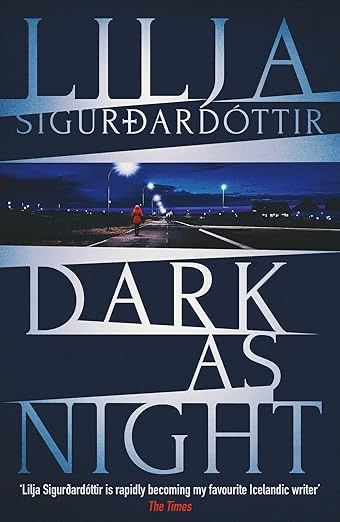
Dark as Night is another brilliant crime thriller from Orenda Books and is No 4 in the author’s Forbidden Iceland series. It takes two long-standing mysteries from the novels and sheds new light on everything we thought we knew. The disappearance of Àrora’s sister was the only reason she came to Iceland from the UK so when she’s contacted by a woman whose young daughter has memories of being Arora’s sister Isafold she’s curious. Usually Àrora is a straightforward and rational woman. She knows that Isafold is dead but finding her has been a compulsion for so long. How can she ignore what this little girl has to say? Her partner, detective Daniel has had a lodger in his garage conversion for a long time. Lady Gugulu leads a quiet life and makes his money performing as a drag artiste. They’ve become close so Daniel’s shocked to find his tenant has left suddenly without a forwarding address. When three men turn up, Daniel has a sense that they’re investigators or secret service. Whoever they are they mean business. Daniel enlists Àrora to look into his friend’s finances in the hope of finding his whereabouts. I love that this author isn’t easy on her heroine, we see her flaws and vulnerabilities and how they drive her actions. She’s hard to like in parts, particularly in the way she treats Daniel. Although, their teamwork is incredible and their ability to lean on and trust each other speaks volumes. Thrillers can be addictive at the time, but instantly forgettable. Here the writing is tense and addictive, but the deep and intelligent characters stay with you. I didn’t want to put this book down at any point. It is simply the best so far in a series that gets better and better.
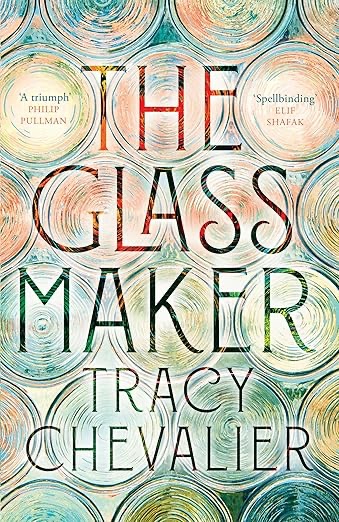
This wonderful new novel from Tracey Chevalier captures the spirit of the Venetian islands and a heroine you will take to your heart. Orsola Rosso is the daughter of a glassmaker living on the island of Murano. She has to grow up quickly when her father is killed in the glass workshop when a flying shard from a chandelier hits him in the neck and cuts into his artery. Under her elder brother, the workshop starts to suffer a decline as he tries to pursue more artistic pieces than the consistently good tableware that was the Rosso’s main source of income. Desperately wanting to help she visits their merchant, Klingenhorn, for ideas and he sends her to the only female glassmaker in Venice to learn how to make glass beads with a lamp. Very soon she is able to create beautiful beads that Klingenhorn can sell. Orsola is a heroine that gets under your skin. She’s ambitious, fiercely loyal to her family but able to see how the workshop must diversify if they’re to survive. Chevalier shows us the magical islands of Venice and Murano through her eyes as she weathers grief, the plague, business woes and falling in love. Set, with magical licence, from the time of Casanova all the way up to the COVID pandemic this is an incredible story of a strong and bold woman who knows how to survive.
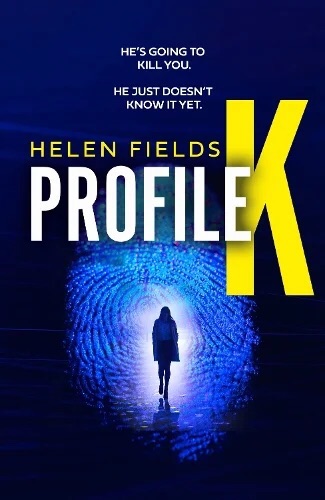
Midnight Jones works at Necto as a profiler, using her psychology training to analyse applications for universities, the military and other organisations. The company like to present themselves as an ethical firm, starting with their space age offices designed specifically to be the most comfortable work environment. Every day Midnight works through thousands of applications passing some through to be interviewed and rejecting others based on assessment data alone. Necto’s testing systems are so sophisticated, there’s nothing about the applicant they don’t know. Midnight wears a virtual reality head set that shows images as well as the applicants responses, recording everything from intelligence to levels of empathy. Then, depending on the parameters for the particular institution they’re applying to, they are accepted or not. However, on this particular day Midnight finds a candidate who isn’t run of the mill, in fact he’s a one-off. In training, a candidate like this is jokingly dubbed a ‘Profile K’- for killer; Midnight finds a man analysed as showing zero empathy. As she watches the footage he was shown she is sickened by what she sees. This is way beyond the normal films shown to illicit empathy. It’s as if the machine couldn’t get a reading, showing more disturbing and violent images to provoke empathy and disgust. Yet none comes. Unable to compute the response and where such extreme footage could have come from, Midnight decides to take this further but her supervisor Richard Baxter isn’t interested. So she goes over his head, telling his boss that she’s found a Profile K. Surely they have a duty to report him, what if he’s dangerous? What if he kills someone? Everything had to stop for the final chapters as I raced through to find out what happens. I was glued to these scenes, made all the more terrifying because the victim doesn’t have a clue how much danger she’s in. This was one of those finales where I put the book down and realised every muscle in my body was tense! This is an absolute cracker of a read and I highly recommend it.
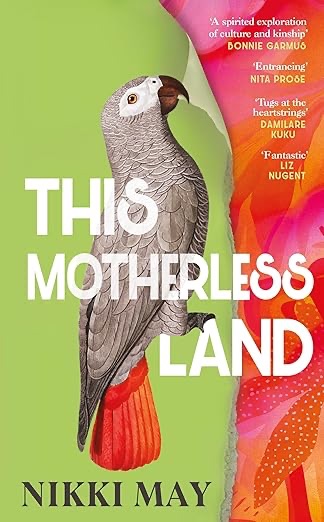
This book was an absolute joy to read, which may sound strange considering the subject matter but somehow it awakened my senses, stirred my emotions and had me reading so quickly I was finished in an evening. Funke lives in Nigeria with her mother, her father and brother Femi. Their entire world is shattered one morning on their normal run to school, when their mother’s car fails to stop and ploughs directly under a lorry. The drivers side of the car is destroyed but Funke’s side is left completely unscathed. She loses her mother and brother in a moment. In his grief, her father Babatunde is inconsolable and he takes it out on Funke. How did she get out without a scratch? Encouraged by his superstitious mother he calls Funke a witch, so her aunties decide she should be sent to her mother’s family in England. Her white family. Funke is ripped away from everything she knows and sent to the mansion where her mother and Aunty Margot grew up. There, although she isn’t being hit or accused of evil spells, she feels the resentment of Margot and her cousin Dominic. They call her Kate, after all it’s easier than pronouncing Funke isn’t it? There’s no colour, bland food and where she was accused of being white in Nigeria, here she is seen as black – with all the racist connotations that come along with it in white, upperclass Britain. The only saving grace is meeting her cousin Liv, but it’s covering for her cousins that will lead to her life being uprooted for the second time. This is a novel about being in between: families, countries, The spaces between can be painful and isolating places to be and the author depicts that with such tenderness and understanding. However, liminal spaces are also freeing. Being in-between gives us the space to choose, to take bits and pieces from each place, each family and make our own identity. I found the end chapter so uplifting and it gave me hope that we can each forge our own identity, once we’ve explored who we truly are.
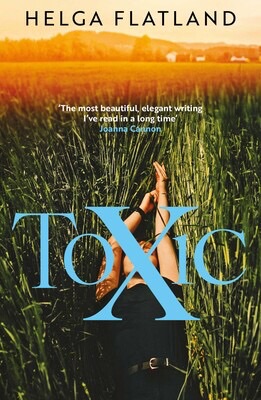
When Mathilde is forced to leave her teaching job in Oslo after her relationship with eighteen-year-old Jacob is exposed, she flees to the countryside for a more authentic life. It’s a quiet cottage on the outskirts of a dairy farm run by brothers Andres and Johs, whose hobbies include playing the fiddle and telling folktales – many of them about female rebellion, disobedience, and seeking justice, whatever it takes. But beneath the surface of the apparently peaceful life on the farm, something darker and less harmonic starts to vibrate, and with Mathilde’s arrival, cracks start appearing … everywhere. Toxic may seem slight but it was the perfect read for me, because the author creates such psychologically detailed characters and a setting so real I felt like I was there. Helga never underestimates the intelligence of her readers, assuming we’ll make sense of these complex characters and their backgrounds. The story is structured using two narrative voices, that of Mathilde and Johs. Johs’s narrative establishes both his family and the setting of the farm. At first his narrative seemed completely divorced from hers; life at the farm is only just starting to undergo change after the rather stifling management of their grandfather. Mathilde is a definite city dweller who seems hellbent on pushing boundaries and pursuing freedom. That search for freedom during the COVID pandemic starts Mathilde’s hankering for a. rural life and losing her job is the catalyst. I became so drawn in by these two narratives and once Johs and Mathilde are on the same farm their differences create a creeping sense of foreboding. I felt an antipathy building towards Mathilde and just one wrong move could cause this tinder box to ignite. With her lack of boundaries, that wrong move seemed very possible. I was surprised by where the ending came, although not shocked. As I took a moment and thought back, every single second we spend with each character is building towards this moment. Utterly brilliant.

I was pleasantly shocked to win a competition for the proof of Eve Chase’s novel plus a vase of my favourite flowers, peonies. All I’d done was describe what I loved about Eve’s writing: her female characters; the secrets from the past just waiting to spill out; the gothic feel and atmosphere she creates, especially around old houses; lastly, it’s the dynamics she creates between the characters particularly the mothers and daughters. In this novel she has gathered all those aspects together beautifully with an intriguing plot and such a relatable central character in Maggie. Maggie is an author, living in Paris and struggling with writer’s blog. Something from her shared past with brother Kit keeps coming into her mind. Her mother Dee Dee died from cancer recently, but her mind is drawn back to her late teenage years. Then Dee Dee was a famous model, living close to the Portobello Road with it’s antique and collectible traders. One summer morning, Maggie wakes up to find that Dee Dee hasn’t come home. Sometimes, modelling shoots can drag on into the night so Maggie isn’t worried. She takes Kit out with his skateboard and he has a fall, breaking one of the wheels. A stranger comes to their aid, introducing himself as Wolf. When his eyes lock with Maggie’s they’re the clearest blue she’s ever seen, there’s also a spark between them and for Maggie it’s instantaneous. First time and first sight love. He recognises the connection too. It’s what makes him take the skateboard back to his uncle’s antique shop and use his tools to properly fix it, just so he has an excuse to go back. These are emotional days as Maggie navigates this new feeling, but also concern for her mother who still hasn’t come home. She calls Dee Dee’s friends and they rally round but no one knows where she is. In the present day, Maggie needs to go home and ask her Aunt Cora some questions as well as catch up with Kit. Once in London she makes her way to their old house with the pink door and bumps into a man on his way out. She’s surprised to see this is a much older Marco, Dee Dee’s hairdresser. He tells Maggie he’s digging out the basement of the house and sends her into a complete panic. Maggie knows that secrets lurk in the garden of their old home and it might not be long before they’re found. This is an engrossing story with a loveable heroine and it took me back to my own teenage years.

Fin and his wife Martha are travelling in South America towards the salt flats in Bolivia – an other worldly natural phenomenon where the horizon becomes endless and you’re standing in the sky. Lately they’ve struggled as Martha has been in the grip of an obsessive anxiety over the climate crisis. They are booked into a retreat on the salt flats, found by Martha and extortionately expensive, it promises a transcendent experience using salt to purify mind and body. So the couple find themselves crammed into a pick-up truck alongside Rick and Barb, a middle aged and out of shape American couple, and partners Hannah and Zoe. They are now in the hands of their driver (who doesn’t speak a word of English) and an elusive shaman called Oscar. They will spend the next few days meditating, relaxing in warm salt pools and participating in a series of salt ceremonies where hallucinogenic visions bring them face to face with their subconscious reality. Yet the final ceremony descends into chaos, Martha and Fin need to grapple with Martha’s anxiety and the moral implications of their trip. Although Martha’s preoccupations are with climate change, it only takes a few swipes of the iPad to see how war, terrorism and climate is changing the lives of those in other countries. Agreeing to the salt spa was Finn’s act of commitment, to show that he can give Martha a little of what she needs in the hope it will be enough. As horrors start to unfold will he blame Martha or will everything they’ve experienced bring them closer together? That’s if they both get out alive.
Honorable Mentions
The Knowing by Emma Hinds
Spitting Gold by Carmella Lowkis
Cross Bones by Tracey Whitwell
The Burial Plot by Elizabeth McNeal
Halfway House by Helen Fitzgerald
Prima Facie by Susie Miller
House of Shades by Lianne Dillsworth
The Small Museum by Jodie Cooksley
You Are Here by David Nicholls
The Kings Witches by Kate Foster
Our Holiday by Louise Candlish
The Book of Witching by C.J. Cooke














 The Lotus Readers