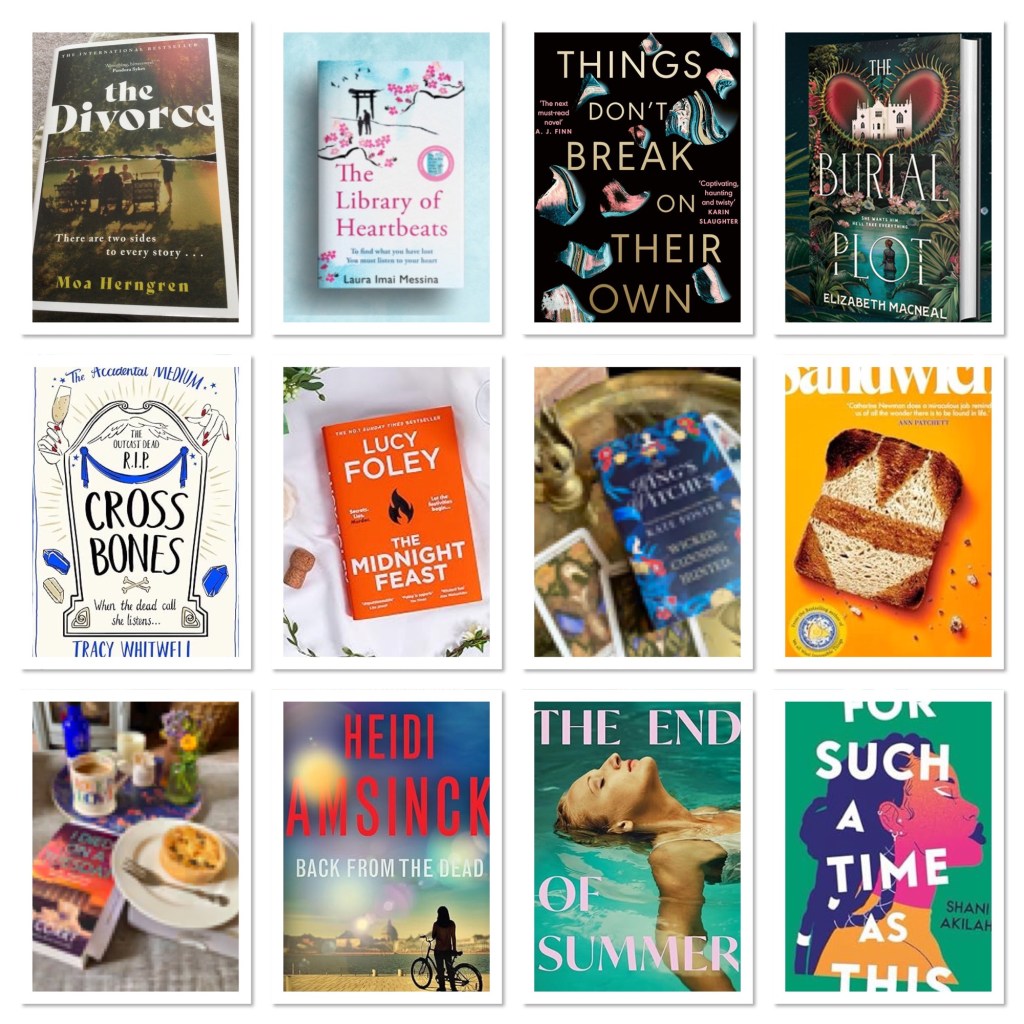
Wow! That was a busy book month. I read so much and enjoyed pretty much every book I read, but these were the stand outs for me this month. I think a combination of having a really painful back and the recent heatwave has meant a lot of resting and time to read. In fact I’ve read so much this month I’m slightly behind on reviews. My NetGalley account is looking seriously neglected though and one of my priorities for next month is to get some of those choices reviewed and tidied away. I hope you’re all enjoying the weather. I’m surgically attached to my new Shark fan which is so quiet I don’t feel like a jet engine is taking off next to the bed! Multiple Sclerosis and heat don’t mix well so I try and keep cool with cold drinks, a cooling mat, cooling spray and frozen strawberries or iced fruit lollies. I’m pretty much guaranteed to be having an afternoon nap each day too. I’m expecting similar conditions next month so lots more reading time. Here are some mini reviews of my June reading:
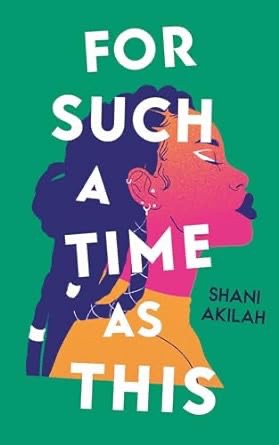
This excellent contemporary short story collection features an interlinked group of young Black British people. It opens strongly with an introduction to one woman’s tube ride to work and the emotions that arise when she sees an eligible man reading her favourite book. It sets the tone for the whole book with a narrative voice that’s immediate and modern. Reading this as a 50 year old in my rural village opens up a much younger generation to me and reminded me of the way my stepdaughters communicate – across so many social media apps I can barely keep up. There are bittersweet feelings of regret and love, the realisation that sometimes love isn’t enough. I loved the way that each story bled into the next, so while we meet a character like Jonathon in the context of the girl who’s always loved him in a later story we can see him visit Ghana with friends discussing how hard it is to be a young black man in Britain. So we know there’s so much more to him than at first appearance. I also love that these stories come full circle in an unexpected way within the final story. This beautiful writing is so immediate with no superfluous words or descriptions. My full review will be up this week.

I’ve never read a Jane Cory novel but was intrigued by the premise of this story revolving around a historic case. Janie tells us ‘on the day I died the sea was exceptionally flat’. She’s a young girl on the verge of exciting life changes, she’s been offered a publishing job in London. It’s something she has always wanted to do and she’s had a last early morning swim. Afterward she starts to cycle home when a 4×4 hurtles round the corner and knocks her off her bike causing horrendous injuries. Janie survives but is severely disabled, struggling to even communicate until she realises that although she can’t speak, she is able to sing. Years later, music legend Robbie is arrested for the offence. The clean living band member, then solo artist, wants to plead guilty but his solicitor is sure there’s something he’s not saying. Victim support volunteer Vanessa is assigned to Janie throughout the court process. Now a widow, she has spent most of her life unwittingly controlled by her husband. Her secret heartbreak is that she couldn’t have children because after a fall when pregnant she sadly had a stillborn baby that didn’t see due to being so unwell. So when a young man turns up claiming to be her grandson it throws her whole life into confusion. Luckily she has Judge, who she’s built up a friendship with after meeting at court, but he has his on secrets too. There are so many tangled threads in the stories of these people who revolve around a single court case. I was compelled to keep reading as the questions started to pile up and revelations came thick and fast. This was an interesting thriller with four narrators taking us into their own inner worlds and slowly revealing it’s darkest secrets.
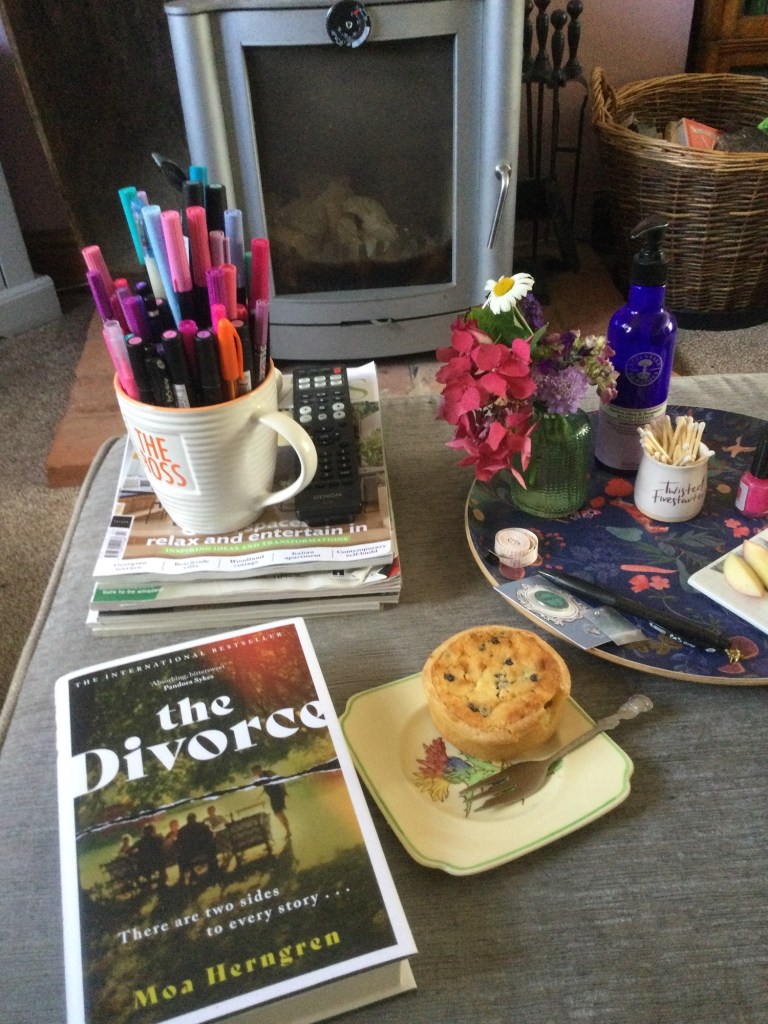
I loved this story of a marriage gone wrong from Moa Herngren, set in Stockholm. Our narrator is Bea, the wife in this divorce, who is angry with husband Niklas because he forgot to buy the ferry tickets to take them on holiday. Bea does everything else so why couldn’t he remember this one thing? Now they’ll be stuck in the city for another week in the heat or they’ll have to take a car and drive to a different ferry. Bea is sometimes exasperated with her husband who has started a new job as doctor in a maternity department, in fact she even picked out the job for him knowing that he would happily stay working in paediatrics in their local hospital for life. If she didn’t push him he wouldn’t fulfil his potential and they’d never have a new kitchen. Niklas and Bea met as teens when Bea’s brother Jacob started to hang out with him. When Jacob killed himself both of them were grieving and he felt a natural pull towards Bea, wanting to look after her. They’ve been together for thirty years and have two teenage daughters Alexia and Alma. Niklas suddenly distances himself from Bea saying he’s not coming home, saying he needs some space. Bea is bewildered by his behaviour. Is it a mid-life crisis? He gets a tattoo and starts to rent an apartment belong to the Ericssons down the road. Bea doesn’t know what she’s done wrong and he won’t communicate, but she’s terrified because if she loses him she loses His family too – the only family she’s known. We’re team Bea at this point and then the author switches to Niklas’s point of view at the half-way point. This is a clever and subtle story of something many of us experience, but shown from two different and fascinating perspectives.

I loved The Phonebox at the Edge of the World and the idea of a place to go and talk to your lost people. It’s a ritual. A point and place of connection where all your anger and grief can be expressed. Then when you put the phone down and leave the box, you leave those feelings behind. Catharsis is very important, but as time goes on so is containment. It allows people to grieve, but at a time and place of their choice. Shuichi is an artist who returns to her home town of Kamakura after the death of her mother to do carry out the administrative tasks that follow a death, but also to sort her belongings. As she starts to sort the contents of her mother’s house into boxes in the garage, she isn’t expecting to find a young boy in there, going through the boxes and taking items out. As a friendship grows between Shuichi and this boy called Kenya, Shuichi’s parental feelings are stirred up by this new child in her life. Children are very healing, because they’re a beginning rather than an end, experiencing the world for the first time with joy and wonder. This book is about the inner journey and the human process of change. There are moments of exquisite descriptions and a philosophical element. It’s one of those books where you find yourself going back to re-read a sentence that’s so beautiful it stops you in your tracks. Although it starts with a feeling of sadness, I felt uplifted at the end. There’s nothing overwrought it sentimental about it either, and it’s because the writer has such a gentle touch that the full impact of the emotions really surprise you. I felt changed by this story and that’s how powerful literature can be.

It seems a long time since I last accompanied Jensen on her investigative adventures, so I was very pleased to receive a proof for this third instalment. As usual this was a complex plot involving politics, organised crime, hackers and headless bodies being fished out of the water. Jensen fears that one of the bodies might belong to a Syrian refugee named Aziz who was working as security for MP Esben Nørregaard, one of her friends. Esben asks Jensen and her assistant Gustav to look into it for him as he doesn’t yet want to involve the police. Meanwhile, detective Henrik Jungersen and his team try to find out who the bodies belong to and where their heads have gone. This complicated investigation means that Jensen and Henrik are going to cross paths. Jensen is in a good place, after a round of redundancies at her newspaper Dagbladet she has become chief crime reporter. Also, she has just moved in with her tech billionaire boyfriend Kristoffer Bro. Henrik can’t believe that Jensen has left him behind for good. He’s still married, just barely, and is due to go on holiday to Italy with his family when the first body is found. Guiltily he can’t imagine anything worse than the holiday, but if he doesn’t go he knows it’s probably the last straw for his long suffering wife and that’s before she knows Jensen is involved in his case. Jensen still feels slightly odd in Kristoffer’s flat and when she starts to look for something of Kristoffer’s that’s personal I could understand why, even if it is an invasion of his privacy. Jensen’s investigative urge could come between them and up until now this is the healthiest relationship she’s ever had. Henrik has never made himself available, but that attraction is still there. The story is compelling, well-structured and there were revelations I wasn’t fully expecting. What’s fascinating about Jensen is that by instinct she’s a lone wolf, suspicious of everyone and very headstrong. Yet she seems to be slowly collecting people in her work and private life. I think these ties make her feel vulnerable, but she’s starting to realise that without them she’d be in a much worse place. The ending was tooth-clenchingly tense and I’m already looking forward to their next adventure.

It seems to be a year of incredible debuts and this one is definitely going to stay with me. We open at a dinner party. Robyn and her wife Cat are hosting an evening for their friends Willa and Jamie, Robyn’s brother Michael and his partner Liv, and Cat’s brother Nat and his new girlfriend Claudette. It’s the first time the group will meet Claudette and Robyn hopes to make it a chilled, relaxed evening. Robyn had a scholarship for a private girl’s school and she ‘buddied’ with Willa who was a new sixth former. Robyn soon learns that Willa’s life is overshadowed by the disappearance of her sister Laika. Michael’s girlfriend Liv is a psychologist and she begins a discussion about implicit and explicit memories. Our explicit memories include times, dates and places and they tend to be from older children. Implicit memories are usually from unconscious emotional recollections and can be an amalgamation of several memories, as well as a few bits of what others have told us. These are memories created when we’re very small, usually pre-school age. Jamie isn’t convinced and Liv’s assertions seem to unsettle the party. As Jamie gets louder, Willa tells a memory of being tickled until she wets herself. She has always hated being tickled. However, someone in the party knows this isn’t actually Willa’s memory. It’s her sister Laika’s. The psychological dynamics of the dinner party are explored within narratives from Robyn, Willa and Laika. We each carry hidden histories within us and these ones are complex and affected by loss and trauma. While the compelling psychological thriller aspect is concerned with finding out what happened to Laika, I was fascinated with the upbringing of the characters and how they became the adults they are. I loved the analogy of the natural pool where Robin’s parents take everyone to bathe. It’s a direct contrast to the sterile and man made pool at Willa’s childhood home. The natural pool at Robyn’s family home is filled with this self-made family that includes their friends too. Robyn and Michael’s family have so much love that it can easily take in others, old friends and new generations. Their love is like the natural spring that feeds the pool, constantly flowing and endlessly replaced.
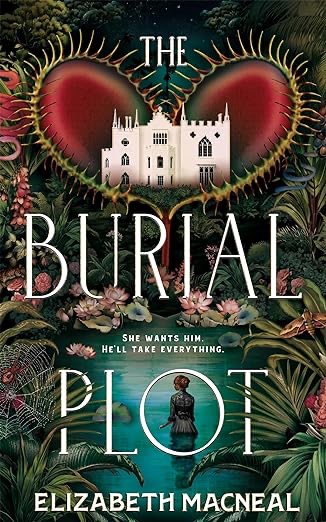
I love historical thrillers and this one really is bristling with menace. This novel pulls together so many things I love in one incredible story: the Victorians; a touch of the macabre; a spooky and unique house; a heroine who has her consciousness raised and a simmering tension that builds to a heart hammering conclusion. Bonnie is our heroine, a young woman who resides in St Giles and earns a living running a scam with her lover Crawford and their friend Rex. The trio hang around public houses looking for a man that Bonnie can lure to a quiet alley for sex, only for Crawford and Rex to appear, rough him up and steal anything they can sell on. However, one night as Bonnie lures a red-headed man to their usual place, Crawford and Rex don’t appear. Pressed up against the wall while the man tries to haul up her skirt, she has to fight him off herself. Bonnie knew as soon as head hit brick, he was dead. Crawford tells her lie low and shows her an advert for a lady’s maid at Endellion – a labyrinthine Gothic house on the outskirts of London. Bonnie goes to meet the owner, a Mr Montcrieffe. He’s a widower with a teenage daughter Cissie who desperately misses her mother. Bonnie gets the job and looks forward to working with Cissie. Yet there is so much more to these unrelated events than she knows and so much about Crawford that’s been hidden by her love for him. Now events are set in motion, Bonnie is caught in a spider web of lies, betrayals and the very darkest of intentions. I loved Bonnie’s development through the book, Crawford has definitely underestimated her. She feels trapped by Crawford but he doesn’t have the hold on her he once did. She wants to remove deceit from her life at Endellion. The revelations keep coming in the latter half of the book, some expected and others a complete shock to Bonnie and to us. I felt a physical sensation of holding my breath in parts and I devoured the final three sections in one afternoon, desperate to find out what happened. Bonnie has to be super-resourceful to survive and create a better life for herself. I was desperate for her to succeed! This novel is a brilliant thriller with an atmospheric and beautiful backdrop. We also have a resourceful heroine with more strength and intelligence than she realises. This is an absolute must read for those who love Gothic and historical fiction.
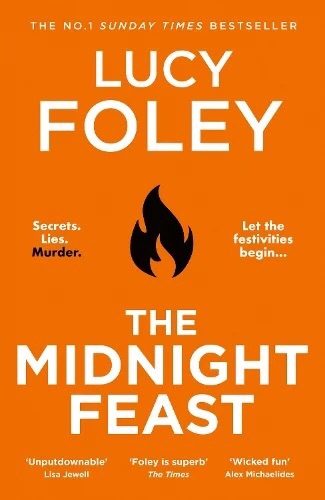
I started this book in bed at night, which turned out to be a big mistake because I didn’t want to go to sleep once I’d started. We’re introduced to the village of Tome (pronounced ‘tomb’ by the locals just to add a sense of foreboding) and the new wellness retreat created there by Francesca Woodland who inherited The Manor and it’s land from her grandfather. Her husband Owen has created woodland ‘hutches’ for guests, featuring outdoor showers and luxurious linens. The Manor itself is the central hub with classes in meditation and yoga, a spa and breakfast area. The opening weekend looms and while there’s a hint of anxiety Fran is sure she has everything under control. On the final night she has planned a mini-festival with live music, a meal out in the woods and crowns fashioned from twigs creating the look and feel of a pagan celebration. While the music is at it’s loudest she has given Owen the go ahead to start digging the foundations for the tree houses, in the hope the music drowns out the noise. However, that’s not the only problem on the horizon because when Owen arrives the workmen are confused by new symbols on the trees. They look like seagulls in flight. By the morning there’s a burned effigy and a body on the beach, a wrecked Aston Martin with blood inside and the manor has been rased to the ground by a ferocious fire. Everyone in Tome knows the local saying- ‘Don’t disturb the birds’. Could Francesca’s dream be over when it had only just begun? The book also goes back twenty years, when Francesca was a teenager living at the manor with her grandparents and twin brothers.
There are several narrators, but there are others who have reason to hate The Manor and some exact their revenge in amusing ways, while others want to end the retreat and Francesca for good. I loved the folk ritual element, reminiscent of Thomas Tryon’s Harvest Home mixed with a dose of Hitchcock’s killer birds. Except these birds are the size of a human, covered in black feathers and under their cloak is the huge beak. The villagers take them seriously, even the contractors who turn up to remove the trees don’t want to mess with those marked by the birds, they’d rather give the money back. Are the birds a simple folk tale that keeps Tome safe or are they real? Tome’s forest and it’s beaches are for the villagers and not to be fenced off for the use of rich visitors. As we countdown to what happened on the big night, two parties twenty years apart reveal their secrets and the birds will have their final say. The ending is terrifyingly final for some, while others will wake up hungover and wondering what exactly they witnessed. As for me, the final page reveal really made me smile.
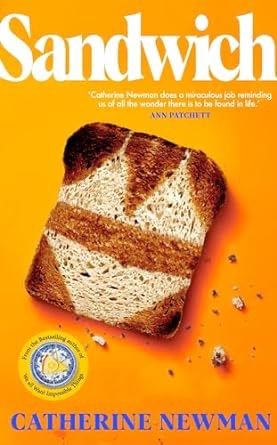
One week in Cape Cod. The perfect family holiday. What could possibly go wrong…?
Rocky and her husband Nick have reached that middle point in life where adults seem to be at their most stretched. They’re coping with children who have left home or are living at university as well as increasingly elderly parents who need more help than they have before. Rocky is a great narrator because I was comfortable and believed in her world. In fact the book flowed so beautifully that I finished it in a day. The family trip to the Cape Cod holiday home they’ve rented since the children were small throws Rocky’s three generation family under one roof. Eldest child Tim is there with girlfriend Maya and student Willa has travelled from her college and meets them there. Later in the week grandma and grandad will join them for two days and of course there’s the ancient cat. They are rather piled in on tap of one another but they couldn’t come here to a different, bigger rental because so many of their memories have been made in this house. During the week Rocky will learn and divulge some secrets, all of them filtered through her anxiety and what husband Nick jokingly calls a hint of narcissism. Rocky is a passionate and emotionally intelligent mother, the sort of mum you might go to with a secret. She also happy to be schooled where she gets it wrong, especially where daughter Willa is concerned. She might use the wrong pronouns and need to check her privilege occasionally but largely she’s the sort of mum you want. She feels things almost too deeply and I understood that in her. I think Catherine Newman is brilliant when it comes to trauma and intergenerational family dynamics and every family has them. Rocky reminisces about the time she miscarried, the unresolved emotions are clear and perhaps stirred up by menopause symptoms and having her babies under one roof. I loved Rocky and Nick’s marriage too because it’s not perfect – they haven’t really connected for a while, physically or mentally. When he stumbles on a long held secret it throws their dislocation into the spotlight and gives them the opportunity to talk. He still loves her, despite the secrets and narcissism. She recognises that throughout the holiday Nick has been cooking, organising, driving and just quietly looking after everyone. They’ve been in their mum and dad roles for so long they’ve forgotten how to be Rocky and Nick. It’s something of a relief for Rocky to know that Nick still desires her, despite the expanding waistline and loss of libido. Each generation has it’s own issues: the grandparents are facing health issues, brought into sharp focus when grandma faints at the beach: Rocky’s son and girlfriend are facing some huge life choices; Willa is listening and helping where she can. Catherine Newman has once again written a novel about family that is truthful, funny and life-affirming. I can easily see this being on my end of year list because it’s raw, emotional and relatable.

If you haven’t had the pleasure of meeting Tracy Whitwell’s character Tanz yet, you’ve been missing out. This bold, sweary Geordie actress and accidental medium is a delight and this is her third adventure in the series. Tanz is being torn in two directions as she reluctantly agrees to do a fringe play in London, but is also suddenly ‘activated’ as her spirit guide Frank explains. She is sent a new guide who she calls ‘Soft Voiced Lass’ and her flat is suddenly teeming with visions and apparitions, including a nurse who is on duty and walks through into Tanz’s bedroom which is quite a feat when you don’t have any legs! Luckily she has friend and fellow medium Sheila to rely on, but there’s a lot of sleeping with the light on. Tanz is guided down to Southwark and a cemetery known as Cross Bones, the burial place of the prostitutes licensed by the Bishop of Winchester. However, Tanz is greeted by a horrific vision of the burial ground in the Victorian period, when overcrowded tenements spread diseases like wildfire and deaths from cholera, typhus and consumption were the daily norm. What Tanz sees isn’t an ordinary graveyard though. The smell hits her first; death, smoke and sewage creates a miasma that seems to cling to your clothes. In the yard Tanz can see a grave digger with a woman screaming at him, when she looks down she can see some fingers and a skull where he has been digging a body up to make room for more. She is overwhelmed and doesn’t really know what her purpose is here, just that it isn’t going to be easy.
I love Tanz because she’s one of the most real people I’ve ever met in a book, despite the spooky stuff that surrounds her. She’s very down to earth, independent and has a few vices. She thinks her visions relate to several generations of the same family. Between the spooky action there’s an injection of dark humour that I really appreciated. I love Tanz’s slightly prophetic phone calls from her ‘mam’ who strangely seems to know when her daughter’s up to something. Thank God she doesn’t find out about the black faced woman, the homeless man and the knife! There’s also a side order of romance in this novel, with a younger police officer stirring up rather unexpected feelings for Tanz. She’s developed some boundaries and her self-worth enough to accept that someone like this could like her. She’s also stopped the habit of keeping her eye on the exit in her romantic affairs. She’s also taking her gift seriously, starting to accept that it’s this type of work that she finds fulfilling. Although, she also makes a radical move in her acting career too. It’s lovely to see Tanz in such a strong position in life, she’s ready to take on the world and I can’t wait for her next adventures.

Judy left England as a teenager and lived with her aunt In New York City. Judy’s mother drummed it into her that it was wise for a woman to have her own money and never rely solely on a man. This lesson was well learned, but without any real qualifications or means of making money Judy has to be more creative. She’s a grifter, stealing here and scamming there. So when she sees a story in a newspaper about a rich resident of Cape Cod becoming a widower, she decides on her next mark. Judy finds her way to a vineyard in the same area, taking a job there and making herself known until the inevitable happens and she meets Rory. She plays it clever, doesn’t ask for anything and is never pushy or monopolises his time. She’s playing the long game because she wants him to fall for her, hook line and sinker. What she didn’t bank on was falling in love with him. When they marry she has access to some of the wealthiest people in the area so she’s easily sneaking the odd item from their home and from other society people to sell on through a fence. When Rory’s asked to hold the local Wine Appreciation Society ball at their chateau in France, Judy is left with a dilemma. Her fence in London is blackmailing her, asking her to provide details of the ball including exits and entrances of the chateau and a guest list of who’s attending. She doesn’t want to help, but when he threatens to tell husband Rory about her past she has no choice. When one of the robbers dies she laments that a young man has died because of her and can’t shake it off. It’s in her French home that Judy receives the phone call, the one she’s dreaded and expected all at the same time. The police are looking into a murder, but is the victim the man in France?
When Judy’s daughter Francesca gets a visit from the police and journalists it’s like a bolt from the blue. She’s a lawyer, in London and is aghast when police inform her that her mother seems to have fled the country and is wanted for murder. Francesca is left bewildered and unsure what to do. The author is very adept at giving out just enough information, drip feeding little clues here and there that keep you reading and keep you guessing. Then, suddenly, she wrong foots you with a different direction. I found Judy so fascinating that Francesca suffered a bit in comparison. She’s the female equivalent of the ruggedly handsome rogue, with a habit of stealing from the rich like a modern day Robin Hood. There is only one woman who suspects Judy might not be all she seems and she won’t let go of her suspicions, even taking them to the grave. I loved the allusions to Lady Audley’s Secret a Victorian ‘sensation’ novel based around the fact that Lady Audley is living a lie. It had pace and excitement just like a contemporary thriller and this book is in that tradition, except the heroine has less to lose, thanks to never relying solely on a man. I was pretty sure that Judy would try her hardest to find a cunning way out. Is it wrong that the thought of her getting away with it made me smile?

This novel is historical fiction, based during the reign of Elizabeth I and James VI of Scotland (James I of England). I knew of James VI’s obsession with witches after studying the Malleus Malificarum at university, the bible for witch finders, describing all the behaviour and characteristics of possible witches. It’s a guide to James VI, who was alarmed by news of witch hunts in Germany. His proposed bride, Princess Anna of Denmark, set sale for Scotland in 1590 and was driven back by catastrophic storms. The storms were blamed on witches in Denmark and when James travelled to meet her in Norway he heard allegations of witchcraft first hand. Around the same time, in North Berwick, a housemaid called Geillis Duncan was accused of sorcery and when tortured she implicated several other witches, allegedly conspiring with the Earl of Bothwell to take the throne from the King. Kate Foster has taken this history and weaves a story from three women’s points of view, giving a feminist slant on the witch trials that killed thousands over the next two centuries. As Kate points out in her historical notes, the majority of these were women over forty. There are three narratives in the book, from women in different positions of society. Princess Anna of Denmark was a young girl of fourteen when he was betrothed to James VI and attempted to reach Scotland with an enormous pressure on her shoulders. They will have a Scottish hand-fasting, if she should please him within the next year he will marry her. If not, she will be ruined for any other marriage and her future looks set to be a life within an abbey. Adding to the pressure, there is a witch burning just before they leave and Anna is compelled to watch, because burnings are a warning to all women.
The renowned witch finder Dr Hemmingsen from Copenhagen assures the king that he has a unique way to identify witches, using a bodkin to prick them and find the devil’s mark on their body. He also sends the king a golden amulet for protection, carved by a man who knows how to ward off evil. It seems signs and charms are only witchcraft when a man says they are. In fact Anna has never heard so much about the practises of witches as she does from the king, regaling her with tales of baby-killing and orgies with man, woman and beast. Her maid Kristen tells Anna that James is becoming a danger, his fervour is a kind of madness and a licence to abuse and degrade women. Anna has a realisation that a woman’s body is never truly her own, no matter what their position in society. Whether you’re a housemaid whose master decides you’re his property, a witch who can be stripped and examined by men who call themselves god-fearing, or a princess whose family hand-fasted her to James Stuart and didn’t ask her if it was what she wanted. Women must work together if they want to survive. These women are strong, but are they intelligent enough to try and outsmart a king? Kate is brilliant with twists and turns, so I wasn’t surprised to find a few revelations towards the end. I was driven to finish to know what happened to all three women and whether any of them would achieve the freedom they craved. This is historical fiction at it’s best.
That’s a lot of fiction for one month. I read around fifteen books in June and had to be choosy, but this tells me there’s a wealth of fantastic fiction out there, especially if you enjoy various different genres as I do. I’m behind in my Squad Pod reading so that’s the focus for July and catching up on my NetGalley reads too. I’m hoping to get my percentage up to 70% over the next couple of months. Here’s a little preview of what I’m hoping to read in July.


 The Lotus Readers