Posted in Netgalley

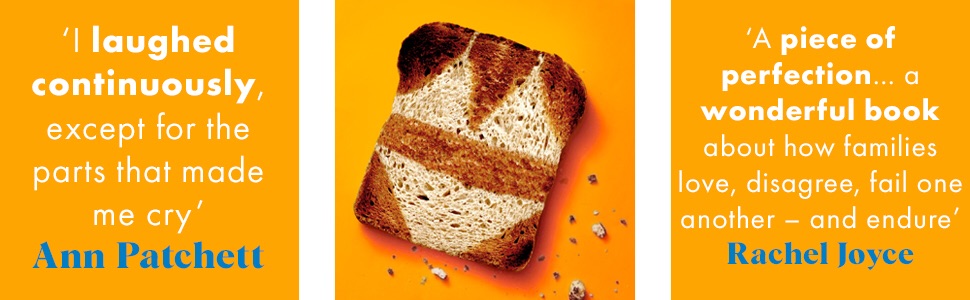
Sandwich by Catherine Newman

One week in Cape Cod. The perfect family holiday. What could possibly go wrong…?

For the past two decades, Rocky has looked forward to her family’s yearly escape to Cape Cod. Their rustic beach-town rental has been the site of sweet memories, its quirky furniture and mismatched pots and pans greeted like old friends.

Now, sandwiched between her children who are adult enough to be fun but still young enough to need her, and her parents who are alive and healthy, Rocky wants to preserve this golden moment forever. This one precious week when everything is in balance; everything is in flux.

But every family has its secrets and hers is no exception.

With her body in open revolt and surprises invading her peaceful haven, the perfectly balanced seesaw of Rocky’s life is tipping towards change…

Rocky and her husband Nick have reached that middle point in life where adults seem to be at their most stretched. They’re coping with children who have left home or are living at university as well as increasingly elderly parents who need more help than they have before. This is the sandwich of the title. The emotions are conflicting, from the parental support a fledgling teenager still needs to the worry about their independence, as well as the feelings of loss that that come from empty nest syndrome. As for parents, it’s like a whole new stage in the relationship defined in the novel as ‘anticipatory grief’ because as they become increasingly frail there’s a constant reminder that the clock is ticking. This reminder of their mortality brings up feelings of loss and a sense of our own life being at their point where more is behind us than in front of us. I’m saying ‘we’ because I fall bang in the middle of this category. I have parents who have endless medical appointments, particularly Dad who seems to have surgery on a yearly basis like some sort of annuity. However, I also have one stepdaughter away at university, really stretching her wings as she ends her second year and moves in with her boyfriend. We’re only a quick call away though and we’ve gained a third child in the boyfriend. We miss her more than I can express. Then we have my other stepdaughter, one of the generation whose education has been massively affected by COVID. She has so many plans with friends that we now see her less so the loss is twofold. Then there’s the menopause, from sweating to vaginal atrophy it’s a veritable shitshow of symptoms that we’re just supposed to manage alongside everything else. To say I felt a kinship with our narrator Rocky, is an understatement. Again Catherine Newman has managed to put something on the page that’s raw, emotional and relatable. So much so that there were points in the book where I burst into tears.

Rocky is a great narrator in that I was immediately comfortable with her and believed in her world. This book was such an easy read and flowed so beautifully that I finished it in a day. A family trip to the Cape Cod holiday home they’ve rented since the children were small throws a family that’s scattered to the four winds, under one roof. Eldest child Tim is there with girlfriend Maya and student Willa has travelled from her college and meets them there. Later in the week grandma and grandad will join them for two days and of course there’s the ancient cat. They are rather piled in on tap of one another but they couldn’t come here to a different, bigger rental because so many of their memories have been made in this house. During the course of the week Rocky will learn and divulge some secrets, all of them filtered through her anxiety and what husband Nick calls a hint of narcissism. This family were so like my own that I deeply appreciated my upbringing, even though some of it wasn’t easy – we never had money, found a secret sibling then happily lost them again, mum and dad had their turbulent years. Yet I always felt loved and that’s what there’s a surfeit of in this family, everyone loves everyone else even when they disagree. Rocky is a passionate and emotionally intelligent mother, the sort of mum you might go to with a secret. She also happy to be schooled where she gets it wrong, especially where daughter Willa is concerned. She might use the wrong pronouns and need to check her privilege occasionally but largely she’s the sort of mum you want. She feels things almost too deeply and I understood that in her. She wants to breathe in her children when they’re little. She reminds me a little of something my mum and Mother, my great-grandmother, used to say when my brother and me were little: ‘ I could eat you on a butty without salt’.

I think Catherine Newman is brilliant when it comes to trauma and intergenerational family dynamics. There was a moment, as Rocky was reminiscing about a time when she miscarried that made me feel like she’d read my mind. I had recurrent miscarriages in my twenties and I’d never been desperate for children till I lost the first one. No one explained that grief can manifest in strange ways, in fact after my operation (which I’d had to consent to on a termination form) I was told when it would be physically possible to try again, but never that it might be a good idea to grieve first. To take time. As far as emotions went I was given a leaflet of phone numbers of women who’d had miscarriages – with the warning that in a lot of cases I might hear children in the background. I couldn’t bear to hear that so I didn’t call. What I do remember from that time was buying pregnancy tests in bulk and checking frequently whether I might be pregnant again, even if I’d already checked yesterday and knew I wasn’t. The author writes about Rocky staring at pregnancy tests, imagining she can see the second line in the window and trying again for the answer she really wants. I truly felt her pain in those moments and my own. I felt slightly less mad. To realise this was an understandable response to grief was so comforting. Every emotion I felt in those terrible couple of years was due to grief. I felt a failure, defective and terribly separate from people as if I was looking at life through a glass screen. Now thirty years later I’d like to thank Catherine for the way she handled this difficult story line because I finally felt less alone. I really admired the way she wrote about post-natal depression too. When my mum had my younger brother I was only four years old, but for years afterwards she had a morbid obsession that he was going to die. Every time something happened in his life she worried that this would be it. Now he would be taken away from her. I have to say that sometimes this felt very dismissive of me. Her explanation when I asked if she’d ever thought the same about me was that I could look after myself, despite me spending a long time in hospitals. This aspect of PND is something I’d never considered before and helped me to understand where she was coming from a little better.

I thought the author beautifully described how women are more aware of their bodies because we’re trained to be. In a medical world that’s often dismissive of things like period pain ( or anything that falls into the category of gynaecology and obstetrics) as a natural process, the author shows how these things truly feel physically and mentally. We have to ‘know’ as soon as we’ve got our period because the shame of being seen to bleed is fierce, especially as period shaming seems to be rife in secondary schools. Our minds and bodies are connected so we know if something is a normal pain or a pain that has a different feeling or intensity. As Rocky loses the idea of the baby she’s carrying, she’s also physically losing the baby. These moments are raw because the emotions are. There’s a desperation in physically losing a baby. The mind does gymnastics trying to find a way to keep them inside you where it’s safe. As Rocky reminisces about this time, the unresolved emotions are clear and perhaps stirred up by menopause symptoms and having her babies under one roof. I enjoyed Rocky and Nick’s marriage too. It’s not perfect and they haven’t really connected for a while, physically or mentally. When he stumbles on a long held secret it throws their dislocation into the spotlight and gives them the opportunity to talk. He still loves her, despite the fact she’s a bit of a narcissist. She recognises that throughout the holiday Nick has been cooking, organising, driving everyone and just quietly looking after everyone. They’ve been in their mum and dad roles for so long they’ve forgotten how to be Rocky and Nick. It’s something of a relief for Rocky to know that Nick still desires her, despite the expanding waistline and loss of libido. Also, as Nick points out, it’s hard to get close to someone when there’s a huge secret between them.

I connected with this novel so deeply and I raced through it in a day. I simply sat and read without music or any other distractions, that’s how engrossed I was in this family’s story. Each generation had it’s own issues to deal with. The grandparents are facing health issues and their eventual loss of each other, brought into sharp focus when grandma faints at the beach. Ricky’s son and his girlfriend are facing some huge life choices. Even great-grandparents cause a drama when Rocky’s dad lets slip that they were in a concentration camp, something Rocky’s never known. Rocky and Nick are the meat in this emotional sandwich. Catherine Newman has once again written a novel about family that is truthful, funny and life-affirming. I can easily see this being on my end of year list.

Published on 6th June by Doubleday
Meet the Author

Catherine Newman is the author of the kids’ how-to books How to Be a Person and What Can I Say?, the memoirs Catastrophic Happiness and Waiting for Birdy, the middle-grade novel One Mixed-Up Night, and the grown-up novels We All Want Impossible Things (Harper 2022) and Sandwich (Harper 2024). She edits the non-profit kids’ cooking magazine ChopChop and is a regular contributor to the New York Times, O, The Oprah Magazine, Cup of Jo, and many other publications. She lives in Amherst, Massachusetts, with her family.

Posted in Squad Pod

The King’s Witches by Kate Foster

Having only just read her debut The Maiden, I was very keen to get started on this second novel from Kate Foster. This novel is based during the reign of Elizabeth I and James VI of Scotland (James I of England). I knew of James VI’s obsession with witches after studying the Malleus Malificarum at university while writing about disability representation in fiction. I looked at witches while discussing how disfigurement and disability in novels is used as a symbol for evil. The Malleus Maleficarum was the bible for witch finders, describing all the behaviour and characteristics of possible witches and signs to look out for. The book features in this novel as a guide for James VI, who had been alarmed by news of witch hunts in Germany. His proposed bride, Princess Anna of Denmark, set sale for Scotland in 1590 and was driven back by catastrophic storms. The storms were blamed on witches in Denmark and when James travelled to meet her in Norway he heard allegations of witchcraft first hand. Around the same time, in North Berwick, a housemaid called Geillis Duncan was accused of sorcery and when tortured she implicated several other witches, allegedly conspiring with the Earl of Bothwell to take the throne from the King. Kate Foster has taken this history and weaves a story from three women’s points of view, giving a feminist slant on the witch trials that killed thousands over the next two centuries, the majority of them women over forty.

There are three narratives in the book, each one from women who hold different positions in society. Princess Anna of Denmark was a young girl of fourteen when he was betrothed to James VI and attempted to reach Scotland. This has been updated to seventeen in the novel, but at either age there’s an enormous pressure on her shoulders. She has been sent on the basis of a Scottish hand-fasting, if she should please James within the next year he will marry her. If not, she will be ruined for any other marriage and her future looks set to be a life within an abbey. Adding to the pressure, there is a witch burning just before they leave and Anna is compelled to watch, because burnings are a warning to all women. Anna is sickened by what she sees and can’t forget it, convinced as they set sail that the witch is stood on the harbour cursing the voyage and her union with the Scottish king. As it is the sailing does feel cursed because the weather is terrible, sea-sickness is rife and when Anna meets her Scottish tutor Henry every thought of the king is driven from her mind. Anna’s companion and lady-in-waiting is Kristen Sorenson, a pious woman who once lived in Scotland. She is charged with keeping Anna focused on her duty, but she also has her own personal reasons for wanting the royal marriage to be a success. Jura is a housemaid working in the house of the local bailie in North Berwick. Her mother was a cunning woman, treating local women’s ailments with natural ingredients and she passed her knowledge on to Jura. She heals the daughter of the house from a rash and redness on her face using an oatmeal poultice and soon other women in their circle are asking for cures of their own. However, she and the daughter clash over a dalliance with a local farmer’s son and when Baillie Kincaid starts to force his attentions on Jura she decides to flee to Edinburgh. All three women are now caught up in the witchcraft rumours and may have to come together in order to save themselves.

Within a few chapters of the book I felt taken right back to the 16th Century. The witch burning scene in Denmark is see through Anna’s eyes and it is sickening and barbaric to imagine people killed in this way. Before she sees Doritte Olsen burned Anna mentions that even though she is to be betrothed, she doesn’t feel like a woman yet. She doesn’t fully know who she is. She can’t eat and can’t sleep, smelling the smoke on her own hair and knowing that on the beach, Doritte Olsen is still burning down to ash. She starts to see that women have no power in this world and the burning is a lesson – this is what happens if women step outside their role. It left me knowing I was in a different world, where women’s roles are wholly defined by men. Jura senses freedom as she flees to the capital city. Her descriptions of Edinburgh are so vivid as she marvels at houses with four storeys that put the whole street in shadow. She is dazzled by Canongate with it’s gleaming shop fronts, tennis courts and cork-fighting pits. She marvels that her mother never told her such variety existed in one place. The use of Scottish dialect in Jura’s narrative really helps ground the reader in that place and her use of bawdy language made me smile and feel warm towards her.

Here and there, Kate uses letters between the chapters and they had the effect of reminding me that a true story lies behind this novel. After their first night together, she strategically places a letter to the king from his friend Douglas Murray, a fictional character who stands in for a series of lovers the king is known to have had. In a letter that is mainly keeping the king up to date with news from court, he signs off with a curious line:

‘Mostly I await your return […] so that we might embrace each other once more in the manner to which we have become so dearly accustomed’.

The consensus among 21st Century historians is that the king was homosexual or bisexual, but in the context of this story it makes us realise that Anna’s task is a difficult one. She truly will be a wife in duty only and she knows this as she tells Kristen it feels unnatural to be intimate with someone she doesn’t care for in the right way. Her role is to stay quiet and bear children, turning a blind eye to the king’s extra curricular activities. Anna’s description of their intimate relations made me feel sick for her, she senses there is no ‘longing’ in him and I realised that should she become Queen this is her life. She won’t be able to have lovers and her only romance in life would be the way she feels for her tutor Henry. In fact James seems more aroused when torturing potential witches. How I wanted her to run away.

The only women in the novel with a small amount of freedom are those able to earn their own money like Jura and her Aunt Mary who is a healer and cunning woman in Edinburgh. Mary lives alone on what she earns, not in any sort of luxury but at least she has autonomy. The ability to consult a cunning woman is vital for women who might want to stop a pregnancy, boost their fertility or need a charm for love or protection. In this way these autonomous women empower the women around them and accusations of witchcraft subdue not just the woman accused, but every woman in that area. When Jura heals Hazel Kincaid’s facial rash and gets the chance to meet with other local women who gather at the house, she glimpses the chance of a better life:

‘I like healing far better than I like polishing and sweeping and mibbie, one day, soothing grumbling guts and easing flaking skin will help me out of horrible Master Kincaid’s house and away from his prick, and able to rent a dwelling of my own.’

The hypocrisy of the men in the book is infuriating at times. The renowned witch finder Dr Hemmingsen from Copenhagen assures the king that he has a unique way to identify witches, using a bodkin to prick them and find the devil’s mark on their body – the only spot where it won’t hurt. In the same package he has sent the king a golden amulet for protection, carved by a man who knows how to ward off evil. It seems signs and charms are only witchcraft when a man says they are. In fact Anna has never heard so much about the practises of witches as she does from the king, regaling her with tales of baby-killing and orgies with man, woman and beast. Kristen tells Anna that James is becoming a danger to ordinary women and his fervour is a kind of madness, or a licence to abuse and degrade women. Anna has a realisation; a woman’s body is never truly her own, no matter what their position in society. Whether you’re a housemaid whose master decides you’re his property, a witch who can be stripped and examined by men who call themselves god-fearing, or a princess whose family hand-fasted her to James Stuart and didn’t ask her if it was what she wanted. Women must work together if they want to survive. These women are strong, but are they intelligent enough to try and outsmart a king? Kate is brilliant with twists and turns, so I wasn’t surprised to find a few revelations towards the end. I was driven to finish to know what happened to all three women and whether any of them would achieve the freedom they craved. This was a compelling and atmospheric read and cements Kate Foster’s position as a writer of historical fiction at it’s best.

Published on 6th June by Mantle Books

Meet the Author

Kate Foster has been a national newspaper journalist for over twenty years. Growing up in Edinburgh, she became fascinated by its history and often uses it as inspiration for her stories. The Maiden won the Bloody Scotland Pitch Perfect 2020 prize for new writers and is long-listed for the Women’s Prize for Fiction. She lives in Edinburgh with her two children.

Posted in Netgalley

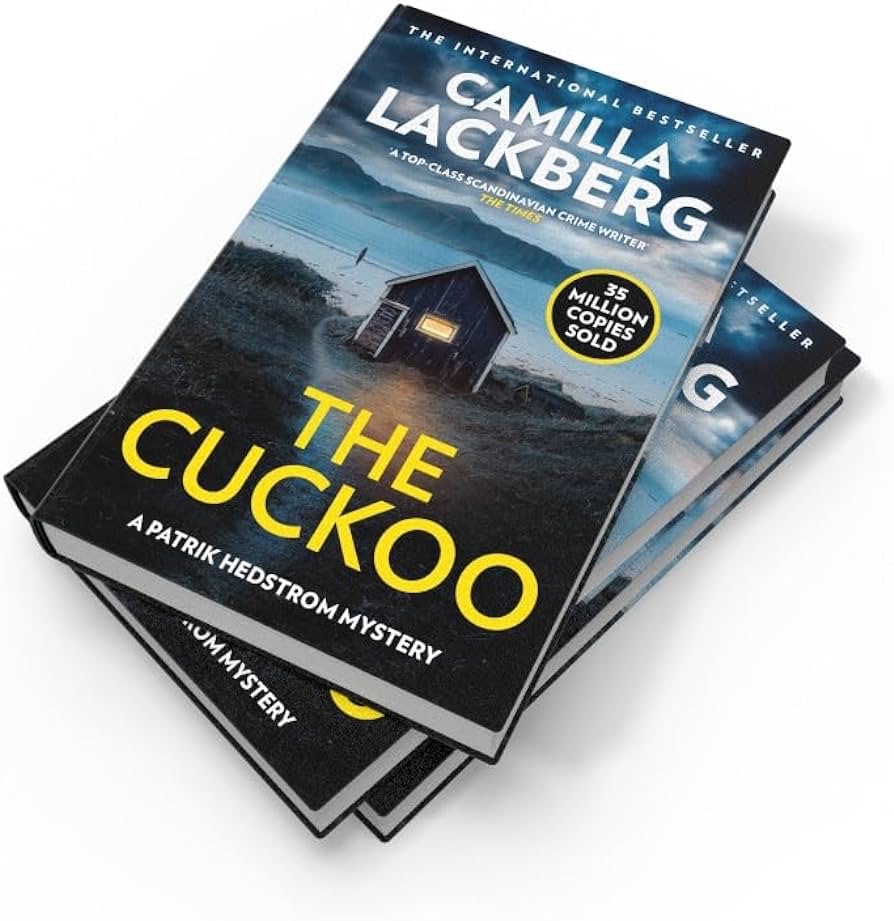
The Cuckoo by Camilla Lackberg

A community torn apart

As a heavy mist rolls into the Swedish coastal town of Fjällbacka, shocking violence shakes the small community to its core. Rolf Stenklo, a famous photographer, is found murdered in his gallery. Two days later, a brutal tragedy on a private island leaves the prestigious Bauer family devastated.

A town full of secrets

With his boss acting strangely, Detective Patrik Hedström is left to lead the investigation. Tensions rise threatening cracks in the team of officers at Tanumshede police station and pressure mounts as the press demand answers.

A reckoning in blood

In pursuit of inspiration for her next true-crime book, Patrik’s wife Erica Falck leaves behind their three children and travels to Stockholm to research the unsolved decades-old murder of a figure from Rolf’s past. As Erica searches for the truth, she realizes that her mystery is connected to Patrik’s case. These threads from the past are woven into the present and old sins leave behind long shadows.

This was my first Camilla Lackberg novel and I thoroughly enjoyed my introduction into the world of Detective Patrik Hedström and his wife Erica. At first it didn’t grab me. I couldn’t remember all of the characters and how they all related to each other at the party. Henning and Elizabeth Bauer are celebrating their wedding anniversary with family and friends, but sprinkled amongst the celebrations the author places little hints of menace or disquiet. As Henning’s son Rikard stands to make a speech we realise all is not well in their relationship. Even worse the couple’s oldest friend Rolf has declined to come, but is over in the gallery organising the photos for his exhibition with an ominous final pair entitled ‘innocence’ and ‘guilt’. Old secrets are stirring and when Rolf is found dead, killed by a nail gun, Patrik has to look at who had something against him. His wife Vivian is shocked and devastated, especially since she was partying the night away. Could there be a link to his exhibition? Or was there something to uncover at Blanche, the club that the friends owned together? Then the next day, when a terrible discovery is made on the Bauer’s private island the pressure mounts on Patrik to find out who could have committed such a sickening crime. Meanwhile his wife Erica has a link to the crime through Louise, Henning’s daughter-in- law. Erica finds herself drawn to a certain aspect of the crimes, through Rolf’s photographs which appear to have featured women in the transgender community. It seems that many years ago the group were linked to another terrible murder.

The author has placed Lola’s narrative in sections throughout the main story. At first I was completely confused as I read about a little girl called P’tite and her daddy Lola. I honestly did look twice to see if it was a mistake, Lola is a woman but her daughter calls her daddy. P’tite isn’t confused or concerned as people might expect, she’s simply accepting of the fact that her daddy is a transgender woman. Lola works in a club at night and there she met Rolf, with whom she built up a friendship. Nights out often ended up at Lola’s flat, with P’tite asleep in bed and the group playing music in the kitchen. Through her narration we know that Lola’s little girl is her absolute world. The only other thing that’s precious to her are her notebooks, that she carries with her and is always writing in any spare moments she gets. I was really interested in Lola’s story, much like Erica, I sensed there was a lot more to her story that would reveal itself. However, we do know that Lola was killed in a fire along with her daughter who was found locked in a trunk. Erica starts to do some research, knowing that she must be careful to stay away from Patrick’s investigation but determined to find out why Lola met such a terrible death. As she starts to ask questions, strange anomalies come to light. The post-mortem shows that Lola had no smoke in her lungs, meaning something or someone killed her before the fire started. Sadly, the child found in the trunk did die of smoke inhalation. However, Erica does uncover something that changes absolutely everything, from the historic crime to Patrik’s investigation. Even worse it might place her in terrible danger.

I thought the author was brilliant in the way she slowly pulled apart this previously solid group of friends and family. There were professional jealousies with Henning about to be announced as the winner of the Nobel Prize for Literature. His sons Peter and Rikard couldn’t be less alike. We hear Rikard discussing with his partner that they’ll be able to get money out of Elizabeth still, despite his father cutting him off. His contempt for his parents is uncomfortable to listen to and it would be easy to imagine him committing the crimes. Peter is more traditional and stands on his own two feet. It hasn’t been easy to be a committed father since the death of his first wife Cecily. Thankfully Louise came along and carefully supported him and the boys. In fact she made herself so indispensable they are now married. The team come across rumours of one of their group, Ole, touching young women inappropriately at Blanche and pay offs having to be made. All the group are well known in their field and one of them sits on the Nobel committee, so one sniff of scandal could completely change their status. With the Bauers wealthy enough for a home on a private island it isn’t just saving their status as artists and writers, it’s preserving their wealth too.

There are very difficult subjects in the novel, dealt with sensitively and with depth. Lola’s experience of transphobia is awful. Her family only see her as Lars and won’t accept Lola at all. In fact her sister visits and makes her position clear, but making the threat that she could let child services know that P’tite lives in such an unconventional situation. This is a rather self-serving threat as she wants the little girl for herself. While Lola is accepted in her group of friends, not everyone feels the same way and the incident with a group of teenage boys outside the club is sickening and terrifying. I wasn’t sure whether she’d been killed in a similar situation or whether her killer was someone closer to home. I felt that Lola had more talent, generosity and integrity than all of her friends put together. Her sections of the book drew me in more than anything else, so I kept reading because I had to find out what happened to her. In this way I felt a kinship with Erica, who’s also compelled to follow Lola’s trail. Probably because I’m an aspiring writer, I was fascinated by her process even though I was scared for her as she started to unravel events. For light relief I loved the sections where Erika’s in-laws decide to redecorate her house while she’s away researching and Patrik is caught up in the investigation. I was inwardly cringing at the archway and the salmon pink kitchen. This is an engaging novel that compels you to keep reading, with a maze of connections and some delicious twists towards the end.

Out on 23rd May from Hemlock Press

Meet the Author

Born in 1974, Camilla Läckberg graduated from Gothenburg University of Economics, before moving to Stockholm where she worked for a few years as an economist. However, a course in creative writing triggered a drastic change of career. Her ten novels all became Swedish No. 1 bestsellers. She lives with her family in Stockholm.

Posted in Monthly Wrap Up

Best Reads May 2024

Finally some sunshine! This is my reading nook in the living room, where I disappear to when I want to be in the same room with everyone but away from the TV end. I love the way the sun streaks through this window in the late afternoon until it sets. It’s been busy again this month and next month is crazy! I guess this is just what being a book blogger is like. Here are my favourites this month, lots of crime fiction and a couple of brilliant historical/crime combinations too.

The Small Museum by Jody Cooksley

A shiver thrilled my spine at the thought of what might be contained in collections to be kept away from ordinary eyes…

London, 1873. Madeleine Brewster’s marriage to Dr Lucius Everley was meant to be the solution to her family’s sullied reputation. After all, Lucius is a well-respected collector of natural curiosities. His ‘Small Museum’ of bones and specimens in jars is his pride and joy, although firmly kept under lock and key. His sister Grace’s philanthropic work with fallen women is also highly laudable.

However, Maddie soon finds herself unwelcome in what is meant to be her new home. The more she learns about both Lucius and Grace, the more she suspects that unimaginable horrors lie behind their polished reputations.

Framed for a crime that would take her to the gallows and leave the Everleys free to continue their dark schemes, Maddie’s only hope is her friend Caroline. She will do anything to prove Maddie’s innocence before the trial reaches its fatal conclusion.

This is a cracking gothic thriller where Maddie has only two choices: shut up and remain complicit in a potentially horrific scheme or try to speak up and be labelled a madwoman. All in all, this is a really well written and researched novel with all the ingredients I love in an historical novel: a fantastic sense of time and place; strong female characters that break through the Victorian ‘Angel in the House’ stereotype; those Gothic elements to bring a sense of mystery. Then added to this are the addictive twists and turns of a crime novel. What an incredible debut this is!

The Maiden by Kate Foster

Kate Foster has taken a real life news report and turned it into an incredible read, full of historical detail and intrigue. It’s the late 17th Century and Lady Christian Nimmo lives with her sister Johanna and her mother at their lavish home in Scotland. Although their home is becoming less lavish by the month because since their father’s death she notices pale spaces where paintings or rugs once lived. Their fortunes are at the mercy of their uncle by marriage. James Forrester is laird of the neighbouring castle where he lives with Christian’s invalid aunt Lillias. James comes for dinner and departs with a little more of their family history packed away for sale. The girls must marry well and it is Johanna with her bubbly personality and pretty face who is proposed to first. For her wedding to Robert Gregory, Christian’s uncle sends her a beautiful brooch to wear and she is pleased at his kindness and the acknowledgement that she might feel left behind that day. However, she does enjoy the attentions of the fabric merchant Andrew Nimmo who brings them new fabric and entertains them with tales of sailing to far off lands and the night sky at sea. Marriage to him would be interesting andadventurous, all the things that Christian yearns for when she reads novels and poetry. So when he proposes she accepts happily, sharing her sister’s new found marriage advice and looking forward to being mistress of her own house. Yet only months later she is detained for the suspected murder of her Uncle James, killed by his own sword under a sycamore tree in the grounds of his castle. How has it come to this and will Christian have to face the infamous ‘Maiden’, a guillotine where Scotland’s aristocratic condemned meet their fate?

What the author does that makes this novel sing is combining the time period and story to the structure of a modern crime thriller. Just when we think we know everything, she trips us up with a different perspective or twist we didn’t see coming. Some revelations throw a completely different light on everything that has gone before bringing that excitement and compelling you to keep reading. I genuinely didn’t know how it would be resolved until we arrived there and once we did it was obvious this was the only way for it to end. Utterly brilliant and definitely a debut worthy of it’s accolades.

The Bookshop Ladies by Faith Hogan.

One sure way to entice us bookworms is to write a book about books and this one has all the warmth, friendship and female empowerment we would expect from a Faith Hogan novel. It’s like receiving a big warming hug, but in book form. Our central character is Joy and we meet her at a hugely traumatic point in her life. Joy lives in Paris with her husband Yves Bachand, a well-known art dealer who has made the career of many a new struggling artist. Joy has a very successful career of her own in public relations. Everything is turned upside down when Yves suffers a massive heart attack and in his dying moments manages to tell Joy he has a daughter. Over the next few weeks as Joy starts to comes to terms with losing her husband, she’s also trying to get her head around his dying words. Could he possibly have been unfaithful? The whole idea adds a new level of devastation because Joy and Yves couldn’t have children of their own. Their solicitor approaches Joy about an unusual request in his will, he has bequeathed a painting he owned to a girl called Robyn. We’re back in the gorgeous coastal village of Ballycove, where our other main character Robyn lives. Robyn has a small bookshop, with largely second hand books on various subjects from rare birds to trains. Although Robyn has put the stock onto online book sites she isn’t exactly turning a profit and she wonders if she’s made a big mistake. Her grandfather Albert suggests that she hire someone or find a volunteer to do a few hours in the shop to free Robyn up for business planning and working on her vision for the shop. Into this scenario walks Joy, renting the flat above Albert’s and hoping to stay for only a couple of weeks in order to pass on the painting. She can see that it belongs with Robyn as it was painted by her mother Fern. Joy both welcomes and dreads meeting Robyn and definitely her mother. If she can do it quickly, almost like ripping off a band aid, she can get the painting handed over and be back on a plane to Paris in no time. However, she hadn’t factored Robyn into the equation. She walks past the shop twice plucking up courage and when she does finally walk in she’s so taken aback by this girl who looks so much like Yves she could only be his daughter. Stunned into silence, Robyn’s chatter takes over and she assumes that Joy is there to apply for the position she advertised in the window. In her stunned state Joy doesn’t argue and soon she is Robyn’s new book assistant.

I really enjoyed the women in this novel, especially Joy who is so resilient and generous with her time, her emotions and her heart. I felt like Ballycove worked it’s usual magic, but Joy matches it, bringing her enthusiasm and joie de vive to the bookshop. She’s using her professional skills of course, but there is just that touch of enchantment about her too. She’s like a bookish Mary Poppins. However, would Robyn’s mum Fern immediately know who Joy was and what would it do to her relationship with Robyn? I felt sad that Joy might lose everything she’s built in Ballycove and the sense of family she’s enjoyed with Robyn and her grandfather. There’s a lovely little romantic subplot and a lot of personal growth on Robyn’s part, particularly the unresolved emotions around being bullied at school. The word that always best describes Faith’s writing is charming. It’s like making new best friends and although her stories are emotional and raise serious issues, they are always uplifting too. This felt like a lovely warm hug in a book and added lots of ideas to my imaginary future bookshop.

Toxic by Helga Flatland

When Mathilde is forced to leave her teaching job in Oslo after her relationship with eighteen-year-old Jacob is exposed, she flees to the countryside for a more authentic life.

Her new home is a quiet cottage on the outskirts of a dairy farm run by Andres and Johs, whose hobbies include playing the fiddle and telling folktales – many of them about female rebellion and disobedience, and seeking justice, whatever it takes.

Toxic was a perfect read for me because the author creates such psychologically detailed characters and a setting so real I felt like I was there. Helga never underestimates the intelligence of her readers, assuming we’ll make sense of these complex characters and their backgrounds. The story is structured using two narrative voices, that of Mathilde and Johs. Johs’s narrative establishes both his family and the setting of the farm where Mathilde will make her new home. At first the narratives seemed completely divorced from each other; life at the farm is only just starting to undergo change after the rather stifling management of their grandfather Johannes, whereas Mathilde is a city dweller who seems hellbent on pushing boundaries and pursuing freedom. It is that search for freedom, during the COVID pandemic, that starts Mathilde hankering after a more rural life and losing her job is the catalyst for taking action. Quickly I became so drawn in by the two narratives that I stopped worrying about a link and once Johs and Mathilde are on the same farm their differences create a creeping sense of foreboding.

The author uses local Nordic myths and songs to give us a sense of the history of the area, but also the attitudes towards modernity and women. I found these songs harmless at first, simply a part of a community where families have remained for generations. However, the more I heard, especially with their interpretations from granddad Johannes who performs them on his Hardinger fiddle, the more the content felt controlling and misogynistic. Johs and Mathilde show how different backgrounds and life experiences rub up against each other. Two different upbringings have created opposite values and lifestyles. Yet I felt a dangerous antipathy building towards Mathilde and that one wrong move could cause this tinder box to ignite. With her lack of boundaries, that wrong move seemed very possible. I was surprised by where the ending came, although not shocked. As I took a moment and thought back, every single second we spend with each character is building towards this moment. Utterly brilliant.

Boys Who Hurt by Eva Björg Aegisdottir

We’re back with Detective Elma in the fifth of the author’s Forbidden Iceland series and she is returning to work from maternity leave when a body is found in a holiday cottage by a lakeside. The victim’s name is Thorgeir, who has grown up in Akranes and in a coincidence typical to small towns, his mother is Elma’s neighbour. The cottage belongs to the family and the evidence suggests Thorgeir was not alone – there were two wine glasses and a lacy thong is found under the bed. He is found in the bed, with stab wounds and the line of a well known hymn is written on the wall behind the bed, in blood. With Saever on paternity leave with their daughter Adda, Elma works alongside her brilliantly grumpy boss Hörour to solve the murder. Several leads come to light. Thorgeir was working with his friend Matthías on an exercise and well-being app and had secured a large sum of money as an investment, but from an unexpected source. The hymn is well known, often sung at a popular Christian camp for teenagers and refers to the washing away of sin – had Thorgeir needed such forgiveness? Matthías and his wife Hafdis mentioned a young woman that Thorgeir had been seeing recently, but there is no sign of Andrea anywhere. The friends had attended camps together as teenagers, but on one such occasion a young man called Heioar had died out on the lake in the night, in similar circumstances to Thorgeir’s father’s death a few years before. It’s soon clear that many secrets are hidden in Akranes, some of them within Elma’s own home.

It sometimes feels like every home in Akranes holds an ocean of pain and unresolved trauma. There’s so much going on just under the surface, an intergenerational trauma that seems to come partly from religion and partly from rigid expectations. One of the most complex relationships is between Thorgeir and his new girlfriend. I was fascinated with her narratives showing how attraction and repulsion can co-exist between two damaged people. Also, how one terrible deed doesn’t define a person. This was a brilliant thriller, exposing a dark underside to Akranes and keeping me guessing to the very end.

Look out for my full review on the blog tour last month.

The Cuckoo by Camilla Lackberg

A community torn apart

As a heavy mist rolls into the Swedish coastal town of Fjällbacka, shocking violence shakes the small community to its core. Rolf Stenklo, a famous photographer, is found murdered in his gallery. Two days later, a brutal tragedy on a private island leaves the prestigious Bauer family devastated.

A town full of secrets

With his boss acting strangely, Detective Patrik Hedström is left to lead the investigation. Tensions rise threatening cracks in the team of officers at Tanumshede police station and pressure mounts as the press demand answers.

A reckoning in blood

In pursuit of inspiration for her next true-crime book, Patrik’s wife Erica Falck leaves behind their three children and travels to Stockholm to research the unsolved decades-old murder of a figure from Rolf’s past. As Erica searches for the truth, she realizes that her mystery is connected to Patrik’s case. These threads from the past are woven into the present and old sins leave behind long shadows.

This was my first Camilla Lackberg novel and I thoroughly enjoyed my introduction into the world of Detective Patrik Hedström and his wife Erica. At first it didn’t grab me. I couldn’t remember all of the characters and how they all related to each other at the party. Henning and Elizabeth Bauer are celebrating their wedding anniversary with family and friends, but sprinkled amongst the celebrations the author places little hints of menace or disquiet. As Henning’s son Rikard stands to make a speech we realise all is not well in their relationship. Even worse the couple’s oldest friend Rolf has declined to come, but is over in the gallery organising the photos for his exhibition with an ominous final pair entitled ‘innocence’ and ‘guilt’. Old secrets are stirring and when Rolf is found dead, killed by a nail gun, Patrik has to look at who had something against him. His wife Vivian is shocked and devastated, especially since she was partying the night away. Could there be a link to his exhibition? Or was there something to uncover at Blanche, the club that the friends owned together? Then the next day, when a terrible discovery is made on the Bauer’s private island the pressure mounts on Patrik to find out who could have committed such a sickening crime. Meanwhile his wife Erica has a link to the crime through Louise, Henning’s daughter-in- law. Erica finds herself drawn to a certain aspect of the crimes, through Rolf’s photographs which appear to have featured women in the transgender community. It seems that many years ago the group were linked to another terrible murder. I was fascinated by the narrative told to us by this previous victim, a transgender woman called Lola. She felt to me like the most developed of the characters and through her I became hooked on finding out who had done this and untangling the fascinating relationships between this lauded group. This was a tangled web and I thoroughly enjoyed unpicking it.

The Midnight House by Eve Chase

I love Eve’s writing: her female characters; the secrets from the past just waiting to spill out; the gothic feel and atmosphere she creates, especially around old houses; lastly, it’s the dynamics she creates between the characters particularly the mothers and daughters. Here she gathers all these aspects together with an intriguing plot and such a relatable central character in Maggie. Maggie is an author, living in Paris and struggling with writer’s block. Something from her shared past with brother Kit keeps coming into her mind. Her mind keeps being drawn back to her teenage years her mother Dee Dee was a famous model, living in the Notting Hill area of London, close to the Portobello Road with it’s antique and collectible traders. One summer morning, Maggie wakes up to find that Dee Dee hasn’t come home. This isn’t too unusual, late parties and sometimes modelling shoots can drag on into the night. She loves spending time with brother Kit anyway. They go out with Kit’s skateboard and he has a fall, breaking one of the wheels. A stranger comes to their aid, dusting Kit down and trying to repair the wheel. He introduces himself as Wolf and when his eyes lock with Maggie’s it’s instantaneous, first time and first sight love. He recognises the connection too, so he takes the skateboard back to his uncle’s antique shop to properly fix Kit’s skateboard. Just so he has an excuse to go back. Maggie navigates this new feeling, but is also concerned for her mother who still hasn’t come home. Adult Maggie needs to visit home and ask her Aunt Cora some questions. Once in London she makes her way to the old house with the pink door and bumps into a man on his way out. She’s surprised to see this is Marco, Dee Dee’s hairdresser. He tells Maggie he’s digging out the basement of the house and sends her into a complete panic. Maggie knows that secrets lurk in the garden of their old home and it might not be long before they’re found… I loved the depiction of first love in this beautiful novel and the mystery unwinds slowly like a maze. Her best yet.

Next month’s reading..

Posted in Publisher Proof

The Bookshop Ladies by Faith Hogan

One sure way to entice us bookworms is to write a book about books and this one has all the warmth, friendship and female empowerment we would expect from a Faith Hogan novel. It’s like receiving a big warming hug, but in book form. Our central character is Joy and we meet her at a hugely traumatic point in her life. Joy lives in Paris with her husband Yves Bachand, a well-known art dealer who has made the career of many a new struggling artist. Joy has a very successful career of her own in public relations. Everything is turned upside down when Yves suffers a massive heart attack and in his dying moments manages to tell Joy he has a daughter. Over the next few weeks as Joy starts to comes to terms with losing her husband, she’s also trying to get her head around his dying words. Could he possibly have been unfaithful? The whole idea adds a new level of devastation because Joy and Yves couldn’t have children of their own. Their solicitor approaches Joy about an unusual request in his will, he has bequeathed a painting he owned to a girl called Robyn. When Joy returns home she goes into Yves’s office where the painting hangs and studies it, trying to see what he saw in this particular work of the Seine. Joy takes in the muddy coloured water, the litter and the green surroundings and thinks it could be a river anywhere. There is nothing to suggest this is the Seine that lovers travelling to Paris dream of walking along. Where are the honey coloured stones, the lampposts and the bridges? It takes time for her to notice anything about it she likes, but there is a streak of light that catches her eye in the top corner. The more she looks at it the more she wonders whether it was this glimmer that kept bringing Yves back to the painting. A promise that the grey cloud would lift and the sun would break through changing the whole scene to something altogether more hopeful. In this moment she makes a decision, she will travel to a Ireland and put this painting in the hands of Robyn herself.

We’re back in the gorgeous coastal village of Ballycove, where our other main character Robyn lives. Robyn has a small bookshop, with largely second hand books on various subjects from rare birds to trains. It’s been just ticking over for several years and while Robyn’s family own the building, including her flat above the shop, she has taken over the stock from it’s previous owner Douglas who has retired. To say the shop is a little tired is an understatement and it really needs some pizzazz to bring it back to life again. Yet it is lovely in it’s own way with it’s floor to ceiling bookshelves and their carvings of animals, little rooms for every subject and a darling little children’s section in a small nook. Although Robyn has put the stock onto online book sites she isn’t exactly turning a profit and she wonders if she’s made a big mistake. Her grandfather Albert suggests that she hire someone or find a volunteer to do a few hours in the shop to free Robyn up for business planning and working on her vision for the shop. Into this scenario walks Joy, renting the flat above Albert’s and hoping to stay for only a couple of weeks in order to pass on the painting. She can see that it belongs with Robyn as it was painted by her mother Fern. Joy both welcomes and dreads meeting Robyn and definitely her mother. If she can do it quickly, almost like ripping off a band aid, she can get the painting handed over and be back on a plane to Paris in no time. However, she hadn’t factored Robyn into the equation. She walks past the shop twice plucking up courage and when she does finally walk in she’s so taken aback by this girl who looks so much like Yves she could only be his daughter. Stunned into silence, Robyn’s chatter takes over and she assumes that Joy is there to apply for the position she advertised in the window. In her stunned state Joy doesn’t argue and soon she is Robyn’s new book assistant. Joy walks away wondering what on earth she’s done and how she’ll cope if Robyn’s mum turns up before she leaves.

I really enjoyed the women in this novel, especially Joy who is so resilient and generous with her time, her emotions and her heart. I felt like Ballycove worked it’s usual magic, but Joy matches it, bringing her enthusiasm and joie de vive to the bookshop. She’s using her professional skills of course, but there is just that touch of enchantment about her too. She’s like a bookish Mary Poppins, thinking up events and little touches to brighten the place including a toy train track which is one of my favourite parts of the brilliant Barter Books in Alnwick, Northumberland. Yet it’s the fact that she’s giving her time and expertise freely to her husband’s secret daughter that makes her all the more extraordinary. Yet I think she gets something special from Robyn too. Robyn allows her to spend time with someone with the characteristics and mannerisms of Yves and in a sense it seems to comfort her that he’s still here in the form of this shy, bookish girl. I also think Robyn balances some of the grief Joy went through when they lost their own baby who would have been a similar age. I was waiting to see what would happen when Robin’s mother Fern arrived. Would Fern immediately know who Joy was and what would it do to her relationship with Robyn? I felt sad that Joy might lose everything she’s built in Ballycove and the sense of family she’s enjoyed with Robyn and her grandfather. There’s a lovely little romantic subplot and a lot of personal growth on Robyn’s part, particularly the unresolved emotions around being bullied at school. The word that always best describes Faith’s writing is charming. It’s like making new best friends and although her stories are emotional and raise serious issues, they are always uplifting too. This felt like a lovely warm hug in a book and added lots of ideas to my imaginary future bookshop.

Meet the Author

Faith Hogan is an award-winning, million copy best selling author. She is a USA Today Bestseller, Irish Times Top Ten and Kindle Number 1 Best Selling writer of nine contemporary fiction novels. Her books have featured as Book Club Favorites, Net Galley Hot Reads and Summer Must Reads. She writes grown up women’s fiction which is unashamedly uplifting, feel-good and inspiring.

Her new summer read The Guest House By The Sea is out now and it’s a great big welcome back to Ballycove for her readers.

She writes twisty contemporary crime fiction as Geraldine Hogan.

She lives in the west of Ireland with her family and a sausage-loving Labrador named Penny. She’s a writer, reader, enthusiastic dog walker and reluctant jogger – except of course when it is raining!

http://www.faithhogan.com

http://www.Facebook/FaithHogan.com

Twitter @gerhogan

Instagram @faithhoganauthor