Posted in Publisher Proof

One Friday in Napa by Jennifer Hamm

The word Vene would have used to describe her mother was ‘cold’ because they’ve always been at odds, even in childhood. So when news of her terminal illness comes, Vene wonders what to do. Is a reconciliation out of the question? She returns to Napa only to find that Olivia is as harsh as she always was. Yet, when Vene finds a cookbook belonging to her mother, it’s like a window on a different woman. Upstairs her dying mother is judgemental and snappy, but between the pages of the cookbook she’s a young woman full of romance and longing, but also duty and a terrible heartache. This is the mum she’s never met and she wants to go on an emotional journey, to connect with the ‘real’ Olivia before it’s too late.

Using a dual timeline, half a century apart Vene tries to unearth the secrets and sacrifice of two different women. I loved the use of food as a medium to communicate emotion and nostalgia. We all have these tastes that rocket us back to childhood in one mouthful. In fact one of my favourite memoirs is Nigel Slater’s Taste which conjures up so many memories of his mother. We don’t always see our parents as people in their own right, especially when there are secrets and we don’t know the truth of everything they’ve endured. Mothers don’t always fully see their daughters, often because they’re so busy trying to protect them from a similar harm to the one they suffered when they were a young woman. In trying not to repeat our youthful mistakes and create a pattern, we make new ones. I thought there was so much insight into women’s emotional history here. There was a running theme of service and sacrifice that reminded me of Virginia Woolf’s A Room of One’s Own. Are women now able to make life choices completely for themselves or do they sacrifice this freedom to look after the needs of others? As an artist can we ever be fulfilled if we don’t write, paint or create? I thought the setting really emphasised the idea of food and nostalgia too, because just reading it I could imagine myself on holiday there. The place was beautifully described and the recipes with their accompanying wines between the chapters conjured up so many tastes and smells. Don’t read this when hungry! I love Italian food so it was wonderful to read those colours and tastes brought to life.

Emotionally and psychologically the author presents heartbreak in such a raw and honest way. Olivia’s past is full of loss and the pain of that has informed the way she brings up her daughter. The hurt of the past always affects our future relationships in some way, but is it possible to acknowledge that hurt and stop it shaping our future and that of our children? If not, a destructive pattern emerges and there is definitely trauma between these two generations. As our trips into Olivia’s past start to explain more about her present, I was hoping that Vene’s newly found knowledge of her mother’s motivations would open up a space for them to communicate honestly and truly know each other as women. I felt more involved in the past timeline, which often happens to me in dual timeline stories, and found the young Olivia a more engaging character. However, it was the dynamic between the two of them I loved and the sense that women have a lot to learn from each other when they communicate honestly. I wondered about how we value the older women in our families and whether we’ve lost that ability to prize them? Is there a collective wisdom we’re missing out on when we stop seeing our older relatives as people. Every so often it’s good to remind ourselves that these people who happen to be our parents, had lives long before they had us and I wondered whether there were incredible stories buried within the past generations of my own family.

Meet the Author
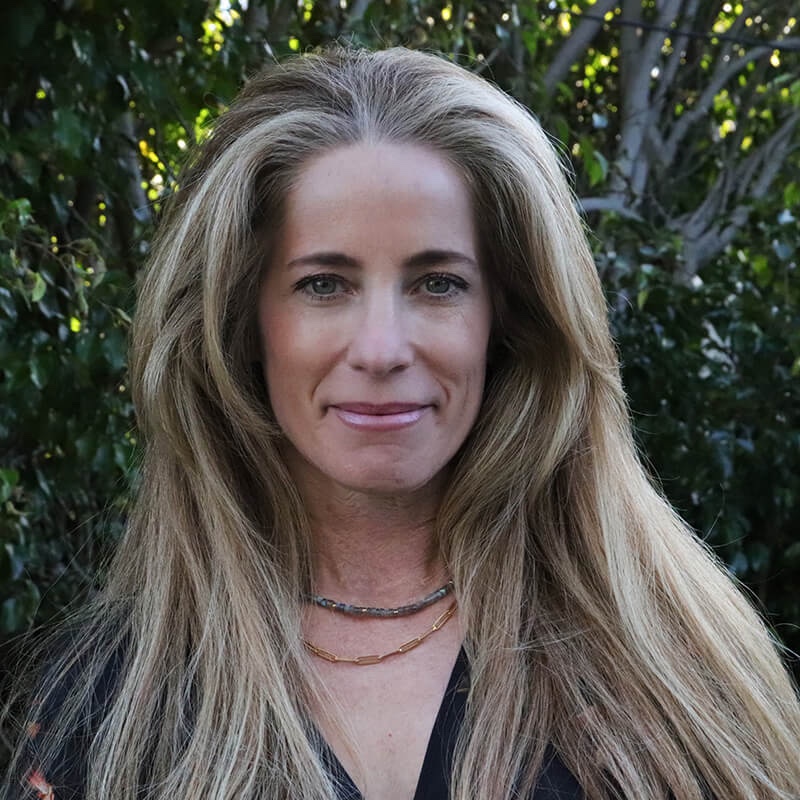
Born and raised in Los Angeles, Jennifer Hamm graduated with a BA in English at UCLA and began her writing career developing screenplays for movies and television. As a travel writer, she has covered the globe on assignment for various magazines and brands. She also writes It’s Only for A Year, a long-running blog chronicling her adventures raising her four boys in two countries. Hamm currently splits her time between London and Los Angeles. One Friday in Napa is her first novel.

Posted in Squad Pod

Still Life by Val McDermid. Karen Pirie Series

As you all know I’m quite happy to admit so called ‘guilty pleasures’ and glaring omissions from my library. You also know I like nothing better than discovering someone I haven’t read before, who has along back catalogue to enjoy. I am absolutely thrilled that the Squad Pod chose Val McDermid for our October book club. This is probably sacrilegious in crime reading circles, but I haven’t read a single book by the Queen of Tartan Noir. She is definitely deserving of the title and after reading Still Life I’ve purchased all the Karen Pirie series so I can read from the beginning and start my Val McDermid journey. Next month we have her new novel in the series Past Lying so my October is going to be pretty much dedicated to her.

Our story is a complicated combination of current and historic case that Pirie is set to investigate from the Historic Cases Unit. A trawler pulls a body from the Firth, eventually identified as a man called James Auld. His brother, Iain Auld, worked in the Scottish Office in Westminster and also disappeared, ten years ago. Even more odd, James had been living as Paul Allard and working in a jazz band in Paris. Two other events come up when researching the two men. Firstly, the paintings chosen from the National Collection for the Scottish Office, were found to be barely passable fakes when the government changed. Secondly, when a fire that destroyed an art gallery in Brighton appears in the press, a photograph seemed to show Iain Auld. An old school friend swears it was Iain, but he was already declared dead by this point. DCI Pirie’s starting point will have to be Iain’s widow Mary, who lives alone and has stayed in touch with brother-in-law James ever since Iain disappeared. Their second case seems less urgent and regards historic remains found in the camper van in the garage of an empty house. The van might have belonged to a young silversmith called Dani, a free spirited and bohemian girl in a relationship with a slightly older accountant called Andrea. Could this body be one of those women?

Both cases were intriguing and grabbed the attention. The story that emerges from their investigation into the camper van skeleton is one of opposites attracting. Opposites can attract, but can they co-exist over time? Dani was clearly the more bohemian of the pair and a bit younger too. She wanted to travel, design her jewellery and perhaps gain inspiration from staying at an artist’s commune. Andrea was more conservative, happy to stay in the same home and go to the same job. Andrea’s parents are abroad, could she have killed her partner and left the country? However, when they visit Dani’s father his first reaction is to ask what his daughter has done this time? So the weight of suspicion falls on her. Then they find a lead, a possible art collective where Dani is mentioned, over near Manchester. Karen sends her sergeant Jason to check things out, putting him in terrible danger. The visit quickly goes from being slightly comical (an elderly person’s painting class) to absolutely filled with tension and deadly. The case of the Auld brothers had so many facets to it and opened up the characters for me. It covered the issue of finding yourself in love with someone of the same sex after years of being heterosexual. The art and political elements were so interesting too. The criticism of the old Lib/Con coalition and the way Westminster works in general was something that chimed with my own views. The musing on Scottish independence and the way Scottish people feel about England really did interest me, but it also firmly sets a character in their place and time.

These subjects showed the reader how forthright and decisive Karen is, something we see in her professional life too – sometimes to her detriment. She had so many sneaky ways around her boss, known as the ‘Dog Biscuit’ thanks to her surname being the same as a brand of dog treats. It might not always be appreciated by her superiors but she does it to get results, out of a desire to help those affected by the crime and also because she has a disgust for unwanted bureaucracy and procedures. When she needs a European arrest warrant she goes direct to a contact who can organise it immediately, not through the boss. Often though, these short cuts do get the job done. She knows it pisses the boss off, but she’s willing to take the flak and smooth it over later. She’s a maverick whose not afraid to take a risk or spend money if it brings results for the victims of crime. I found her intelligent, determined, rebellious and competitive. She would probably drive me crazy in reality, but as a character I loved her. I also loved the way she’s trying to cope with ongoing grief for her partner Phil, while starting a new relationship with Hamish. I’ve been there so I understand the conflicting emotions, the guilt and the desire to move forward. This was so well written. She’s asserting her boundaries and trying not to jump in with both feet? There’s something she’s uncomfortable with about the relationship, but she talks herself round to the positives. Hamish’s business and the Croft in the Highlands keeps him busy and sometimes absent which I think suits her. It gives a distance to the relationship that she needs for now.

Her dogged determination and that of her team can lead to taking risks, but they don’t hesitate. Karen gives Jason his own tasks showing trust and confidence in him. She keeps her borrowed recruit Daisy close to her, they’re very different but there’s definitely an attention to detail in Daisy that echoes Karen’s. She instils in both of them her philosophy that just because it’s a cold case doesn’t mean they do half a job, or a slow one. She holds these mispers and victims of crime in high regard and expects the same from her team. As the COVID pandemic starts to move across the world there’s a further sense of urgency to their work. While the case of the body in the camper van starts to resolve, the Auld brothers case takes many unexpected turns. As the trail moves over to Ireland, using the art world to unravel some clues, it was great to see that Karen is happy to get her hands dirty and isn’t the sort of boss who hands that stuff to her juniors. Here she’s sitting in vegetation, watching a house for suspects and deftly deploying a tracker. She’s just as deft when walking into a small gallery and questioning an art dealer. Whatever it takes to uncover the next steps. When talking about her cold cases, Karen articulates something that crime readers often feel. She knows there’s an explanation that solves all these clues and exposes a pattern, but she just can’t see it yet. You have to let it wash over you, read more and hope that all will become clear. The difficulties solving this one kept me reading and kept me thinking about the case when I was doing other things. As COVID worsens and starts to lock down the country, decisions have to be made about how the team work and live. Karen makes a choice I didn’t see coming and I would be interested to read how it works out moving forward. This was one of the best crime novels I’ve ever read, with a fascinating central character that I can’t wait to read more about.

Meet the Author

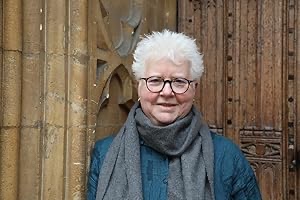
Val McDermid is a number one bestseller whose novels have been translated into more than forty languages, and have sold over eighteen million copies. She has won many awards internationally, including the CWA Gold Dagger for best crime novel of the year and the LA Times Book of the Year Award. She was inducted into the ITV3 Crime Thriller Awards Hall of Fame in 2009, was the recipient of the CWA Cartier Diamond Dagger in 2010 and received the Lambda Literary Foundation Pioneer Award in 2011. In 2016, Val received the Outstanding Contribution to Crime Fiction Award at the Theakstons Old Peculier Crime Writing Festival and in 2017 received the DIVA Literary Prize for Crime, and was elected a Fellow of both the Royal Society of Literature and the Royal Society of Edinburgh. Val has served as a judge for the Women’s Prize for Fiction and the Man Booker Prize, and was Chair of the Wellcome Book Prize in 2017. She is the recipient of six honorary doctorates and is an Honorary Fellow of St Hilda’s College, Oxford. She writes full-time and divides her time between Edinburgh and East Neuk of Fife.

Posted in Personal Purchase

The Running Grave by Robert Galbraith

I wouldn’t have imagined back at the beginning, that we would get this many books down the line with private investigators Cormoran Strike and Robin Ellacott. In fact after the last book I thought the author had hit a wall with ideas or was trying to hard to be up to the minute with technology and new trends. I was pleased to find that this was a much better investigation. Full of tension and very dark in tone, this book delves into a church that’s really a cult, every bit as huge and secretive as Scientology. This is a tale of abuse: financial, physical, sexual and spiritual. In parts it is hard to read but compelling and fascinating to see how it’s teaching affect the people who follow it, but also our investigative duo. Sir Colin Edensor approaches Strike to try and bring his son home from the United Humanitarian Church’s compound in Norfolk. Chapman Farm claims to be self-sufficient, growing fields of vegetables and keeping animals, as well as undertaking evangelical work on the streets of Norwich. Sir Colin’s son Will has been part of the UHC for several years and would seem completely indoctrinated. He’s failed to get him out before, but desperately wants him home to see his mother who is dying of cancer. How will Strike and Robin go about their task?

The best way to discredit the church and get close to Will would be for someone to go in undercover. It would be better if that was a woman and Robin volunteers. Strike is reluctant to agree, but can’t come up with a sensible reason for that instinct, knowing his reluctance is probably down to his growing feelings for his partner. However, their other female investigator Midge is covering a famous actress who has a father and son stalker team who want to kidnap her. Robin is adamant it should be her and creates a persona called Rowena, who visits their London base for a ‘service’ with just the right clothes to suggest she has money, borrowed from Strike’s half-sister Prudence. It’s agreed that Robin will go to Chapman Farm for an induction period but they pick a place on the perimeter fence to leave a fake rock. Every Thursday Strike will leave a letter under the rock for Robin to find and she will leave a reply, if she wants to come out she can let them know and they will use blot cutters on the fence and bring her out.

As regular readers will know, Strike and Robin are one of my favourite literary couples, but I’ve been wondering during the last two novels how long she can keep them apart? There’s also a trend for putting Robin in danger to evoke feelings in her partner. Here I was genuinely worried for Robin before she even went into the farm. I could understand her wanting to assert her ability to go undercover and her authority as partner to make the choice – it shouldn’t have to be okayed by Strike. Yet as a person Robin has certain life experiences that a church like this could see as weaknesses to exploit: the rape she suffered at university, the knife attack on her first case that left her with PTSD, there’s also the fall out from her marriage to Matthew and her undisclosed feelings for Strike. These chinks in her armour will be seen by people used to exploiting others. I think there are times when asserting your authority and taking a feminist stance are admirable, but not at the expense of your own safety. ‘Rowena’ is noticed straight away by recruiters at the London temple and after a few attendances, Rowena is taken to Chapman Farm and starts at the bottom of the pile, working in the fields and mucking out the animals. In between there are services or talks about the church’s purpose, bombarding new recruits with images of everything that’s wrong in the world until their current place seems like one of safety. Then a process of breaking recruits down begins – lack of sleep, restricted food or fasting, manual labour and strange interventions and group therapy where the individual is broken down mentally. All of this starts to have a detrimental effect on Robin, but the most disturbing practices are around familial relationships. Children are taken to a dormitory and school so they are no longer a family unit but belong to everyone. Family groupings outside the UHC are rubbished as false attachments that should be broken immediately. Then there’s the spirit bonding. On the farm there are pods called ‘retreat rooms’ there expressly for the purpose of when someone approaches you and asks for sex. Emotional bonding is not the norm, sex is just another form of service, given freely with no ties. What will Robin do if approached?

There were times when I found myself a bit lost on who was who because the cult has so many members and their relationships are complex. There are also complications about the names they have for themselves. I think the author could have achieved the same effects and build up of tension within the farm with less characters and a shorter process of indoctrination. I also felt that Robin would have struggled to come out more than she did. The PTSD seemed mild considering what she’s seen and heard. The experience of looking after a disabled child who isn’t receiving the medical care he should was horrifying and was the main experience she struggled to shake off. The neglect was terrible and Robin desperate wanted him found by the police. However, she was cornered in the retreat room by a naked Will Edensor and was sexually assaulted by the church leader, but once she’s out it’s never mentioned and she doesn’t even tell Strike or Detective Murphy, her boyfriend. I wondered if this might be revisited in the future but it did seem odd to leave it hanging. I also started to be confused by the ex members that Strike was interviewing and where they’d fit into the hierarchy. There was so much detail surrounding the doctrine of the cult and it’s different prophets that I felt the other cases disappeared into the background. In fact one case seemed to be there only to serve as a distraction for Strike at a strategic point. Nevertheless, the tension built as Strike started to unravel the truth and Robin was still inside.

All that being said this was a much better novel than the last in the series. I was totally engrossed in it by half way through and barely surfaced till the end. Of course there is the question of Robin and Strike’s relationship. Ex-girlfriend Charlotte comes to the fore again, trying to lure him back in with an unforgivable lie. I was hoping he would see the manipulation, especially since he’s on his own and can’t run anything past his best friend. He’s wrestling with risking all that he’s built in terms of his business and their friendship if he tells Robin that Charlotte has been right all along, he does love her. Can he find the courage to tell her?

Meet the Author

Robert Galbraith’s Cormoran Strike series is classic contemporary crime fiction from a master story-teller, rich in plot, characterisation and detail. Galbraith’s debut into crime fiction garnered acclaim amongst critics and crime fans alike. The first three novels The Cuckoo’s Calling (2013), The Silkworm (2014) and Career of Evil (2015) all topped the national and international bestseller lists and have been adapted for television, produced by Brontë Film and Television. The fourth in the series, Lethal White (2018), is out now.

Robert Galbraith is a pseudonym of J.K. Rowling, bestselling author of the Harry Potter series and The Casual Vacancy, a novel for adults. After Harry Potter, the author chose crime fiction for her next books, a genre she has always loved as a reader. She wanted to write a contemporary whodunit, with a credible back story.

J.K. Rowling’s original intention for writing as Robert Galbraith was for the books to be judged on their own merit, and to establish Galbraith as a well-regarded name in crime in its own right.

Now Robert Galbraith’s true identity is widely known, J.K. Rowling continues to write the crime series under the Galbraith pseudonym to keep the distinction from her other writing and so people will know what to expect from a Cormoran Strike novel.

Posted in Personal Purchase

The Invisible Hour by Alice Hoffman

After a few years building on the Practical Magic series, I was looking forward to seeing what Alice Hoffman would come up with next. She has based her story around the writer Nathaniel Hawthorne and his classic novel The Scarlet Letter and introduces us to two young women facing difficulties. Ivy is from a rich Boston family and when she finds herself pregnant at 16, she truly expects support. The father of her baby retreats into his wealthy family and the elite university he’s due to attend, taking no responsibility for the predicament they’re both in. Facing her pregnancy alone she talks to her parents who also wash their hands of her, not wanting the stigma or embarrassment. Ivy decides to leave home and climbs out of the bedroom window, setting out to see a friend who she knows will have an idea. She suggests they leave together and make their way out to a religious community she’s heard of in Blackwood, Massachusetts, with a charismatic leader called Joel Davies. When her father decides to look for her several months later he finds the worst, Ivy has a little girl called Mia and has become the leader’s wife. Mia grows up in Joel’s community and he decides who is in favour and what is a transgression. Everyone is punished, but the women particularly so – they might have their hair cut off or even be branded with a letter. Women are not allowed reproductive rights, but nor do they get to keep their children. Children belong to everyone and after a few days with their mother, sleep in dormitories. Books are not allowed and as she grows up books are Mia’s particular downfall. She finds her way to the public library and starts to read American classics like Little Women and Huckleberry Finn. Then she finds a copy of The Scarlet Letter, beautifully bound and very old. On the fly leaf is a dedication:

To Mia. You were mine and mine alone.

Is it perhaps her mother, who does show her special attention despite the rules. She tucks the book into her dress and keeps it. Reading in the barn, where she has loosened a board to keep her treasures behind. She has a small landscape painting of the view from the community’s buildings. Land that was left to Joel by his first wife Carrie. Carrie was also a rich girl, but one who had assets to bring to this Puritan community. Carrie was a great painter, but was often punished lest she become too vain about it. On the back of this painting is an inscription about the lands she owns and a promise that Joel will get to keep it ‘as far as the eye can see’.

One day during the apple harvest, a terrible accident happens and Ivy is killed. Mia is distraught, but as her mothers body is carried away she grabs the red boots that Joel uncharacteristically bought for her mother to have as a keepsake. She knows that now it’s either run or stay forever. Grabbing The Scarlet Letter and the painting she takes a leap, out of the bedroom window and across the fields to the library. The librarian had noticed Mia lurking in there, reading in the warmth. She had a feeling the girl was in trouble so she gave her a key and invited her to let herself in if she is ever in danger. She understands that to keep Mia safe they must move quickly, so she packs up the car and takes her somewhere he won’t know, because nobody knows. She has a long-term partner, a woman she doesn’t live with but trusts implicitly. She knows that with them, Mia should be able to thrive without the community breathing down her neck, to go to school and read to her heart’s content and have the life she has dreamed up for herself.

She also sensed that Joel was a man who wouldn’t give up Mia without a fight.

Of course it wouldn’t be an Alice Hoffman without something magical happening and here Mia experiences a time slip and finds herself in the same time and place as her hero Nathaniel Hawthorne. He hasn’t yet written The Scarlet Letter, in fact he’s on the verge of giving up writing altogether. When he meets Mia their connection is instant despite the centuries between them. They start a love affair, but what will the consequences of that be? Anything they do will change the future. Could her presence in his world mean that the very book that brought her here, no longer exists? In fact the consequences of their love could be even more life changing for both of them. Can she stay in his world? Is there any way he could come into hers? Mia is becoming aware that Nathaniel may have to sacrifice his writing for them to be together and she’s not sure she can let him do that. All the while, her father Joel is still watching and waiting.

I loved the play on The Scarlet Letter here because it shows us how powerless women have been across the centuries. I loved how Alice Hoffman creates this magical setting. The landscape, particular the woods and river, feel like something out of A Midsummer Night’s Dream. It would be easy to dismiss her work as whimsical and romantic, but underneath is a fierce feminist manifesto and an equally fierce defence of the written word. I was aware as I read the novel that it could go the same way as other books that have supported women’s reproductive rights and end up banned. The way the religious community prevent women from controlling their own fertility is a representation of what’s happening in some states of America. Abortion has always been a controversial topic in the US and the rights of women in some areas have reverted back to the early 20th Century. Jodi Picoult often cites Alice Hoffman as her favourite writer and a huge influence on her own work. In some states of America Jodi Picoult’s work is banned from libraries and schools because it concerns issues like abortion, teenage pregnancy, fertility treatment and same sex marriage. Here Hoffman is hugely critical of a community that doesn’t value women’s education, burns books and leaves them with no rights over their own bodies. There’s a part of her magical landscape where desperate women have taken matters into their own hands. They’ve taken herbs or potions to end their pregnancies and have created a burial place for the children they’ve lost and those they can’t bear to have.

Mia’s surrogate parents are the antithesis of Joel’s community. They are intelligent and progressive women who actively encourage questioning and reading. They remind Mia that no matter how moral and righteous a community might seem, if it restricts education, burns books and controls women, believing them to be inferior to men, then it is on the way to being fascistic. It’s so sad that Joel won’t let women read but then uses letters to punish them and control their behaviour, by literally branding them into the skin in a ceremony. Instead of wearing a scarlet letter, an adulteress would be branded on the upper arm with a letter ‘A’. Words and books are the source of our knowledge and that scares men like Joel. This is a brave book and will probably be underestimated, but women have been speaking their truth in ways that fly under the radar for centuries; films or books dismissed as ‘chick lit’ or ‘rom coms’; jingly, bright pop music with dark or subversive lyrics; pretty pink fashion branding the wearer as stupid, like Elle in Legally Blonde. I think there are people who will see the beautiful landscape, the time travel and magical feeling of this nook and underestimate it. I’m hoping readers look for the deeper themes here and see what Alice Hoffman was doing when choosing to use The Scarlet Letter. It’s a much beloved classic that she clearly loves, but it’s also a perfect basis for a story about these women. The ending is perfect for the autumn in that it’s bittersweet. We love the beautiful fall colours, particularly in the part of the USA where the book’s set. Those brightly coloured leaves bring us joy, but they’re also signalling an ending. The beauty of loss. 🍂

Published on 17th August by Scribner

Meet the Author

Alice Hoffman is the author of thirty works of fiction, including Practical Magic, The Dovekeepers, Magic Lessons, and, most recently, The Book of Magic. She lives in Boston. Her new novel, The Invisible Hour, is forthcoming in August 2023. Visit her website: http://www.alicehoffman.com