Posted in Monthly Wrap Up

Best Reads October 2023

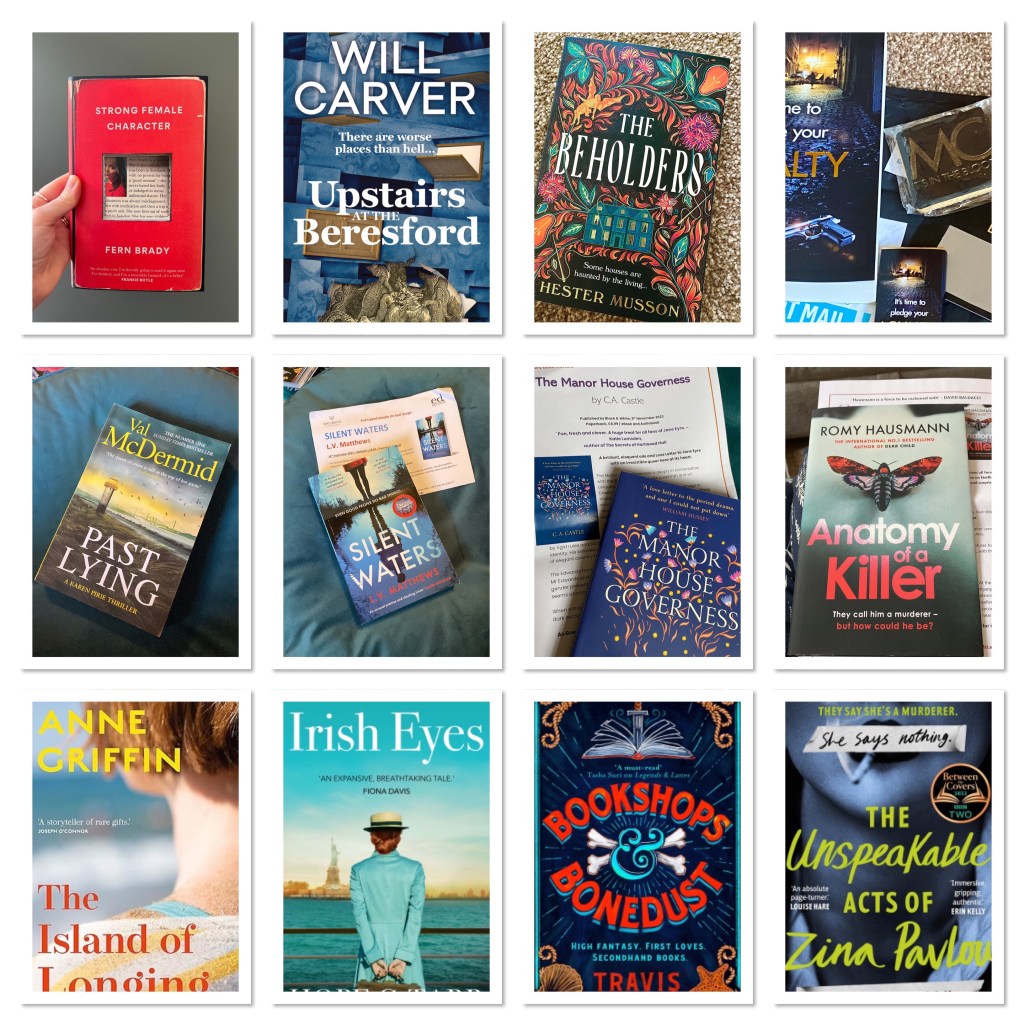
October has continued to be a quieter reading month as I’m still recovering from a relapse that started last month. I’ve not taken part in blog tours and mainly have picked and choose what I’ve read from my TBR book trolley and my pile that lives next to me in the bedroom. It’s been an eclectic mix and I’m even starting to pick up the odd non-fiction book too. I’ve enjoyed most things I’ve read but these six really are the cream of the crop.
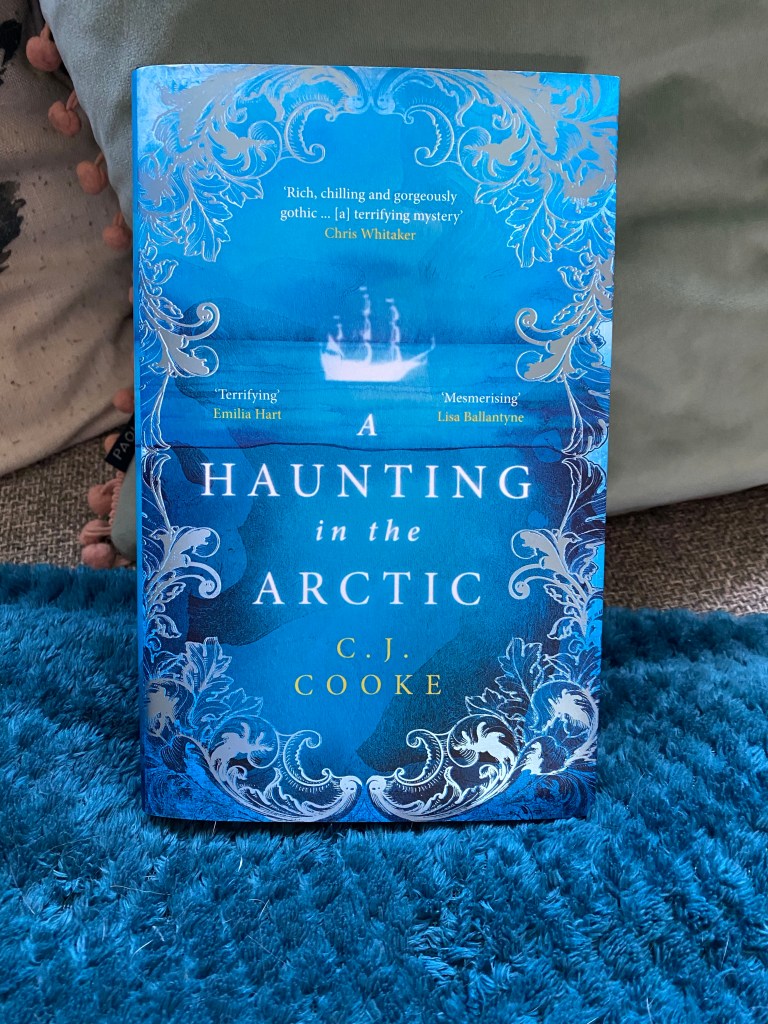
This latest novel from C.J. Cooke was originally a NetGalley choice but I bought it as well, because I like a finished copy when I’ve enjoyed a book and I’ve bought her last three models without worrying about trying it first. They’re always good. This one was exceptional and all based on board the Arctic whaling boat the Ormen. In the present day it’s a shipwreck just off an isolated part of Iceland and about to be moved out to deeper water and sunk. We follow Dom, who is try to document the ship before it is disappears forever, but I had so many questions about why she’d chosen to do this alone. Not long after a group of three explorers also turn up to document the boat and they join Dom, living on the Ormen and measuring sounds, distances and filming their attempts at Parkour. Then we’re sent over 100 years into the past and a different voyage for the Ormen, a whaling expedition with an unusual addition on the ship. Nicky wakes as the ship is moving and soon realises she has a severely broken ankle with an open wound. She has no recollection of coming aboard, but does remember being in the park and bundled into a sack. For some reason she has been taken from her home and family by one of these rough and ready crewmen. She hopes the captain will free her, but when he refers to her as the crew’s Selkie wife she knows what she’s here for. If Nicky wants to live and return to her family, she will spend the voyage ‘entertaining’ the men in her cabin. Nicky resigns herself to her fate, but not to the strange thing that’s happening to her injured leg. Where the leg is healing, instead of soft warm skin covering the wound Nicky can see a sleek silver grey skin, almost like that of a seal. This is a brilliant bit of historical fiction and a great ghost story too. The setting is eerie and unsettling, Nicky’s voyage is horrifying and the explorers become very on edge with their situation and each other. Unputdownable!
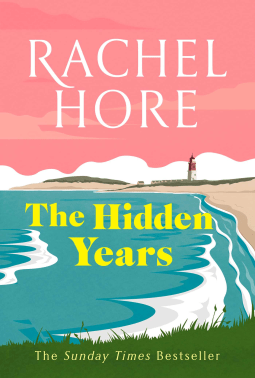
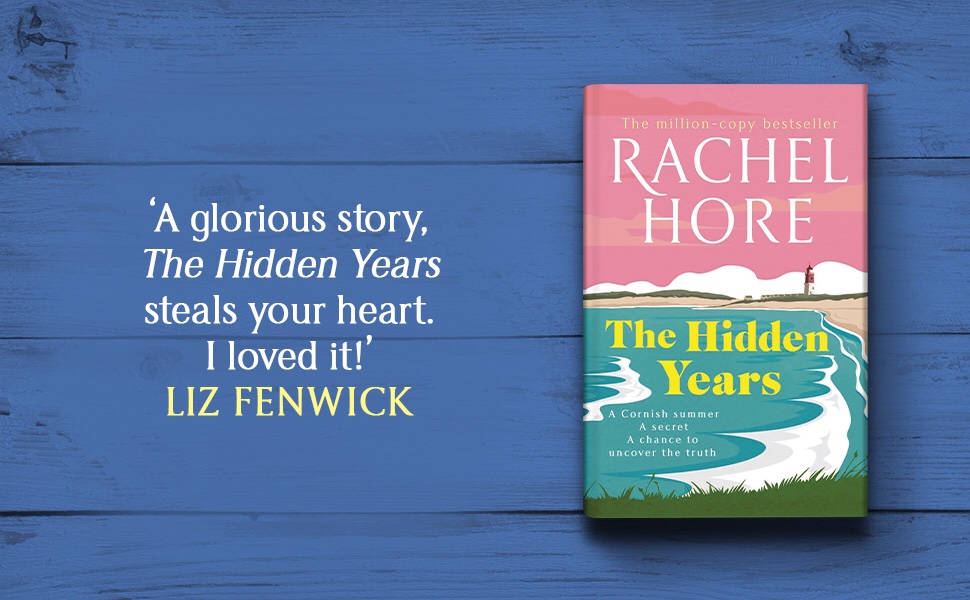
The Hidden Years is another dual timeline narrative, set in a large mansion in Cornwall both in the 1960’s and the war years. We start with Belle who is at university in the 1960’s when she meets Gray and falls head over heels in love. Gray invites her to Silverwood, a community where self sufficiency and creativity are a way of life. Gray wants to work on his music and he wants to take Belle down to Helford, Cornwall with him. Once there, Belle experiences a different way of living but also befriends a lady in a nearby cottage who inexplicably seems to recognise her. We then go back to the 1940’s a girl called Imogen taking two boys down to their school in Cornwall, where she’s offered a temporary job as matron in the dormitory. She has a friendship with one of the teachers Ned, but there’s a spark of attraction with another school master too. When Imogen starts to volunteer as a nurse for the war effort, her relationships with these two men will cause heartache and shape her life. I loved the way she writes about how war shapes the future of these young people and how far reaching it’s influence is. This is a great read, full of period detail and local history with a central mystery you’ll want to uncover.

Alice Hoffman’s new novel The Invisible Hour is a mixture of historical fact and magic realism, including one of America’s most famous writers, Nathaniel Hawthorne. Hoffman’s book uses Hawthorne’s book The Scarlet Letter as a basis for her story which starts with a young girl called Ivy who becomes pregnant while still a teenager. Her rich, Boston, family are horrified and reject her pleas for help, so Ivy leaves home. With the help of a friend she makes her way to a community in Massachusetts that has a very charismatic leader. Joel has been left land by his first wife and has built a religious community that makes its money from the apple orchards they harvest. By the time Ivy’s father has sent out a private investigator to find her, she is married to Joel and has a small daughter, Mia. In a separate timeline we meet a teenage Mia who is finding the restrictions of their community too hard to cope with. She has already found a way to sneak into the library and enjoy the books banned by Joel. When tragedy strikes at the farm, Mia takes a chance and runs with the help of the librarian. However, Joel isn’t very good at letting things go and Mia has left with a painting, with a very important inscription on the back. There’s jeopardy and tension all the way, but of course Alice Hoffman brings in some romance and a sprinkle of magic as Mia steps outside her time and meets Nathaniel Hawthorne. This was a feminist take on the themes of The Scarlet Letter, with a strong defence of women across history and an even stronger defence of the written word.

This was a real return to form for the Strike novels after the complex and internet based case at the centre of the last book. Here Strike is running several cases, but the main investigation is of a religious organisation not unlike Scientology in it’s methods. A peer of the realm asks Robin and Strike to find his son, who has been part of the church for a number of years. They have been trying to let him know that his mother was terminally ill and would like to see him, unfortunately she has now died and he believes that the church haven’t given him their letters. We’re taken to the church’s farm and retreat in Norfolk, known as the Chapman Farm. With most of their operatives already on cases it’s Robin who volunteers to be a new recruit, offering to visit services at their London temple. Strike worries, but from Robin’s point of view as an equal partner she has the right to make these choices. However, knowing Robin’s previous trauma I was worried that the church would target and manipulate her. They agree she will identify a place on the farm’s perimeter to leave them a note each week under a rock. That way if she wants to come out, they will know. The farm sections are tense, disturbing and kept me turning the pages – no mean feat in a book of this size. As always the feelings these two have for each other will threaten to break the surface and as Robin finds herself in danger will this be the time they are honest with each other? This was a great investigation and a definite step up from the last novel in the series.
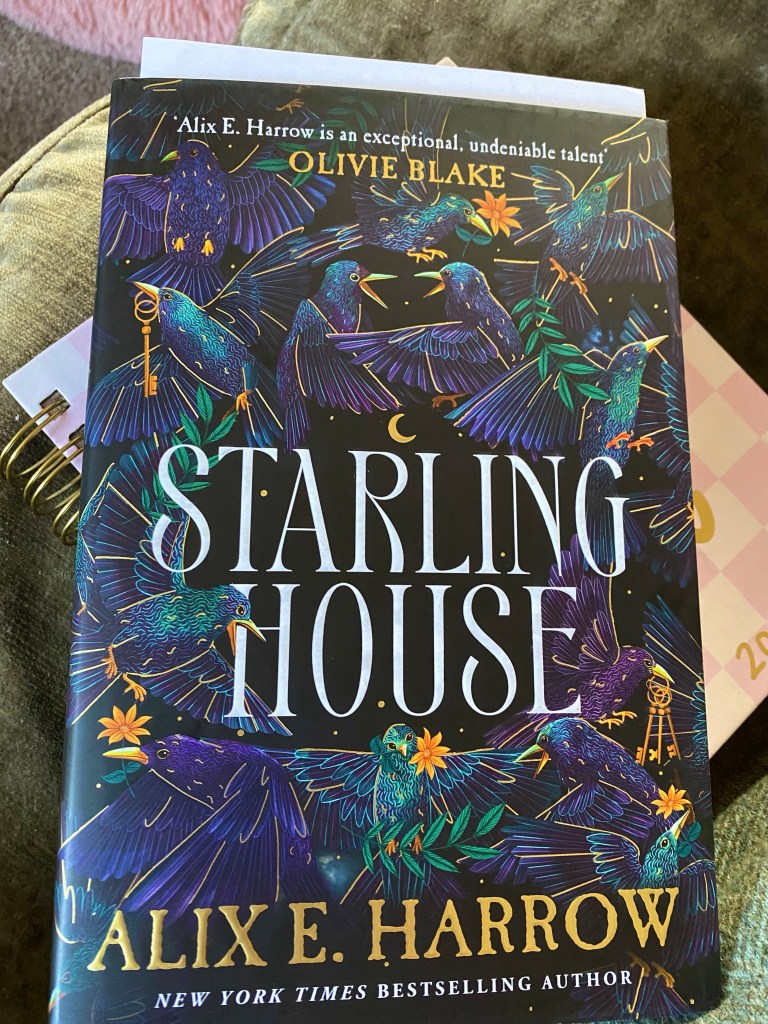
This is the third novel from Alix E. Harrow and she became a ‘must-buy’ author for me after her last. Consequently, I ended up with three copies of this after forgetting I’d ordered it and getting a copy from the publisher. We’re in the town of Eden, Kentucky, a place where industry dominates the job market and the Graveley’s power plant is the destination of most young men who stay put. Opal doesn’t want that for her brother Jasper, who she’s been looking after since she was twelve and their mother drowned in an accident. The brother and sister live in a motel room, exist on food that doesn’t need cooking and live hand to mouth. Opal has two cleaning jobs, but isn’t spending their money on their day to day expenses, or on herself. She has seen potential in Jasper and she wants him to get a proper education. Her savings are all for him to attend a private academy where he’ll flourish and be able to leave Eden. However, Opal is attracted to Starling House. She passes on her way between jobs each day and although it’s barely visible from the road, there is one light that glows in an attic room and there’s the gates, sinuous ironwork that almost looks alive. One night she stands at the gate and places her hands on the curls of the ironwork. Immediately, she feels wetness and realises her hand is cut, but on what? When she looks up, a tall, dark wild looking man has appeared in front of her with a sword. He’s magnetic and as they stare into each other’s eyes he says one word – ‘Run’. Opal doesn’t need telling twice, but will she be able to stay away? Especially when the house wants her. … A love story of swords and thorns rather than hearts and flowers, this is a perfect dark fantasy for autumn.
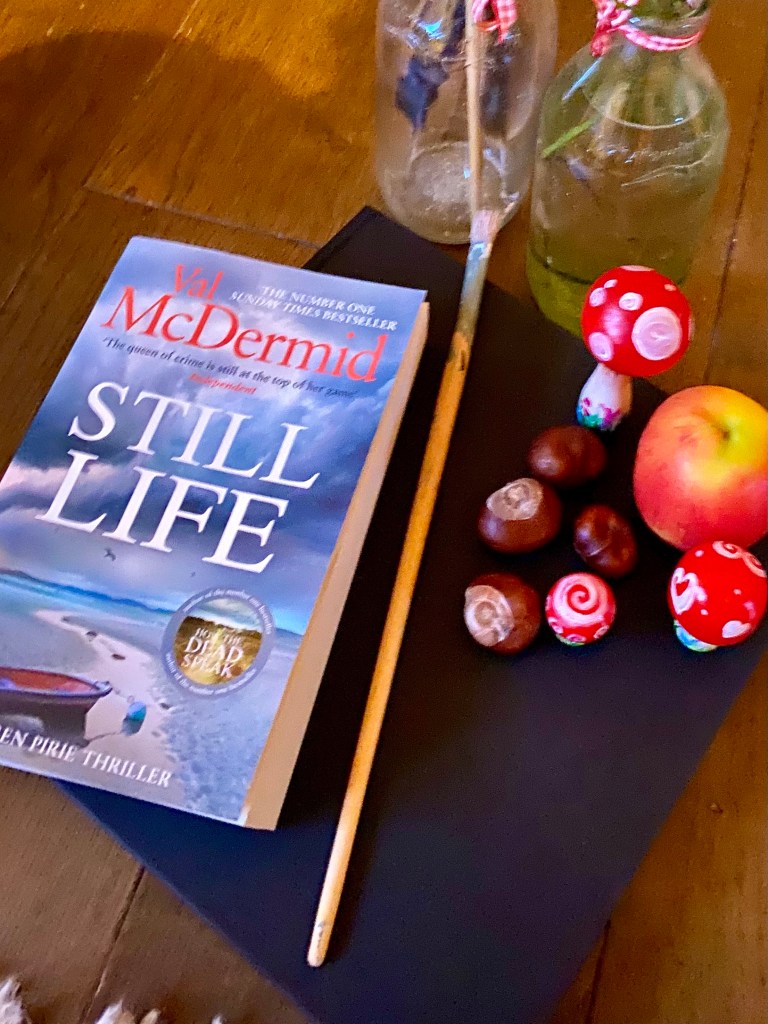
Val McDermid is one of my reading oversights, so I was thrilled when her latest Karen Pirie novel was chosen for one of our Squad Pod reads. We were also sent Still Life, to catch up with the story and I can now see why Val is the Queen of Crime. Karen Pirie is in charge of a cold case unit, but this case begins with a new body being pulled from the Firth of Forth. The dead man has been living in France under an alias, but strangely his artist brother went missing a few years before and is in Karen’s cold case files. Surely the two disappearances are related? I loved Karen because she’s so determined, meticulous in gathering every detail and not above getting her hands dirty. They follow the dead man’s movements during his Scottish visit and think he had a lead on his brother’s disappearance. Meanwhile, her sergeant Jason is following leads on a skeleton found in a camper van, within the garage of a rented house. Two women lived there, but the team can’t be sure at first who they body is and which woman is on the run. They have a lead to the north west of England where one of the women has lived in an art collective. So, on her own travels to France, then Ireland Karen has the help of a young recruit called Daisy. The story took us into interesting places, including Westminster and the Scottish office and how they choose their art from the National collections. I was also touched by the sensitivity Val brought to Karen’s personal life and her new relationship with Hamish, while still grieving for Phil – a fellow police officer and the man she loved. The cases are fascinating, but so is Karen and there are so many reasons to keep turning the pages. I was so sucked in by this that I read the next one straight away and then went back to the first in the series! I’m so excited to have all of Val’s back catalogue to read.

So that’s been October. Here’s what I’m hoping to read in November.
Posted in Sunday Spotlight

Book Scenes That Gave Me Nightmares

A Halloween surprise

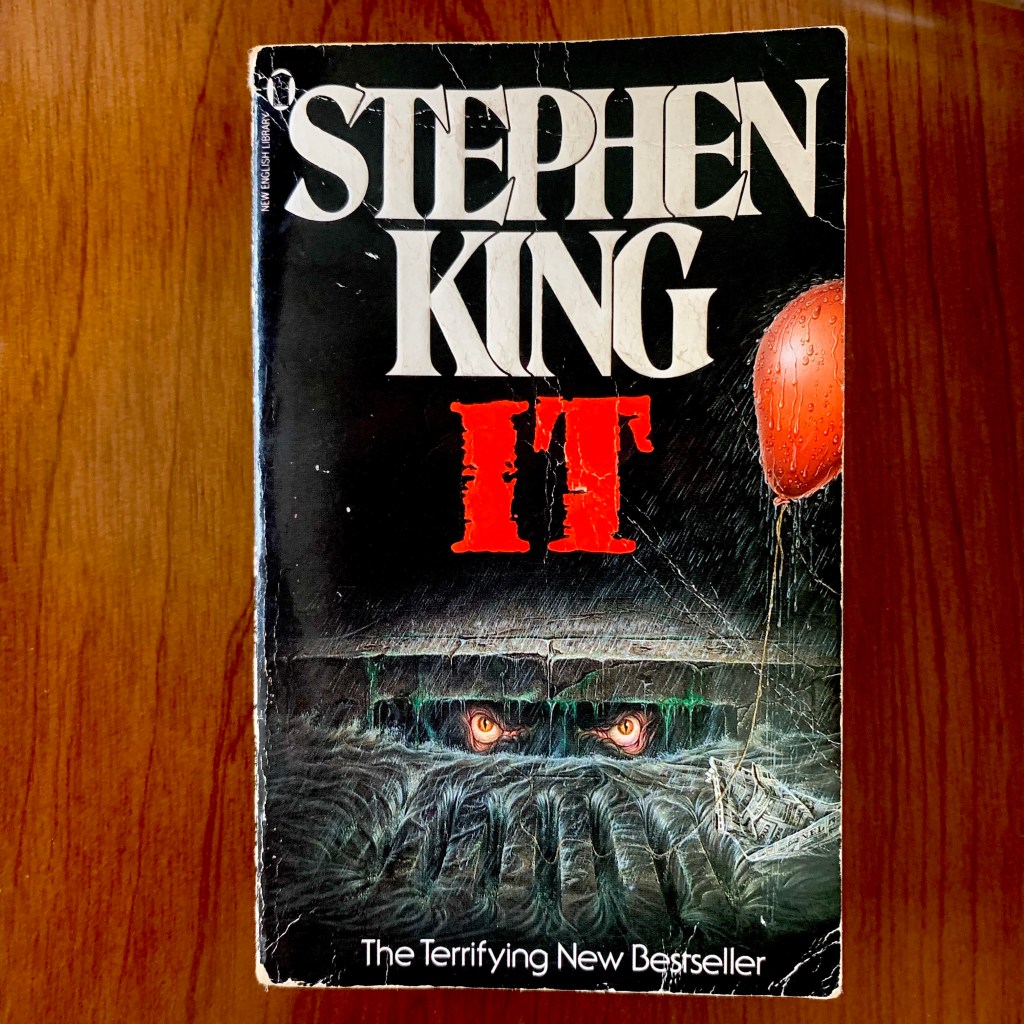
It by Stephen King. There are a lot of problems with this book, mostly the fact that his villain, Pennywise the Clown, is way more terrifying than the ‘It’ eventually encountered by the gang underground. I don’t think reading It started my clown phobia, but reading it as an impressionable teen certainly didn’t help. Now I’m terrified of anything that doesn’t show it’s real face, so masks, hoods, and make up always send a shiver up my spine. The scariest scene has to be when little Georgie Denborough, in his yellow Macintosh and hat, goes outside in the rain to play with his paper boat. The boat slips into the gutter and is washed into the storm drain. As Georgie approaches the drain he can see red tufted hair and floating balloons. They float, says Pennywise the clown. This clown has teeth and as Georgie reaches into the drain for a balloon he loses his arm. They all float down here.

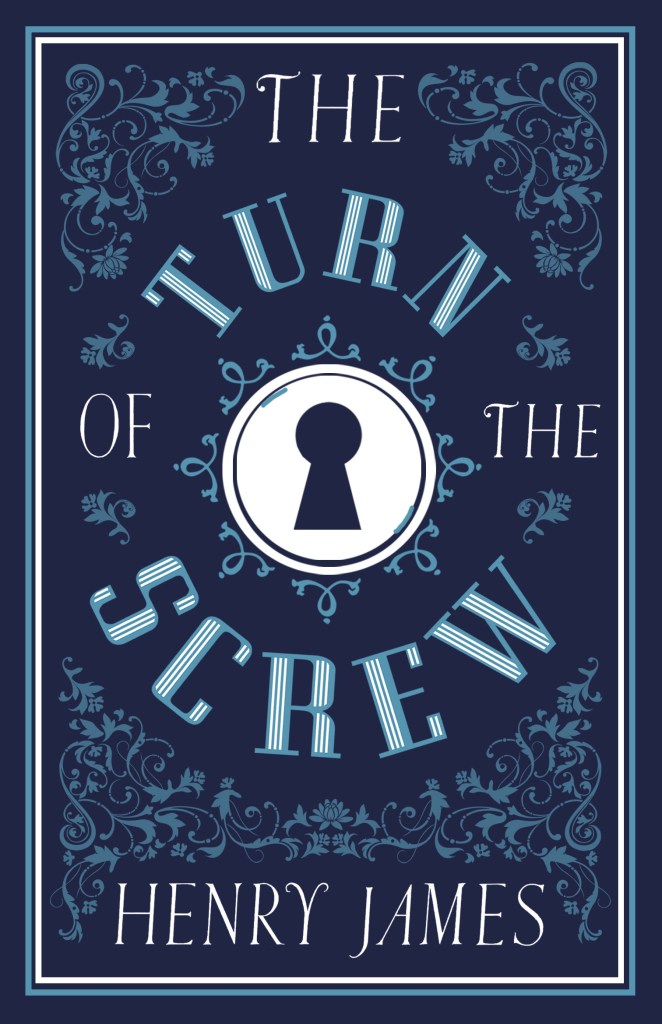
The Turn of the Screw by Henry James. This is a distinctly odd book, with no real answers or clarity about what is happening at Bly. Are there real ghosts at the house with malicious intent? Is it the children, Flora and Miles, who are possessed by demons or just evil and manipulative towards their governess? Is the governess mad, hallucinating the ghosts of Bly’s former employees and terrifying the children? I definitely err on the side of the children being the problem, they are far too knowing and precocious for their years. It may be that the children have been affected by their time with previous employees Peter Quint and the last governess. Whichever it is the two children make me shiver and the final scene where Peter Quint appears at the window to the governess is doubly scary because we don’t know if they can both see him, or just the governess. As Miles falls down dead I wondered whether their aim to send the governess mad has worked and backfired spectacularly. Henry James plays with the Victorian ideal of childhood innocence and that’s what makes it so creepy, the thought that we might be in danger from those we consider vulnerable and incapable of evil is incredibly subversive.

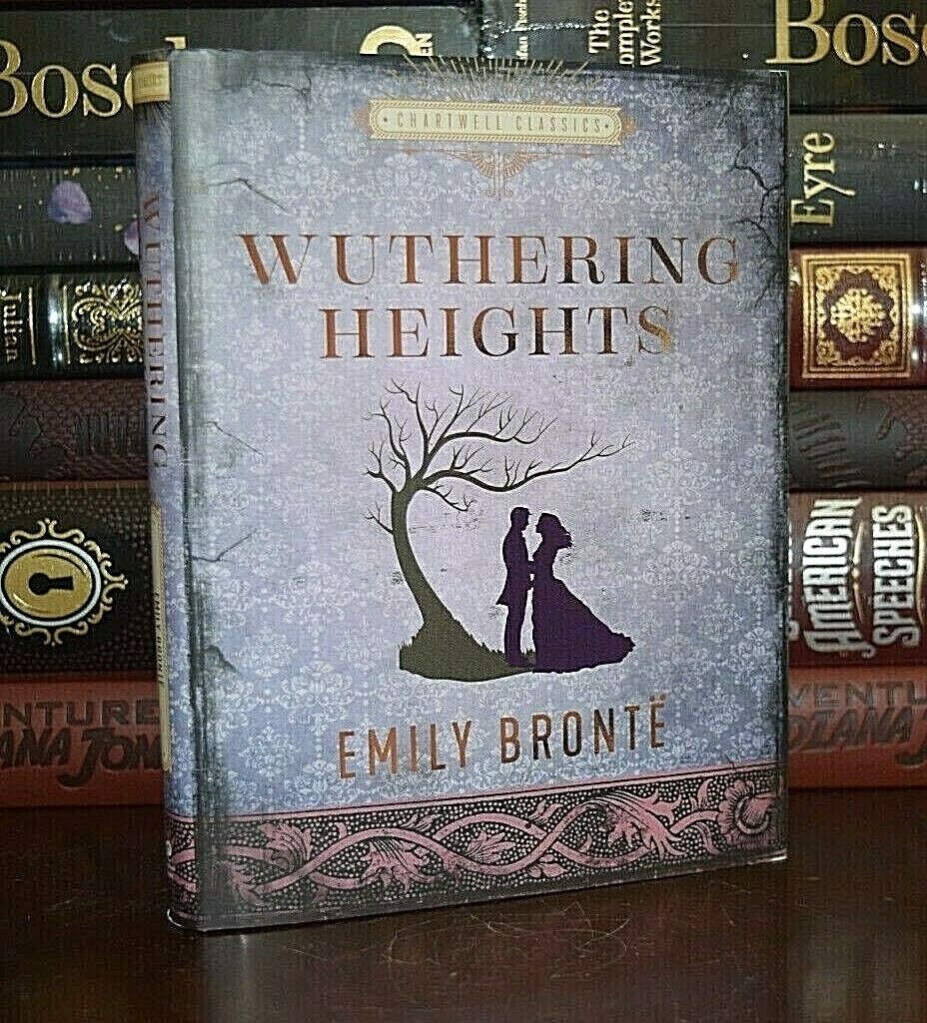
Wuthering Heights by Emily Brontë. Wuthering Heights is a story narrated by the family servant Nelly Dean, as told to a visitor to the farm, one of Heathcliff’s new tenants called Mr Lockwood. The weather worsens dramatically during his visit and as night falls it is clear that it’s unsafe to travel on horseback and he must stay. Heathcliff begrudgingly gives Lockwood a bed for the night, an old oak bed set under a window that overlooks the Moors. He wakes in the night, disoriented and disturbed by a tapping at the window. It is merely a branch and he concludes that he has been dreaming, influenced by Nelly’s tragic story of Catherine Earnshaw. He cannot unfasten the window, then resorts to breaking the glass to grasp the branch. The moment he reaches out to grab the branch but instead grabs an ‘ice-cold hand’ never fails to lift the hairs on the back of your neck. As he sees her white little face through the window he tries to pull his hand away but she won’t let go, begging him to let her in as she has lost her way on the moor. His solution is to grind the child’s wrist across the broken glass of the window until blood runs onto the bedclothes. This scene ensured that for my whole childhood I closed the curtains of any room I was in as soon as it was dark.

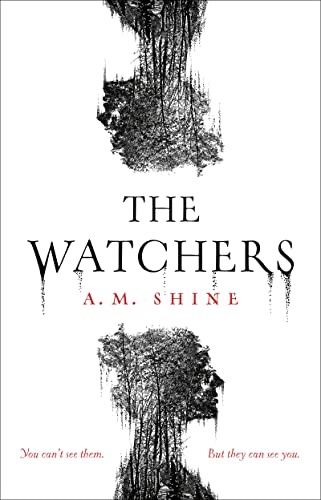
The Watchers by A.M. Shine. There’s so much to love in A.M.Shine’s debut novel, but one scene stands out for me, leaving me unsettled and unable to sleep. Set in rural Ireland, our heroine Mina is stranded in the middle of nowhere after her car breaks down as she does a strange favour for a friend. As sets off on a walk towards civilisation, she takes a wrong turn and ends up in the woods. The trees seem never ending and as afternoon starts to move towards dusk she has a strange sense of being watched. An unusual screeching noise unnerves her as she reaches a clearing and sees a woman shouting, urging Mina to run to a concrete bunker. As the door slams behind her, the building is besieged by screams. Mina finds herself in a room with a wall of glass, and an electric light that activates at nightfall, when the Watchers come above ground. These creatures emerge to observe their captive humans and terrible things will happen to anyone who doesn’t reach the bunker in time. This opening scene is so tense that when she reaches safety there’s a moment of relief, but only a moment. As the light comes on we realise that the glass window is full of creatures, staring in at their prey. I think the fact we never fully see a watcher makes it scarier as our imagination fills in the blanks. There is a twist to the ending that I can’t reveal, but I assure you it’s just as terrifying.

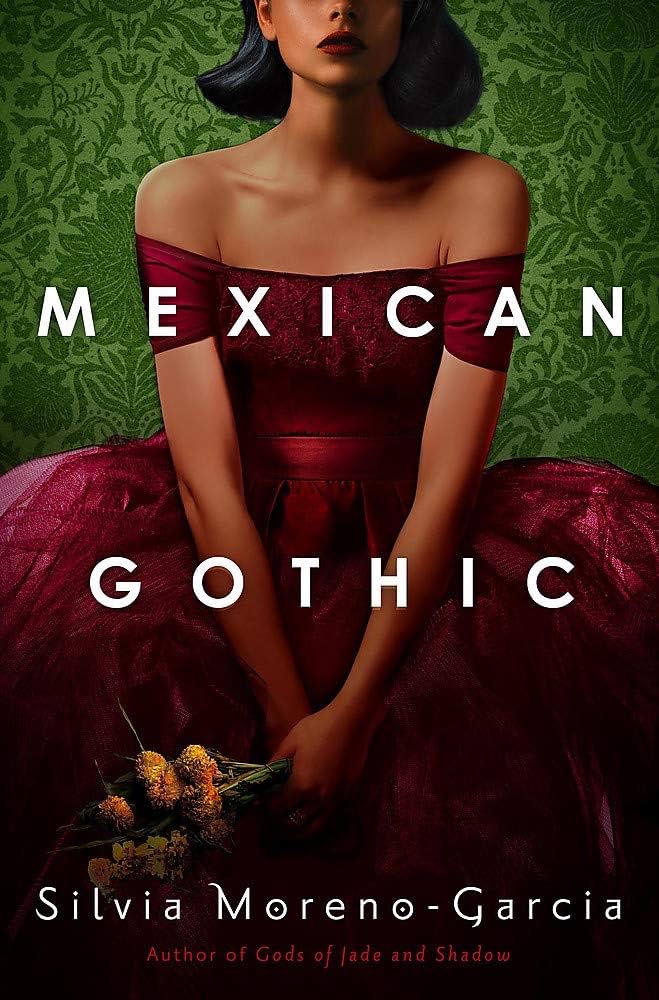
Mexican Gothic by Silvia Moreno-Garcia. I loved this brilliant horror novel that explores colonialism, feminism and eugenics as well as being downright scary. Noemi is a guest at High Place, wanting to spend time with her friend Catalina who has married into the wealthy Doyle family. Yet all is not well in the Doyle household. Noemi finds her time with her friend is very tightly controlled because Catalina has succumbed to a mystery illness. The family patriarch spouts his vile views on race and eugenics at the dinner table and what is going on with the mushroom wallpaper? It was Noemi’s strange dreams that I found most terrifying: she wanders the house covered with spores, has deeply sexual encounters with her friend’s husband and is haunted by a woman with a golden glow for a face who tries to communicate despite not having a mouth. However, nothing is more terrifying than coming face to face with the reality of the patriarch’s existence. Just as Noemi dreamed of the house becoming a mass of sores, his body is rotting to the touch. We are faced with blood, pus, bile and many other grotesque images, but even worse for Noemi there’s a threat of sexual violence culminating in the sort of kiss she really didn’t want. This made me physically retch! Oh, and you’ll be put off mushrooms for a little while.

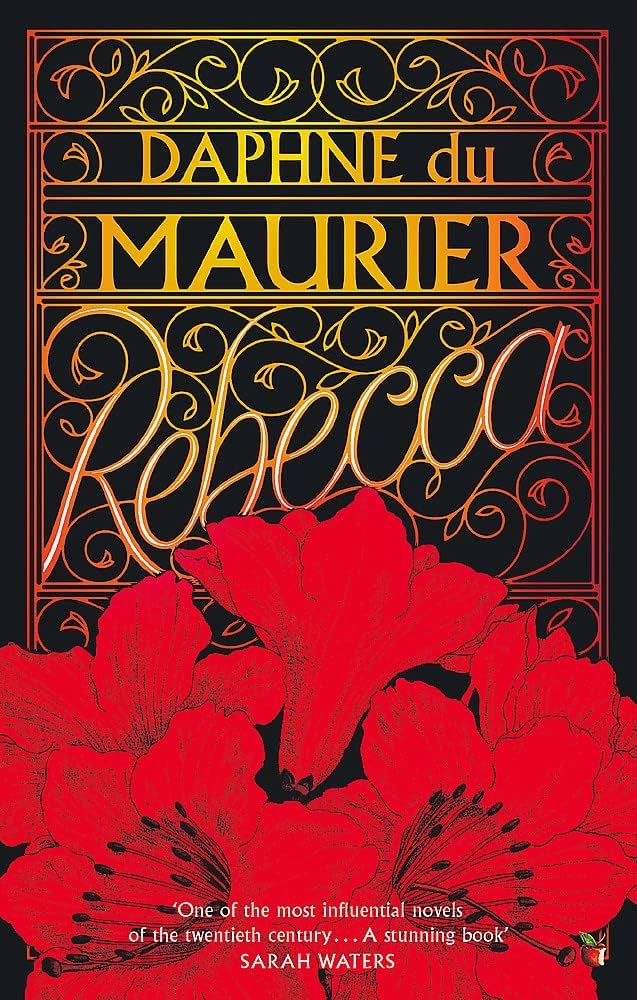
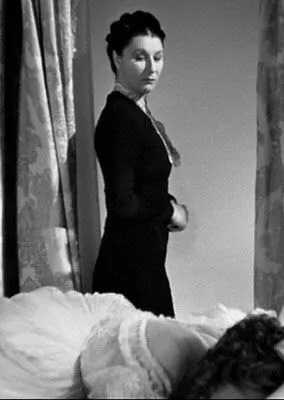
Rebecca by Daphne Du Maurier. I would argue that Daphne Du Maurier’s classic thriller is a ghost story, in fact in some ways both the women married to Maxim De Winter are haunting his home Manderley. Rebecca is dead, killed in a sailing accident, but her presence is still very much alive in the mansion: the west wing upstairs is off limits, still set up as her bedroom complete with her nightclothes laid out on the bed; her correspondence and address book is still out on her desk in the morning room with a huge ‘R’ on the cover; she even inhabits the cottage on the beach that her dog Jasper escapes whenever he can. The new Mrs De Winter is lost in this grand stately home and simply wanders to whichever room the servants direct her, servants who are still following the Rebecca’s routine. She doesn’t even have a name. However, the scariest part of Manderley is Rebecca’s servant Mrs Danvers installed as housekeeper after the to move to Maxim’s Cornish home. Described as wearing a long black dress, with gaunt features and deep set eyes that made her look like a skull she seems to slip between room silently, always seeing precisely the moments that the young Mrs De Winter would rather she didn’t. She encourages her new mistress to hold a costume ball like the old days and as an extra favour she suggests that she copies a costume from an ancestral painting on the stairs, not mentioning that Rebecca wore the same costume at the last ball. When Maxim first glimpses his wife on the stairs he thinks for a dreadful moment it is his dead wife and he is unnecessarily harsh. As she flees to the banned West Wing, Mrs Danvers torments her with Rebecca’s flimsy nightwear and the details of their routine. Her voice is hypnotic as she urges her new mistress to open the window to lean out for some air. The suspense as she tells her to jump, that she’s no use, she’s not loved and Maxim will always love Rebecca. A well timed shout and flare from a ship in distress are the only things that save her. This is the moment we know what this terrifyingly obsessed woman is capable of. Is Rebecca working through her, was she in love with her mistress, or was she simple unable to accept her death? Either way she is deadly dangerous and very creepy indeed.

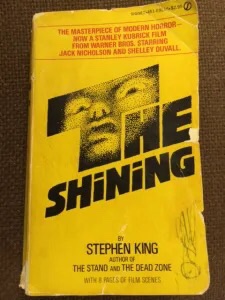
Shining by Stephen King. We’re back to King now, the ultimate horror writer and one of my favourite novels in his back catalogue. Everything about this book is creepy, from the wasp’s nest to the twins in the corridor, but there’s one scene that puts the fear into me and that’s the woman in room 217. Jack Torrance has been slowly sinking into his alcoholism ever since his family arrived at The Overlook Hotel and his son Danny has been exploring the place, often unchecked since they’re so isolated they know there’s no one else around. The problem is that Danny has the ability to see things his parents can’t and while they’re sure no people are around, they can’t say the same about dead people. In a scene that’s written so well I can feel Danny’s terror, he makes his way into room 217 and notices the curtain drawn around the bathtub. As he pulls the curtain back, hoping his parents have left a surprise for him, he is horrified to see the grey, lifeless flesh of a woman. Except she’s not so lifeless. As Danny desperately tries to exit the room he hears the sound of her body slipping and sucking over the side of the bath. Her squelching footsteps as she chases him. Obviously King writes so much better than me, so when I first read this scene my heart was hammering in my chest so hard! I felt sick. Ever since, if I enter a bathroom and the shower curtain is pulled across my mind immediately goes back to this scene and I do feel a little unnerved.

Frankenstein by Mary Shelley ‘It was already one in the morning; the rain pattered dismally against the panes, and my candle was nearly burnt out, when, by the glimmer of the half-extinguished light, I saw the dull yellow eye of the creature open; it breathed hard, and a convulsive motion agitated its limbs.’ The various film adaptations of Frankenstein rarely do justice to the true horror of Mary Shelley’s words. I must admit that the 1990’s Kenneth Branagh version made me vomit, quite literally, into my popcorn bucket! Not a great look for a date, but there we are. That was about the way the creature slipped out of the bath of fluid he’d been kept it. It’s hard to describe but I have a horrible revulsion towards snotty egg whites and this was like a bath full of them and a naked Robert de Niro was sliding about in them like Bambi on a frozen pond. The sound was enough to induce retching and I’ve never been able to watch it without that reaction. The original words though strike fear into me, the sheer horror of what he’s created and the realisation that he’s concentrated all his efforts into achieving life, without once thinking what would happen next. The dull yellow eye feels reptilian to me and that fear of what exactly this creature is swirls around the mind.

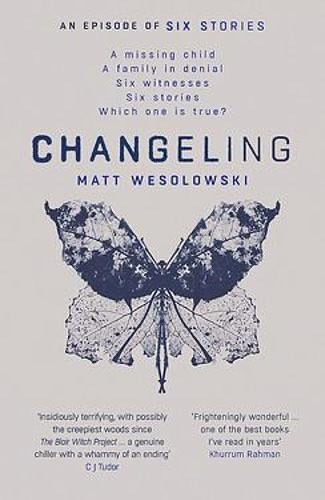
Changeling by Matt Wesolowski. This book really did get under my skin, possibly not helped by reading it in an unfamiliar and remote house where we were on holiday, not a million miles away from the forest in question. This starts as a missing child case, when Sorrel Marsden stops his car in a lay-by on the Wentshire Forest Pass on the Welsh Borders. As he investigates under the bonnet, hoping to find the cause of a strange knocking noise he has heard in the engine, he leaves son Alfie in his car seat. Minutes later, when he closes the bonnet, he glances up to see Alfie and finds him gone. He is never found. Scott King fronts a true crime podcast, a new one explored in each book of Wesolowski’s Six Stories series. Usually, the cases that Scott explores have a supernatural element and that’s definitely he case here, with the forest seemingly a hot spot for unusual unexplained noises, glitches in machinery and possible fairy sightings. However, room is also left for a more human explanation and it was the human aspects that really chilled here. A trainee teacher and her journals and reports form part of his investigation and her research into Child A takes on a sinister significance. She records a time when she was supervising the child alone and his lack of communication is a little unnerving. Then she starts to hear noises, strange knockings that she assumes are Child A banging under the desk. However, he isn’t moving. Then she hears muttering, as if he is talking under his breath to someone or taking instructions. Yet he is utterly still, eyes completely blank as if he has tuned out or is tuned in to something else. This scene did make me shiver. I didn’t know what scared me more: a child possessed or used as a conduit for something supernatural or a child that’s rather too knowing, deliberately setting out to unnerve their teacher.

The Ghost Woods by C.J. Cooke. We’re back in the gothic territory of monstrous births in this novel from C.J. Cooke and I loved the strange mix of the horrors of nature with the supernatural. In a room where he keeps his favourite specimens, Mr Whitlock has a wasp that’s been taken over by a fungus. The life cycle starts when the creature breathes in the spores, but then they slowly grow inside the insect until it bursts out of their body. It feels like there may be parallels here, especially for resident Mabel who is expecting a ghost baby. When our heroine Pearl arrives, this mini example of a parasitic fungus is overshadowed by the incredible fungal takeover in the west wing. Despite being closed off, she finds spores growing and multiplying on the outer stairs. Will it eventually take over the whole of Lichen Hall? There is a creeping sense of dread about the girl’s pregnancies because they do seem monstrous in their movements as seeing a tiny feet stretch out the skin of their abdomens. Mabel’s boy is beautiful, but its not long before she notices the strange lights appearing from under his skin. What do they signify? Is this the legacy of the ghosts? The atmosphere feels isolated and wild, but weirdly suffocating and claustrophobic at the same time. Everything builds slowly, keeping you on edge, but for sheer heart stopping terror it’s when walking outside in the woods that a shadowy figure awaits. I realised I was holding my breath when one of the girls fell trying to escape this creature and it grabbed her leg. In the seconds before she kicked it away she felt it’s purpose very clearly, a terrible intention to get ‘inside’ her skin.

New Spooky Recommendations

New releases to check out are Alix E. Harrow’s new novel Starling House from Tor Books out on November 1st and The Haunting in the Arctic by C.J.Cooke which is out now from Harper Collins.

Posted in Netgalley

Lady McBethad by Isabelle Schumer

I was first introduced to Macbeth thanks to my crush on Sean Bean. I was living in Milton Keynes at the time and studying for my English Lit degree. We knew that Macbeth was coming in our final year and when we found out that Sean Bean would be playing the title role at our local theatre we had to see it. It was a production that had some unusual choices, but an incredibly clever banquet scene that has stayed with me. However, it was the more recent Michael Fassbender and Marion Cotillard film that I found absolutely spellbinding and moving in it’s depiction of Macbeth and his wife as two grieving parents. It gave some context to their actions in the play, particularly Lady Macbeth who is often depicted as a power hungry harpy who coerces her husband into a violent act that he’s unable to live with. I’ve always thought Lady Macbeth was done a disservice, depicted rather like Eve in the garden of Eden as a woman dissatisfied with her lot who convinces her husband to eat apples from the only tree God expressly told them not to touch. According to most dramatists she’s greedy, dissatisfied and power hungry. She was ripe for a rewrite and here it is in Lady Macbethad.

Gruoch has druid heritage and her grandmother prophesied that she would be Queen of Alba. She believes in this prophecy and will try her best to fulfil it. She was born the daughter of a King, even though her father has now been ousted. Her heart and desires are with Macbeth but she is the betrothed of Duncan, the heir elect and marriage to him should enable her to fulfil her destiny. Yet life at court comes with it’s difficulties, it’s lonely and uneasy to know every woman at court would do anything to be in her position. He coronation approaches, with the women keeping her at a distance and giving her the cold shoulder. An unexpected turn of events tears her plans apart and she’s forced to run for her life and leave her ambitions for the crown behind. Now she must fight just to survive, never mind the crown.

This was a really interesting take on the tale of Macbeth and a woman whose motivations are always unclear. There’s a feel of Eve about her, it is Macbeth who wields the knife yet in many depictions I’ve seen, the emphasis is on Lady Macbeth as the instigator of the killings. The evil temptress whispering in the blameless man’s ear. I was intrigued by a retelling of the story, based on a real woman who did marry a man called Macbethad who became the king of Scotland. The book starts as a fiction about Gruoch, but becomes an origin story for the character of Lady Macbeth. I thought these two women were brought together well, creating one character. She does have aspects of character that Shakespeare establishes in the play, becoming a scheming, power hungry woman. She’s also rather paranoid and even violent in her own right. However, whereas in the play we don’t know why she is this way, here we get her back story and have an opportunity to understand her a little better. Even if we don’t necessarily like her.

Macbethad seemed to be more balanced and measured in character. He stands out for this, which seems an irony when I expected to respond to Gruoch more sympathetically. There are other characters in the book based on real people from history, covering their family allegiances and their conflicts. I think it’s so difficult to marry historical facts with a fictional story in this way and I was impressed with the author’s attention to detail. She sets the book firmly in it’s Scottish setting by using Scottish Gaelic, as well as the stories and folklore of the area. She brought to life the conflict between the established pagan traditions and the growing practice of Christianity, something I found really interesting. Her descriptions of the place felt vibrant and alive, I could actually see it. She is equally vivid when it comes to the more brutal aspects of the story. There were parts of this book that I enjoyed immensely and I would definitely recommend it to those interesting in historical fiction and Shakespeare.

Meet the Author

Isabelle Schuler is a Swiss Hawaiian-American actress, writer and former Waterstones bookseller. She has a BA in Journalism and her screenplayQueen Hereafter was longlisted by the Thousand Films Screenwriting Competition in 2019. In 2020, Schuler adapted Queen Hereafter into her debut novel, Lady MacBethad. She lives in Hertfordshire.

Posted in Personal Purchase

Starling House by Alix E. Harrow

“When the house was complete, in February of 1870, Eleanor Starling took up residence and stayed there until her death in 1886. There is substantial evidence that she devoted the remaining years of her life to the study of the place she later called “Underland.” She believed, according to the notes and journals found by her successors, that there was another world beneath, or maybe beside, our own—a terrible, vicious world, populated by monstrous beings. She believed that there were cracks between that world and our own, places where things might leak through, and that one of these rifts lay underneath Eden, Kentucky.”

Starling House sits on Starling land and can’t be fully seen from the roadside, except for a pair of iron gates that are so intricate and sinuous it wouldn’t be a surprise if they started to move and become a living, writhing being. Opal passes the house daily as she takes a short cut from one of her jobs to another and she’s intrigued by the house, especially the one amber lit window, high up in the attic room. There she imagines Eleanor Starling, living the solitary life of an author trying to follow up their first extraordinary book. Opal loved Eleanor’s children’s book Underland described as a much darker Alice in Wonderland where a girl called Nell is under the ground with a weird array of beasts (all of which look like a member of the animal kingdom, but at the same time not at all). Opal’s life is a gruelling slog from the motel room she shares with brother Jasper, to her cleaning jobs then back to supervise homework and share their measly evening meal. It only takes one small difference in their routine to shake everything up and bring huge change to their lives. Opal pauses her route home and stops at the iron gates of Starling House. She holds on to the iron, but immediately finds her hand is slick with blood. More disturbingly, she feels the gates give, almost as if her blood is the key. She looks up to see that a tall, thin and rather bedraggled man has appeared in front of her. He looks her in the eye and says one word. Run!

[The town] “liked the Starlings even less. They’re considered eccentrics and misanthropes, a family of dubious origin that has refused for generations to participate in the most basic elements of Eden’s civil society (church, public school, bake sales for the volunteer fire department), choosing instead to stay holed up in that grand house. […] It’s generally hoped that both they and their house will fall into a sinkhole and rot at the bottom, neither mourned nor remembered, and—perhaps—release the town from its century-long curse.”

Arthur, the bedraggled man, is the current Starling living in the house and it isn’t long before Opal is drawn back into his presence. Arthur seems to be torn. He’s drawn to Opal, but so is the house. It seems unfair to strike up a friendship with her knowing that the house wants her and what that will mean for her life. Yet he asks her if she will clean for him and offers enough money that Opal can’t refuse. He is concerned about this flame haired waif that is now in his midst and he can’t help but offer her a winter coat, then his old truck. Are these genuine gifts, or is Arthur trying to assuage his guilt for doing the house’s bidding? The house almost seems to sigh and settle as Opal cares for it, like a cat stretching with pleasure when stroked. She does wonder about the crude symbols scratched into the wooden doors, that match Arthur’s tattoos. Every conceivable symbol to ward off evil is either scratched, painted or hung around the house. How do you ward off something that strikes from within? Opal is then approached by a woman in a suit, who seems to know a lot about Opal and the Starling House. She wants Opal to take photographs and pass on information from the inside of the house. Firstly she seems like any old local official, but becomes more sinister when Opal is reluctant to help, finally making threats against Jasper. Now she has no choice, but she’s surprised by her own emotions; it’s harder to betray Arthur Starling than she expected. Is it really the house she’s drawn to, or is it Arthur?

“Eleanor Starling left no record of why she built such a vast and strange house, but the oldest and best-loved book in her collection was a copy of Ovid’s Metamorphoses. It has been suggested by subsequent Starlings that she was not building a house but a labyrinth, for much the same reason the King of Crete once did: to protect the world from the thing that lived inside it.”

Opal isn’t easily afraid and I knew, just from that opening, she wasn’t done with Starling House. More to the point, the house isn’t done with her. I admired this plucky girl who is only just getting by in life and does everything for her brother Jasper. She desperately wants him to get away from Eden, Kentucky, because he has so much talent but also because nobody with any sense stays in Eden. She is saving for the fees of a private school she has seen, somewhere that would give him prospects and he would meet the right sort of people. She’s so set on this plan, she hasn’t bothered to ask what Jasper wants. Her heart is in the right place though. She doesn’t love many things, but when she does Opal loves like she does everything else – fiercely. Her existence is all work, striving just to survive but Opal is so intelligent, in fact one of the only places in town she visits religiously is the library. The librarian Charlotte is perhaps the closest thing to a friend she has. The truth is that Opal feels enormous guilt over the terrible car accident that killed their mother and what she sees as the decision she made to survive:

I’m fifteen and cold water is pouring through the windshield. The glove box is open, spewing pill bottles and plastic utensils. Mom is beside me, her limbs drifting gently, her hair tangling with the tacky dream catcher she pinned to the car roof. I’m reaching for her hand and her fingers are slick and limp as minnows and I might be screaming—Mom, come on, Mom—but the words can’t make it past the river? Then it goes very quiet and very dark. I don’t remember letting go of her hand, but I must have done it. I must have crossed her name off the list in my head and swum for the surface, abandoning her to the river bottom.”

I loved the psychological aspects of the story. The house has an identity and it knows who has the right stuff to live there and keep up the fight. I wondered whether the monsters were real or a manifestation of the occupant’s mental state. The thought of the monsters in our heads being able to run free in the world is definitely a terrifying one. The author builds the two worlds within the novel with contrasting techniques: short, blunt descriptions create Eden with it’s power plant and functional buildings, whereas Starling House and it’s labyrinthine tunnels are given long, descriptive passages that bring it to life. If something in Opal or Eleanor’s world is inexplicable she allows it to be unfinished or confused. Some of the monsters are beautifully described as ‘like a cat, but not quite’ or other strange combination that leaves gaps in the image for the reader to fill with their own imagination. This is an author that knows, the things we can’t see or comprehend are the most frightening.

When we finally get to Eleanor’s life story it is disturbing and sad, showing how unresolved trauma can project outwards into something monstrous. There’s a feminist thread here too in the truth about Eleanor’s life with the Gravely men and Opal recognition that her mother was shunned by the town, not just for liking sex but for not being sorry about it. In a reversal of the usual damsel in distress story, Opal is the architect of her own life and is determined to rid Starling House of it’s monsters and save Arthur. I was biting my nails in the final chapters, desperately wanting her to succeed! I’ve never doubted Alix E. Harrow’s talent or imagination. I’ve been a fan since her first novel, but this is her best yet. I’ve been reading that it’s a reimagining of Beauty and the Beast, and I can see that. However, Underland felt like the very darkest Alice in Wonderland to me. In both cases, all the ‘Disney-fied’ prettiness has been swept away. In it’s place are monsters that defy all description and a love story that’s more swords and thorns than hearts and flowers. It’s an absolute feast for the imagination and the perfect dark fantasy read for October.

Posted in Publisher Proof

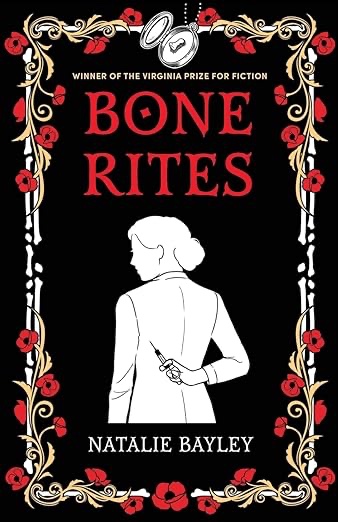
Bone Rites by Natalie Bailey

“I collected the first bone when I was twelve… Such a tiny little bone, more like a tooth. I only kept it to keep him safe.” Kathryn Darkling, imprisoned in Holloway, is facing death by hanging for her vengeance killing. Haunted by a spirit, she still hopes to perform the ancient black magic that will free her soul, or her struggle to punish the mighty will have been in vain. Will the love of her life come to her aid? Or can she find a way to escape her fate?

Bone Rites is a dual timeline story, split between the early 1900s and 1925 when Kathryn Darkling is in Holloway, the women’s prison, where she awaits the date of her own execution, by hanging. While waiting Kathryn starts to tell her story to a priest, assigned to hear her final words and offer solace as she awaits death. She begins with the first time she found a bone and performed a rite, then works her way through to her training as a doctor in Edinburgh. All the while she is developing her practice of performing bone rites, a black magic focused on freeing her soul. As she tells the stories of her bones, I started to wonder about her version of events. Clearly she’s an incredibly intelligent and determined woman and I admired that, but should I be taking the owned of a convicted murderer? Is she a reliable narrator? She seems to be slipping into madness as the tale goes, but does that mean everything she’s telling us is a lie? The thing I most enjoyed was getting inside Kathryn’s head and trying to work out what makes her tick, rather like holding a counselling session with this imaginary character. As we drifted back into her early childhood, I became won over by this obstinate little girl who won’t be deterred from her purpose. We learn about how tough her upbringing was, alongside her little brother Freddie. I love a dark story with a sense of foreboding and I thought this was perfectly pitched for a Halloween read. It’s not a traditional ghost story but Kathryn is certainly haunted, like many of us are by our pasts. I thought the book perfectly fitted it’s timelines, one before and one after WW1 considering how much change and trauma happened in-between. I also enjoyed the LGBTQ+ representation in the novel, it’s fascinating when authors ‘write back’ to a time where minority groups are under represented. All in all this was a well- written piece of historical fiction with a rather macabre edge and an admirable heroine.
Out on Nov 1st from Aurora Metro Books

Meet the Author

Natalie Bayley is author of ‘Bone Rites’, ‘Lolita’s Daughter’, ‘The Secret Life of Grandmothers’, ‘The Witch Who Saved Paris’ and ‘The Lady Lyttle Murder Mystery’ series. Her dark thriller ‘Bone Rites’ was selected for the 2019 Blue Pencil long list, went on to be shortlisted for the 2021 Blue Pencil First Novel Award and was long listed for the 2021 Caledonia prize before becoming the Winner of the Virginia Prize for Fiction. Natalie lives in NSW, Australia and enjoys ocean swimming and whispering to cats. Born in the UK, she’s been in sunny Australia since 2000. Her books are always about justice and how a seemingly powerless underdog can always find a way to fight back. My spooky historical fiction novel, BONE RITES, won the prestigious Virginia Prize for Fiction and is being published by Aurora Metro books October 2023. Enjoy!

Posted in Random Things Tours

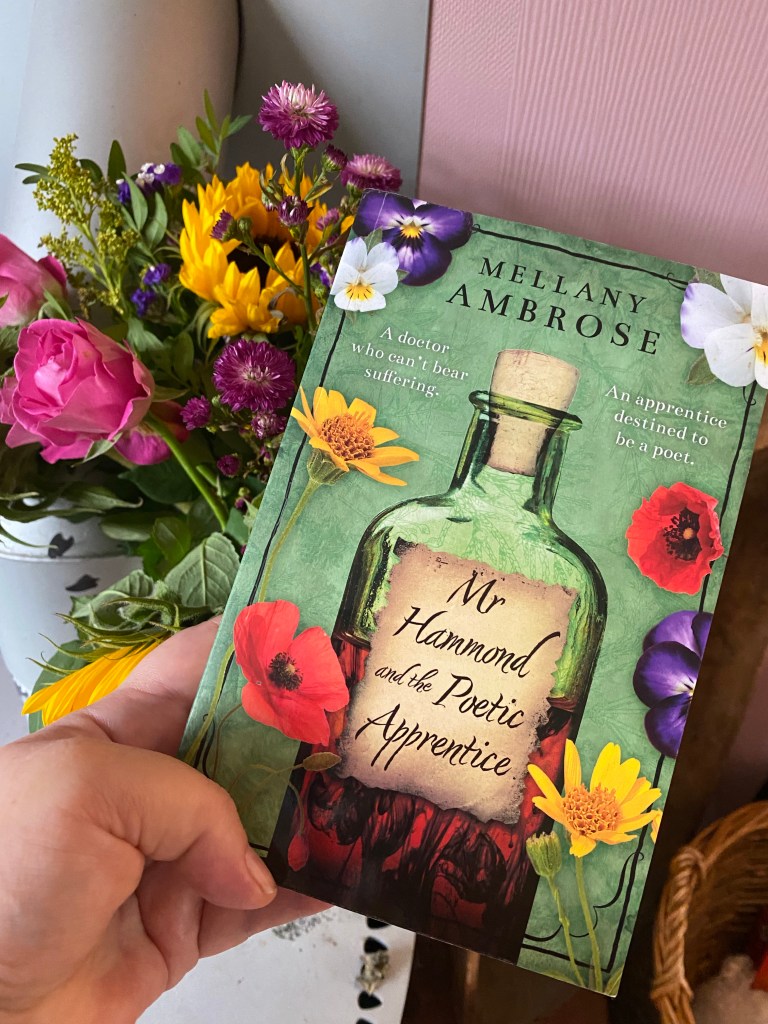
Mr Hammond and the Poetic Apprentice

What were our great poets before they were great? Long-time NHS doctor Mellany Ambrose has penned a historical novel about the time John Keats spent training in medicine before he chose to follow poetry. She discovered Keats had been apprenticed to an apothecary surgeon a few miles away from where she was working as a GP and it sparked her curiosity.


“Why hadn’t he become a doctor? How would such a supposedly sensitive individual react to the horrors of medicine in an era with no anaesthesia, antibiotics or antisepsis?” Mellany asks, explaining, “I’d struggled in our modern era; his was far worse. In my first week as a nineteen-year-old medical student, I had to dissect a body. I felt unable to process the shock and enormity of it and wrote a poem to help me cope. Did he write poems to express his emotions as I had? And what would it have been like to have the young Keats as your apprentice?”


The story is set in 1814. Thomas Hammond is an apothecary surgeon whose apprentice is eighteen-year-old local orphan, John Keats. Thomas sees John as a daydreamer who wastes time reading. Thomas failed to save John’s mother four years earlier, and when John criticises Thomas’s methods tempers flare on both sides. Despite their differences, Thomas and John begin to develop a grudging respect for each other with Thomas seeing a humanity in the way John relates to patients. Their relationship deepens into one more resembling father and son while Thomas’s true son, Edward, disappoints his father. Thomas realises John is gifted and would make a skilled surgeon, but to help John succeed Thomas must confront his own past mistakes. On the verge of qualifying as a surgeon, John unexpectedly abandons medicine for poetry, ending all Thomas’s hopes. Thomas is devastated and struggles to find meaning in his life and work. As he faces one final challenge, can the master learn some valuable lessons about life from his poetic apprentice before it’s too late?

Out now from Troubadour Publishing

Meet the Author

I worked as a hospital doctor and general practitioner in the NHS for nearly 30 years. My interest in Keats’s medical career arose when I discovered he’d trained as an apprentice close to where I was working as a GP. I spent many happy hours researching in the British and Wellcome Libraries and visiting sites related to Keats’s life and Georgian era medicine.


See my website mellanyambrose.com for more on Keats and the history of medicine

Instagram @mellanyambrose

Twitter @mellanyambrose

Posted in Netgalley

The Hidden Years by Rachel Hore

The Hidden Years is a tender-hearted and bitter sweet tale about how life can take unexpected turns. In fact John Lennon was right, life is what happens when you’re busy making other plans. She also explores how patterns emerge in life: we might find ourselves unconsciously choosing a path that repeats a pattern or takes us to somewhere that has a hidden importance in our lives. Belle has done something very impulsive. From the moment she met Gray they had a connection and now he’s invited her to Silverwood, a mansion next to the Helford River, where a group of his friends are living a different life. They are a creative collective, living as self-sufficiently as possible but dependent on the kindness of the house’s owner. Luckily he’s very fond of his nephew Arlo, one of the residents at Silverwood. As she leaves university and misses her exams for this uncertain life she has no idea that Silverwood holds secrets and some of them are quite close to home.

The author tells her story through a dual timeline; Belle’s story set in the 1960’s and then Imogen’s story, a young woman who visits Cornwall in the 1940’s. Imogen has been working for an agency that secures placements for young women who work with children. It’s mid- WW2 and Imogen is tasked with taking two young brothers down to Silverwood, a boy’s boarding school in beautiful and relatively safe surroundings. She soon finds out that life can change in an instant when she’s asked to temporarily for the school’s Matron who has fallen ill. Imogen takes the booking and finds she loves working with the young boys in the sick bay, feeling unwell and far from home. So, when she’s offered the chance to stay on she decides to take a chance and loves her work. She also makes friends with one of the teachers, Ned. They explore Cornwall on their days off and as the war comes ever closer Imogen makes the huge choice to serve her country, by training in nursing at a hospital in Truro. A bomb narrowly missing the school pushes her to use the skills she’s gained for the war effort. Meanwhile in the 1960’s Belle settles into life at Silverwood with Gray’s friends, trying to help out where she can and joining in with meditation sessions where the incense is more than a bit potent. She’s drawn naturally to Mrs Kitto, a lady of her parent’s generation who lives in a cottage on the estate. She’s slightly taken aback by Belle, because she reminds her of someone she once knew. Their afternoon visits become story sessions as Mrs Kitto tells Belle about a woman she used to know, back in the war.

I enjoyed both sections of this lovely story. Often with dual timelines the novel suffers because one narrative is much stronger than the other. Here I thought the author got the balance just about right. Since Imogen’s story is set during WW2 there’s obviously heightened drama and the decisions made can be life and death. However, I think the differences in the timelines complimented each other. The difference in moral expectations and behaviour is huge. There’s also a difference in how people make choices, creating a huge generation gap like the one between Belle and her parents. The fact that she leaves uni with her lover and is clearly living with him at Silverwood is difficult for her parents to understand and would have been unthinkable in the 1940’s when they were Belle’s age. It would be understandable to think that the 1960’s characters have it so much easier compared with their parents. Yet I could empathise with Belle, in fact without WW2 her generation wouldn’t have the freedom to make choices in the same way. Her father has high expectations for her and he wants her to buckle down and make life choices. After all, his generation had to lay their lives and their hearts on the line with often very little understanding of the person they were making promises to. Belle’s not quite ready to make a choice. Should Belle follow duty, when she could be an idealist and follow her heart? Singing with Gray’s folk band The Witchers comes very naturally to her when she’s got over her nerves. There are so many opportunities, how do you know which is the right path?

Imogen is doing her duty in her working life, but her heart is torn. She has a best friend in Ned. They love the same things, they’re comfortable together and have a similar outlook in life. She knows he’s starting to feel more for her than friendship, but also teaching at Silverwood is the rather enigmatic Oliver Dalton and there’s an immediate frisson between them. Although they don’t spend any time together, the pull towards him is hard to resist. When they finally do get a chance to spend time together during her work in Truro, could their spark develop into something more lasting? I found myself rooting for Ned, because he’s so kind and supportive. I thought they’d make a great team. There’s no denying her attraction to Oliver, but he’s more of a closed book and I felt life with him might be more turbulent. Which way would she choose?

I know this area of Cornwall well and it was very easy to imagine myself there as the author explores the scenery. The area was a Mecca for artists in the 1960’s and I loved the ideas that the Silverwood residents had for the place. It’s ripe to be an artistic retreat, offering creative and self- care workshops such as meditation. It’s such a now idea that I wanted to do it myself. I thought it was interesting how Belle reacted to these ideas, making decisions about which parts she’s supports and which isn’t for her. She’s intervened with one resident’s treatment of her son and calls an ambulance rather than watching her continue with homeopathic medicines and see the boy suffer, or perhaps die. That takes bravery and faith in her own convictions. When her family turn up in Cornwall will she get the space she needs to work out what’s best for her. As to Mrs Kitto, how does her story connect to Belle and what impact will this wartime story have on her choice? The historical detail shone through and seeing through Imogen’s eyes the arrival of the American soldiers, the preparations along the Cornish coastline for the D-Day landings and the bombing of Truro really does bring it alive. There’s a realisation that we’re all the product of our experiences and trauma can take a long time to heal, even several generations. I thought this was such such a bittersweet ending and it left me feeling a bit autumnal, sort of melancholy but glad for the experiences of love both women had known.

Out now in hardback from Simon and Schuster U.K.

Meet the Author

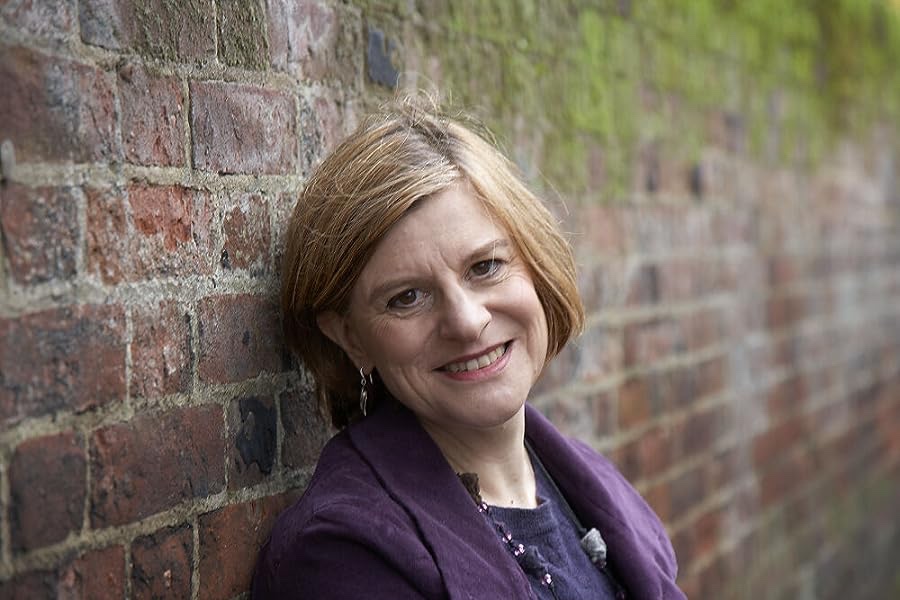
I came to writing quite late, after a career editing fiction at HarperCollins in London. My husband and I had moved out to Norwich with our three young sons and I’d had to give up my job and writing was something that I’d always wanted to try. I originally studied history, so it was wonderful finally to put my knowledge to good use and to write The Dream House, which is partly set in the 1920s in Suffolk and London.

Most of my novels are dual narrative, often called ‘time slip’, with a story in the present alternating with one set in the past. I love the freedom that they give me to escape into the past, but also the dramatic ways in which the stories interact. My characters are often trying to solve some mystery about the past and by doing so to resolve some difficulty or puzzle in their own lives.

The books often involve a lot of research and this takes me down all sorts of interesting paths. For The Glass Painter’s Daughter I took an evening class in working with coloured glass. My creations were not very amazing, but making them gave me insight into the processes so that my characters’ activities would feel authentic. For A Week in Paris I had to research Paris in World War II and the early 1960s through films and books and by visiting the city – that was a great deal of work for one novel. Last Letter Home involved me touring a lot of country houses with old walled kitchen gardens in search of atmosphere and to explore the different kinds of plants grown there.

Places often inspire my stories. The Memory Garden, my second novel, is set in one of my favourite places in the world – Lamorna Cove in Cornwall – which is accessed through a lovely hidden valley. A Place of Secrets is set in a remote part of North Norfolk near Holt, where past and present seem to meet. Southwold in Suffolk, a characterful old-fashioned seaside resort with a harbour and a lighthouse, has been a much loved destination for our family holidays and has made an appearance in fictional guise in several of my novels, including The Silent Tide and The Love Child.

Until recently I taught Publishing and Creative Writing part-time at the University of East Anglia, but now I’m a full-time writer, which felt like a bit step. My boys are all grown up now and finding their way in the world, but we still see a lot of them. My husband David is a writer, too (he writes as D.J. Taylor), so we understand each other’s working lives.

I find I have to have a regular routine with my writing, not least to keep the book in my head. My aim is to sit down at 9am every morning and write till lunchtime, then again the afternoon, but there is often something ready to interrupt this, not least our Labrador girl Zelda, so I go with the flow.

I hope that you are able to find my books easily and enjoy them – I am always happy to hear from readers!

Taken from Rachel’s Amazon author page on 18th Oct 23.

Posted in Netgalley

The Haunting in the Arctic by C.J.Cooke

All I could say after reading the final sentence of the book was WOW! I couldn’t stop reading, the housework is completely neglected and I even forgot to eat lunch! Yes, I read this in 24 hours. This is the absolute best of her novels and I’ve enjoyed them all.

Dominique is making her way through Iceland to an old whaling ship called the Ormen. Stranded in a bay, the ship is going to be sunk out at sea and Dom wants to document it before it disappears from view together. Ormen was an unusual whaling ship being a sail and steam hybrid that became beached in the early days of the 20th Century near the small village of turf houses called Skúmaskot. When she reaches the ship she sets about turning the cabin into a base to explore from and puts up her tent. There’s one door in the ship that she wonders about, it’s made of carved oak and when she touched the handle it emitted such a feeling of evil she was taken aback. As she settles, she hears someone walking about on deck and she realises she’s not alone. Three more explorers join her – Jens, Samara and Leo. They have more up to date equipment and soon the four are documenting the ship and their discoveries as well as Leo’s parkour sessions. The questions start to mount though, is she wrong or are the other three suspicious or even slightly scared of her? What are the strange noises she can hear – banging could be gunfire or chains banging against the ship? There’s also a strange mix of footsteps and dragging something heavy in a steady rhythm. Who is the woman in the dress that she’s seen standing in the shallows? This is a strange place where light is limited, the village is deserted and there is a strange stone throne by the beach, said to be a Mermaid’s Throne. These are not Disney mermaids though, these mermaids have teeth and a song that will lure a man to his death.

There are different types of haunting in this tale. I could see examples of my own theory of hauntings in the woman seen by the edge of the sea. She feels like an imprint on the landscape. A place where heightened emotion and terrible events have left such a strong imprint that defies time. The sounds also seem to come from another place, a repetitive echo from time past. This is what I call a proper ghost story. It isn’t gory or a slasher’s tale, it’s old-fashioned creepy and blended beautifully with local folklore. The ship is from Scotland and this is where the folklore of selkies comes from, a race of seal women who have a dual nature. They can be nurturing and helpful, such as saving a child who’s in trouble in the sea. They can communicate with other aquatic creatures and assume a human form when on land. However, selkies can also be seductive luring men to her and often having hybrid children. At their worst Selkies can be violent and vengeful, but their need for revenge gives us a clue about why; people seeking revenge have usually been wronged in some way. Mermaids are also depicted as sirens, luring ships and men with their singing and often thought to lure ships onto the rocks. However, there is also a terrible element of coercion in their mythology, stories where a man steals an item from the mermaid and while he has that item in his possession she belongs to him and lives as his wife. If she finds the object the spell is broken and she can return to the sea. Of course in the fairy tale we have a mermaid who has to choose between her land and sea lives, she can have love but to have legs she must suffer excruciating pain and she can never use her voice. It’s a hard price to pay. Icelandic mermaids have all these qualities, but use their seductive charms to lure sailors to their deaths – a nice reversal of their capture by human men. The author describes Icelandic mermaids as having rows of pointed teeth too. There’s a sense of devouring their enemies, particularly those who have wronged them. Is this Nicky’s end?

I loved the tension between the group of four on the Ormen. Samara seems fine with Dom, but then she overhears a conversation with Leo where Samara seems terrified of her. She talks about ‘this time’ being different, but Dom can’t remember meeting them before. I loved this mix of psychological tension, the real dangers of the landscape around them and then the truth of what has happened to the previous crew of the ship and previous explorers who’ve also left their echoes here. I sensed a possible kinship between Jens and Dom, almost as if he already knew her. I was scared of Leo. There’s so much nervous energy in him, a rage running just under the surface that I feared might ignite at any point. Yet they’re also dependent on each other for their survival creating what feels like a truce between them, but how can a truce exist if they’ve never met? There are so many strange happenings, such as Dom’s dream of ponies running off a cliff followed by finding the skeletons of Icelandic ponies in a deep cave. I loved the bits of magic realism, such as Nicky’s leg. Everything about the voyage from Scotland is historically accurate and gives us such an incredible sense of place I can see it. However, Nicky’s broken ankle and wound start to heal in an usual way. She notices the grey colour of her newly healing skin and thinks she has an infection. The sensation is altered too, feeling rubbery and a little cold. As time goes on this patch of skin grows and she’s aware that the gap between her legs is becoming webbed. Could her legs be joining together? This could be a magical sort of protection against the assaults she suffers on a daily basis. It could also be a transformation. As the past starts to inform Dominique’s present I couldn’t leave the story and I was left with the worst kind of book hangover where I was stuck in the world and the feeling of the ending. It’s taken me two days to start another book but I can’t stop thinking about this one. In fact I’m already thinking about reading it again, a bit like watching The Sixth Sense again once you know the twist. This is a dark, disturbing ghost story of hauntings but also about the worst things human beings can do to one another, particularly men against women and the extraordinary ways they exact their revenge.

Out in Hardback now from Harper Collins

C J Cooke (Carolyn Jess-Cooke) lives in Glasgow with her husband and four children. C J Cooke’s works have been published in 23 languages and have won many awards. She holds a PhD in Literature from the Queen’s University of Belfast and is currently Senior Lecturer in Creative Writing at the University of Glasgow, where she researches creative writing interventions for mental health. Two of her books are currently optioned for film. Visit http://www.cjcookeauthor.com

Posted in Netgalley

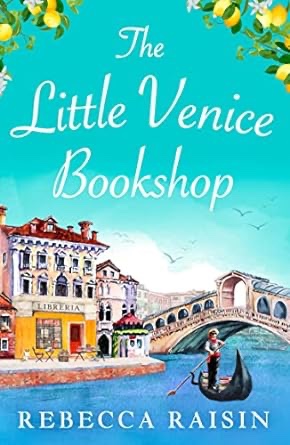
The Little Venice Bookshop by Rebecca Raisin

A bundle of mysterious letters, a trip to Venice, and a journey that will leave a lasting impression.

When Luna loses her beloved mother, it feels as if she’s lost her identity She’s rootless and can’t ground herself. Once she has these doubts, she’s begins to question everything around her. They have enjoyed a rather nomadic way of living up till now, probably because home has been where her mother was, but as she tries to cope with grief, the lack of roots is a struggle.The discovery of a collection of letters in her mother’s possessions seems to signal the way forward and she embarks on a most unexpected adventure. Taking clues from the letters, Luna travels to Venice, in the hope of unraveling her mother’s mysterious past. Maybe if she finds the answers, she might find her own place in the world.

I love Venice. I’ve been lucky enough to spend two weeks there, once in the spring and then a couple of years later in the winter when it actually snowed. I actually travelled with my mum the first time and it was wonderful to see this place we’d always dreamt about come to life in front of our eyes. Venice is obviously a place of wonder, but it’s also got a spooky edge that’s been explored in literature many times. This is more of a ‘cozy’ Venice and I think the cute cover really sets the tone for that. It focuses on the quaint and romantic side of the city, so it’s an easy read, but enjoyable nevertheless. The bookshop is a lovely setting for the story and the rather grumpy owner is clearly crying out for something new, perhaps an antidote to loneliness? As Luna begins to work at the shop mentioned in her mother’s letters she tries to work out how her bohemian mother and the owner, Giancarlo, were connected. She also persuades him to let her develop the shop, improving its visibility through use of social media – to make it a destination place for bookish travellers.

There’s nothing better for an avid reader than a book about books. Luna is definitely a lover of stories and she appreciates what books mean to their readers and collectors. I love that this celebrated second hand books too, something I love too, especially ones that have dedications or messages inside them. Often they tell a story that’s all their own, separate from the printed pages. It’s an interesting thought that these books have been through so many different hands, each with their stories to tell. It was a joy to spend time with a character who’s so passionate about books and Luna’s bookish initiatives are great fun. The family of cats named after authors are particularly whimsical. The idea that her bereavement has made her think about her own life is such a relatable one and the realisation she wants her own family is understandable. The urge to set down roots comes from wanting to make connections, permanent ones that are entirely opposite to the traveller’s existence she’s grown up with. I enjoyed the romance between Luna and Oscar and wondered if perhaps she’d found her forever home?

Although I normally enjoy books that go a little deeper, I did come away from this with a smile on my face. This was a relaxing and soothing read for me. It had a magical feel and I guess it does read like a book lover’s fairytale. I have often daydreamed of a life far different to my own and Italy, books and handsome men are an irresistible combination for this reader. Yes there’s the sadness of loss, but the emphasis is on healing and the result is hopeful and uplifting.

Published on 30th March by HQ

Meet the Author

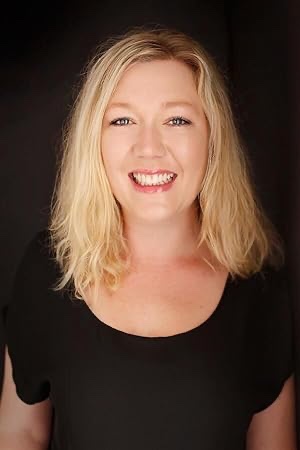
Rebecca Raisin writes heartwarming romance from her home in sunny Perth, Australia. Her heroines tend to be on the quirky side and her books are usually set in exotic locations so her readers can armchair travel any day of the week. The only downfall about writing about gorgeous heroes who have brains as well as brawn, is falling in love with them – just as well they’re fictional. Rebecca aims to write characters you can see yourself being friends with. People with big hearts who care about relationships and believe in true, once in a lifetime love. Her bestselling novel Rosie’s Travelling Tea Shop has been optioned for film with MRC studios and Frolic Media.

Come say hello to Rebecca on her Facebook page : https://facebook.com/RebeccaRaisinAuthor

Posted in Netgalley

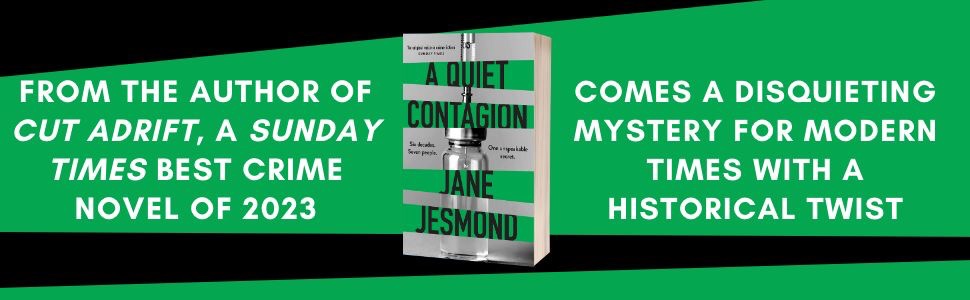
A Quiet Contagion by Jane Jesmond

I was introduced to Jane Jesmond’s writing by a blog tour and I thoroughly enjoyed her series, the most recent of which was Cut Adrift – a novel I reviewed earlier this year. A Quiet Contagion is an inventive stand-alone thriller that brings together dark history and medical ethics for a fast paced and well-researched mystery. Phiney’s grandfather Wilf, committed suicide after an incident at the pharmaceutical company where he worked. Using a dual timeline narrative and six different narrators we jump between 1957 and 2017 to uncover the truth around work to find a vaccine during the polio epidemic. The author combines the tension of a thriller with extensive historical research to unearth the secrets of the past and ask questions about healthcare ethics in public health emergencies, never forgetting the human cost of the choices made.

There are obviously parallels to the the COVID pandemic here, including many lessons that still haven’t been learned. In contrast to the modern parallels, the author has grounded her narrative very successfully in the historic sections, creating a great balance. Having had oxygen therapy for MS, I’m very aware of the use of hyperbaric chambers and the antiquated ‘iron lungs’ that were used to treat polio patients in the 1950s. I thought the descriptions of the epidemic were outstanding, really bringing home to the reader the terrible truth of a disease most people younger than me have ever seen. I’ve met people with post-polio syndrome and there’s no denying the life-long disabling effects of this awful disease. The author’s medical knowledge brings the realities of the epidemic to life, but also brings an authenticity to the characters whether they’re affected by this disease or treating it.

I thought the challenges created by a real medical crisis were well-presented and illuminating. There’s a range of voices to represent the medical/scientific outlook and these resonated particularly with contemporary issues around the COVID pandemic, such as the race against time to produce a vaccine and get as many vulnerable people vaccinated as soon as possible. We can see the origins of ‘big pharma’ with profit becoming the main goal, rather than public health. I don’t know if the author used the recent pandemic to inform her character’s thoughts and feelings, but the anxiety and panic felt very real and timely. The novel’s characters were well-developed and at home in their world, but I connected particularly to Phiney and her determination to unravel the mystery of happened to her beloved grandfather. I admired her. but worried that she was taking too many risks in her search for the truth and this kept me hooked. I enjoyed the moral dilemmas faced by her friends and family too. The struggles of each character added so much depth to the novel and their individual perspectives, created some thought provoking contrasts. I love it when I find myself thinking about a book days later and I this one has stayed with me. Sometimes, thrillers are full of action and tension but feel empty because they stick to one perspective or the characters just aren’t developed enough. This story still had tension, but it was also intelligent and full of emotion. This combination made the book hard to put down and equally hard to forget once it was back on the shelf.

Out 7th November 2023 from Verve Books


Meet the Author

Jane Jesmond writes psychological suspense, thrillers and mysteries

Her debut novel, On The Edge, the first in a series featuring dynamic, daredevil protagonist Jen Shaw was a Sunday Times Crime Fiction best book. The second in the series, Cut Adrift, was The Times Thriller Book of the Month and The Sunday Times Crime Book of the Month. Her latest novel, Her, a psychological thriller will be published in May 2023.

Although she loves writing (and reading) thrillers and mysteries, her real life is very quiet and unexciting. Dead bodies and danger are not a feature! She lives by the sea in the northwest tip of France with a husband and a cat and enjoys coastal walks and village life.

Stay connected to Jane and receive news about her books and giveaways by signing up for her newsletter – https://jane-jesmond.com/contact/

You can find Jane:

On Twitter – @AuthorJJesmond

On Facebook – http://www.facebook.com/JaneJesmondAuthor

On Instagram – http://www.Instagram.com/authorjanejesmond