Posted in Random Things Tours

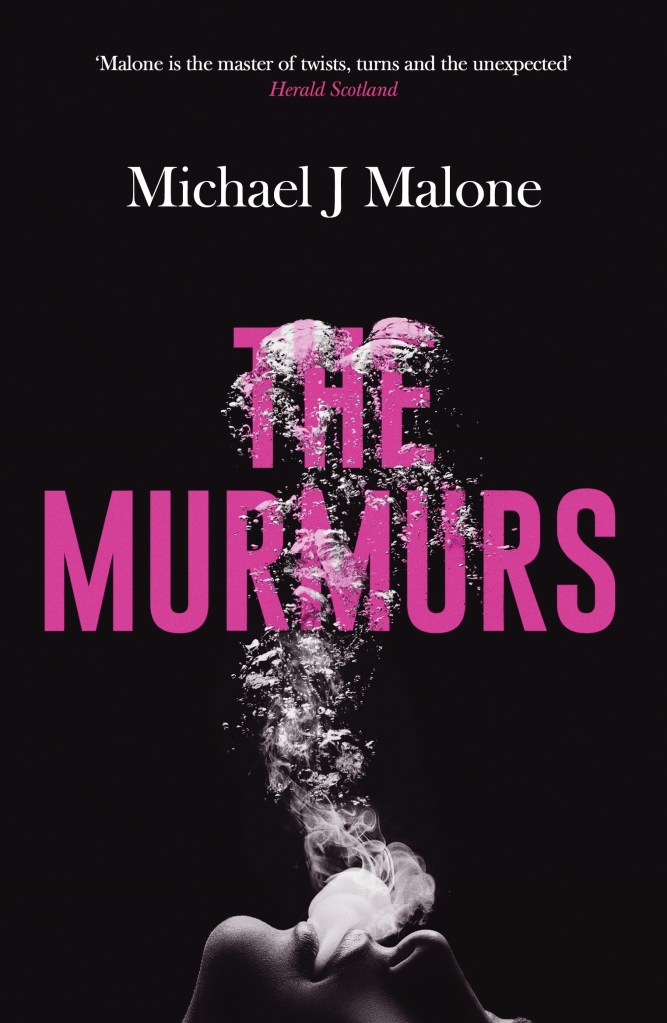
The Murmurs by Michael J Malone

I quickly became fascinated with this mix of historical fiction, psychological suspense and the paranormal. We meet Annie Jackson as she tentatively starts her new job in a nursing home in the West End of Glasgow, hoping to get her life back on track. Annie suffers with terrible nightmares where she’s stuck in a car underwater. She also has the sensation that someone is holding her head under water until her lungs feel ready to burst. She also has debilitating headaches and she can feel one threatening as her new manager introduces her to resident Steve. Then something very odd happens, as a blinding pain in Annie’s head is followed by Steve’s face starting to shake, then reform. A whispering sound begins in her head and she sees Steve as a skull, followed by a vision of him falling in his room and suffering a debilitating stroke. She desperately wants to tell him but how can she without seeming like a lunatic? He becomes agitated and upset, as Annie starts to describe the layout of Steve’s bathroom and he asks her to stop. As she’s sent home from another job she starts to think back to her childhood and the first manifestations of her debilitating problem. Annie survived the terrible car accident that wiped her childhood memories and killed her mother. This strange supernatural phenomenon is why Annie is alone and struggles to make friends. These are ‘the murmurs’.

I felt so much compassion for Annie, as the story splits into two different timelines: we are part of Annie’s inner world as a child, but also 0in the present as fragments of memory slowly start to emerge. We also go back even further to the childhood of Annie’s mother Eleanor and her two sisters Bridget and Sheila. We experience their lives through other people’s stories and written correspondence, especially that of a nun who also works in a residential home. I enjoyed how this gave me lots of different perspectives and how the drip feed of information slowly made sense of what was happening in the present day. Different revelations have a huge effect on the adult Annie and because her memories have been buried for so long she experiences the shock and surprise at exactly the same time as we do. This brings an immediacy to the narrative and I felt like I was really there alongside her, in the moment. With my counselling brain I could see a psyche shattered by trauma, desperately looking for answers, she is piecing herself back together as she goes.

Teenage Annie had a similar vision about a girl called Jenny Burn, who went missing never to return. The murmurs awakened when her mum’s sister Aunt Sheila came to visit them. She tried to openly discuss an Aunt Bridget who also had a ‘gift’ but has ended up in a home. Eleanor, Annie’s mother, asks Sheila to leave, but it’s too late because Annie has already seen that her aunt is dying of cancer. Annie evades her mum and makes her way to the hotel, the only place Sheila can be staying. Unfortunately, Jenny is working on reception. Annie can see her climbing into a red car and she desperately wants to warn her, but she knows she’ll come across as a crazy person. Eleanor is desperately looking for a way to deal with her daughter, she’s a person of importance in the church and she can’t be seen to have a daughter who has visions. Pastor Mosley has Eleanor exactly where he wants her. There’s a control and fanaticism in him that scared me much more than Annie’s murmurs. When Eleanor takes Annie to the pastor, he demonstrates his control by holding her head firmly under his head as he prays for her. When she almost faints, he’s convinced there’s a demon in her. Annie is scared of him, she gets a terrible feeling about him but doesn’t know why. Religion is portrayed as sinister and controlling, with fervent followers who never question, but live in the way they’ve been instructed is Christian? story takes an interesting turn when Annie’s brother Lewis, a financial advisor, becomes involved with the church once more and it’s new pastor Christopher Jenkins, the son of their childhood neighbour. He’s revolutionised the church and through the internet he’s turning it into a global concern. He’s not just interested in saving souls though, he’s also amassing money from his internet appeals. He also seems very interested in meeting Annie.

As the book draws to a close the revelations come thick and fast as both past and future collide. The search for Aunts Bridget and Sheila seems to unearth more questions than answers. Annie finds out that Jenny wasn’t the only woman who went missing in Mossgaw all those years ago. As she starts to have suspicions about her childhood home, Chris seems very keen to draw her back there. Might he be planning a huge surprise? I was a bit confused at first with all these disparate elements, but as all the pieces started to slot together I was stunned by the truths that are unearthed. Then as Annie’s childhood memories were finally triggered I felt strangely terrified but also relieved for her all at once. I hoped that once she’d regained that past part of herself she would feel more confident and free, despite the strange gift she seemed to have inherited. Maybe by facing the past and leaning in to her relationship with her brother, she might feel more grounded and strong enough to cope with her ‘gift’. I thought the author brought that compassion he’s shown in previous novels but combined it with a spooky edge and some intriguing secrets. I really loved the way he showed mistakes of the past still bleeding into the present, as well as the elements of spiritual abuse that were most disturbing. This book lures you in and never lets go, so be prepared to be hooked. Michael Malone is a natural storyteller and the fact this is billed as Annie Jackson Number One makes me think there may be others. I certainly hope so,

Out Now from Orenda Books.
Meet the Author

Michael Malone is a prize-winning poet and author who was born and brought up in the heart of Burns’ country. He has published over 200 poems in literary magazines throughout the UK, including New Writing Scotland, Poetry Scotland and Markings. Blood Tears, his bestselling debut novel won the Pitlochry Prize from the Scottish Association of Writers. Other published work includes: Carnegie’s Call; A Taste for Malice; The Guillotine Choice; Beyond the Rage; The Bad Samaritan; and Dog Fight. His psychological thriller, A Suitable Lie, was a number-one bestseller, and the critically acclaimed House of Spines and After He Died soon followed suit. Since then, he’s written two further thought-provoking, exquisitely written psychological thrillers In the Absence of Miracles and A Song of Isolation, cementing his position as a key proponent of Tartan Noir and an undeniable talent. A former Regional Sales Manager (Faber & Faber) he has also worked as an IFA and a bookseller. Michael lives in Ayr.
Posted in Netgalley

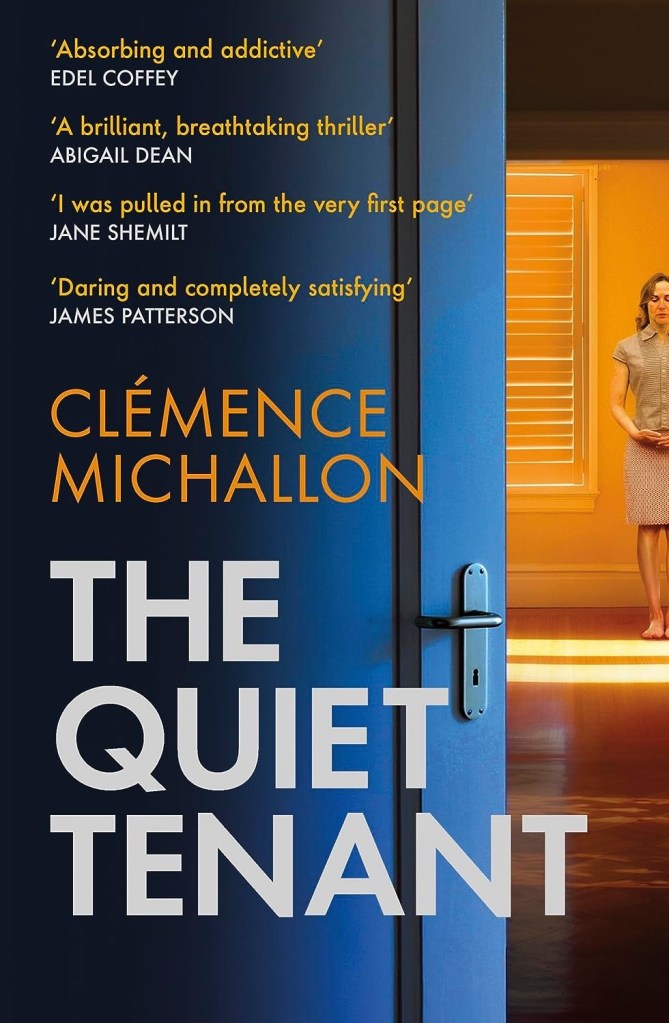
The Quiet Tenant by Clémence Michallon

He took you and you have been his for five years. But you have been careful. Waiting for him to mess up. It has to be now.

Reading this novel was quite an experience! I didn’t want to put it down, I was reading so fast to get to the next bit that I sometimes had to go back and re-read a paragraph. I had to tell myself to read slower and take it in, because the urge to devour this story is so strong. The writer has chosen an interesting viewpoint, that of the women in a killer’s life. I loved that contrast to other serial killer novels where a male serial killer and a male detective often narrate the story. Where the only women are the dead ones. Women are not expendable here. Even the murdered ones.

This is still the story of Aiden, a serial killer, but told from the perspective of the women in his life: his daughter, the woman he has abducted and imprisoned in a shed, and the bartender who is infatuated with him. There are also small sections from the women he imprisoned before, now dead. Each woman’s narrative gives the reader a different side to this hidden monster. It’s an intimate reading experience, because I felt like I knew everything about this woman: how she thinks, how she feels and even the details of her dreams. It feels like you’re with her in that tiny space, sharing her experience. It’s a very tense existence, knowing that you’re here at the whim of a man who’s already killed so many times you mean nothing to him. As someone who gets claustrophobic it felt almost too close and I felt her fear that it might just take one wrong move for him to kill again.


Aiden’s wife has just died, so he and his daughter Cecelia need to move house and his captive moves with them. She goes from her place in the garden shed to being chained to a radiator in the house. If she puts a foot wrong he will kill her and somehow he does know everything she’s doing even while he’s out of the house. How is he watching her? Incredibly, he has a daughter in the main part of the house as well as a souvenir stash in the basement. This only adds to the tension. What is hard to understand is how he rationalises his killing of women when he’s father to a daughter.– to a place with no shed. After years of isolation, Rachel is allowed inside a house again, and meets her captor’s child. I had so many questions though. Why is she still alive? It’s been five years now and he’s always killed his victims. He also seems to be out stalking a new victim, Emily, a local restaurant owner. Is this good news for the captive, or is he looking for a replacement?

Since the book Rebecca I’ve always been intrigued by characters that we don’t see, but even more so, by characters without the right name or a name at all. We know this woman as Rachel, but the choice not to use her own name makes you think. It seems common sense that he wouldn’t use it, he’s trying to distance himself. To make her an object rather than a human being. Yet she doesn’t mention her name either. Maybe even she can’t remember it or maybe every one of his captives is ‘Rachel’. This is part of the mystery that I wondered about when I was going about my day. It has allowed the author to place emotion and the victims at the centre of this thriller, making it stand out. As others have noted there’s a hint of Emma Donoghue’s Room here, where the four walls you’re in become your whole world and you become whatever you’re called. Rachel is a complicated character, and it’s clear that she’s suffered at the hands of Aiden. There are moments where I was rooting for her escape. She has time and opportunity, but can’t take it out of fear. From reading cases of abductions and long captivity, this isn’t unrealistic. Yes, she’s a strong woman, but she’s been manipulated and terrorised by this man so has to be sure before she takes a chance.

In the local area Aiden is seen as a good husband and father, in fact there’s probably an element of hero worship. So, local restaurateur Emily is aware of him already and might even be a little into him. She’s also young and alone, so it doesn’t take long for till she’s under his spell completely. Through these three narratives, Aiden’s captive, his daughter and the new love interest, Aiden’s dark truths are unravelled. This is not about considering his motivation or perspective, all of this story is about his victims and the mess the man like this leaves in his wake. I loved how the style of the author’s writing, which is mesmerising and poetic contrasts strongly with the dark subject matter. I doesn’t rush like thrillers often do. The contrast shows us that life can be beautiful, but what Aiden does is twisted and sadistic. I was desperately hoping that Rachel would survive and we might know who she really is.

Meet the Author

Clémence Michallon was born and raised near Paris. She studied journalism at City University of London, received a master’s in Journalism from Columbia University, and has written for The Independent since 2018. Her essays and features have covered true-crime, celebrity culture, and literature. She moved to New York City in 2014 and recently became a US citizen. She now divides her time between New York City and Rhinebeck, NY.

Posted in Publisher Proof

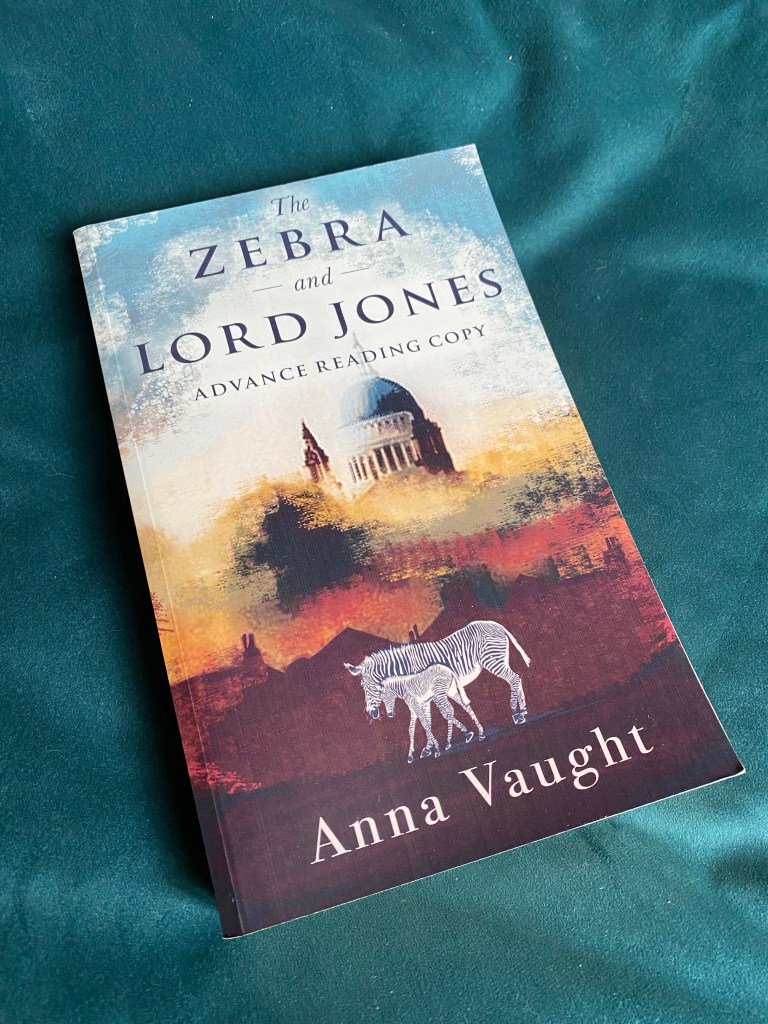
The Zebra and Lord Jones by Anna Vaught

Autumn, 1940. As the Blitz rages in London, Lord Ashburn (known as Lord Jones) is conducting some family business in the capital. As he walks the streets of Knightsbridge he finds himself confronted with an amazing and incongruous sight; a zebra and her foal are sharing the sights and sounds of the city. They have have escaped from London Zoo after their enclosure is damaged. A strange but unforgettable connection is formed between Lord Jones and the animal, who begins to follow him. The instant connection sparks a rebellion in him and he can’t leave her, so decides to do the unthinkable instead. He takes the zebra and her foal, Sweetie, back to his family’s estate in Pembrokeshire.

These beautiful and exotic animals arrive at Cresswell Manor in rural Wales and immediately start working their magic. Slowly, they start to transform the lives of those who live on the estate. Lord Jones seems inspired and has a thriving sense of purpose for the first time in his life. He finds the courage to put some distance between himself and the family that have always treated him with coldness and disdain. Strangely he finds himself forming a friendship with Anwen Llewelyn, the feisty and independent housekeeper at Cresswell, while all the time these wise creatures look on…

I love books that are hard to pigeonhole into one category and this is a mix of personal growth, historical fiction, romance, and a sprinkle of magic realism. Anna Vaught seems to choose these fascinating and unusual events in history to explore a familiar trope from a unique perspective. Half of the appeal is in the beautiful way she writes, something that grabbed me with her novel Saving Lucia. The Zebra and Lord Jones is a simple boy-meets-girl, but made magical by the dangerous backdrop of bombs falling from the sky and one man’s destiny with two zebras. The zebra’s escape from London Zoo is part of historical record, but with her unique style and talent Anna uses this one event to explore so many aspects of life. She weaves these strands together, slowly creating a tapestry of love and loss, threaded with some much needed hope.

I had so much empathy for Lord Jones, who contracted polio as a child and has always had a limp. His aristocratic family have looked down on him all his life, withholding love and physical affection. In this historical period, the aristocracy in this country really were dreadful. Many were instrumental in the plan to appease Hitler prior to WW2 and Lord Jones’s father was friends with Mosley and his wife Diana Mitford, even attending their wedding at Joseph Goebbel’s home in Germany. The way they’ve treated their son has left him depressed and with low self-esteem. Despite being tremendously privileged materially he is emotionally malnourished and desperately in need of a focus, preferably something he can become good at and build his confidence. It is perfect timing for these beautiful creatures to appear in his life and his plan to take them back to Wales with him is his first confident and decisive step into a new way of living. A more hopeful one.

Hope is a precious commodity at this point in the war and it isn’t just London where people are in need of a magical uplift. Anna has woven some of these characters into her story, such as Ernest the evacuee, Talbot the dedicated zookeeper and his counterparts in Germany. All of them are just trying to live their ordinary day to day lives in extraordinary times. There’s even an unexpected cameo from the Emperor of Ethiopia, Haille Selassie. Most interesting of all to me is Anwen, who has a keen sense of justice and a fierceness that I admired immediately. The characters are the stars of this particular show and they are a joy, including Lord Jones and his slow transformation into a different man. At the centre, drawing all of these people together, are the beautiful zebras Mother and Sweetie, who feel like characters in their own right.

I love magic realism, it’s one of those genres that make me a little bit giddy when I’m reading. It’s possibly the closest thing an adult reader can have to the stories we encounter as children that fill us with wonder. It has a different effect to all out fantasy because it creates what I call ‘literary glimmers’ – those shimmery moments of wonder amidst the drudgery and routine of the everyday. The contrast between the magic and the ordinary, elevates the themes and emotions of the story. The narrator is also playing with the reader, they walk us through the story showing us what happens like a puppeteer, deciding what to show us and when to draw the curtain. They display a giddiness and excitement at what’s happening, as they place in front of us a new snippet of gossip or historical document. It’s as if they’re discovering it at the same time we are, so we’re inspired by their immediacy and excitement. It’s as if they run up to us, waving a letter and saying ‘wait till you hear this!’

I felt inspired by this childlike curiosity and I found myself actually smiling on the outside at the playful details, ghosts, owls and zebras communicating with humans. I felt comforted, provoked, happy and full of hope about life, which is a gift in itself. The backdrop is hard hitting. I’ve always remembered the Stephen Poliakoff piece Glorious 39 because it depicted people in London queueing up to have their animals put to sleep and our main character Anne feeling unable to part with their cat. I’d never seen this depicted in a war drama before or after, so to see it as part of the narrative here made it real for me. I couldn’t imagine letting go of my animals even for the war effort and it made me think about the all domestic sacrifices being made for the public good. This historical detail, as well as the changes being made at the zoo, were so important to include, but absolutely heartbreaking to read. This is the hard part of surrendering to her mix of reality and fairy tales, but it was beautifully offset with the humour around Operation Zebra too. In all this is a wonderful tale, told by a unique and playful writer at her most skilful.

Thanks to Renard Press for inviting me to join the tour. The book is out on 27/9/23. You can buy The Zebra and Lord Jones

http://www.annavaughtwrites.com for recent articles and news!

Meet the Author

Anna’s next publication is her new novel, Saving Lucia, about the Honourable Violet Gibson who tried to kill Mussolini; this will be published by Bluemoose Books in April, 2020. Anna also publishes her first short story collection in September 2020; this is Famished and published by Influx Press. At the time of writing, Anna has three further books in the area, various short fiction coming and is writing a new book. She is an English teacher, tutor and mentor to young people, volunteer with young people, editor, short fiction writer, creative writing tutor and copywriter. She currently lives in Wiltshire, with her husband and three boys.

Posted in Writing Therapy

Literary Glimmers

I don’t know how many of you have come across the term ‘glimmers’ but it’s one I love and notice more and more, it’s about finding joy in the everyday, but not expecting to feel cock-a-hoop all the time. Instead recognise those moments when we’re stopped in our tracks by something beautiful – a sight or a sound, but any combination of the senses is okay. In that moment we are purely happy. Glimmers are the opposite of triggers. Where triggers might send us spiralling back into negative emotions, glimmers do the opposite, a mixture of happiness, wonder, calm and contentment. The word was coined by social worker Deb Dana who suggested that in between moments of extreme joy – getting married, getting your dream job – we need to look for micro joys. They may be fleeting moments, but the more we stop and enjoy them they can have a very positive effect on our mental well-being. In an article in Stylist magazine, clinical psychologist at Headspace Dr Sophie Mort describes them as ‘safety cues’ that tell the nervous system we’re okay.

“Glimmers don’t tend to lead to euphoric moments; instead, they gently nudge us towards ease, relaxation, connection and a feeling that the world is OK. And, they can be fleeting. We will all have our own specific brand of glimmers and they can be found in a number of different places and senses.”

https://www.stylist.co.uk/health/mental-health/glimmers-how-to-spot/814102 18/09/23

Their list of possible glimmers included:

  • A phone call from your best friend
  • Watching your favourite tv show
  • Cuddling pets
  • Being in nature – from a walk in the woods to watching the stars

It made me realise that I get these moments when I read quotes or passages from one of my favourite novels. Those moments where you read a paragraph then pop the book down for a minute to soak in the words. There are some that whenever I hear them I notice myself smiling, they bring such joy into every day life! I’m going to share with you my twelve literary glimmers.

1. “And at home by the fire, whenever you look up, there I shall be — and whenever I look up, there will be you.“ Far From the Madding Crowd Thomas Hardy

2. “His heart beat faster and faster as Daisy’s white face came up to his own. He knew that when he kissed this girl, and forever wed his unutterable visions to her perishable breath, his mind would never romp again like the mind of God. So he waited, listening for a moment longer to the tuning fork that had been struck upon a star. Then he kissed her. At his lips’ touch she blossomed like a flower and the incarnation was complete.” The Great Gatsby F.Scott Fitzgerald

3. “It has always seemed to me, ever since early childhood, amid all the commonplaces of life, i was very near to a kingdom of ideal beauty. Between it and me hung only a thin veil. I could never draw it quite aside, but sometimes a wind fluttered it and I caught a glimpse of the enchanting realms beyond-only a glimpse-but those glimpses have always made life worthwhile.” Anne of Green Gables by L.M Montgomery

4. “This was the simple happiness of complete harmony with her surroundings, the happiness that asks for nothing, that just accepts, just breathes, just is’. The Enchanted April by Elizabeth Von Armin

5. “The wood was silent, still and secret in the evening drizzle of rain, full of the mystery of eggs and half-open buds, half unsheathed flowers. In the dimness of it all trees glistened naked and dark as if they had unclothed themselves, and the green things on earth seemed to hum with greenness.” Lady Chatterley’s Lover by D.H.Lawrence

6. “George had turned at the sound of her arrival. For a moment he contemplated her, as one who had fallen out of heaven. He saw radiant joy in her face, he saw the flowers beat against her dress in blue waves. The bushes above them closed. He stepped quickly forward and kissed her.” Room With A View by E. M. Forster

7. “almost met in the middle. From either hand the notes of the small birds that had not yet given up singing went winging out across the water, and so quiet it was that though they were only such thin songs as those of willow wrens and robins, you could hear them all across the mere. Even on such a burning day as this, when I pulled the honeysuckle wrathes, there was a sweet, cool air from the water, very heady and full of life. For though Sarn was an ill place to live, and in the wintry months a very mournful place, at this one time of the year it left one dreaming of sorrow and was as other fair stretches of wood and water. All around the lake stood the tall bulrushes with their stout heads of brown plush, just like a long coat Miss Dorabella had. Within the ring of rushes was another ring of lilies, and at this time of the year they were the most beautiful thing at Sarn, and the most beautiful thing I’d ever seen. The big bright leaves lay calm upon the water, and calmer yet upon the leaves lay the lilies, white and yellow. When they were buds, they were like white and gold birds sleeping, head under wing, or like summat carven out of glistering stone, or, as I said afore, they were like gouts of pale wax. But when they were come into full blow they wunna like anything but themselves, and they were so lovely you couldna choose but cry to see them. The yellow ones had more of a spread of petals, having five or six apiece, but the white ones opened their four wider and each petal was bigger. These petals are of a glistening white within, like the raiment of those men who stood with Christ upon the mountain top, and without they are stained with tender green, as if they had taken colour from the green shadows in the water. Some of the dragon-flies look like this also, for their lacy wings without other colour are sometimes touched with shifting” Precious Bane by Mary Webb

8. “If you listen, you can hear it. The city, it sings. If you stand quietly, at the foot of a garden, in the middle of the street, on the roof of a house. It’s clearest at night, when the sound cuts more sharply across the surface of things, when the song reaches out to a place inside you. It’s a wordless song, for the most, but it’s a song all the same, and nobody hearing it could doubt what it sings. And the song sings the loudest when you pick out each note.” If Nobody Speaks of Remarkable Things by Jon McGregor

9. “Every life has its kernel, its hub, its epicentre, from which everything flows out, to which everything returns. This moment is the absent mother’s: the boy, the empty house, the deserted yard, the unheard cry. Him standing here, at the back of the house, calling for the people who had fed him, swaddled him, rocked him to sleep, held his hand as he took his first steps, taught him to use a spoon, to blow on broth before he ate it, to take care crossing the street, to let sleeping dogs lie, to swill out a cup before drinking, to stay away from deep water. It will lie at her very core, for the rest of her life.”

“He feels again the sensation he has had all his life: that she is the other side to him, that they fit together, him and her, like two halves of a walnut. That without her he is incomplete, lost. He will carry an open wound, down his side, for the rest of his life, where she had been ripped from him. How can he live without her? He cannot. It is like asking the heart to live without the lungs, like tearing the moon out of the sky and asking the stars to do its work, like expecting the barley to grow without the rain.” Both from Hamnet by Maggie O’ Farrell

10. One by one, the snowflakes floated down on to his warm snout, and melted. He reached out to grab them so he could admire them for a fleeting moment. He looked towards the sky and watched them drift down towards him, more and more, soft and light as a feather. “So that’s how it works,” thought Moomintroll. “And I thought somehow that the snow grew from the ground up!” Moominland Midwinter by Tove Jansson

11. “One of the strange things about living in the world is that it is only now and then one is quite sure one is going to live forever and ever and ever. One knows it sometimes when one gets up at the tender solemn dawn-time and goes out and stands out and throws one’s head far back and looks up and up and watches the pale sky slowly changing and flushing and marvelous unknown things happening until the East almost makes one cry out and one’s heart stands still at the strange unchanging majesty of the rising of the sun–which has been happening every morning for thousands and thousands and thousands of years. One knows it then for a moment or so. And one knows it sometimes when one stands by oneself in a wood at sunset and the mysterious deep gold stillness slanting through and under the branches seems to be saying slowly again and again something one cannot quite hear, however much one tries. Then sometimes the immense quiet of the dark blue at night with the millions of stars waiting and watching makes one sure; and sometimes a sound of far-off music makes it true; and sometimes a look in someone’s eyes.” The Secret Garden by Frances Hodgson Burnett

12. The Peace of Wild Things

When despair for the world grows in me
and I wake in the night at the least sound
in fear of what my life and my children’s lives may be,
I go and lie down where the wood drake
rests in his beauty on the water, and the great heron feeds.
I come into the peace of wild things
who do not tax their lives with forethought
of grief. I come into the presence of still water.
And I feel above me the day-blind stars
waiting with their light. For a time
I rest in the grace of the world, and am free.”

Wendell Berry.

Posted in Squad Pod

The Continental Affair by Christine Mangan

Meet Henri and Louise.

Two strangers, travelling alone, on the train from Belgrade to Istanbul. Except this isn’t the first time they have met. It’s the 1960s, and Louise is running: from her past in England, from the owners of the money she has stolen―and from Henri, the person who has been sent to collect it. Across the Continent―from Granada to Paris, from Belgrade to Istanbul―Henri follows. He’s desperate to leave behind his own troubles and the memories of his past life as a gendarme in Algeria. But Henri soon realises that Louise is no ordinary traveller.

As the train hurtles toward its final destination, Henri and Louise must decide what the future will hold―and whether it involves one another. Stylish and atmospheric, The Continental Affair takes you on an unforgettable journey through the twisty, glamorous world of 1960s Europe.

All the way through the novel I kept thinking of The Thomas Crown Affair, the glamorous and seductive 1960’s film starring Faye Dunaway and Steve McQueen as a rich playboy suspected of stealing a priceless painting and the insurance investigator sent in to catch the thief. The Continental Affair had that same mix of incredible style, plot twists and wonderful locations. I mustn’t forget the sexual tension – that chess scene alone is a masterclass in seduction! Christine Mangan’s third novel is similarly alluring, from the Hitchcock-esque cover design to the incredible cat and mouse tale within.

The story is told through a dual timeline narrative, enhancing the sense of cat and mouse between the characters. Yet they have more in common than we might initially think. Yes, the chase has this cat and mouse running in the same direction but it’s not just about the chase, they’re both trying to escape their past as well. From the moment they ‘meet’ in a train compartment on the way to Istanbul they’re playing a game. They might be acting as if they’ve never met, with their polite conversation, but Henri knows who she is because he’s been tracking her from country to country. Similarly, Louise knows exactly who Henri is and why he’s there. She first ventured into Europe as an escape from a cruel and restrictive family life in England. Then, in Granada she stole from a criminal gang and went on the run. Henri was related to the criminal gang who sent him to collect an amount of money, only to witness Louise stealing it right in front of him. Yes, he’s been sent to retrieve the money but he’s also driven by a fascination in Louise and the more he follows her, the more fascinated he is. Interestingly, Henri worked in Algeria as a gendarme and this past plays on his mind constantly, yet once he starts pursuing Louise he’s distracted from his own demons. This is a police officer who finds himself on the wrong side of the law. Henri is the first narrator and once I got to know him I expected to be on his side. Then I heard Louise’s back story and I felt sorry for her, struggling with her disabled father after her mother left the family home. The only joy and escape she had was in books and I was torn between my understanding for her and my knowledge that she’s taken someone else’s money.

Reading this book felt like the Saturday afternoons I spent with my grandad watching old black and white films, where he’d teach her me who all the actors and actresses were. This could have been the gentleman Cary Grant pursuing Grace Kelly with her sleek, sophisticated glamour. I’m now waiting for a gap in reads so I can go back and read the author’s previous novels on the strength of this one. I enjoyed all the settings, the incredible landmarks, the food and the two intriguing people I was travelling alongside. I was glued to this tale wondering whether Henri would overcome his fascination and retrieve the money or whether this developing relationship would take our pair to becoming friends, or even more. I’d had this book on NetGalley for quite a while and I can’t believe I left it until the Squad Pod got the chance to read and review? It’s the sort of book I love to get lost in because it combines such evocative descriptions of European destinations and the 1960’s era. I felt like I was there for every moment and I when I was away from the book, I missed it. I loved the journey, the actual and the emotional one. Henri and Louise want the same things and it was delicious watching them realise this and become ever closer. I was transfixed, waiting to see if Henri would actually complete his mission to retrieve the family money, or whether he’d forget their game of cat and mouse. Christine Mangan has created two such intriguing characters who despite their mistakes are incredibly likeable and memorable. This a wonderful escapist read full of both style and substance.

Meet the Author

Christine Mangan has a PhD in English from University College Dublin, where her thesis focused on eighteenth-century Gothic literature, and an MFA in fiction writing from the University of Southern Maine. Tangerine is her first novel

Posted in Publisher Proof

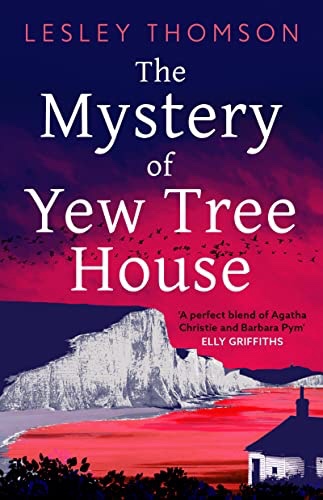
The Mystery of Yew Tree House. The Detective’s Daughter Series – Book 9

As Stella Darnell arrives at Yew Tree House, it seems like an idyllic little place to spend the summer. Like any village, Bishopstone has it’s past and a dark side lurking beneath the surface. The holiday is a trial of sorts for her, partner Jack Harmon and his seven-year-old twins, Milly and Justin, not forgetting Stanley the dog. Stella‘s thoughts and feelings around a more permanent living arrangement with Jack is always changing, but what better way to trial the arrangement? As they disembark and start to explore it’s clear that the house is a little dilapidated once you look closer. Stanley and Millie, both as lively and full-on as each other, are soon tramping round the garden making discoveries. The house belongs to the Stride family, two sisters Stevie and Rosa live in the annex while eking out their state pension by renting the main house for holidays. Perpetually single, the two women can’t afford to run Yew Tree House, but can’t afford to leave either. It’s clear that some parts of the house are past their best, but cleaning company owner Stella, can see past that and once the place has had a good scrub it will be adequate for a family holiday. However, the house has a complex history, especially the period during WW2 when Stevie and Rosa were girls, living with mum Adelaide and an evacuee called Henry. Their Dad Rupert is called up but loses his life at Dunkirk, leaving his family to make their own way in the midst of rationing and the bombings while their house is also used as a meeting place for the Home Guard. When Millie is exploring one day she finds an old pill box in the garden (a concrete guard post or dug-out from where volunteers would defend the coastline) putting past and future on a collision course. Inside is a skeleton, with a hole in it’s skull that’s been caused by serious force. Jack and Stella may have fallen upon a murder mystery for their popular podcast, but as the aged vicar glares at them from his cemetery across the road, it could be that not everyone wants the truth to be discovered.

This is a book within a series based around Jack’s true crime podcast and I would recommend reading the others to better understand the relationships in this story. I felt I connected better with the wartime section of the story and I think it was because regular readers will know these characters well. Jack is rather blindly optimistic about their first family holiday, leaving readers and Stella as the more doubtful parties on this journey, especially when we meet the redoubtable Milly. Despite being of primary school age, Millie is possibly in charge of every room she walks in and if I were Stella, I’d be imagining what this exuberance might look like when ramped up by teenage hormones! A terrifying thought. I didn’t pick up the chemistry between Stella and Jack at first, but they clearly have a joint passion for solving mysteries and presenting true crime stories that’s rather infectious. I really liked the fact that both characters were connected to the area, bringing an added element to their sleuthing as I felt they had a stake in the village’s history and a real thirst for the truth. I thought the author created an interesting balance, not only between the two timelines, but with a contrasting lightness and shade of the plot. Family life is very lively and full of fun, especially with Stanley’s antics, and there was an almost Famous Five style coziness to the mystery. However, as foreshadowed by the glowering vicar in the book’s opening, there are darker undertones that become even more pronounced as we travel back to the 1940’s.

War isn’t the only cloud over Rosa and Stevie’s family, there is a missing girl too and the anxiety felt by Adelaide Stride about her two girls is very real. I felt Adelaide’s uneasiness around some of the guard, who move freely around the downstairs at night. The house is split between normal family life upstairs, with the realties and tension of war downstairs. There’s a sense this is men’s business and the presence of them in her family home must have added to her worries about her girls. Can Adelaide trust them? It seems clear she has her instincts and one character definitely raised her hackles (and mine). Tension and suspense build in both timelines, with some creepy moments but the wartime sections were the more disturbing. The present day sections have plenty of humour, the directness and attitude of Miliie, as well as plenty of twists to keep the reader on their toes. The fact that some of the characters from the 1940’s still live in the vicinity added to the tension towards the end of the book, as I wondered if any of them were still a danger in the present day. What might they do to keep certain secrets buried? Stella and Jack would need to keep their little family safe, all the while uncovering a tale that holds the heartbreak and tragedy of WW2, alongside a vengeful and murderous secret.

Meet the Author

Lesley Thomson was born in 1958 and grew up in London. She went to Holland Park Comprehensive and the Universities of Brighton and Sussex. Her novel A Kind of Vanishing won The People’s Book Prize in 2010. Lesley combines writing with teaching creative writing. She lives in Lewes with her partner.

Posted in Netgalley

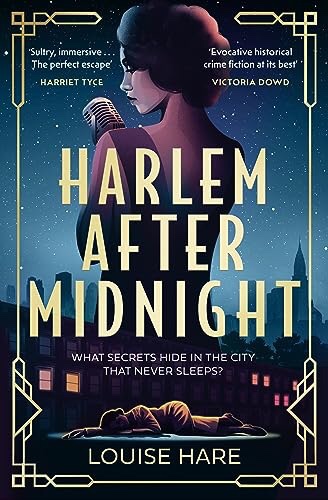
Harlem After Midnight by Louise Hare

Ever since the final page of Miss Aldridge Regrets I’d wondered what would happen next to Lena, who had managed to escape the clutches of a murderer, find her birth mother and become the lover of band leader Will all on board ship. She was sailing to New York to audition for a new musical on Broadway, but became embroiled in the life of a rich NYC family after being placed with them for dinner. Now in New York, what would become of her relationships – both with her mother and with Will? Would she be able to find work after finding out the Broadway job was a ruse to get her on the voyage? I was shocked when the novel began with a woman, sprawled on the sidewalk after failing from a high rise window. As the police arrived and start to look at the body they notice she’s clutching something in her hand. It’s a passport in the name of Lena Aldridge. The author then takes us back to Lena’s arrival in NYC nine days earlier, when Will had taken her to stay with friends of his until the return voyage. What could possibly have gone so wrong?

Lena has found herself dragged into Will’s world, perhaps a little sooner than would be expected in a conventional relationship. As Will takes leave she wonders if this will give them time to test their relationship out and whether they could have a future. His friends Claudette and Louis are a lovely couple who live in a good neighbourhood in Harlem. Claudette is a librarian and she settles Lena into their spare bedroom, telling her about how long they have known Will and that they’re looking forward to getting to know her. Will’s only family is his sister Belle and niece Joey, who he stays with when the ship’s on a fortnight turnaround. The five are pretty close knit, apart from the obvious tension between Will and his sister, despite which he absolutely adores his niece. Even though she’s wary, Lena and Belle get along enough to go out shopping and have cocktails in a fancy bar. I started to feel this creeping sensation that Lena was on the outside of something. The three friends have secrets and so does Belle, is it because Lena is new to the group and maybe not quite trusted yet? Is there something about her being British that makes them think she won’t get it? She is surprised to find out That despite their animosity, Will does go to any lengths to protect his sister. Lena is patient though, she has concerns about her own situation and doesn’t want to delve too far into their secrets, without knowing what’s going to happen between her and Will. It’s too early to say love or talk about permanence. She doesn’t even know if she could find herself living in Harlem. Lena’s also looking for people who knew her father to learn about his early life and if there’s family that Lena’s never met. There are also financial and emotional issues in her relationship with her mother that must be resolved. It’s a huge crossroads to negotiate and the tension builds as we start rooting for her future and worrying she’s plummeted to her death.

I love this combination of historical crime mystery, especially those set in such a stylish city and time period. I think in a lot of ways this was a more successful novel than the first and I definitely felt the time period in the social life of Harlem and the contrasting Sunday church going. The glamour of New York was set beautifully against those less fortunate and I was interested in the way colour had some bearing on this; Lena and Belle can ‘pass’ as white enough to get into a fancy bar, but the much darker skinned Will would have struggled. I enjoyed these deeper looks into racial divisions, class and privilege, as well as how they differed in the earlier timeline. Lena being bi-racial didn’t seem to have the same complexity in London as it did in New York, but she is reminded a few times that it would be worse in the south. There are references to lynchings, the prejudice around mixed race relationships (both for Alfie and his daughter) and the exploitation of black women by wealthy white men. In this earlier timeline I enjoyed this exploration of young black women’s lives as well as the contrast with the relative freedom Lena and Belle are enjoying. Have things changed or is it their lighter skin?

I thought the historical element really came to life and I enjoyed these sections that went back even further to 1908, when her father Alfie suddenly fled New York for London. As both of these storylines started to reveal their secrets, the novel became intense and gripping. I had suspicions around both Claudette and her husband, because although they were there for Lena in a practical sense they didn’t give much of themselves emotionally. There were also certain morals to their way of life, such as Will not staying with Lena at their flat. I wasn’t sure that they actually liked her, but wanted to do a favour for Will. The central mystery really held my attention and remained tense even with the flashbacks in-between. The more building blocks we had to construct Lena’s, the more I felt I knew her and the hope she’d have a happy ending grew for me. I would suggest reading the first novel before this one as there are links and recurring characters throughout. There was an open ended feel to the final chapter so who knows we may be able to spend time with Lena again. I’d be more than happy to join her.

Meet The Author

Louise Hare is a London-based writer and has an MA in Creative Writing from Birkbeck, University of London. Originally from Warrington, the capital is the inspiration for much of her work, including This Lovely City, which began life after a trip into the deep level shelter below Clapham Common. This Lovely City was featured on the inaugural BBC TWO TV book club show, Between the Covers, and has received multiple accolades, securing Louise’s place as an author to watch.

Posted in Random Things Tours

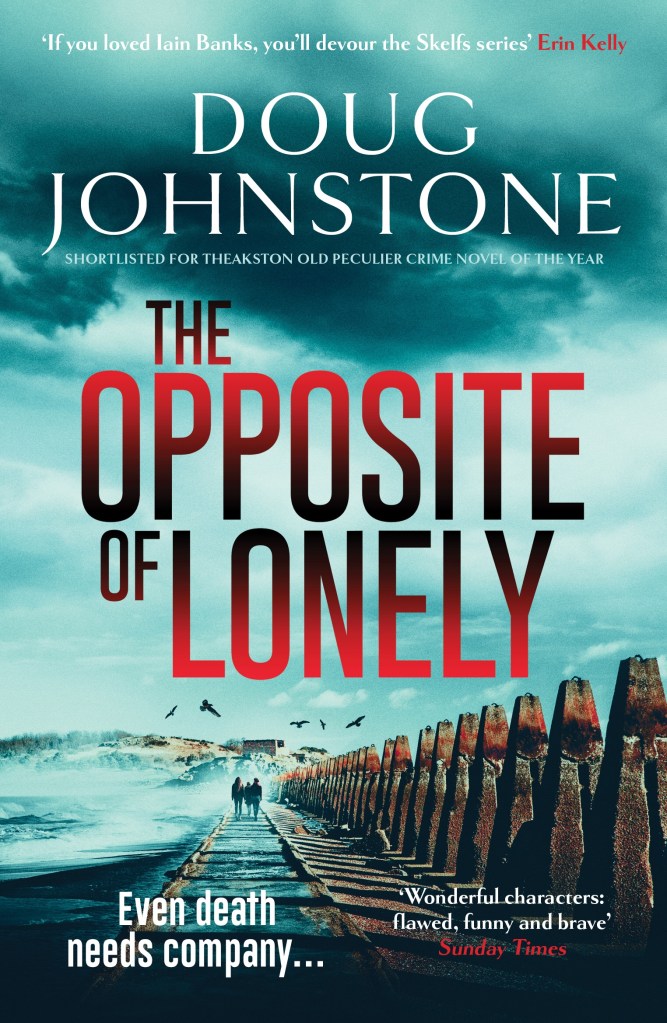
The Opposite of Lonely by Doug Johnstone

As many of you know I am a super fan of Doug Johnstone and particularly his Skelf series of novels, based in Edinburgh and following a family of women, running both a funeral home and a private investigation business. I love the Skelf women because they’re feisty, original, intelligent and incredibly compassionate. This is his fifth in the series and I’m in constant fear of it ending, though if it did this wouldn’t be a terrible way to bow out. In fact this may be the best in the series so far. As usual there’s an eclectic mix of people and cases. Dorothy is investigating a suspicious fire at an illegal traveller’s campsite, but also takes a grieving homeless man under her wing. Jenny is tasked with finding her missing sister-in- law who fled with the body of Jenny’s violent ex-husband Craig. Meanwhile, Hannah meets a women astronaut and is asked to investigate potentially dangerous conspiracy theorists who think she has returned from space ‘changed’. Add to that the new idea of water cremations, funerals for the lonely, strange happenings in space, a body lost at sea and a sexually adventurous man in a rabbit mask and you have all the ingredients to keep a Skelfaholic like me very happy indeed.

I love the Skelf’s outlook on life and other people, it chimes so well with my own family’s philosophy and is such a welcome change from the perspective of our current government. There’s an acceptance of others, whatever way they choose to live or love. They treat people with respect, in whatever circumstances they find themselves. There’s no judgement, something I especially love in Dorothy. She seems to have a knack for reading people and knowing when they’re trustworthy. She has a great track record too, having brought both Archie and Indy into the fold when both were in straitened circumstances. She has moments of exasperation when investigating, especially when she tries a pub local to the traveller camp where a fire happened. When gauging local feeling about the travellers she ends up in a long debate on their behaviour, most of which she dismisses as bigotry, but also their opinion of people ‘on benefits’, refugees, drug takers and women of easy virtue. They are the Daily Mail brought vividly to life and Dorothy notes how easy it can be for someone her age to accept the media narrative and become entrenched in their views. She doesn’t want to be like that and she’s certainly not going to be welcomed back to this pub. Jenny feels much the same.

‘everyone just trying to get to the end of the day and hoping tomorrow would be a little brighter. We didn’t need our homes torched, our dead ex-husbands disappearing, all the hate and bullshit in the world coming to kick us in the arse’.

This outlook also feeds into the sense of place Johnstone creates, something that made me drive around Edinburgh while on holiday earlier in the year. I wanted to get an idea of where these characters lived and was ecstatic to be able to walk on The Links, where Dorothy used to walk their dog and once encountered an escaped jaguar! He describes the strange juxtapositions in Edinburgh, something that happens in all big cities placing very different people up against each other. I was horrified to read once that there’s a street in NYC separating Harlem from the Upper West Side where the life expectancy differs by thirty years when you cross the street. As Dorothy and Archie drive out to Muirhouse she notices the stately home hidden by a high hedge from a caravan park, a halfway house for prisoners next to a posh golf course. It’s not planned of course, but it’s how all big cities grow and develop over time. However, what seems universal is that ‘the poorest people got the shitty end of the stick’ especially in Muirhouse. Johnstone’s current affairs and issues are bang up to the minute, here police officers become implicated in one of their cases. As the women meet for breakfast and a catch up, Jenny observes that cops tend to ‘circle their wagons’ when they’re accused of wrongdoing, especially sexual assault. She references the hundreds of sexual assault cases against police officers and the force’s mishandling of them, or even covering them up.

It’s wonderful to see Jenny in a calmer place, despite the ghost of her ex still hanging over her as she tries to find his sister. Her friendship with Archie, their mortuary assistant, has steadily become a regular part of her life. It feels like unofficial therapy, taking a long walk every couple of weeks and randomly choosing somewhere to eat. There’s something about Archie’s presence that seems soothing and she just enjoys sharing space with him. There’s nothing dramatic or addictive about it. Hannah has noticed them getting closer and observed that it seemed to have pulled her mother together somehow.

‘Maybe all you need is a friendly face once in a while, someone to listen to your bullshit and not judge. Hannah had read once about a man who succumbed to suicide on the Golden Gate Bridge. He left a note at home before walking there, which said that if one person smiled at him on the journey, he wouldn’t jump. Maybe all we need is a smile to stop us jumping’.

Hannah and Indy are tested a little by their new connection to Kirsty, an inspirational woman astronaut she met after her talk at the National Museum of Scotland. Kirsty invites Hannah and Indy to dinner where they meet her partner Mina. Mina is concerned about men who troll Kirsty online and at events, fuelled by a conspiracy theory that something happened to her on the International Space Station. Whether they think she’s had the alien probe up the butt or just some kind of first contact, the phrase used is that she ‘came back wrong’. Mina tells them they’ve had people outside the house, going through their rubbish and they’ve been doxxed. When Mina gets Hannah alone she asks her to do a little digging and to keep an eye on Kirsty. She’s been different since she came back, Mina explains and she’s worried that Kirsty is in danger. This had a strange dynamic to it and I was concerned that Hannah and Indy might be in danger too. I loved the theme of loneliness and dislocation, particularly the idea for The Lonely Funeral, sparked by the story of a middle aged woman who had no family or friends to make arrangements. Dorothy’s thinking had been inspired by projects in the Netherlands and New Zealand where they research the deceased and get a poet to write about them for the funeral. Dorothy has negotiated with the council so that the Skelf’s can carry out the funerals for the basic budget set aside. Brodie, the homeless man Dorothy meets and decides to help, tells her a moving story that I think explains how we all feel at times. I’ve certainly felt it in the depths of grief. It’s about a whale oceanographers had detected with a call that registered 52hz, a pitch that’s higher than other whales. It had no idea that other whales couldn’t hear it and it had spent decades singing out to no one. This story brought a lump to my throat and I’m not surprised that it touches Dorothy too. She decides then and there that Brodie is going to fit in.

It’s not everyday that the heroine of a book takes a walk into the woods to check out a mausoleum, taking the time to think about her father and how much she’s struggled since his death. Then in the next moment, stumbles upon a dogging scene, with one young woman and a quartet of men masked as a badger, deer, rabbit and fox. These juxtapositions keep the reader on their toes, we never really know what might come next or how it might make us feel. Johnstone can take us from tears to gallows humour in a couple of sentences. As he closes the book, with the first of the Skelf’s lonely funerals, Dorothy speaks on behalf of the man in the coffin who they hadn’t known anything about except his name and where he was born. She echoes Hannah’s astronaut friend, whose experience in a solar storm was both spiritual and grounding all at once. What she talks about is connection, in the E.M. Forster sense to ‘only connect’. To connect with others is the most vital thing we do in life. Connectedness is perhaps the best choice of word when trying to work out the opposite of loneliness. She talks about how we tend to close down as we age, to shut off from the world. I’ve observed this with people and noted recently the important of older people connecting with their younger family members using WhatsApp or Snapchat and how it brings daily joy to them, something those that who choose to dismiss new technology miss out on, to their detriment. We need to connect, both with the world we live in and with the people around us. We need to stay part of this great ‘human experiment’ in order to carry on living as fully as possible, for as long as we’re granted.

‘The idea of an impartial, unconnected observer watching the world was totally wrong. We’re all up to our necks in the universe, we can’t be separated from it’.

Out 14th September 2023 from Orenda Books

Doug Johnstone is the author of fifteen novels, most recently The Space Between Us (2023). Several of his books have been bestsellers, The Big Chill (2020) was longlisted for the Theakston Crime Novel of the Year, while A Dark Matter (2020), Breakers (2019) and The Jump (2015) were all shortlisted for the McIlvanney Prize for Scottish Crime Novel of the Year. He’s taught creative writing and been writer in residence at various institutions over the last two decades including festivals, libraries, universities, schools, prisons and a funeral directors.

Doug is a Royal Literary Fund Consultant Fellow and works as a mentor and manuscript assessor for many organisations, including The Literary Consultancy, Scottish Book Trust and New Writing North. He’s been an arts journalist for over twenty years and has also written many short stories and screenplays. He is a songwriter and musician with six albums and three EPs released, and plays drums for the Fun Lovin’ Crime Writers, a band of crime writers. He’s also co-founder of the Scotland Writers Football Club.

Posted in Personal Purchase

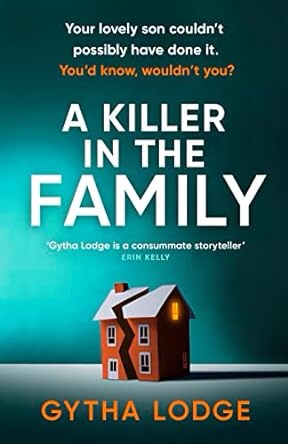
Killer in the Family by Gytha Lodge

Aisling would do anything for her family – but can she protect a killer?

I had about three false starts with this book. Having read all her other books in the series when I won them in a competition on Twitter, I was intrigued to see what was next. I would read a bit, then a blog tour would come along or an urgent bit of bookpost would fall through the door and I would have to set it aside. I was so glad to finally get going with it again on holiday and it didn’t take me long to race through to the finish. The story gained both momentum and tension from about chapter four onwards. We’re back with Detective Chief Inspector Jonah Sheen’s team as the uncertainty of his private life is overshadowed by a terrible case and a man nicknamed the Bonfire Killer. He has killed two women already and the police have very little to go on. Then single mum and game developer Aisling, puts her DNA on an ancestry site. She’s thrilled to find a match, but that piece of her she felt was missing might come with some serious baggage – starting with an interview with CID. Aisling’s DNA is a match to the crime scene and possibly the Bonfire Killer himself, so the police have their eye on her two sons, Ethan and Finn, as well as her long lost father. There are secrets in this family, not limited to her missing parent. Will she be willing to unearth a painful past to prevent someone else suffering a painful future?

Aisling is an interesting and unexpected central character, with a life that isn’t everything it seems. She has gone to great lengths to avoid her past and she isn’t the only one in the family. Her father, Dara Cooley, went missing years before. As the team try to crack the case, they break into smaller working groups to find Dara Cooley, chase up the DNA and interview suspects that arise, and investigate a stud farm where a horse has been taken and killed, then burned on a pyre. Could it be linked to the case? The detectives spend time with the farmer and his two sons, trying to establish who would want to hurt their mare, Merivel. There are so many blind alleys and red herrings, but they have to be followed just in case one of them leads to a breakthrough. I loved the complications around an Irishwoman named Anneka Foley and her potential relationship to the case. One of Aisling’s sons is in a band, that one of the killer’s victims had a fascination with and that’s before we get to the exploration of Aisling’s own teenage years. I was suspicious, but loved Aisling’s loyalty to her sons. Her ‘first love’ story was so relatable and digging into the past can stir up a lot of feelings, especially when an unexpected visitor turns up. She’s unusual, a gamer who likes to play at home with her sons, but is also quietly very successful as a developer in her own right. She’s been tough and dedicated to her boys. Can she come to terms with her past and open herself up to a different future?

The team are on form, but I particularly loved the subplot around Juliette who is receiving unwanted attention from an old boyfriend. At a couple of crime scenes there have been markers that he might be around again: her favourite hot coffee and a waterproof jacket left on the bonnet of her car on a cold wet night. We see the strain she’s under, but she still does her job. It’s a subplot that seemed to have petered out but now returns with deadly consequences. This was a story I’ll love to see concluded in the next book. Then there’ Jonah’s private life, where trying to do the right thing seems to have backfired spectacularly. How does he extricate himself from this without causing further harm? Will the right path still be open to him when he does? With a fascinating background of Ireland’s poverty and the ways in which people struggled with a restrictive religious society, this is a fascinating thriller with so many different aspects to it. Gytha Lodge brings all these seemingly disparate strands together and successfully resolves most of them, only leaving us with one cliffhanger. But it is a humdinger of a cliffhanger! All of this as well as a atmosphere and tension you could cut with a knife, this is another brilliant read from a consummate crime writer.

Meet the Author

Gytha Lodge is a multi-award-winning playwright, novelist and writer for video games and screen. She is also a single parent who blogs about the ridiculousness of bringing up a mega-nerd small boy.

She has a profound addiction to tea, crosswords and awful puns. She studied English at Cambridge, where she became known quite quickly for her brand of twisty, dark yet entertaining drama. She later took the Creative Writing MA at UEA. 

Her debut crime novel, She Lies in Wait, has been published by Penguin Random House in the US and UK, and has also been translated into 12 other languages. It became an international bestseller in 2019, and was a Richard and Judy book club pick, as well as a Sunday Times and New York Times crime pick.

Posted in Squad Pod Collective

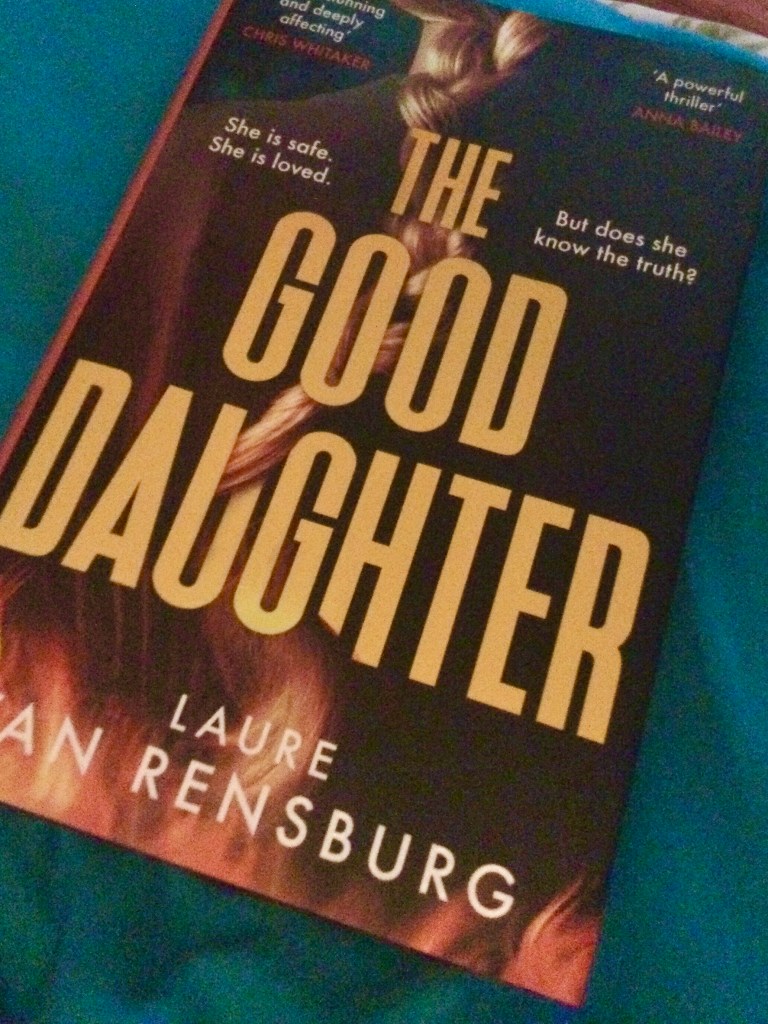
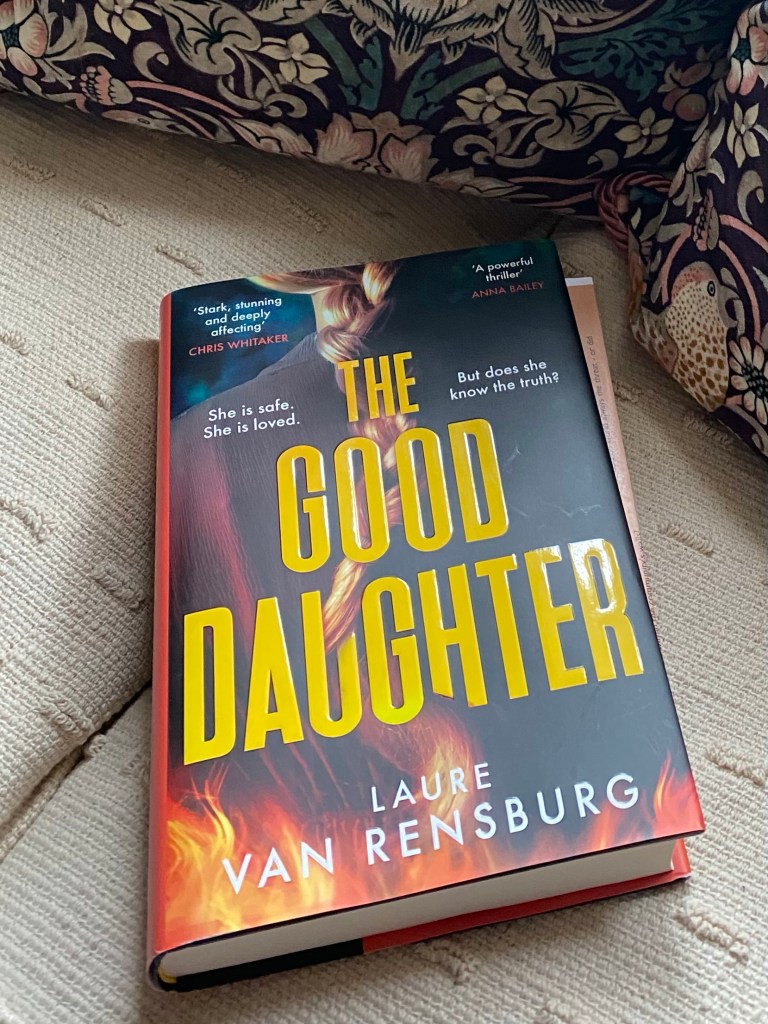
The Good Daughter by Laure Van Rensburg

Abigail is a proud member of the New America Baptist Church. A Christian community miles away from the nearest town in South Carolina, she is safe from the depraved modern world.

She is a good daughter. A valued member of the community.


So when she is the sole survivor of a fire that burns her family’s home to the ground, it seems like a tragic accident.

Until a surprising discovery is made: before the fire, Abigail let a stranger in.

Who was the stranger? What started the fire? And was the outside world always the threat – or did danger lurk within the community’s walls?

I became completely immersed in this fascinating story about faith and the complexities of memory while on holiday. Having spent part of my childhood in a church from the American Christian Fundamentalist tradition, I am always alert to the insidious nature of spiritual abuse and cultish techniques used to entrap converts in evangelical churches. The book opens with a death, immediately filling the reader with questions and drawing them into the story. A document tells us about the wreckage of the house, following a fire. From there the author tells her story in two parts: the present day and then back to three weeks before the fire happened. In between these two timelines there are more documents and discussions that work like ‘real life’ pieces of evidence. There are news reports, public comments and podcast transcripts, all working to verify the story and establish a factual perspective opposing the emotion and confusion of our narrator. The opening is dramatic and emotive, as we realise Abigail has lost her parents; Genevieve and Pastor John Heywood were discovered dead after the fire. Yet Abigail survived. Her parent’s congregation are secretly suspicious about Abigail and think she may have started the fire. The police are beginning to think the same, but what reason does Abigail have for doing something so awful? She’s always been a good girl, dutiful and obedient. Or is that just an act? We experience everything through Abigail and her mind is a complex and intense place to be. She felt like a real person to me very quickly.

Their neighbourhood, in a remote part of South Carolina, is entirely made up of New American Baptist church members. The church members, including Abigail’s family, live according to strict rules based on the Bible. They don’t mix with non-church members and have a domestic life where the man is the head of his household. He goes out into the world to provide for his family and the wife is the homemaker, looking after the house and their children according to the principles laid down by her husband. This is a philosophy I’m very familiar with and I remember, even from a young age, wondering how could I possibly defer to my husband if he happened to be a complete idiot? Abigail doesn’t question the religious rules that govern her life, but then she meets a stranger who changes everything. Summer comes to the community to interview church members for a podcast she’s making about the New American Baptist Church. She asks to interview Abigail. They are completely different in terms of life experience but a friendship starts to grow. It’s fascinating watching the changes in Abigail and her characterisation is excellent, as is that of Summer. She is a catalyst of so much and the storytelling is strong, but follows an unpredictable path. It’s a slow start, then as Summer arrives the story takes off and becomes the pacy and addictive psychological thriller I expected from this writer.

Laure Van Rensburg has taken a very sensitive, difficult subject and has managed it with a great deal of care and empathy. It’s hard to tell such a powerful story with the right amount of sensitivity, while also creating a gripping narrative that keeps readers turning the pages, but I think the author has managed that balance well. We’re taken deeper into life on the plantation with brilliant descriptive passages that create insight into the group. There’s a lot here that wasn’t weird to me, although I think it would be for most readers. If I say to people religious fundamentalism most people don’t really know what that means. I was taught to take every word in the Bible as the absolute truth: Noah built an ark, we all come from Adam and Eve and the world was created in 7 days. Every word comes direct from God with no room for interpretation, symbolism, or the historic period or culture it was written in. Years later, when studying literature at university, I was asked to consider the Bible as a book. I had to research how it was produced, when and by whom. It’s obvious why all books included in the New Testament are written by men. It became a written text in AD325 and powerful men decided what went in (at least that explains the prominence of St. Paul the misogynist). Emperor Constantine and a council of men had the final say, but when the reformation swept through Europe in the 16th Century there was a further split on the books included by the existing Roman Catholic Church and the newly formed Protestant belief system. It’s no wonder then, that the New Testament preaches female modesty and subservience; it suited the church and the men in control of it.

When you imagine that that belief system preached to you every Sunday, borne out by the way your home functions it’s clear to see the damage it can do to self-esteem and the way young women form relationships. That was certainly the case for me. It’s a potent recipe of coercive male control and dominance over women and I could feel a familiar conflict brewing within Abigail as she tries to follow the path forced upon her by both the religious group and all the families around her, but starts to wonder if there’s more. Of course the church is judged and treated with suspicion from outside the community, but there’s no room for questions inside. Questioning the status quo is seen as rebellion, a loss of faith or even a spiritual battle going on within the soul. However, as with all organisations, there are disturbing secrets that lies beneath. I will admit that this was difficult to read in parts, because it set off a chain of little light bulb moments for me. Although, I think it would be an emotional experience for any reader. There’s a creeping sinister feeling, but the increasing tension and twists in the tale keep you glued to the page. I came away feeling so many emotions, but mainly I was so angry, for Abigail and the other young women in the community. Of course some of that anger was for me and the other young women who grew up in my church, many of whom I’m in contact with and who, despite all of them leaving the church in their teens and twenties, are still affected by the experience and their internalisation of the church’s teachings. As Amber’s real memories began to appear I was hooked and had to know what had happened and how she was going to move forward.

I am so impressed by the level of research Laure Van Rensburg has done into this type of church and the sinister way it works. She has really captured the narrative that’s constructed, using the Bible to create an outmoded and illusory vision of the world. If you follow their teachings and actively apply them to your life, God will protect you and keep you safe. The loneliness felt by church members when something bad happens to them or their family is heart-breaking; I was told that my multiple sclerosis would be healed by prayer and when it wasn’t it couldn’t be a failure of God, or their prayer. It was my lack of faith. I found Laure’s writing absolutely mesmerising, the Newhaven community felt just as real as Abigail. I could see it vividly in my mind’s eye. Then when she allowed the outside world to encroach on the narrative it came as a shock, because you realise just how far these people are removed from modern society and even reality. Your mind will flit between whether Abigail is genuinely traumatised by the community and the terrible night of the fire, or whether she’s a psychologically astute and proficient liar. It has a slow start, but by the end I was questioning everything! For me, although it’s at the extreme end of experience in a church like this, the teachings and the coercion were no surprise at all. Most readers will be familiar with these but see them as the practices of cults or churches like the Latter Day Saints. I think they might be a lot more comfortable imagining this mistreatment of women is confined to religions like Islam. It will surprise a lot of readers to learn that a modern Christian church could be like this. They do exist, both here and in USA. As both the restriction of women’s rights over her own body and book banning is in progress now in some US states, the timing of this book is just right. It’s not much of a leap from here to The Handmaid’s Tale. I found this a disturbing, dark and addictively intense read that you really won’t want to put down.

Meet the Author

Laure Van Rensburg is a French writer living in the UK and an Ink Academy alumna. Her stories have appeared in online magazines and anthologies such as Litro Magazine, Storgy Magazine, The Real Jazz Baby (2020 Best Anthology, Saboteur Awards 2020), and FIVE:2:ONE. She has also placed in competitions including 2018 & 2019 Bath Short Story Award.

The Good Daughter is out now from Michael Joseph Books