Posted in Monthly Wrap Up

Monthly Wrap -Up July 2023

As we pass the half way point of the reading year, I’m reading so many great books that I’m panicking about my end of year favourites. There wasn’t a bad read at all this month, but these are my absolute favourites of the bunch. With all the wet weather there isn’t a great deal to do outdoors so it’s been a blissful month for reading. Although, I must admit to a little bit of FOMO as people pop off to various festivals that are currently prohibitive due to cost and the fact I’m still recovering from my back procedure. Currently I can manage to be up and about for about 15 minutes at a time, but I’m hoping that will improve soon. I hope you’ve all had a brilliantly bookish July!

I loved this rather gothic dual timeline mystery from Freya Berry, with a fascinating setting of taxidermy and exotic animals. In 1932, Heinrich Vogel employs adventurer Emily Blackwood to come to his castle in Scotland and catalogue his taxidermy animal collection. She soon realises that she’s looking for a rather different treasure and through a book called The Birdcage Library, she follows the clues of another woman to bunches of paper secreted around the castle. In these papers is the diary of Heinrich’s sister-in-law Hester Vogel, who committed suicide by throwing herself from the Brooklyn Bridge. Emily becomes immersed in Hester’s life, as she is separated from the work she enjoyed to be a society wife and becomes stuck between two Vogel brothers. This is a fascinating story with amazing set pieces involving hummingbirds and the menagerie of animals in Vogel’s collection. As she reads Emily becomes increasingly suspicious about the remaining brother and exactly what is the real treasure he seeks? Sinister, intriguing and with two intelligent heroines.
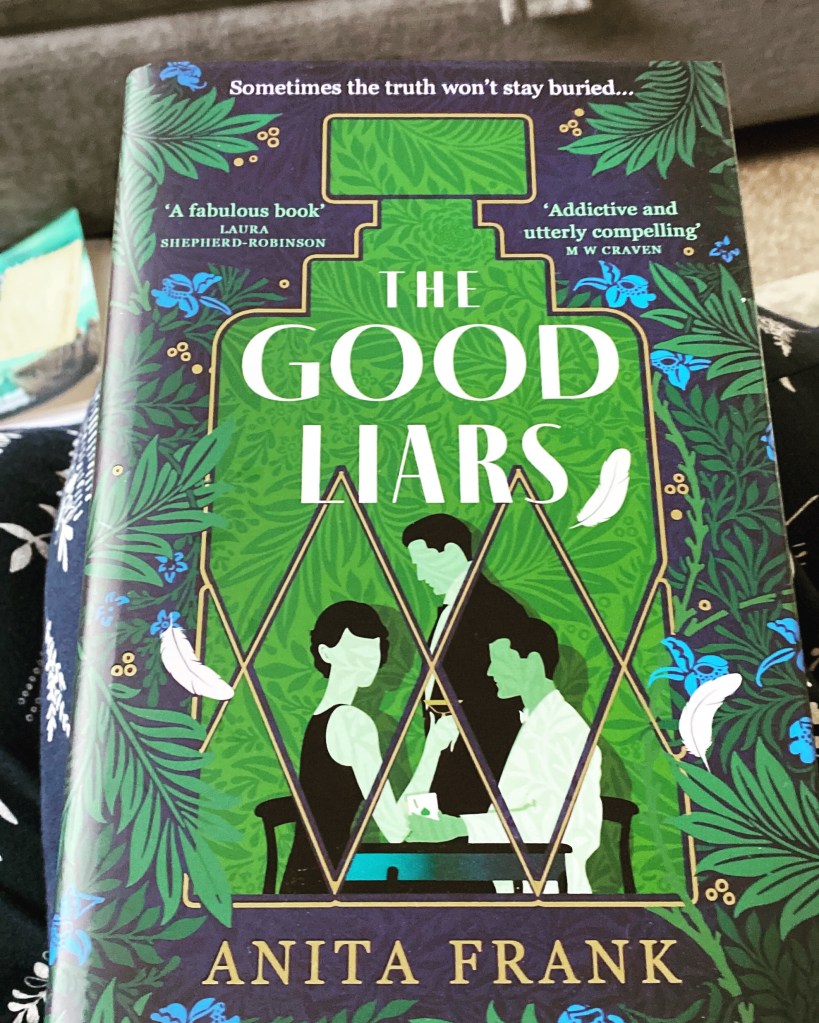
This is another mysterious house with lots of conundrums to solve and isn’t this beautiful Art Deco cover incredible too? Sarah is a new employee arriving at Darkacre, the family seat of the Stilwells. Like many aristocratic families, WW1 has wreaked havoc on the men in this family. When their father died, the eldest son Hugo became the heir of Darkacre. Yet his time as heir was very short – he was killed on his return to the front leaving middle brother Maurice as heir to the Stilwell estate. Maurice was not prepared to be the master of the house and with double death duties already crippling the estate, he has learned fast. Unfortunately, he has returned from war a changed man too, plagued by nightmares, flashbacks and extreme responses to loud noises, an ailment then referred to as shell shock. With youngest brother Leonard severely disabled by his war injuries and struggling to come to terms with the loss of his limbs, the family are depleted and barely coping. However, as Leonard so cryptically tells us, perhaps it is no more than they deserve? Sarah’s arrival is the catalyst for this story and it isn’t just the relationship between family members that points to there being issues at Darkacre, soon a series of unexplained happenings start to gnaw away at the nerves of even the most stoic inhabitants. Especially the arrival of a mysterious, masked detective who claims to be trapped by rising water as a storm descends. A storm that rumbles all night, both outside and inside Darkacre. Exactly what is this family hiding? Brilliantly set in it’s time, with issues of loss and disability handled incredibly well
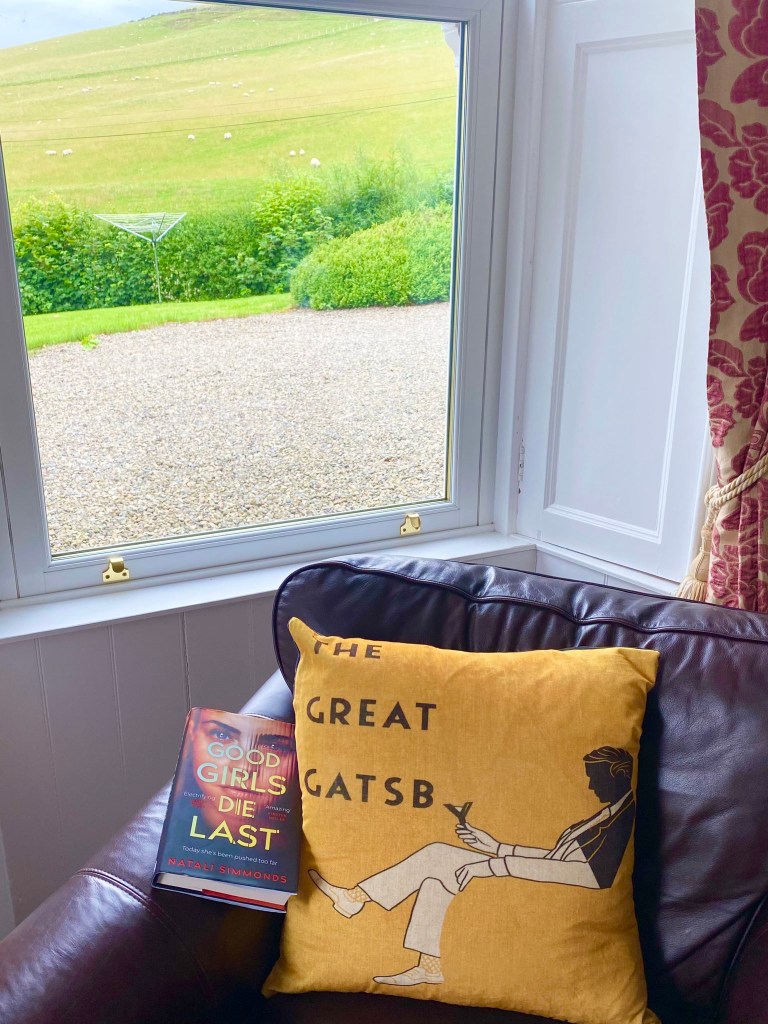
Wow! This is a searingly raw story, simmering with righteous anger and injustice. Set on a boiling hot summer’s day, you can almost smell the tarmac and diesel fumes. You can hear the traffic noise and feel the agitation and impatience of people trying to get to work without exchanging a word with anyone else. It’s too hot to breathe let alone exchange a friendly word. Em needs to get through her day at work, stay smart for her appraisal then find her way across London to reach the airport to catch an evening flight to Spain for her sister’s wedding. What follows is a total clusterfuck! This book is impossible to put down as the heat, her appraisal and strikes on public transport conspire to ruin her day. Not to mention the psychopath running round London and strangling women. Then she gets her period. I finished this book overnight because I just had to know what happened next. Em is determined and with the help of some new friends she is reminded that she doesn’t have to keep her landlords secrets, nor is it her fault that her much older, married boss sexually harassed her. It’s time to stop accepting the state of things and fight back. As Em becomes an unlikely heroine, this is a shocking indictment of the world we inhabit as women and a reminder not to accept it. Powerful, visceral and thought provoking.
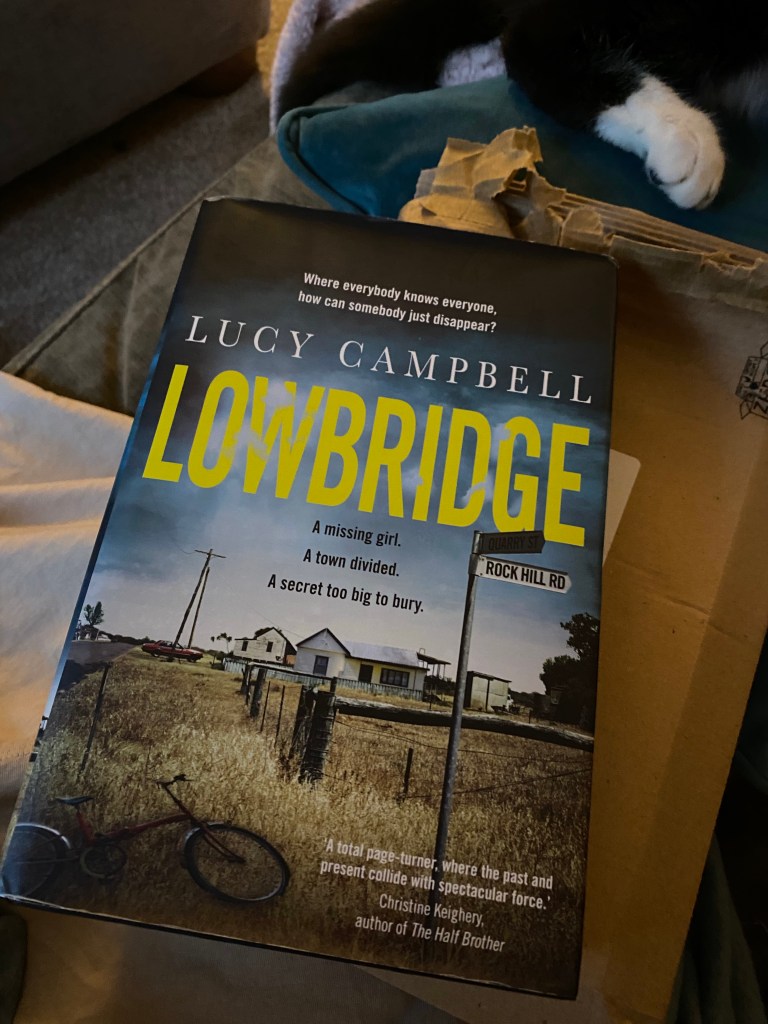
This story is a slow burn, dual timeline mystery set in small town Australia. Katherine has moved to her husband James’s hometown of Lowbridge, a town with a very clear line between ‘the haves and have-nots’. Katherine is struggling with her mood and self-medicating with drink. James is hoping that the move will help her and has made it clear that they can’t continue as they are. He encourages her to get dressed and leave the house or go for a run like she used to. It’s clear something momentous has happened and their lives have imploded, but they are each dealing with it in different ways. When she does leave the house, Katherine accidentally stumbles across the town’s historical society and shows an interest in the exhibition they’re putting together. It’s something she can potentially help with and it’s enough to get her leaving the house. However, when she comes across a thirty year old mystery, problems start to arise. The disappearance of a young girl called Tess during the summer of 1987 has remained unsolved and Katherine thinks it may be time to highlight the case and perhaps jog people’s memories. She knows she must involve Tess’s family in the decision, but she doesn’t expect opposition from anyone else. It’s James’s opposition that surprises her most. He tells her to leave the mystery alone, that it will stir up trouble and it’s would be unhealthy for her to become wrapped up in another family’s grief. Katherine is determined though and with Tess’s family on board she starts to research what happened in 1987. Who has the most to lose from her findings? A brilliant depiction of how loss affects individuals and a whole town. Thoughtful, honest and addictive.
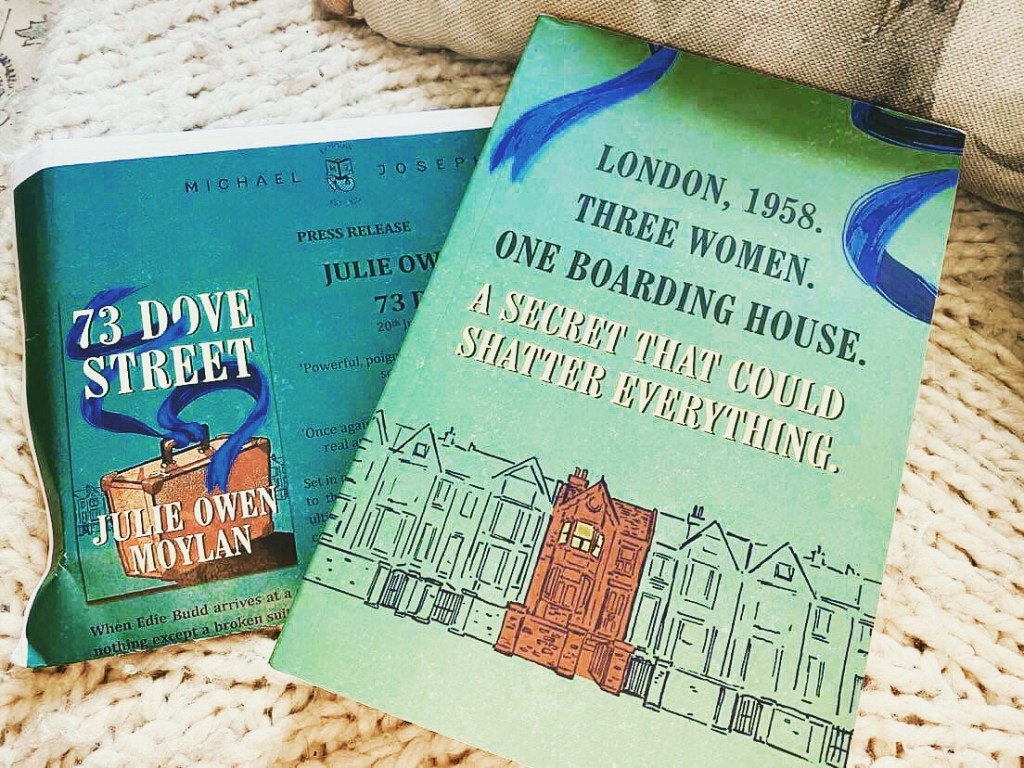
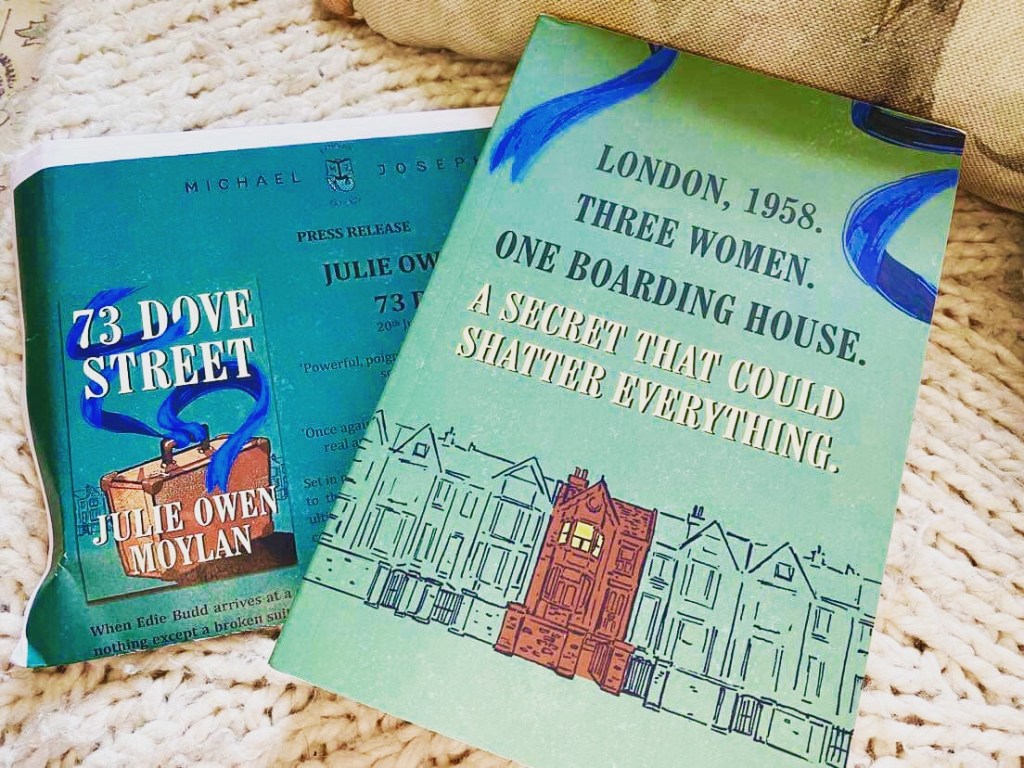
73 Dove Street is Julie Owen Moylan’s third novel and I thought it was a brilliant depiction of ordinary women’s lives in post-war Britain. What an incredible writer Julie Owen Moylan is, because within a few pages I was absolutely immersed in 1950’s London. This is a London I haven’t visited too often in literature, the haunted and broken post-war period rather than the glory and the drama of the the war itself. Here the war has a ghostly presence, shown by children climbing piles of rubble or an incomplete street that looks like a mouth with one of it’s teeth missing. The story is told through three women; Edie, Tommie and Phyllis. It’s Edie we follow to 73 Dove Street where she hopes to look at a room, with just a single suitcase and an envelope full of cash. Edie is almost put off by the mattress and pile of men’s clothes burning fiercely just outside the yard, but a voice summons her from an upstairs window and she recognises a place she can lie low. What is she hiding from? Tommie lives in the room below and works for an eccentric socialite who was once wealthy and popular. Outside work Tommie is lured to the seedy nightlife of Soho and the man she can’t quit. Phyllis is the landlady of 73 Dove Street, burning her husband’s belongings in the street after she discovered a terrible betrayal. She puts on a good front, an armour that she needs to cope with a past she won’t talk about. Slowly each woman’s story is unravelled and as we hear them it is so emotional, I found it deeply moving. It isn’t just the bombed houses that are missing. There are people locked in wartime, trying to carry on by avoidance, distraction or stepping around something there’s only one way through. I found this part of the book so beautifully rendered by this wonderful writer that the emotions were deeply felt.
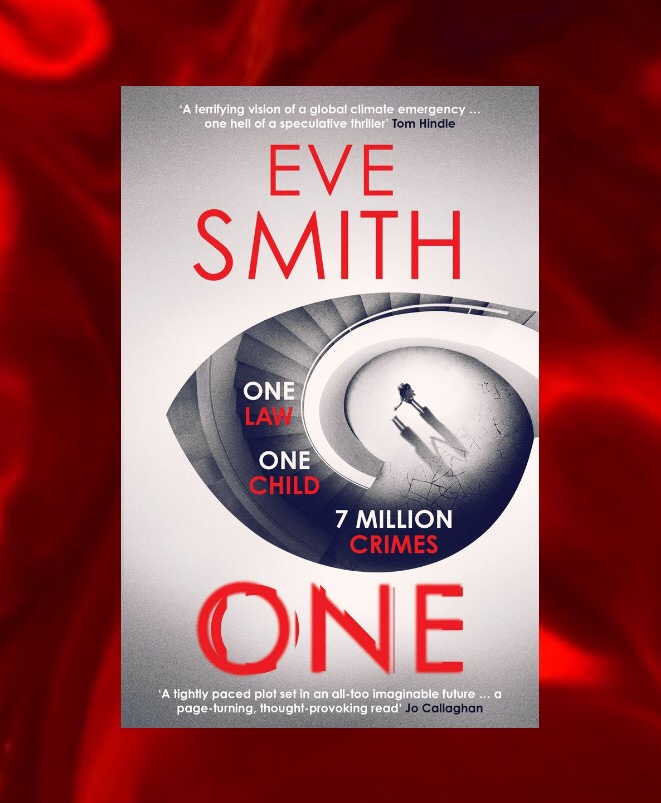
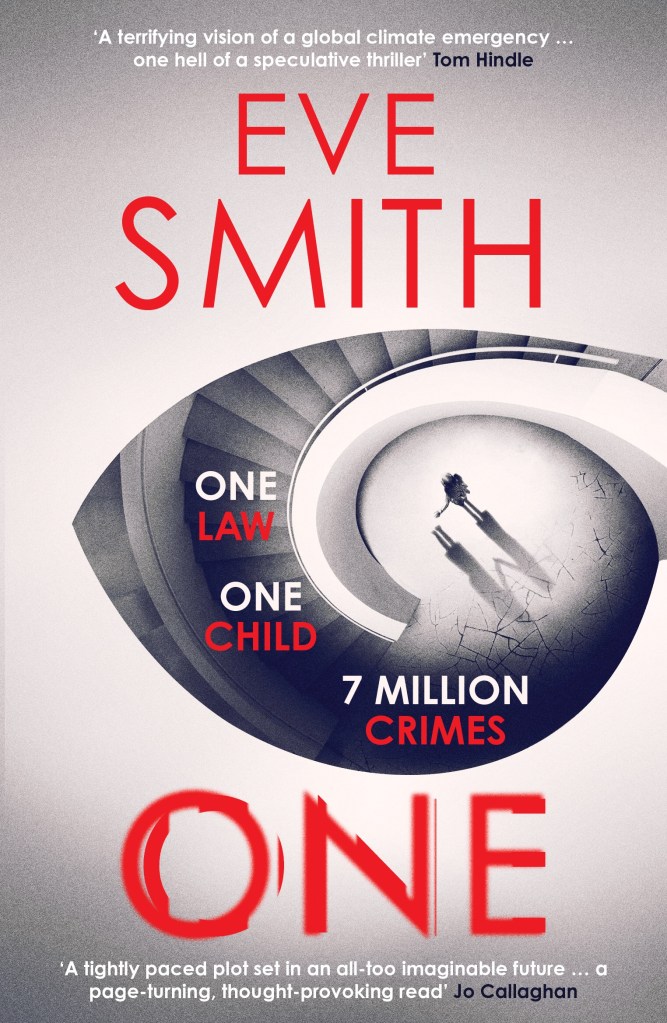
A catastrophic climate emergency has spawned a one-child policy in the UK, ruthlessly enforced by a totalitarian regime. Compulsory abortion of ‘excess’ pregnancies and mandatory contraceptive implants are now the norm, and families must adhere to strict consumption quotas as the world descends into chaos. Kai is a 25-year-old ‘baby reaper’, working for the Ministry of Population and Family Planning. If any of her assigned families attempts to exceed their child quota, she ensures they pay the price. Until, one morning, she discovers that an illegal sibling on her Ministry hit- list is hers. And to protect her parents from severe penalties, she must secretly investigate before anyone else finds out. Kai’s hunt for her forbidden sister unearths much more than a dark family secret. As she stumbles across a series of heinous crimes perpetrated by the people she trusted most, she makes a devastating discovery that could bring down the government … and tear her family apart. I LOVE that Eve Smith doesn’t baby her readers. If there are hover cars that’s what she gives us. A two word description. No long flowery explanations of how they came to be, she just tells us what IS. She expects our own imaginations to keep up. The immediacy of her writing brings us slap bang in the middle of this alien world and it’s exhilarating. This is a great addictive thriller, involving one of women’s most emotive issues. It’s an emotional, intelligent and imaginative read from a writer who’s fast becoming my go-to for speculative and dystopian literature.
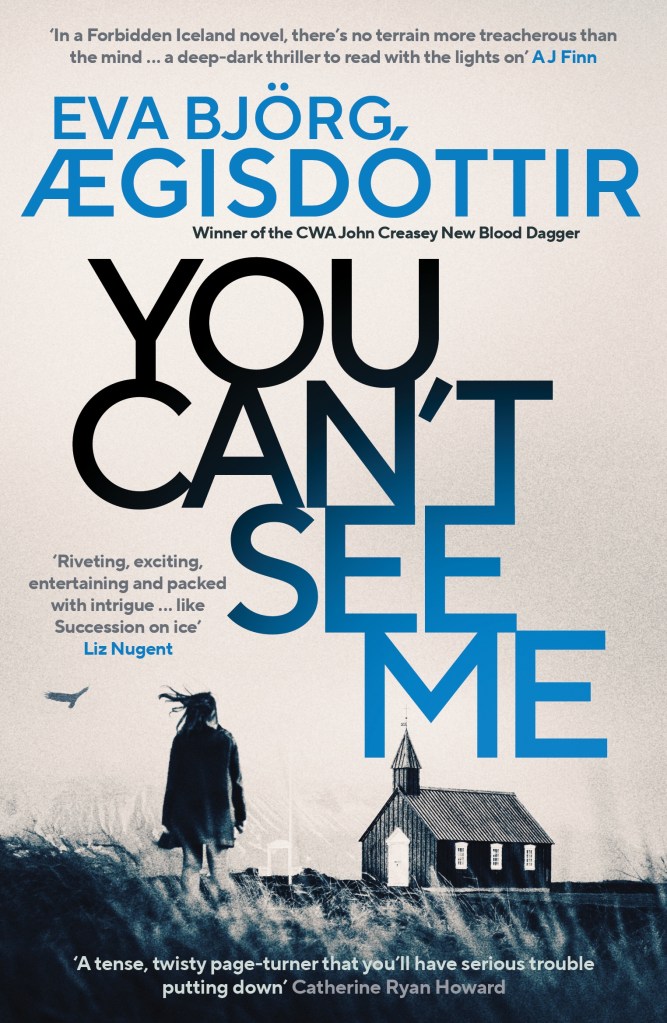
I LOVED the first two books in the Forbidden Iceland series, featuring detective Elma, recently returned to her home town of Akranes after several years working in Reykjavik. This story is a prequel and we meet her eventual partner Sæver as he looks into some very strange events surrounding a family reunion. This is not your average family though and I don’t think I’ve ever wanted to be at a party less! My sympathies were largely with hotel employee Irma who views the Snæberg family as if they are a totally different species. In a way they are, set apart by their successes and their wealth from the everyday hotel employee. So wealthy in fact that they’ve hired this entire luxury hotel for the weekend, with a full itinerary of activities and boozy dinners at night. It isn’t long before tensions and differences come to light: judgements and opinions on each other’s partners; family members who’ve lost touch and resent each other; teenagers who’d rather be elsewhere; parents who can’t connect with their children or each other. All cooped up together for a whole weekend. As the author moved our point of view from one character to another we realise this family has so many secrets. As a storm begins to roll in, cutting the hotel off from civilisation, horrifying truths bubble to the surface. Someone who has been waiting a long time for their moment makes their move in this complicated chess game. We don’t always see those who hide in plain sight and those we think we know could be monsters in disguise. I love this author’s ability to get inside the heads of her characters and pull the reader along with her. Here she builds a labyrinth of clues, red herrings and suspicious characters that I found absolutely impossible to resist. That’s why I was awake at 3am, with my attention split between the page in front of me and my ears attuned to even the slightest creak downstairs. After all you never know who might be watching….
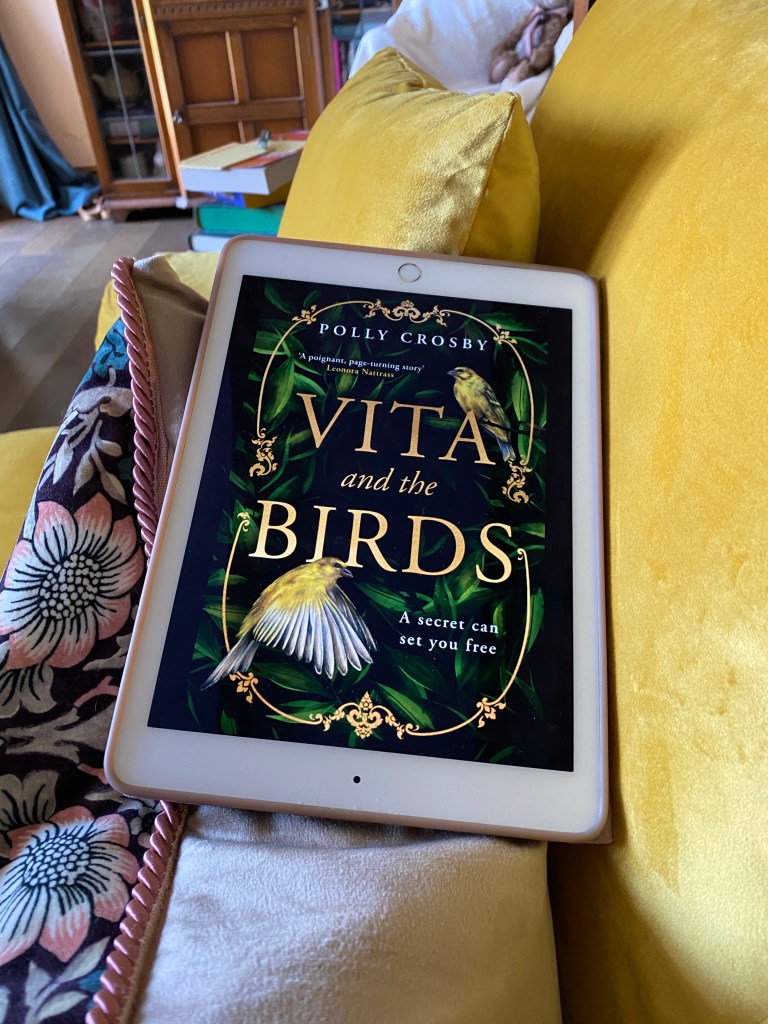
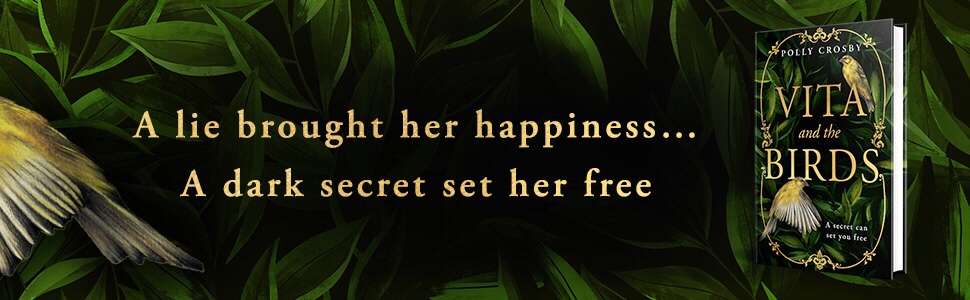
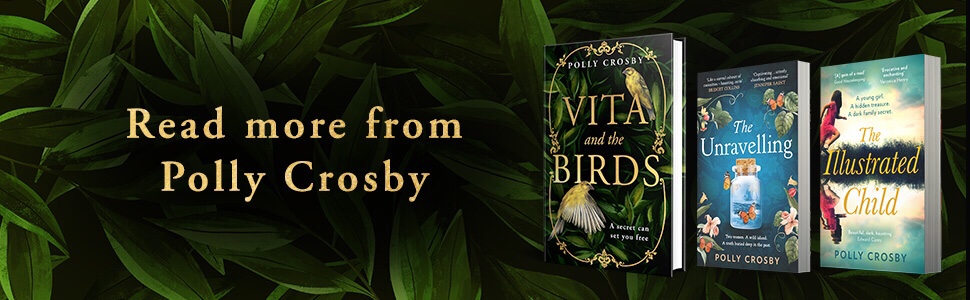
I’ve looked forward to the new Polly Crosby novel for a while. I love her writing so I gave myself a lovely sunny weekend to completely wallow in the story. Eve has felt adrift since her mum Angela died, so her four brothers think it might be good for her to take a trip to the coast and clear out their grandmother’s studio. Grandmother Dodie was a painter and lived a fairly basic life in a small ramshackle studio just off the beach and all have fond memories of childhood holidays there. Close by is the strangely alluring Cathedral of the Marshes, a glass building so imposing it has the presence of such a holy building. Once, when she was a teenager, Eve had taken a dare to go into the cathedral with Elliot, one of the local boys. She remembers being terrified and running, but doesn’t remember much else about that night apart from seeing a painting standing on an easel – a portrait of her. How will it feel to be back in the place that still holds some of her best childhood memories? She finds a box under the sink filled with Dodie’s letters and reads of a hidden relationship and is plunged into a completely hidden part of her grandmother’s life, a powerful love affair with repercussions that lasted decades. We’re pulled back into the past to see what happened. As I was reading about the past I kept wondering who owned Goldsborough Hall now? The answer took many unwashed dishes and unhoovered floors to unravel. This was a beautiful hidden love story and an intriguing mystery as well, told with compassion and empathy.

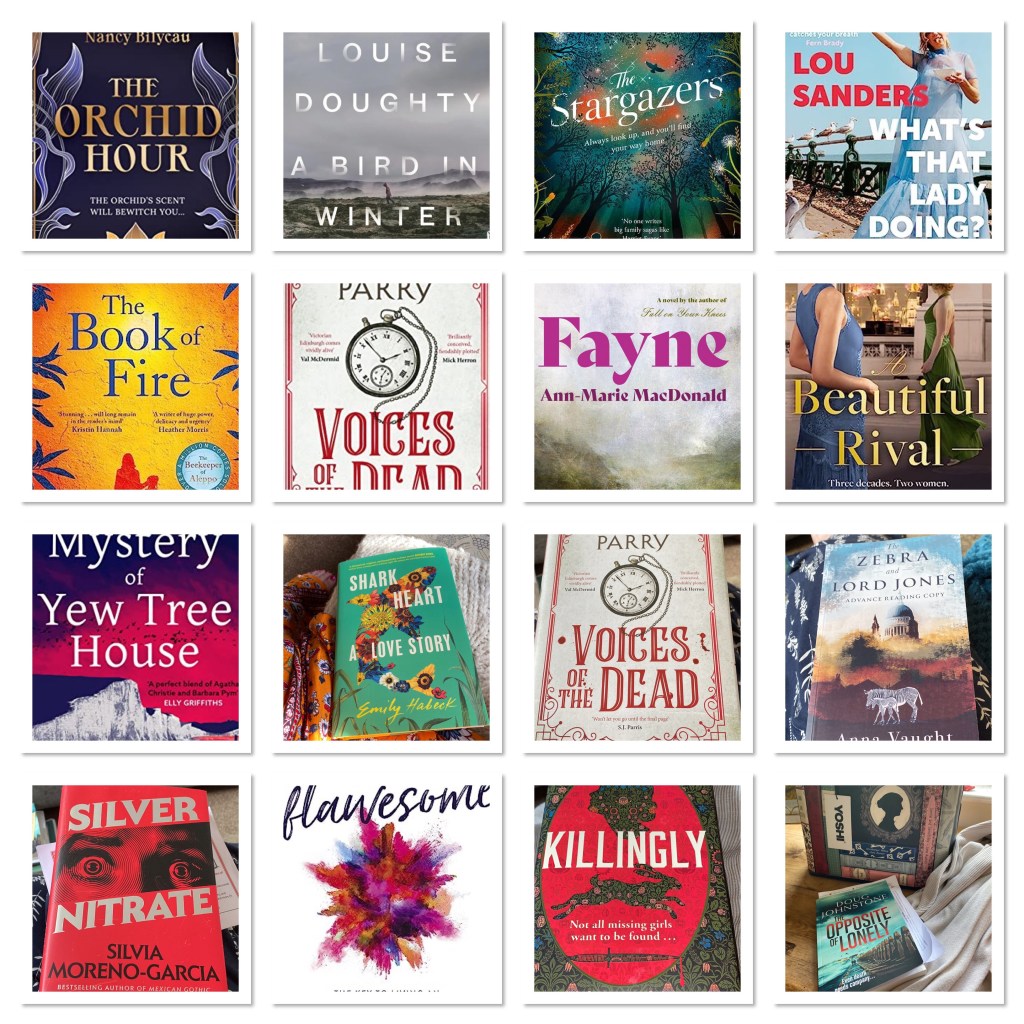
What a brilliant month and as we creep closer to the end of the year I’m even more worried about how I’ll choose between them for the best of the year! I’ve been away this month and wanted to catch up on some books in series that I’ve only partly read. So I have to mention Matt Wesolowski’s Six Stories series. I took the remaining four books to Shropshire with me and out of all of them, it was Changeling that made the hairs stand up on the back of my neck. Not helped by the fact we were out in the very area between Chester and Wrexham featured in the story. This was a brilliant mystery and supernatural thriller combined and I can honestly say Ive never been disappointed by one of his books. I also enjoyed a paperback from Elizabeth Noble with the title Other People’s Husbands where the balance of a group of couples shifts when two people decide to have an affair. This was a brilliantly balanced novel that gives us the viewpoint of the two adulterers as well as other members of they’re social group. Can friendship and marriages triumph over this mistake, or has it blown everything apart? Both will appear in the next month on Throwback Thursday with a full review. Finally I must mention this lovely novel which was a Squad Pod Collective choice for July that I’m a little late starting. Minor Disturbances at Grand Life Apartments by Hema Sukumar was a very enjoyable holiday read about the residents of a an old set of apartments in Chennai, South India. This is a relaxing read, full of incredible detail with each resident facing a personal dilemma as well as the possible compulsory purchase of their homes. Review to come in the next few days. See you next time and here’s a peek at next month’s TBR!
Posted in Netgalley, Publisher Proof

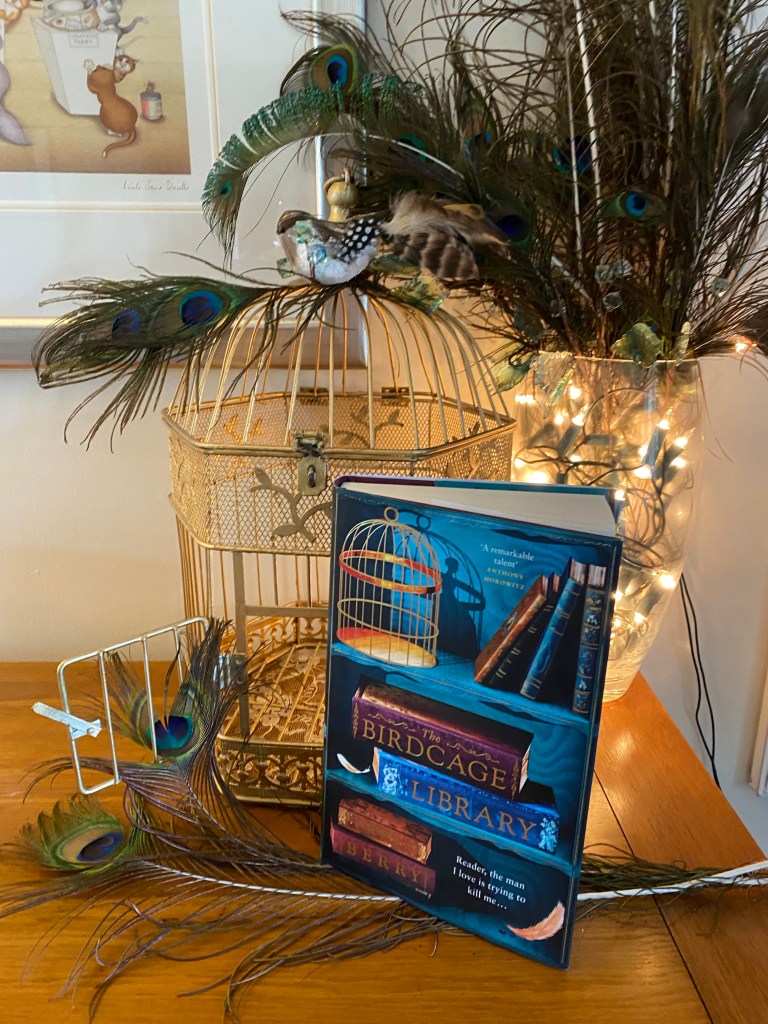
The Birdcage Library by Freya Berry

Dear Reader, the man I love is trying to kill me ….

In 1932 Emily Blackwood, an adventurer and plant collector, is employed by Heinrich Vogel to solve a puzzle. A treasure is hidden in his remote Scottish castle and he has employed her to find it. Her excavations take us back several years to New York and a young woman called Hester caught between two brothers and the family business of supplying rare animals to society homes and show business. As Emily follows the clues she discovers torn out clumps of pages from their hiding places around the castle. These tell Hester’s story in her own words and Emily starts to piece together this part of the Vogel’s family history. However, the discovery means she also starts to question her host, the isolated place she’s staying and whether or not she is safe within it’s walls. As Emily solves the clues and we race towards her final conclusions I found myself anxious and thoroughly addicted to Freya Berry’s intriguing and puzzling mystery.

I also found myself rather spellbound by the a book because it features one of my more macabre favourite things – I have to admit that vintage taxidermy has a strange fascination for me and the quirkier it is the better. Victorian tableaux with their anthropomorphised animals really do make my heart flutter. Rationally, I know it’s horrible and undignified for these beautiful creatures but I can’t resist a squirrel tea party. This book is set at a time when killing these beautiful living creatures and posing them for the collections of rich men is huge business. The Scottish castle has it’s owncollection, but we are also taken back a few years to Heinrich Vogel’s youth when he and his brother were the source of all these wondrous creatures. In one example, sourcing a vast collection of hummingbirds to be the talking point of an exotically themed gathering for the great and good of New York Society.

Emily rather reminded me of another incredible heroine, botanist Alma Whittaker in Elizabeth Gilbert’s wonderful novel The Signature of all Things. Like Alma she is intelligent, curious and forges her own path in the world of scientific discovery. I loved that Emily wasn’t like other women in society, usually depicted in fiction as diverted by dances and adorning themselves for the marriage market. She is an academic and sets foot in places across the world that many men haven’t yet reached, never mind the supposed fairer sex. That said, her biggest adventure and challenge is trying to be acknowledged for her expertise within an academic system that’s firmly a patriarchy. It is a lack of funds that put Emily in Vogel’s orbit, when he hears of her employment cataloguing the Rothschild’s butterfly collection. He feels that only the intelligent and ingenious Miss Blackwood will do as he wishes to catalogue his own incredible collection of taxidermy creatures. It doesn’t take long for Emily to discover there’s a more intriguing task though. Heinrich Vogel’s sister-in-law Hester famously threw herself to her death from the Brooklyn Bridge. From an old book entitled The Birdcage Library, Emily deciphers clues that lead her to the remains of Hester’s diary and her words pull Emily into a past filled with clues, explaining all that happened to the Vogel brothers and Hester’s relationship with them.

The highest form of love is indistinguishable from liberty.

Freya Berry uses her historical knowledge perfectly. It grounds the story within it’s time, using real people and places to anchor Hester’s account until it feels like part of history rather than fiction. The world she describes is so rich, alive with sound and colour, creating an all round sensory experience for the reader. I felt like I knew this world inside out. As many of you know, the birdcage is a potent symbol for me, one that I have tattooed on my body as a reminder to never let anyone put me inside one again. Here Freya Berry uses it as a metaphor for the way high society and wealth keep women from living the fullest lives they could. A cage is a cage, even if it’s a gilded one. The women in New York society may have money enough to adorn themselves with the feathers of birds of paradise, but they would never have the freedom that Emily has had to travel abroad and see these birds living in their native habitat – something infinitely more valuable than wearing them as a hat. Despite having a central role in the Vogel’s business operations, Hester is soon relegated to the parlour when her brother-in-low returns to New York. The business is going in a different direction, as her husband pursues the kind of fame and fortune earned by Barnum. Her creativity, business acumen and financial know how are sidelined and she finds herself bored and dissatisfied. Her distraction from the boredom and bewilderment of being relegated to the parlour, is a destructive one.

As Emily gets closer and closer to the final parts of Hester’s diary, she realises that the repercussions of what happened in New York are still playing out, but now she is in the middle. I was actually starting to be scared for her safety. The arrival of Vogel’s nephew Yves made me wonder if Emily could find an ally in this isolated castle? Or is she doomed to live out Hester’s life, caught between two Vogel men? The novel is the perfect combination of historical novel and mystery, with just the right edge of gothic darkness. There are echoes of both Jane Eyre and Rebecca here, two of my all time favourites. Freya Berry has created two interesting and intelligent heroines in Hester and Emily, and I was enthralled by their stories till the final page. I think you will be too.

I am no bird; and no net ensnares me

Jane Eyre by Charlotte Brontë

Meet the Author


Freya Berry always loved stories, but it took several years as a journalist to realise she loves the kind of truth that lies in fiction, not reality. (Or, to put it another way, making stuff up is more fun.) 

Her second novel, The Birdcage Library, is out now, a gothic mystery and literary treasure hunt packed with twists. A 1930s adventuress discovers an old book containing clues about the disappearance of a woman who vanished 50 years before. Set between a Scottish castle in the 1930s and an exotic animal emporium in Gilded Age New York, it’s a gothic tale of secrets, obsession and murder. Oh, and taxidermy. 

Her first novel The Dictator’s Wife, a high-stakes exploration of power, glamour and complicity, was published in 2022. It was shortlisted for the Authors’ Club First Novel Award, a pick for the BBC’s flagship book show Between The Covers, and The New European’s novel of the year. 

Freya lives in London and graduated with a double first in English from Cambridge. She spends more time reading smutty fantasy novels than she likes to admit.

Posted in Squad Pod

73 Dove Street by Julie Owen Moylan

What an incredible writer Julie Owen Moylan is, because within a few pages of starting her new novel I was absolutely immersed in 1950’s London. This is a London I haven’t visited too often in literature, the haunted and broken post-WW2 period rather than the supposed glory or the drama of the the war itself. Here the war has a ghostly presence, shown by children climbing piles of rubble or an incomplete street that looks like a mouth with one of it’s teeth missing. The story is told through three women; Edie, Tommie and Phyllis. It’s Edie we follow to 73 Dove Street where she hopes to look at a room, with just a single suitcase and an envelope full of cash. Edie is almost put off by the mattress and pile of men’s clothes burning fiercely just outside the yard, but a voice summons her from an upstairs window and she recognises a place she can lie low. What is she hiding from? Tommie lives in the room below and works for an eccentric socialite who was once wealthy and popular. Outside work Tommie is lured to the seedy nightlife of Soho and the man she can’t quit. Phyllis is the landlady of 73 Dove Street, burning her husband’s belongings in the street after she discovered a terrible betrayal. She puts on a good front, an armour that she needs to cope with a past she won’t talk about.

This author is absolutely brilliant at creating a feeling and time period, from the dark and depressing post-war London to the interiors of both No 73 and the more upmarket house where Tommie works.

“It was one of those London streets that had become a canvas of tatty boarding houses: windows filled with crooked pieces of cardboard saying ‘Room to Let’. The houses all looked the same: bay-fronted with scruffy front gardens filled with dustbins, and children loitering on doorsteps with their runny noses and scraped knees.“

She makes a beautiful observation about these streets, that where once there were hints of colour, London is now bombed back to dreary black and white. People are trying to drag their lives out of wartime monochrome, but fail every time. There are houses with the front ripped off and the contents still inside, looking like a grotesque full-size doll’s house. Through Tommie’s childhood experiences we can see what it was really like to be in one of those houses as she remembers a direct hit on her family home and being sat in the suffocating dark rubble until a hand breaks through to save her. These memories are so powerful and evocative, they really bring the reality of the Blitz to life. It’s clear that one of the reasons why London is so bleak is that it’s people are traumatised and numb. As well as the lack of money, rationing and their surroundings, these people haven’t even begun to recover. They’re vulnerable and in the case of our main characters, they’re trying to battle on alone.

I was immediately on board with Edie and loved the way the author built up her relationship with Frank. It was one of those situations where I could clearly see what was going to happen and I was mentally screaming at Edie to walk away. This is a man who knows how to choose the right woman, the one who will fall for his charms and become hooked on the way he operates. He likes to keep a woman on edge, waiting for his affection and easily moulded to what he wants by withholding that affection. Sadly it’s a pattern that’s only noticeable when you’ve been through it and Edie is a quiet, inexperienced girl who’s bowled over by his subtle manipulations. She’s so unformed and brought out such a protective mode in me. In a typical pattern he follows any glimpse of anger or violence with apologies and huge gestures.

“Frank’s pale blue eyes never left Edie’s face. Pleading with her without saying a word, desperate to make everything right between them. ‘Will you marry me, Edie? Say you will . . .’ The words tumbled out before Edie could stop and think about them. ‘Yes, of course I will.’ Her arms wrapped around his neck; her good wrist covering the bruises on the other one. His mouth felt tender and warm on hers and for that moment she couldn’t hear the daft comments or applause from the pub, it was just her and Frank”.

The abuse Edie suffers is a hard read, but such an authentic representation of domestic violence in all it’s forms. I am from a working class family, with some very strong women on both sides especially in those aunties old enough to get married during the war. They often comment on how the generations beneath theirs are too quick to split up or divorce and that marriages in their generation tended to stay together. Yet, when I hear the reality of some of their marriages – the drinking, gambling, physical and sexual violence, financial abuse and infidelity – I wonder what’s the point of a long marriage that has only left them grieving and traumatised? The author shows how economic and psychological difficulties prevented women from leaving terrible relationships. I was interested to read the author’s comments about her own family and how the strong women in it had given her inspiration for the book.

I haven’t spoken about Phyllis much, although towards the end of the book it was her experience that had tears pouring my down my face. At the beginning we see through Edie’s eyes the burning pile of men’s clothes outside No 73 and we could guess at what had happened in her marriage. She’s full of anger at her husband, but as the story develops we get the feeling there is something more underlying her feeling of being wronged. We get the picture of a marriage rather like the bombed out houses – a facade remains but it’s been empty for some time. When we hear the full story it is so emotional, I found it deeply moving and could identify with this woman whose abrupt manner is simply the amount of protection she needs to get through each day. It isn’t just the bombed houses that are missing. There are people locked in wartime, trying to carry on by avoidance, distraction or stepping around something there’s only one way through. I found this part of the book so beautifully rendered and deeply felt. Julie has dedicated this book to her grandmother and the strong, working class women in her family. She has really done them proud with this wonderful historical novel.

Published by Michael Joseph 20th July 2023

Meet the Author

Julie Owen Moylan was born in Cardiff and has worked in a variety of jobs, from trainee hairdresser and chip shop attendant at sixteen to business management consultant and college lecturer in her thirties.

She then returned to education to complete her Master’s degree in Film before going on to complete a further Master’s degree in Creative Writing. Julie is an alumna of the Faber Academy’s Writing a Novel course. She lives in Cardiff with her husband and two cats.

Julie can be found on Twitter: @JulieOwenMoylan

Posted in Netgalley

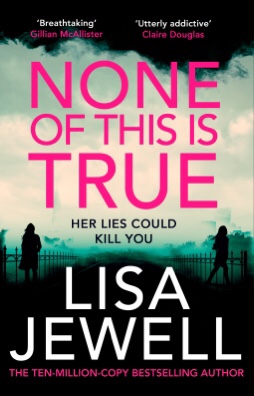
None Of This Is True by Lisa Jewell.

I always look forward to a new novel by Lisa Jewell, because I know I’m going to be engrossed in it for the weekend, oblivious to everything else that’s going on around me. This new novel was so addictive I’m not sure I looked up and luckily my other half knows when to disappear into his workshop and to deliver a hot brew on the hour. I have no idea how this writer manages to be so prolific, but thank goodness she does! She always manages to find a new angle to the thriller and this novel has a really interesting premise based around the phenomenon of podcasts. One of our protagonists, Alix, has been running a successful weekly podcast based around women’s lives and interviewed women who would inspire her listeners. However, it was time for some new ideas and so far Alix hasn’t had one. Then she meets Josie Fair. Josie is celebrating her forty-fifth birthday with her husband in a restaurant that’s a little more upmarket than they would usually book. She notices a group at a large table celebrating the birthday of a rather glamorous woman. Later in the night, the women bump into each other in the lady’s loo. Josie mentions to Alix that they share a birthday and is surprised to discover they are both 45 years old. They make a joke about being birthday twins then go back to their tables where the huge contrast between them becomes clear. Alix’s table is filled with friends, flowers and balloons whereas Josie is having a quite dinner, just her and her husband Walter. A few days later they accidentally meet again outside Alix’s children’s school. This time they chat about Alix’s work and Josie admits she’s been listening to some of Alix’s podcast since they met. Alix has made a successful series interviewing inspiring women, but admits she’s now looking for a change of direction. Josie volunteers herself as a subject, admitting that she’s about to go through some major life changes and seemingly convinced that Alix’s listeners will want to hear her story. They swap contact details and each comes away feeling positive, but Josie wasn’t exaggerating. Big changes are on the way, just not in the positive, life-affirming way Alix is used to. After interviewing Josie once Alix knows her story will appeal to listeners, because despite being very unsettled by her subject, she can’t help wanting to dig further.

The format really does work, with the interviews providing so much information to unravel and tantalise the reader. In-between we see the effect Josie’s revelations have on her own family life and on Josie’s as well. Each interview works very like a counselling session, but perhaps most like the early sessions when the client is telling you their story so far and what brings them to therapy. Alix is a fantastic listener and allows Josie to tell her story in her own way and at her pace, only asking questions to clarify or encourage her interviewee to expand on a point. I detected a subtle shift as the interviews progressed, but it’s almost imperceptible. While at first Alix is in control of the project, Josie starts to take charge both of the content and how often they meet and work together. This could simply be a woman finding her confidence or having an emotional need to offload her story quickly, while she has the courage. Josie weaves a tale of grooming and domestic abuse that’s not easy to listen to. Her husband Walter is much older and very set in his ways, they started their relationship when Josie was a teenager and Walter was in his thirties. There are little clues to the control he has over his wife, such as wearing double denim to please him and not having a job, even though their daughters are beyond school age. At this point I feared for Josie, but also for her daughters: why has one left home at 16 and why does the other one seem locked in her bedroom with a diet that consists of nothing but baby food? One tiny act of Josie’s made me go cold. Each time she visits, she starts to take small items from Alix’s home, starting with a coffee pod that she hides in her underwear drawer.

As Josie becomes more involved in Alix’s life, Alix’s Instagram lifestyle seems to erode.

“She thinks of Alix’s home: from the front, a neat, terraced house with a bay window, no different to any other London Victorian terraced house, but inside a different story. A magazine house, ink-blue walls and golden lights and a kitchen that appeared weirdly to be bigger than the whole house with stone-grey cabinets and creamy marble counters and a tap that exuded boiling water at the touch of a button. A wall at one end reserved purely for the children’s art!”

Her husband Nathan has always had issues with alcohol, but they really come to the fore. He’s always had a line he doesn’t cross, but now he starts to stretch to one more drink, staying out later with work colleagues, going out for a normal lad’s night then not coming home. Alix knows that once it reaches a certain time, it’s likely he will be on a bender, only coming home when he’s run out of funds or sobered up. Where is he when he doesn’t come home? Alix starts to doubt Nathan’s fidelity and finds herself searching for evidence. As the stress at home cranks up a notch, Alix notices that Josie is pushing the boundaries of their agreement. She turns up where Alix doesn’t expect her, stays longer than their agreed session and Alix can’t tell if she’s becoming subsumed by Josie’s world, or if Josie is starting to take over hers. There’s a claustrophobic feeling and a sense of menace starts to creep in, as Josie controls her story and will only let it unfold in the way she has planned. I sensed something was very wrong and wanted Alix to back off the story, even though it could make her name in the world of podcasts. Alix seems transfixed by Josie’s story, her life is like a car crash you can’t look away from and although part of Alix has the journalistic interest in a great story, another part is fascinated by the horror of what Josie is telling her. In much the same way as the reader is fascinated too, I genuinely couldn’t put the book down until I’d worked out what was going on. Were Josie’s revelations putting herself and Alix in danger from Walter? Will telling her story change Josie, acting as the catalyst to leave the situation and get help for her daughter? I kept wondering about the other daughter, the one who left home. I couldn’t help but think she might be the key to the truth about Josie and Walter’s marriage.

I thought the structure, using the podcast for Josie to tell her story, was really clever considering how popular true crime podcasts are these days. I thought the idea for Alix’s podcast, interviewing inspirational women was very like the Megan podcast in tone showing how up to the minute Lisa Jewell has been in the creative way she frames her story. As coercive control is now so well known, as compared to four or five years ago. Everyone understands what it means and terms like ‘gaslighting’ have become the norm, showing up in soap storylines and all over social media. I think what Lisa has tapped into here is the overuse of these terms, so much so that they’ve become diminished. It seems that daily someone is claiming their ex was a narcissist but these are huge psychological labels that shouldn’t be used lightly – in the same way people say ‘I’m a bit OCD’ the real understanding of the disorder has become lost. It isn’t all about arranging your kitchen shelves so the labels show at the front. We are all educated into believing the victim of abuse, but in a society where these terms are so misused, should we reserve a little bit of judgment? If I was Alix I might have been inclined to walk away from the story – especially as she starts to have questions and doubts – to concentrate on my own problems. Josie’s story and it’s fallout are almost too messy and she seems very adept at knowing when Alix is doubting her, on one occasion turning up on the doorstep having apparently confronted Walter, and definitely outstaying her welcome. Lisa Jewell really is a master at these dark, almost nightmarish, stories about women’s lives while weaving so many twists and turns the reader can’t stop guessing until they’ve reached the final page. While I’ve enjoyed her recent novels I was absolutely gripped by this one and think she’s outdone herself. The setting and situation are so believable, the characters are incredibly well drawn, full of enough flaws and contradictions that you’ll be questioning everything they tell you.

Published by Random House 20th July 2023

Thank you to the publisher for allowing early access to the novel in exchange for an honest review.

Meet the Author


LISA JEWELL was born in London in 1968.

Her first novel, Ralph’s Party, was the best- selling debut novel of 1999. Since then she has written another nineteen novels, most recently a number of dark psychological thrillers, including The Girls, Then She Was Gone and The Family Upstairs and The Night She Disappeared, all of which were Richard & Judy Book Club picks.

Lisa is a New York Times and Sunday Times number one bestselling author who has been published worldwide in over twenty-five languages. She lives in north London with her husband, two teenage daughters and the best dog in the world.

Posted in Random Things Tours

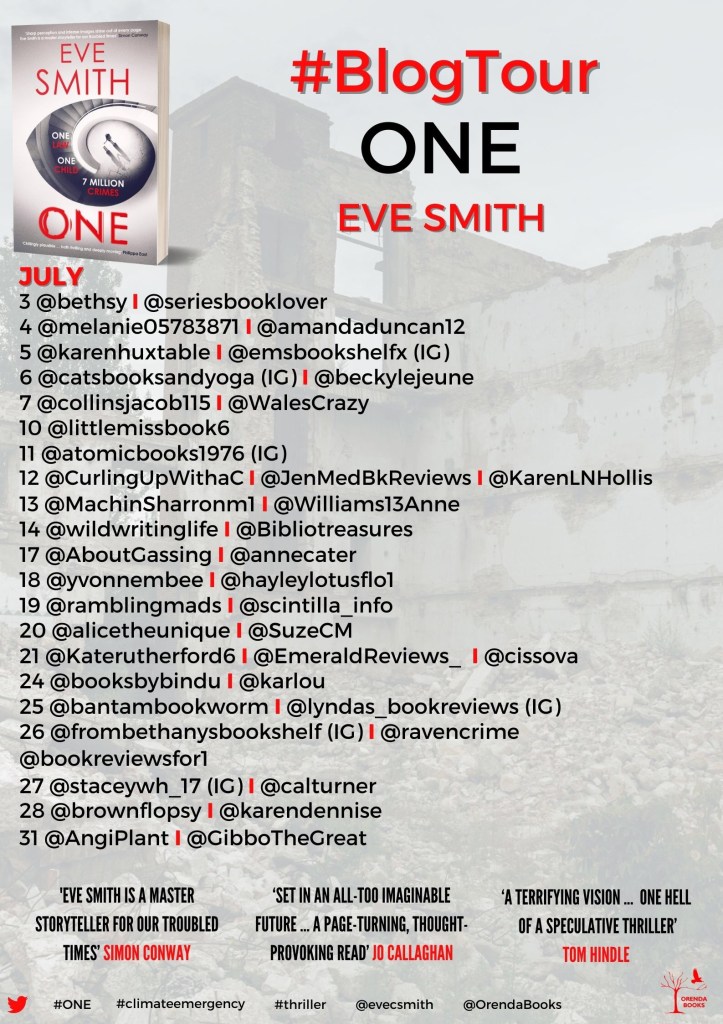
One by Eve Smith.

A catastrophic climate emergency has spawned a one-child policy in the UK, ruthlessly enforced by a totalitarian regime. Compulsory abortion of ‘excess’ pregnancies and mandatory contraceptive implants are now the norm, and families must adhere to strict consumption quotas as the world descends into chaos.

Kai is a 25-year-old ‘baby reaper’, working for the Ministry of Population and Family Planning. If any of her assigned families attempts to exceed their child quota, she ensures they pay the price.

Until, one morning, she discovers that an illegal sibling on her Ministry hit- list is hers. And to protect her parents from severe penalties, she must secretly investigate before anyone else finds out.

Kai’s hunt for her forbidden sister unearths much more than a dark family secret. As she stumbles across a series of heinous crimes perpetrated by the people she trusted most, she makes a devastating discovery that could bring down the government … and tear her family apart.

I LOVE the way Eve Smith doesn’t baby her readers. If there are hover cars that’s what she gives us. A two word description. No long flowery explanations of how they came to be, she just tells us what IS. She expects our own imaginations to keep up. The immediacy of her writing brings us slap bang in the middle of this alien world and it’s exhilarating.

Our narrator Kai is a perfect ministry operative. She’s brainwashed from birth into accepting the world as the ministry present it. The political party One came to power with an unusual mix of ecological and anti-immigration policies. We might expect that ecological parties are more left-wing and we expect our totalitarianism to come in a right wing package. The lack of resources has left the country without options (although other countries have less draconian regimes) and any political movement can become a totalitarian one. Due to the climate emergency there are now places it is impossible to live so immigration is rising. The government used predictions of climate disaster to ease the population in to accepting extreme policies to reduce consumption and the population. Each family has a consumption quota to cover things like food, travel and water usage. I loved little touches like Kai’s grandparents always being the ones to overuse their quota, still used to the old days. The one child policy is the most extreme and the administration and enforcement of the policy is down to officers like Kai. The reality of her job is devastating. Women’s fertility is controlled by the Destine implant, a contraceptive with a chip that means it can be switched off when a woman wants to start a family, it is then switched back on after her only pregnancy. All women of child-bearing age have their HCA levels monitored by the government and as soon as any change is detected Kai’s department would know. In the case of a second child they must schedule a termination, but if they don’t that’s where Kai’s job begins. She must visit the woman and ensure that a second appointment is kept. Termination even applies in cases of twins. Prison awaits anyone who conceals a second pregnancy.

The reality of their policies as they affect real people is hard to read and Kai seems as obedient and capable of free thought as her robotic pet dog. I have found the author terrifyingly prescient in the past and I hope that’s not the case here. This isn’t necessarily our future but it could be. Every terrible policy here has it’s roots in our current world and that’s what’s so scary. The effects of climate change can seem a long way away so it was very disconcerting to find out that in this world Horncastle was on the coast! My stepdaughter’s other home is there and it’s only a half hour journey up the road from me. My home county is essentially a wetland. Despite this, I loved the inventiveness of the resistance movement Free, from their houses on rafts and living walls to the ability to morph their features. Again the author gives us just enough information to see it, because everything we see comes through Kai and to Kai this is normal. She has no memories of a world we would recognise, because she hasn’t lived in it. A bit like the way my stepdaughters gasp when I tell them there was no internet when I went to university and I had to do all my dissertation research from books. The immigration policies are an obvious extension of comments like ‘we can’t take any more people we’re all full up’. There’s an immigration centre coming three miles from us on an old RAF base and although we object to the plan on humane grounds – the government plan to keep people on the runway in storage containers – we were shocked to find how racist a lot of the opposition was. On our return from holiday recently we found a large St George’s Cross with crusader had been placed at the gates and we’ve vowed to go back in the dead of night and take it down. I often wonder if our government’s alarmist immigration rhetoric is simply a precursor to warring over the world’s remaining resources. Kai’s world played on some of my worst nightmares.

Despite Kai’s blinkered perspective, I did find myself respecting her as the story developed. She fears the ministry and her rather formidable boss Minister Gauteng. Yet, Kai doesn’t report the sibling she has found at first, showing a loyalty to her parents above that she gives her workplace. She undertakes her own investigation and puts herself in some very risky situations. She faces up to her own parents and the choices they made and is willing to sacrifice herself for a family member. This shows incredible bravery and her fortitude in the face of the new version of the world her sister Senka is describing to her is incredible. As she learns she shows remorse for the women she’s forced into terminations. One member of Free tells Kai that opening your eyes to a new reality of the world is like going cold turkey. She copes with this admirably. The reality of Senka’s life is also horrific. Tales of reallocation, trafficking, abuse in the care system all have their root in the here and now. It’s an age old story of vulnerable children being failed and preyed upon. There was one scene that genuinely brought a lump to my throat, a future version of some of the horrors of the old Magdalene Laundries. If we don’t know the past, we can’t stop ourselves from repeating patterns. We like to think that we wouldn’t follow a government like this, but terrible times make people do terrible things.

Whether it’s a termination, finding out your husband has a baby with another woman so you can’t have one, or having to give your baby to be reallocated it is the women who most bear the grief of this life. As Kai works to uncover a further atrocity committed by her employers, we realise it’s a grief that will be repeated down the generations. As we hurtled towards an ending, full of action, I wanted One to be ousted and held to account. I think some of my anger at the regime was rooted in my real-life anger at where we are in the world. As the author says in her afterword the control of women’s bodies is becoming an issue again. As regimes become more controlling it is always women who are targeted – just like the recent clampdown on a woman’s right to choose in some states of the USA. There are states where certain books are banned, immigration is being reduced and I genuinely wondered how far are we from this future? This is an incredibly intelligent dystopian thriller. It’s a fantastic read and although it scared me I wouldn’t have put it down. Now I need to go put my house on the market and look for something further inland, on a big hill.

Meet the Author

Eve Smith writes speculative thrillers, mainly about the things that scare her (and me). Longlisted for the Not the Booker Prize and described by Waterstones as ‘an exciting new voice in crime fiction’, Eve’s debut novel, The Waiting Rooms, set in the aftermath of an antibiotic resistance crisis, was shortlisted for the Bridport Prize First Novel Award and was a Book of the Month in the Guardian, who compared her writing to Michael Crichton’s. It was followed by Off-Target, about a world where genetic engineering of children is routine. Eve’s previous job at an environmental charity took her to research projects across Asia, Africa and the Americas, and she has an ongoing passion for wild creatures, wild science and far-flung places. She lives in Oxfordshire with her family.

Posted in Personal Purchase

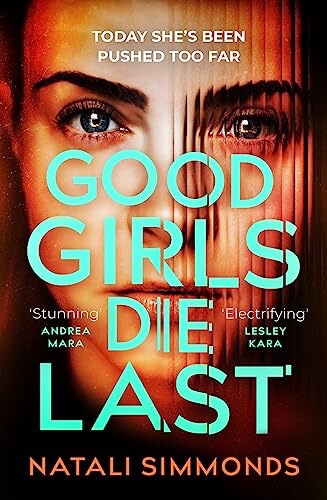
Good Girls Die Last by Natali Simmonds

Wow! This is a searingly raw story, simmering with righteous anger and injustice. Set on a boiling hot summer’s day, you can almost smell the tarmac and diesel fumes. You can hear the traffic noise and feel the agitation and impatience of people trying to get to work without exchanging a word with anyone else. It’s too hot to breathe let alone exchange a friendly word. I had the unnerving experience of reading our heroine’s thoughts and hearing my own words. During the day from hell that Em was experiencing, it felt like some of my own thoughts and frustrations were running round her head. They just need awakening. I have to be honest and say that my age is more in line with another heroine from earlier this year – Amazing Grace Adams – who had her own walk of rage, fuelled by love. However, Em’s voice is a millennial war cry that becomes a national phenomenon in the space of a day. As she leaves her landlord’s bed that morning she expects to look smart for work, especially since she has a HR meeting and expects to be offered a permanent role after completing three months maternity cover with great results. Finally she’s catching an evening flight back home to Spain for her little sister wedding. Her actual day is a complete clusterfuck!

It was her very first thoughts and actions as she woke in the morning that started to build that inner fury in me. First of all her name isn’t Em, or Emily and not even Emma. It’s Emygdia. Everyone shortens it for her. To something that’s more manageable for them. This is an indication of what’s to come and references all those things about women that people find ‘too much.’ Em gets up quietly, so as not to disturb her landlord Matt – son of a Tory MP and an absolute dick. She wouldn’t want to wake him up. She gathers her clothes quietly and scurries away as if she has done something wrong. It’s Matt who’s in the position of power. It’s Matt who has a long-term girlfriend. It’s Matt who started this little fling. Yet it’s Em who has to leave the flat to accommodate his weekend with the saintly Rebecca. It’s Em who shouldn’t be so sexy and irresistible. It’s Em who buys into this bullshit and scurries quietly to her own room as if nothing has happened. As if she doesn’t exist. It made me wonder, what is it she’s so scared of? In fact, what are women so afraid of?

‘you warm-blooded Mediterranean types’, he says ‘all that passion eh? You can’t control yourselves.’ Ah yes the Spanish thing. He talks about that a lot. My long thick hair, the way I use my hands when I talk, my olive skin, how red my lips are, how dark my eyes are, how round my breasts are. What do English girls look like in bed then? Maybe they just lie there silent, pale and still. I doubt it. Maybe that’s just Rebecca.’

This sets up a central idea in the book and it’s title. It’s classic Madonna-Whore complex, the misogynistic idea that there are women you sleep with and women you marry. ‘Emmy’ as Matt calls her, is definitely the former. Like obliging little opposites of a dichotomy Rebecca and Em have never met, but Em has Facebook stalked her. Rebecca, who hates being called Becca, isn’t a large breasted, wild haired, sexy inconvenience. She’s a pale, pretty girl who wears her hair in plaits at the weekend and has a rabbit called Sniffles. She dislikes spicy food and even her favourite colour is mild – who likes mint? She wears loose sundresses and flat sandals. Her figure can’t be seen. She even has freckles. Could anyone be less threatening? This is the type of woman men like Matt idealise, they are the wives and mothers, not to be sullied or degraded in any way. This type of thinking also applies to serial killers. As the character of Rose explains, while men are killing women who deserve it they’re notorious, they’re given sexy nicknames and people make documentaries about them. It’s ok to kill the ‘Ems’ of this world: immigrant girls, homeless girls, nagging wives, pushy girlfriends, women who sell themselves, who wear slutty clothes, who walk home late at night. It’s only when they kill the ‘Rebecca’ types that people sit up and take notice. Girls who are nice, who don’t take risks, who don’t deserve it, who are innocent little angels. This attitude is prevalent in real life, I remember it from both the police and the media during the Yorkshire Ripper investigation. It starts small. Men shout ‘cheer up’ or ‘give us a smile’ as if we owe them a nice expression! As if we owe them pretty. Then there’s the man who wants to buy you a drink, to put their arm round you or touch your waist. It’s a continuum that, at it’s most extreme, encompasses those who use, abuse and even kill. Em has encountered all of these types before – the sexual harassment that costs her a job, the violent father, the user landlord and those she meets throughout the day right up to the London Strangler.

I loved how the author wrote about the body and how ‘other’ women’s natural bodily functions seem to be. There’s a disgust conveyed by men that women buy into and internalise. The shame of being caught out by a period in a public place must be a lot of women’s worst nightmare. When I read it I physically cringed on Em’s behalf. It was interesting that this was the point she meets Rose, who simply accepts this woman she’s just seen cleaning herself up and having to pee outdoors. It doesn’t make her look away or form a value judgement. This isn’t the only bodily function that Em is trying to avoid – sweat, sore armpits where her blouse was too tight, foot blisters – they’re all unladylike and shouldn’t be seen. I go loopy when I see Naked Attraction where women’s vulvas are often praised as ‘all neat and tucked in’ and ‘hygienic’ for having no pubic hair. Apparently we should also have a thigh gap and be in proportion. Sometimes they seem keen to erase so much of us, it’s a wonder we don’t just disappear. Rose is the furious feminist voice in the novel and she’s almost like a mentor to Em, listening and giving frank advice where needed plus the odd political rant here and there. She is her own woman and lives life on her terms. Could Em ever be like that? Could she acknowledge with her friends and her religious family that the love of her life is Nikki, a woman? Could she live a happier life focused on what she loves? Em seems to realise that her destiny is to be an example. Only she can discover which direction to go and the best way to achieve it.

Out now from Headline and currently 99p on Kindle

Meet The Author

Natali Simmonds began her career in glossy magazines, then went on to manage marketing campaigns for big brands. She’s now a creative brand consultant, freelance writer, and fiction author, writing gritty and unflinching stories full of complex women and page-turning suspense (and sometimes a little magic).

Simmonds’ dark, feminist thriller debut, Good Girls Die Last, has been optioned for a television series by STV. As N J Simmonds, Natali penned the fantasy trilogy The Path Keeper and Son of Secrets, and in 2022 was shortlisted for the RNA Fantasy Award for the last book in the series, Children of Shadows. She’s one half of paranormal romance author duo, Caedis Knight, and has also written for manga. 

When she’s not writing or consulting, she’s a columnist for Kings College London’s ‘Inspire The Mind’ magazine, and lectures for Raindance Film School. Originally from London, Natali now divides her time between Spain, the UK, and the Netherlands where she can be found drawing, reading in her hammock, or complaining about cycling in the rain.

Posted in Random Things Tours

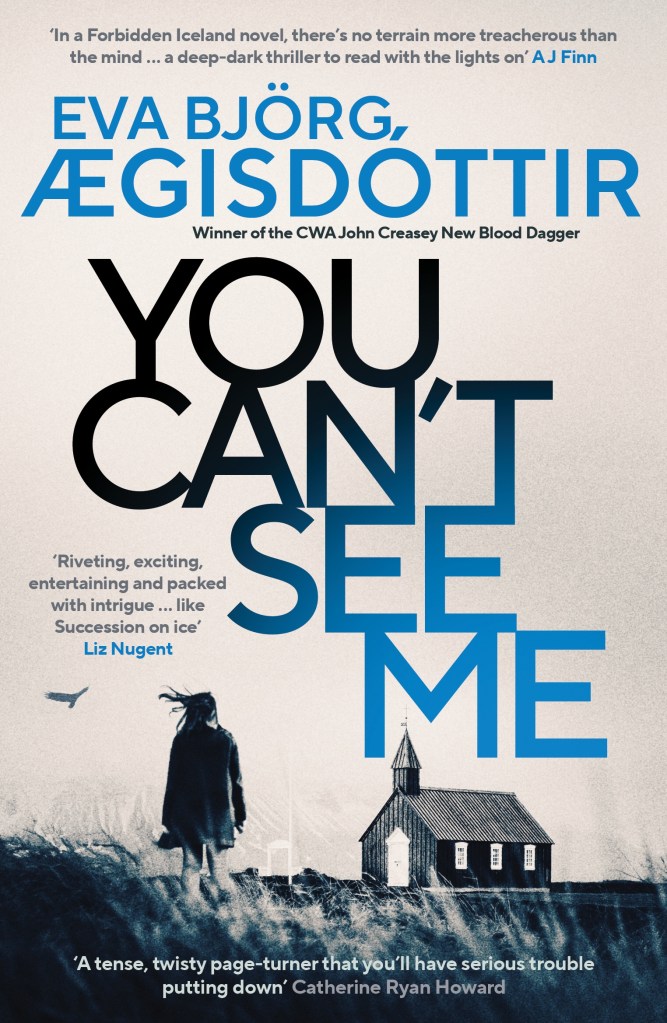
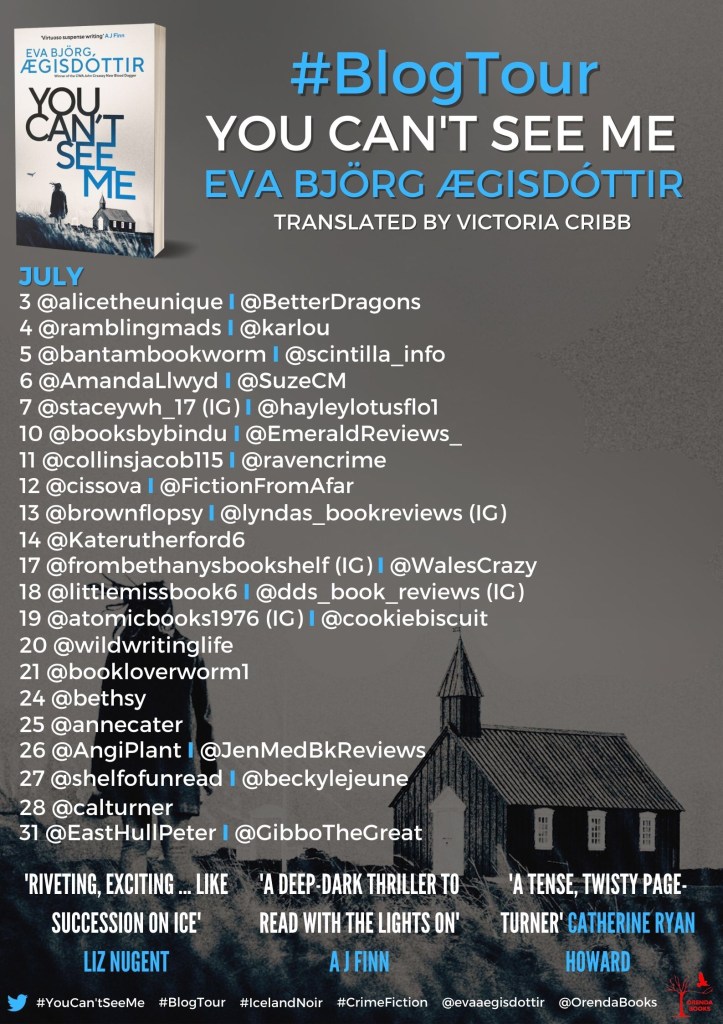
You Can’t See Me by Eva Björg Ægisdottir

Translation by Victoria Cribb.

Evil creatures here abound. We must speak in voices low. All night long I’ve heard the sound. Of breath upon the window.

Sixteenth-century verse by Þórður Magnússon á Strjúgi

The wealthy, powerful Snæberg clan has gathered for a family reunion at a futuristic hotel set amongst the dark lava flows of Iceland’s remote Snæfellsnes peninsula.

Petra Snæberg, a successful interior designer, is anxious about the event, and her troubled teenage daughter, Lea, whose social- media presence has attracted the wrong kind of followers. Ageing carpenter Tryggvi is an outsider, only tolerated because he’s the boyfriend of Petra’s aunt, but he’s struggling to avoid alcohol because he knows what happens when he drinks … Humble hotel employee, Irma, is excited to meet this rich and famous family and observe them at close quarters … perhaps too close…
As the weather deteriorates and the alcohol flows, one of the guests disappears, and it becomes clear that there is a prowler lurking in the dark.
But is the real danger inside … within the family itself?

I LOVED the first two books in the Forbidden Iceland series, featuring detective Elma, recently returned to her home town of Akranes after several years working in Reykjavik. This story is a prequel and we meet her eventual partner Sæver as he looks into some very strange events surrounding a family reunion. This is not your average family though and I don’t think I’ve ever wanted to be at a party less! My sympathies were largely with hotel employee Irma who views the Snæberg family as if they are a totally different species. In a way they are, set apart by their successes and their wealth from the everyday hotel employee. So wealthy in fact that they’ve hired this entire luxury hotel for the weekend, with a full itinerary of activities and boozy dinners at night. It isn’t long before tensions and differences come to light: judgements and opinions on each other’s partners; family members who’ve lost touch and resent each other; teenagers who’d rather be elsewhere; parents who can’t connect with their children. All cooped up together for a whole weekend. As the author moved our point of view from one character to another we realise this family has so many secrets.

The setting is isolated and bleak. No amount of candlelight could ever convince me that concrete looks anything but brutally uncomfortable. However, thanks particularly to interior designer Petra Snæberg who can’t stop snapping for her Insta followers, the hotel’s phone is ringing and bookings are going through the roof. Set on a remote peninsula there is nowhere to go, except the equally bleak outdoors and with a set itinerary in place there’s no escape from each other. The atmosphere the author creates is incredible and had me veering from suspicious to unsettled to really creeped out. The uncovered windows leave guests feeling exposed, realising that if a light goes on they are lit up like a theatre stage. Not helped by the fact that an app controls heating and lighting, so easy to plunge another guest into darkness or into light by accident or just when they least expect it. We realise that certain people are watching others, but we’re not exactly sure why, whose stare is benign and whose stare means danger is lurking? Some narrators send icy cold shivers down the spine. Petra’s daughter Lea receives a message from an unknown number:

The video is dark, taken outside at night. Instinctively I bring the phone closer to my face, to see better. I turn up the volume. The sound crackles with the wind, then I hear a crunching of gravel. Footsteps. Someone is walking outside, along a gravel path. The video ends with the sound of a throat being cleared and a cough. I turn to the window, feeling the sweat break out all over my body. Isn’t there a gravel path leading to the hotel? Again I hear a rustling sound outside the door, then more knocking. Two taps, like before. Tap, tap.

Some of the scariest moments happen to Petra too. There’s a tension between her and her cousin Stefania who grew apart years ago when they were teenagers. An awkward drink with the two women and Stefania’s brother Viktor starts to open up old wounds. Petra is haunted by a misunderstanding that had tragic consequences, but does she even know the full story? Why does she find her hotel room door open when she’s been inside, showering and sleeping? Then there’s the creepy notes under the door. It’s enough to make the hair stand up on the back of your neck.

Then there’s Irma, who seems intrigued by this glamorous family who are so ‘together’. They’re Insta-perfect and seem so far outside her experience. She mocks Petra’s overuse of the word ‘sanctuary’ which is what your home is supposed to be, a place that reflects who you are. When Irma thinks of her flat it’s merely a box and her shelves are merely a place to keep stuff. It’s boring, functional and sparse – does that reflect who she is?

Mum always said I had an overactive imagination. As a child I lived in a world that no one else could see. One that was much brighter and better than the real one, like a fairy tale or story, because as I turned the pages of books I became the characters. […] But the older I got, the more difficult it became. I started comparing myself to other people. I realised that the flat Mum and I lived in probably wasn’t that tasteful, and the life we lived wasn’t actually that exciting. Perhaps it wasn’t so desirable after all to be constantly moving from place to place, constantly changing schools and spending most of my evenings alone at home.“

She imagines living like the family do, envious of the freedom to walk around the supermarket and pick up whatever they want, with no fear of their bank card being rejected. Irma’s not completely taken in by appearances though, while she scrolls she reminds herself of the gap between the selves we are on social media and the reality. She looks forward to people watching, spotting where the cracks are. Those tiny resentments. The things they keep from each other. After all, no family is perfect.

However it’s Lea who I’m most scared for because she’s just so vulnerable. Lea is a confused teenager and she is never without her phone. A lack of friends and support at home has left her so open to exploitation. She has a friend called Birger who might be staying nearby, maybe they might finally meet? Lea seems to get validation from his messages on her photos. In fact it’s that very validation and a need to be seen that convince her to do something dangerous. She realises how exposed she is too late and the signs that she’s struggling are being missed, until she walks out into the sea in all her clothes. All the ‘what ifs’ begin to race through her mind, but not once does she wonder whether Birger might not be who he claims to be. Then there’s Gulli, an older man who’s very appreciative of her posts and so easy to talk to, but the unease sets in when he too turns out to be nearby. There’s the old man she saw wandering the corridors, even though her family are the only guests. Is it her aunt Oddny’s unusual boyfriend Tryggvi, an outsider thanks to his job as a joiner and his unique dress sense? Could he be watching? Lea begins With her mum embroiled in secrets and lies of her own, will anybody notice that Lea is standing on a knife edge. Lea is being watched of course, but is that enemy looking in through the windows or are they closer? Inside the building?

The suspense builds beautifully and reaches fever pitch on the last night. Tryggvi falls drastically off the wagon on an important anniversary. Petra has made a bloodstained find in one of the bedrooms. Victor’s much younger, pregnant girlfriend has left the hotel in the night despite being unable to drive. Lea is also drinking heavily, scared about who is stalking her. While Petra has a long overdue conversation about the past, but can she trust her version of events? As a storm begins to roll in, cutting the hotel off from civilisation, horrifying truths bubble to the surface. Someone who has been waiting a long time for their moment makes their move in this complicated chess game. We don’t always see those who hide in plain sight and those we think we know could be monsters in disguise. I love this author’s ability to get inside the heads of her characters and pull the reader along with her. Here she builds a labyrinth of clues, red herrings and suspicious characters that I found absolutely impossible to resist. That’s why I was awake at 3am, with my attention split between the page in front of me and my ears attuned to even the slightest creak downstairs. After all you never know who might be watching.

Published by Orenda Books Thursday July 6th.

Meet the Author

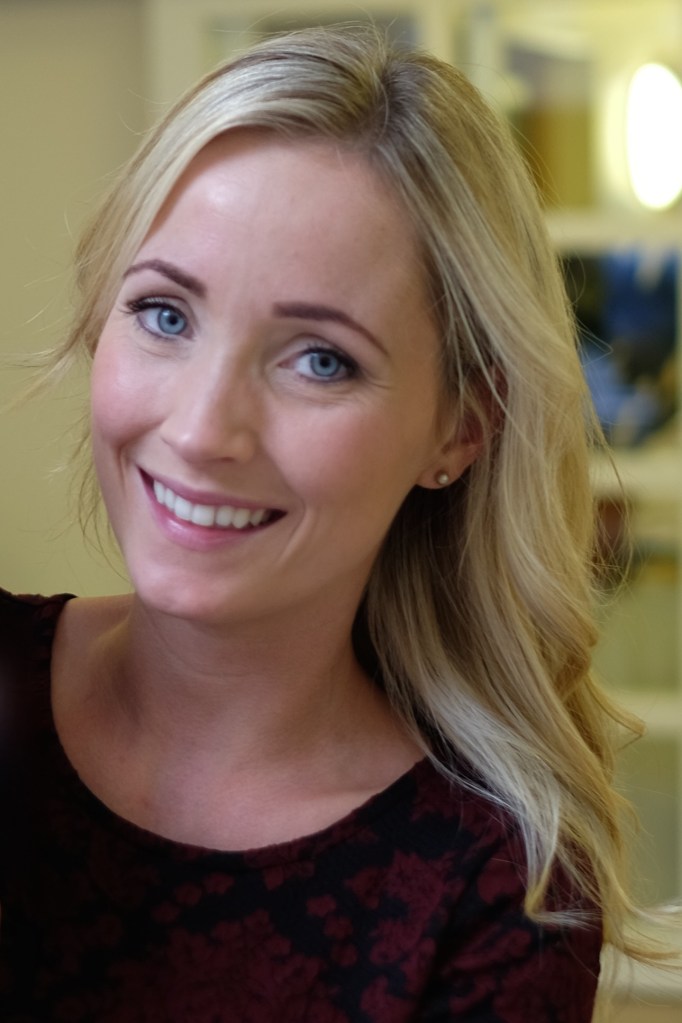
Born in Akranes in 1988, Eva Björg Ægisdóttir studied for an MSc in globalisation in Norway before no one can be trusted, as the dark secrets
returning to Iceland to write her first novel. Combining writing with work as a stewardess and caring for her children, Eva finished her debut thriller The SCnreæakboenrgthfeaSmtaiilrys,awrheicuhnwcaosvpeurbelidsh…edaind the 2018. It became a bestseller in Iceland, going on to win the Blackbird Award. Published in English by Orenda Books in 2020, it became a digital number-one betseller in three countries, was shortlisted for the Capital Crime/Amazon Publishing Awards in two categories and won the CWA John Creasey Dagger in 2021. Girls Who Lie, the second book in the Forbidden Iceland series was shortlisted for the Petrona Award and the CWA Crime in Translation Dagger, and Night Shadows followed suit. With over 200,000 copies sold in English alone, Eva has become one of Iceland’s – and crime- fiction’s – most highly regarded authors. She lives in Reyjavik with her husband and three children.

Thanks to Anne Cater at Random Things Tours and Orenda Books for having me on the blog tour, to see more reviews and giveaways follow the rest of the tour.

Posted in Random Things Tours

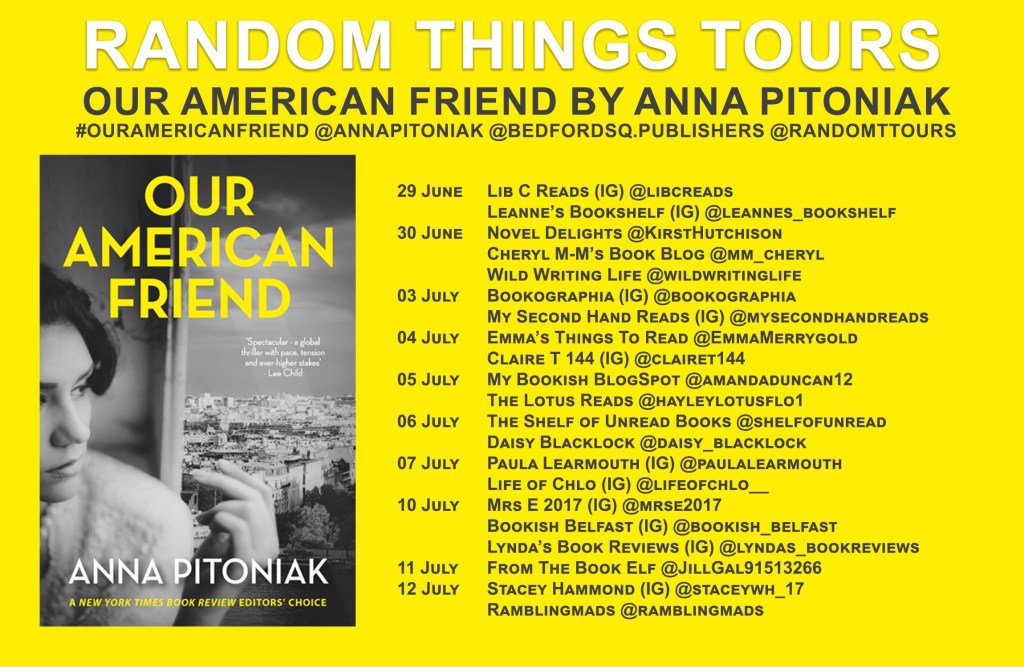
Our American Friend by Anna Pitoniak

A mysterious First Lady. The intrepid journalist writing her biography. And the secret that could destroy them both. Tired of covering the grating dysfunction of Washington and the increasingly outrageous antics of President Henry Caine, White House correspondent Sofie Morse quits her job and plans to leave politics behind. But when she gets a call from the office of First Lady Lara Caine, inviting her to come in for a private meeting with Lara, Sofie’s curiosity is piqued. Sofie, like the rest of the world, knows little about Lara – only that she was born in Soviet Russia, raised in Paris, and worked as a model before moving to America and marrying the notoriously brash future president. When Lara asks Sofie to write her official biography, and to finally fill in the gaps of her history, Sofie’s curiosity gets the better of her. She begins to spend more and more time in the White House, slowly developing a bond with Lara. As Lara’s story unfolds, Sofie can’t help but wonder why Lara is rehashing such sensitive information.Why tell Sofie? And why now? Suddenly, Sofie is in the middle of a game of cat and mouse that could have explosive ramifications.

I read a very odd tagline to a review for this book that likened it to Emily in Paris and the TV series Scandal – the comparison to either is inaccurate, because while this has the addictive quality of a thriller it goes much deeper and is clearly well-researched. The blurb immediately took me to Donald Trump and his rather enigmatic First Lady, Melania. A very different First Lady from her predecessor Michelle Obama, she certainly didn’t fit the usual mould and curiosity about their relationship and her past is certainly perfect material for a good thriller. I’m not the first to wonder whether they met at the notorious parties in NYC where very young models were supplied to meet wealthy and powerful men. The potted biography of our character Lara Caine certainly seemed to echo Melania’s journey towards becoming the President’s wife, so this hooked me straight away.

The author sets her characters within the current political climate, the era of fake news, conspiracy and what seems like a complete lack of accountability. I’m not alone in wondering who to believe any more and constantly searching for the truth beneath the headlines. The author certainly conjures up this complicated present and what it’s like to be a journalist within this maze of misinformation, but she also weaves in the fascinating Cold War era, a time absolutely ripe with complicated plots and conspiracies. It’s a clever combination, because when we think back to America and the Cold War we think of the containment of Russia, the Berlin Wall, the arms and space race between the US and USSR, and the Cuban Missile Crisis. At this time even a hint of collaboration between East and West rising to the surface, was investigated robustly and punishments were harsh. McCarthyism was the epitome of the type of paranoia on display as actors and other people working in Hollywood were interrogated and their movements restricted if any socialist or communist sympathies were found. In this country the Profumo affair brought to light a sexual scandal where our Secretary of State for war was having an extra-marital affair with 19 year old model Christine Keeler, who was also sleeping with a Russian naval attaché. Again the root of the problem was secret parties held by osteopath Stephen Ward, where he introduced young models that he knew to powerful men in politics and possibly in the Royal Family too, as portrayed in the series The Crown. This book contrasts these two moments in history as we travel back and forth in time to uncover Lara’s story. It seems that where there were once barriers, there are now complex financial and political relationships between old enemies. Russian financing seems to be behind many Western political campaigns including our own Brexit referendum. Is this simply business or have our old enemies found a more creative way to destabilise the West? I find these complicated collaborations fascinating, so this was fertile ground for a very enjoyable novel as we moved through Paris, Moscow, Washington and New York.

Anna Pitoniak uses the character and background of Lara to explore these contrasting time periods in politics. She could have been a cipher, but she’s more than that and is definitely intriguing from the start. Why would the First Lady approach a journalist who is retiring from politics and whose own political leanings are at odds with the President? Why is she choosing to share her life now, especially when there are so many secrets and who is her reader? Is she perhaps getting ahead of a narrative she knows will come out anyway, creating a chance to influence the story and perhaps gain sympathy from the reader. Sofie has to wonder whether she’s been chosen because the First Lady has had a change in outlook or because her choice of a liberal journalist will influence readers into thinking the book is a fair account, more balanced than if she’d chosen a right wing author. All of these questions were running through my head while reading, as if there aren’t enough on the page. I was full of suspicion, but Lara seems open and welcoming, giving Sofie access to her life. Slowly a relationship builds between these two very different women, potentially a friendship. There is trust but does it really work both ways? Lara gives Sofie previously hidden stories from her childhood and adolescence with access to close family members as a back up. Yet I understand Sofie’s confusion, as she starts to like this woman but remains opposed to everything about Lara’s husband – his politics, morality and the way he’s conducted himself in office. So when Lara discloses a huge secret, something serious enough to upset not just her family but global politics too, she may as well have handed Sofie a ticking time bomb. It’s a journalist’s dream to have such a scoop, but there’s a certain amount of trepidation too. This is a slow burn of a novel, but it is engaging and once you’re hooked you’ll want to see what happens. There are some twist and turns to keep the reader entertained, but the author always keeps it intelligent and historically factual underneath, especially in the Cold War sections. While I didn’t form an attachment to either character I did enjoy the story, showing how the things most important to us like love and family become threatened when pulled into the world of espionage. There are also themes of complicity and the lack of integrity rife in modern-day politics, so current as we go through scandals such as Partygate and see the daily revelations from the COVID Enquiry. I also enjoyed reading a political thriller with two women as the focus, something often lacking in this genre. This is my first novel by this author and I look forward to reading others.

Released by No Exit Press in the UK on 29 June 2023.

Meet the Author

Anna Pitoniak is the author of The Futures, Necessary People, Our American Friend, and the forthcoming The Helsinki Affair. She graduated from Yale, where she majored in English and was an editor at the Yale Daily News. She worked for many years in book publishing, most recently as a Senior Editor at Random House. Anna grew up in Whistler, British Columbia, and now lives in East Hampton and New York City.

Posted in Publisher Proof

The Apple and the Tree by Clemmie Bennett

For her debut novel Clemmie Bennet has chosen to write something so complex I have to take my hat off to her. Ella has recently lost her beloved grandmother, Lolly. They used to spend a lot of time together, exploring stately homes and royal residences, particularly those from the Tudor period. Lolly left her granddaughter a beautiful gold and sapphire ring, one that’s very precious to Ella as she remembers her grandmother wearing it every day on a chain around her neck. However, it’s when Ella puts the ring on her finger that something very strange happens. Ella feels dizzy and passes out, waking up in a field next to what looks like Eltham Palace. As a man walks towards her, Ella thinks she’s fainted in the middle of an historical reenactment. He’s dressed in the rich robes of a member of the Tudor court and his manners are impeccable, offering to let Ella rest in the palace until her memory returns. Her rescuer is Henry VIII. As Ella finds herself in the court, becoming one of Katherine of Aragons ladies, she is a fly on the wall for some of the most dramatic events in royal and religious history. Is it possible to remain an observer, or will Ella find herself tempted to intervene and perhaps change the course of history?

I’ve been fascinated by Tudor history, ever since I saw one of the Hans Holbein portraits of Henry VIIII in the Chatsworth library when I was a child. Henry seemed like a curiosity in our royal history with so many wives and scandals to his name. Once I’d read the David Starkey books and Phillipa Gregory’s novels from The Other Boleyn Girl onwards. I was also drawn to the glamour and dubious historical content of the Showtime series The Tudors, with Jonathon Rhys Meyers Henry and his best friend the Duke of Suffolk, as portrayed by the rather delicious Henry Cavill. What all these sources brought home to me was how uneven his marriages were – he was married to Katherine of Aragon for as long as he was to every other wife combined. That’s without noting his devotion to her from the moment she reached England for her marriage to Henry’s elder brother Arthur, a devotion that survived his teenage years, her first marriage and his brother’s death. They were in love, he wasn’t faithful but Kings were not expected to be faithful. The idea of a character time travelling to that period threw up all sorts of questions and I was so impressed by the bravery of the writer. Writing historical fiction means researching your period throughly, so to do that and put your character in the middle of such a well- known series of events is such a risk.

I also applaud the author’s bravery in ripping up the rule book on time travel – we all know that it is important not to change anything in the past, but Ella ignores that rule. It’s a great choice because it gives her character more freedom, but I also think it makes an historical point too. I have always said that had I been in the Tudor court, I would do a Mary Boleyn and marry someone of little importance and get the hell out of there. I have always wondered while reading about the wives and friends of Henry why you would involve yourself in the political and religious machinations of the time. Wouldn’t a life in the country as a nobody be preferable? I think that the author allows Ella to get involved because she’s making the point that it would be impossible to live in that court and not become involved. It’s a game of survival and women are both marginalised and limited in their choices. They have a choice, to withdraw for a quiet life like Mary Boleyn or fight for their place and power like her sister Anne. Ella’s choices certainly raise the tension level! She’s playing a living game of chess, trying to keep within the rules but think three steps ahead of her opponent. Of course she has the benefit of hindsight and all the Tudor history her grandmother Lolly taught her, so she might be able to win.

I thought the book really brought to life the difficulties of the time period and being a subject of Henry VIII, particularly for women. We know there are ladies in waiting, but they’re often portrayed as companions the Queen and possible lovers of the King, but here we see more of their day to day activities and their emotional lives. Ella is a 21st Century woman and because of that we can see these women as being just like us. I loved the way she formed friendships and how the women supported each other. They are portrayed as emotionally open about their marriages and the dangers they face, whether from men or from their own bodies. Fertility plays a major part in the huge decisions of this court, in fact it still does today if we think of Prince Harry’s book Spare and the importance placed upon his father to marry and have both heir and spare. It’s always a huge part of the ‘King’s Great Matter’ that Katherine had not produced a male heir, but here the author explores what these struggles were like for the ordinary women at court. There’s a moment where Ella has to cope with getting her period in a time where underwear isn’t worn and she’s having all the same worries I remember having when starting my periods, all over again. It made me realise how vulnerable women were to sexual assault as well. It broke my heart to see how terrified women were of becoming pregnant, then dreading childbirth or losing their child. Having Ella there as a 21st Century comparison really heightened how different a woman’s lot really was and how the aristocratic practice of handing your child to someone else to look after caused such pain and grief.

I came away from this book with a different understanding of both the time and the court, even Henry himself. This Henry was intelligent, tender and seductive. Despite his shortcomings, there’s a compassion in Henry that seems missing from his actions in later years. It’s interesting to see how different the course of history might have been with just a few small changes. As Ella builds a friendship with Henry, I wondered how far her influence might reach and what might happen if she ever returned to her own time. This kept me reading and there was also a huge twist I didn’t expect! This was such an interesting premise and kept me intrigued enough to read to the end. I recommend this to anyone who knows a bit about the time period and maybe thinks they know all there is to know about Henry’s court. I would be interested to know what the author would change if she went back to Henry’s court, or whether she would choose to lie low? This is such an interesting debut and I hope to see Clemmie flourish as a writer of historical fiction.

Meet the Author

Clemmie Bennett is a writer, author of the historical fantasy “The Apple and the Tree.” A professional London-based French nanny, Clemmie has been working on her debut novel for over three years, but writing a book has been on her bucket list for as long as she can remember. When she is not writing or reading, she can be found wandering about ancient royal palaces or abbey ruins, most likely despairing that time travel is not a reality – like it is for her main character.

Posted in Netgalley

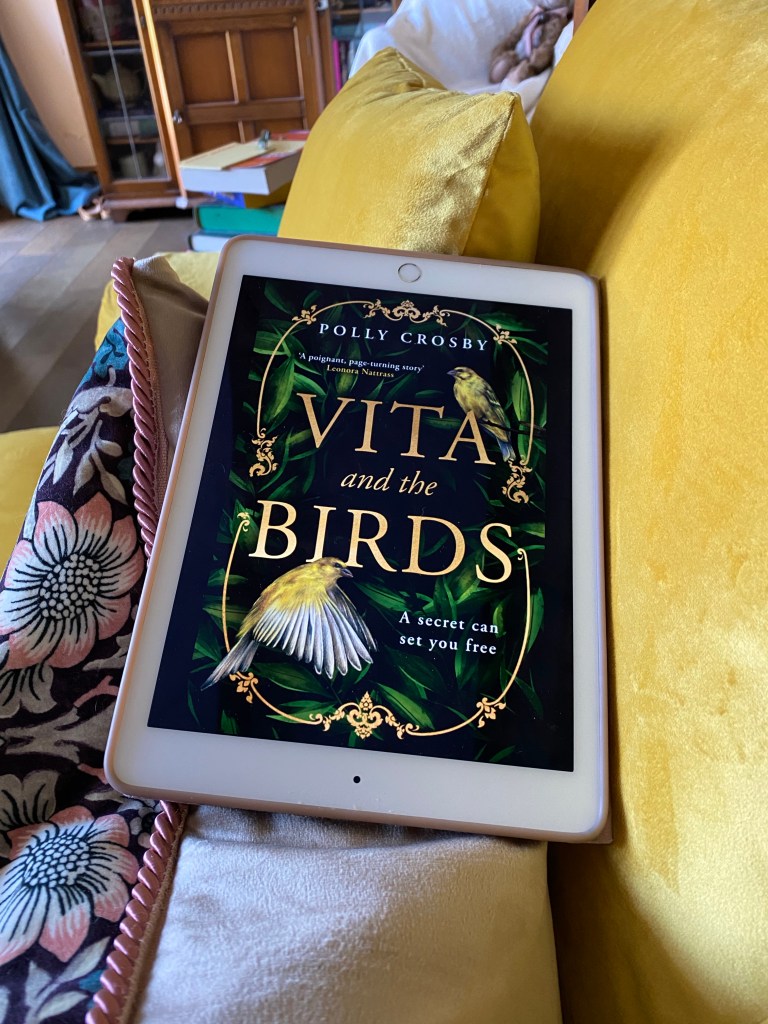
Vita and the Birds by Polly Crosby

1938: Lady Vita Goldsborough lives in the menacing shadow of her controlling older brother, Aubrey. But when she meets local artist Dodie Blakeney, the two women form a close bond, and Vita finally glimpses a chance to be free.

1997: Following the death of her mother, Eve Blakeney returns to the coast where she spent childhood summers with her beloved grandmother, Dodie. Eve hopes that the visit will help make sense of her grief. The last thing she expects to find is a bundle of letters that hint at the heart-breaking story of Dodie’s relationship with a woman named Vita, and a shattering secret that echoes through the decades.

What she discovers will overturn everything she thought she knew about her family – and change her life forever.

I’ve looked forward to the new Polly Crosby novel for a while, it was one of my most anticipated books of 2023. I love her writing so I gave myself a lovely sunny weekend to completely wallow in the story. It seemed fitting that I was outside, since nature plays a strong part in the novel both metaphorically and as an extra character that’s often more vivid than the inner spaces. Eve has felt adrift since her mum Angela died so her four brothers think it might be good for her to take a trip to the coast and clear out their grandmother’s studio. Grandmother Dodie was a painter and lived a fairly basic life in a small ramshackle studio just off the beach. Eve has fond memories of childhood holidays there, when her brothers would snuggle up with her like sleepy puppies on the studio floor at night. Close by is the strangely alluring Cathedral of the Marshes, a glass building so imposing it has the presence of such a holy building. Once, when she was a teenager, Eve had taken a dare to go into the cathedral with Elliot, one of the local boys. She remembers being terrified, but doesn’t remember much else about that night apart from seeing a painting standing on an easel. Strangely, it was a portrait of her and she ran out into the night, never to return. How will it feel to be back in a place that she has feared, but that still holds some of her best childhood memories? When she finds Dodie’s letters and reads of her relationship with Vita, she is plunged into a completely hidden part of her grandmother’s life.

This is a dual timeline novel, so through the letters we go back to the outbreak of WW2 and Dodie’s early years at the studio. She met one of her more notorious neighbours, Vita Goldsborough, resident of Goldsborough Hall and an owner of the glass cathedral. Vita and her brother Aubrey are the subject of gossip in the village. The stories are varied: Vita went mad and was put in a psychiatric hospital; Vita and Aubrey committed incest; they were to blame for ‘the vanishings’. They didn’t mix in the village and the stories around the siblings seemed to multiply and when a local girl vanished they were the first to be blamed by villagers. Strangely, as Eve arrives, a boy goes missing. It seems like an echo of the past, a foreshadowing, as if this is a thin place where memories and historical events seem close enough to touch. The physical sorting of her grandmother’s belongings is a simple enough task, she will just hire a skip, but when it comes to finding things that evoke memories and emotions they’re not so easily thrown away. Now Eve finds herself questioning the past and discovering things about this place and her beloved grandmother that she’d never imagined.

I thought this was a fascinating story highlighting women’s history and showing how much Victorian attitudes still prevailed in aristocratic society. The way Aubrey Goldsborough thinks feels around forty years out of date and the power he has over his sister we would now label as coercive control. Vita tries to explain to Dodie that his hold over her is so powerful he doesn’t have to force her, he simply has to tell her what to do and she obeys. He wants Vita to be respectable and only spend time with the right sort of people. Becoming friends with a bohemian artist like Dodie was definitely unexpected and she is the epitome of the wrong sort of company. Vita decides that Dodie must paint her portrait, something that her brother can’t really object to. Aubrey would like her to make a good marriage, but Vita’s interactions with men are fast and short-lived. Vita’s rebellions had to be passive aggressive – she gathers her jewels and keeps them in a box chained to the bottom of a pond in the glass cathedral. Hopefully, she can sell them without Aubrey knowing and have some financial freedom. She and Dodie hide in plain sight after Aubrey goes to war. They set up home in the cathedral, able to see everything around them, but thanks to the reed beds outside they are very unlikely to be seen. In another echo of her grandmother’s past, Eve meets an elderly lady in the village who asks to have her portrait painted. Eve isn’t usually a portrait painter, but can’t turn down the generous money offered for the work. She has the key to the cathedral and suggests they use it for their sitting, so Eve stands where her grandmother did many years before. What might this lady know about that time and her grandmother’s life?

The outside spaces seem to have an effect on Eve and I noticed a more natural, authentic part of her shine through. When she’s wild swimming or having a campfire on the beach with her brothers it feels like she belongs here. I was fascinated with how Polly plays with interior and exterior spaces, mirroring the parts of themselves her characters are revealing and concealing. Dodie’s studio has one glass side, leaving the whole living space open to view and her only concession to privacy is a screen where her models can undress. This is so in keeping with Dodie’s character, she is who she is and nothing is usually concealed. A beautiful detail comes when Eve is aware that putting the light on opens the space up to the outside like a stage set, but switching it off opens up the landscape outside. The cathedral is something of a paradox because I thought at first the glass would be very exposing, but Aubrey had designed it with living spaces that were kept private. I was imagining it like a Victorian glasshouse or orangery, very ornate with an almost tropical climate inside. The central ‘Turkish Room’ where Vita sits for her portrait has an otherworldly feel, with a smell of vegetation and rotting fruit. A large pool sits at the centre and church pews are placed around it upholstered with Turkish throws and pillows. There’s a sensuality to this space, the heavy warmth and the softness of pillows contrasts sharply with the glass. The room is hidden by the marsh reeds and it feels like a world apart, a feeling echoed by the ornamental bird cage engraved just for them. It holds Vita’s canaries, until one day they escape out through a hole in the roof. Yet they come back and visit Vita, eating out of her hand and filling the room with beautiful bird song. The name Eve finds scratched on the cage alongside that of Vita and Dodie should be no surprise. It’s a hope that person will return and bring a new generation back to the cathedral, represented by the flock of yellow and brown canaries Eve sees fly into the cathedral – the ancestors of those first two birds returning to their home.

As with previous novels, Polly really knows how to pile on the layers of mystery and create an undercurrent that’s quite unnerving: the painting that looks like Eve; the birdcage and the names engraved on it; the earrings Eve finds under the sink in the studio that she’s never seen her grandmother wear. Eve’s mind plays tricks on her, confused by the likeness between Vita and her grandmother, but also with herself. She’s still confused about that night when she was a teenager, when she went into the cathedral on a dare. Did she really hear a woman’s voice? Was she holding something when she ran away? Was it a shard of glass? As we move towards finding out what happened in the cathedral all those years ago the tension builds and I worried whether the two women would be safe from someone like Aubrey. Eve knows that he was found dead in the cathedral cut by a shard of glass, but was it suicide or murder? Whatever happened to Vita, someone her grandmother never talked about? There’s also the question of Eve’s mum Angela, born around the same time period but brought up by Dodie alone and has never known her father. As Goldsborough Hall was obliterated by a bomb during the war, only the cathedral remains and I wondered who owned it now? I was totally engrossed by this point and dishes went unwashed, the dog went unwalked and my other half, who knows when I’m lost in a story, kept me amply supplied with tea and toast. I do this strange thing when I’ve really enjoyed a book, I seem to hug it to my heart as if it can reach the characters inside. This was one of those books. It’s a beautiful hidden love story and an intriguing mystery as well, told with compassion and empathy.

Meet the Author

Polly Crosby grew up on the Suffolk coast, and now lives with her husband and son in the heart of Norfolk.

Polly’s third novel, Vita & the Birds, came out in May this year. Her first novel for young adults, This Tale is Forbidden – a dystopian fractured fairytale with hints of the Brother’s Grimm and The Handmaid’s Tale – is out in January next year with Scholastic.

In 2018, Polly won Curtis Brown Creative’s Yesterday Scholarship, which enabled her to finish her debut novel, The Illustrated Child. Later the same year, she was awarded runner-up in the Bridport Prize’s Peggy Chapman Andrews Award for a First Novel. Polly received the Annabel Abbs Creative Writing Scholarship at the University of East Anglia.

Polly can be found on Twitter, Instagram & Tiktok as @WriterPolly

Website: pollycrosby.com